Foucault News

News and resources on French thinker Michel Foucault (1926-1984)

L’écrivain Serge Livrozet, anarchiste et militant anti-carcéral, est mort à 83 ans
franceinfo: Culture 30/11/2022

Figure des milieux anarchistes, il fut l’un des meneurs des révoltes qui ébranlèrent les prisons françaises dans les années 70. Il s’est éteint chez lui dans la région niçoise, “des suites d’une longue maladie”, ont annoncé mercredi ses proches à l’AFP.

Il était une figure des milieux anarchistes et anti-carcéraux, du Comité d’action des prisonniers de Michel Foucault à Mai-68 et il avait participé aux débuts du quotidien Libération. Serge Livrozet est mort dans la région de Nice à 83 ans, ont annoncé mercredi ses proches à l’AFP. L’intellectuel s’est éteint “des suites d’une longue maladie”, ont-ils précisé, rappelant qu’il fut “l’un des meneurs des révoltes qui secouèrent les prisons françaises dans les années 1970”.

Plombier, perceur de coffres-forts, puis écrivain
Né le 21 octobre 1939 à Toulon, issu d’un milieu modeste, Serge Livrozet racontait avoir commencé à travailler comme plombier à 13 ans, avant de percer des coffres-forts : “Le seul moyen de sortir de ma condition sociale, c’était (de) prendre de l’argent là où je considérais qu’il y en avait trop”, déclarait-il dans un documentaire qui lui a été consacré en 2017, La Mort se mérite de Nicolas Drolc.

Parmi ses combats, il a participé à Mai-1968 et cofondé avec le philosophe Michel Foucault le Comité d’action des prisonniers, militant pour l’abolition des prisons. Il a fait partie des tout premiers fondateurs du journal Libération, qu’il a quitté très rapidement. Serge Livrozet est l’auteur d’une quinzaine de romans et d’essais, dont De la prison à la révolte et Lettre d’amour à l’enfant que je n’aurai pas (réédité en 2022 par L’Esprit frappeur). Par ailleurs, il est apparu au cinéma chez Laurent Cantet (L’emploi du temps en 2001).
[…]

LA MORT SE MÉRITE from LES FILMS FURAX on Vimeo.

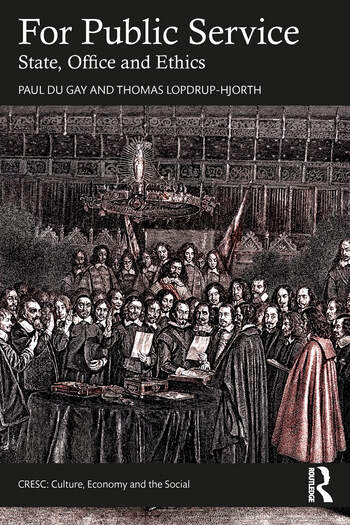
Paul Du Gay, Thomas Lopdrup-Hjorth, For Public Service. State, Office and Ethics, Routledge, 2022

Book Description
This book develops a particular stance on the subject of public service. It does so in large part by indicating how early modern political concepts and theories of state, sovereignty, government, office and reason of state can shed light on current problems, failings and ethical dilemmas in politics, government and political administration.

Simply put, public service is an activity involving the constitution, maintenance, projection and regulation of governmental authority. Public service therefore has a distinctive character because of the singularity of its ‘official’ object or ‘core task’ – namely, the activity of governing in an official capacity through and on behalf of a state. In pursuing this activity, public servants – civil, juridical and military – have a range of tasks to perform. It is only once the nature of those tasks is appreciated that we are able to identify the unique character of public service. The authors employ early modern political concepts and doctrines of state, sovereignty, government, office and reason of state in order to critically analyse contemporary political issues and offer solutions to problems concerning the status and conduct of public service. This book aims to remind public servants of the status of their ‘calling’ as office-holders in the service of the state, a daunting task given the rising tide of populism and the widespread prevalence of anti-statist, bureaucrat-bashing political discourse. It stresses the governmental dimension of the work of public servants as occupants of official roles in the service of the state, in order to reinforce their legitimate position in articulating public interests against the excesses of private interests and intense partisanship that continue to dominate many societies.

This timely and thought-provoking book will be of great interest to those working within a range of fields in the humanities and social sciences, including political science, history, sociology, philosophy, organization studies and public administration.

Table of Contents
Introduction 1. The State 2. On Office 3. The Bureaucratic Vocation 4. Whatever Happened to ‘Administrative Statesmanship’? 5. Reason of State as an Official Comportment Conclusion: To Serve a State

Authors

Paul du Gay is Professor and Director of Research Impact in the School of Business and Management at Royal Holloway, University of London, Professor in the Department of Organization (IOA) at Copenhagen Business School, Denmark, and Research Guest Professor at the Royal Danish Defence Academy. His research interests include organization theory, bureaucracy and the ethics of office. He is author, inter alia, of In Praise of Bureaucracy: Weber, Organization, Ethics (2000) and co-author of For Formal Organization: The Past in the Present and Future of Organization Theory (2016).

Thomas Lopdrup-Hjorth is Associate Professor in the Department of Organization at Copenhagen Business School, Denmark. His research interests include the history and status of organization theory, contemporary and historical problematizations of office-holding, bureaucracy and the state and – more recently – the organization of security. His articles have appeared in numerous journals, including Organization, European Journal of Cultural and Political Sociology and Journal of Cultural Economy.

Reviews
“Despite its sober title, this book makes a vivid intervention into contemporary debates over the nature and justification of the state’s public authority and the role played by public officials in its exercise. To do so, it launches a series of daring raids on early modern political thought, recovering a series of key concepts—state, sovereignty, office, and reason of state—in support of a crucial practical and political objective. This is nothing less than to deliver into the hands of contemporary statesmen and officials an almost lost ethical and political vocabulary, one that is vital for understanding and defending their roles in the face of a widespread and multi-faceted anti-statism. Paul du Gay and Thomas Lopdrup-Hjorth have thus written a tract for the times in the manner of their exemplars Thomas Hobbes and Samuel Pufendorf. By turns learned and passionate, historically informed and politically attuned, For Public Service delivers classical tools for thinking about public authority in a form suited to their immediate use by all those engaged in its exercise or dependent on it.”

Ian Hunter, Emeritus Professor of Intellectual History, Institute for Advanced Studies in the Humanities, University of Queensland, Australia

“Impersonality, reason of state, prudence, ethics of office: if someone had told me that one of the most spirited and penetrating arguments for the ideal of public service would come from such a tired repertoire, I would have wished them good luck. I couldn’t have been more wrong. Resourcing themselves in the history of political thought, Paul Du Gay and Thomas Lopdrup-Hjorth breathe new life into a dusty constellation of concepts to remind us what there is to love about the state at a time when everyone seems eager to dismiss it. They argue that public service is not just about acting diligently in the public interest, but also about constituting and safeguarding the authority of the state, and they explain under what conditions such authority warrants our respect. Criss-crossing the fields of international relations, political sociology, intellectual history, public administration, and organizational theory, this brilliant book is a feast of erudition. Above all, it is a moving paean to the impersonal structure of offices we have inherited and to the civil servants whose vocation it is to keep it afloat, and whose primary merit is—against the incantations of new managerialism—to think well within the box.”

Bernardo Zacka, Assistant Professor of Political Science, Massachusetts Institute of Technology, USA

“This is a timely, scholarly, compelling and important book which defends the role of the public service as an essential institution for preserving liberty and protecting our common life against populist politicians from both the left and the right. Exercising the objective, critical detachment they seek to reinvigorate in the idea of public service itself, the authors remind us of the ethics of office and the importance of duty and responsibility, as distinct from the predominantly individualistic ethics of contemporary times. They explain the value of public bureaucracy as a crucial cornerstone of constitutional rule.”

Janet McLean QC, Professor of Law, University of Auckland, New Zealand

“This book is very compelling. It exhibits a critical ethical dimension in its defense of the plurality of value-spheres,  and its resistance to sweeping, ‘epochal’ critiques of modernity that suggest that there is nothing those of us who regret the decline of state service and its ethic can do but bemoan the misfortunes of our era. In providing a useable set of early modern ‘classics’ by whose lights we can rehabilitate key concepts of state, office, and reason of state, and thus escape both the post-1970s enervation of the state throughout the West and the unhelpfully totalizing (and thus paralyzing) critiques of the former by theorists of the left and right, it strikes me as a vital help to overcoming our collective impasse.”

Blake Smith, Harper Schmidt Fellow at University of Chicago Society of Fellows, USA

CRISIS AND CRITIQUE
Volume 9 / Issue 2, 25-11-2022
Edited by Agon Hamza & Frank Ruda

Open access

Introduction: Is Politics Possible Today? by Frank Ruda & Agon Hamza

Table of Contents

Politics Today: Thirteen Theses and Commentaries
by Alain Badiou

Rethinking Politics and Freedom in Anthropocene
by Wendy Brown

Technique as Politics
by Andrea Cavalletti

Thinking Life: The Force of the Biopolitical
by Andrew Benjamin

Is Politics Possible Today?
by Verónica Gago

Politics Today: ‘Only a Suffering God’ Can Help Us
by Saroj Giri

Is Politics Still Possible Today?
by Karl-Heinz Dellwo

The Will of the People and the Struggle for Mass Sovereignty: A Preliminary Outline’
by Peter Hallward

Politics is Intervention
by Christian Klar

Subjective Singularities
by Sylvain Lazarus

Politics at the Gateway of Nothingness: Liminal Times
by Álvaro García Linera

Immigration: A Major Issue in Politics Today
by Robert Linhart

The Revolution of the WethOthers (NosOtros)… Around a Theory of the Real for a Material Historical Politics of Our Times
by Ricardo Espinoza Lolas

Which Politics are Necessary in the Age of Ecological Crisis?
by Michael Löwy

In the Silences of the Catastrophe: From the Standpoint of Reproduction
by Natalia Romé

Can this War Be Thought of Politically?

by Claudia Pozzana & Alessandro Russo

Working through political organization: current results of the Subset of Theoretical Practice (2021-2022)
by Subset of Theoretical Practice

Is Politics Possible Today?
by Sophie Wahnich

The Left and (New) Antisemitism: The Palestinian Question and the Politics of Ressentiment
by Zahi Zalloua

Three Fragments on Suicide as a Political Factor
by Slavoj Žižek

Politics Today: Interview with Wolfgang Streeck
by Frank Ruda & Agon Hamza

Workerist Marxism: Interview with Antonio Negri
by Frank Ruda & Agon Hamza

Söderberg, J., Bjurö, O.
The Return of the Repressed: Subject, Truth and Critique in Times of Post-Truth
(2022) Philosophy of the Social Sciences

DOI: 10.1177/00483931221126912

Abstract
The surge of post-truth calls for a reassessment of psychoanalytic and ideology critique-approaches in the social sciences. Both traditions are dismissed by the principal antagonists in the post-truth debate, the “positivist” defenders of science and the “post-modern” critics of science. The antagonists share a predisposition towards anti-humanism, refusal to distinguish between the latent and the manifest, and adherence to descriptive methods. In order to substantiate these claims, the article investigates commonalities between B.F. Skinner and Michel Foucault and Jacques Derrida. The article concludes that the allegedly “pseudo-scientific” or “metaphysical” concepts of Subject and Truth, pivotal to both psychoanalysis and ideology critique-approaches, need to be rehabilitated in response to the challenge of post-truth. © The Author(s) 2022.

Author Keywords
critique; ideology; post-truth; psychoanalysis; science wars; subject

Ivan Moya-Diez, Matteo Vagelli, Georges Canguilhem on sex determination and the normativity of life. History and Philosophy of the Life Sciences 44, 60 (2022).

https://doi.org/10.1007/s40656-022-00544-5

Abstract
Our goal in this paper is to reassess the relationship between norms and life by drawing on the philosophy of Georges Canguilhem, particularly some of his unpublished lectures about teratology and sexual determination. First, we discuss the difficulties Canguilhem identified in the introduction of life and sexuality as objects of philosophical reflection. Second, we reassess Canguilhem’s understanding of normativity as rooted in life and the axiological activity of the living. Third, we analyze how Canguilhem drew from past and contemporary teratology to conceive of the notions of anomaly and abnormality. Finally, we reconstruct Canguilhem’s analysis of a case of hermaphroditism, highlighting how he presented it as evidence that sexual determination is the result of a normative choice. One of the key contributions of the paper to scholarly literature on Canguilhem is a better understanding of his notion of choice, which was considered not the conscious and intentional act of a subject but rather an axiological activity of the living. We conclude by positioning Canguilhem’s concept of normativity and his belief that norms are produced by the living in relation to the naturalist/normativist divide in medicine.

Extract
In June 1951, Canguilhem was the vice-president of the committee governing the eligibility exam (agrégation) for high school teachers in France. In 1948, he had been appointed the “Inspector General” of high school education and, in that role, had undertaken a modernization of the oral part of the exam. Through this initiative, he managed to introduce “sexuality” as a new exam subject – though not without resistance from the other members of the committee – by arguing that “they [the students] all read Freud. And they do not talk about anything else anyways” (Eribon, 1989, p. 70). Michel Foucault, who had failed this exam the year before, in 1951 was found to have the third-best performance on the oral exam. Upset at not being first, he angrily reproached Canguilhem for having chosen such an unusual topic (Eribon, 1989, pp. 70–71).

In addition to being an interesting episode in the path that would lead Foucault to develop a five-book project on the history of sexuality, this anecdote is meaningful for at least two reasons. First, because the subject of sexuality was not an arbitrary choice on the part of Canguilhem but rather reflected a long-held interest of his which this paper aims to explore. The general recognition that Foucault has received for introducing sexuality and its history as philosophical subjects has in part overshadowed this earlier interest exhibited by Canguilhem. Besides being developed in unpublished notes for his lectures, as we shall see, Canguilhem also included the topics of “sexuality”, “sexual life”, “sexual impulse,” and “sexual instinct” in the 1952 collection of readings Besoins et tendances (“Needs and tendencies”, Canguilhem, 1952) he prepared for secondary school students in his role as General Inspector of Public Education.

New translations of Alternatives à la prison (2022)

The lecture given by Foucault on alternatives to prison in 1976 at the University of Montreal was published and commented on in Foucault in Montreal (2021) published by Éditions de la rue Dorion. A shortened version of this book was published, in France, by Éditions Divergences. This latest version is now available in Italian: Alternative alla prigione (Editions Neri Pozza, 2022) and in Brazilian Portuguese: “Alternativas” À prisão (Editora Vozes, 2022)

https://ruedorion.ca/foucault-a-montreal/
https://www.editionsdivergences.com/livre/alternatives-a-la-prison
https://neripozza.it/libri/alternative-alla-prigione
https://www.livrariavozes.com.br/alternativasaprisao6557134850/p

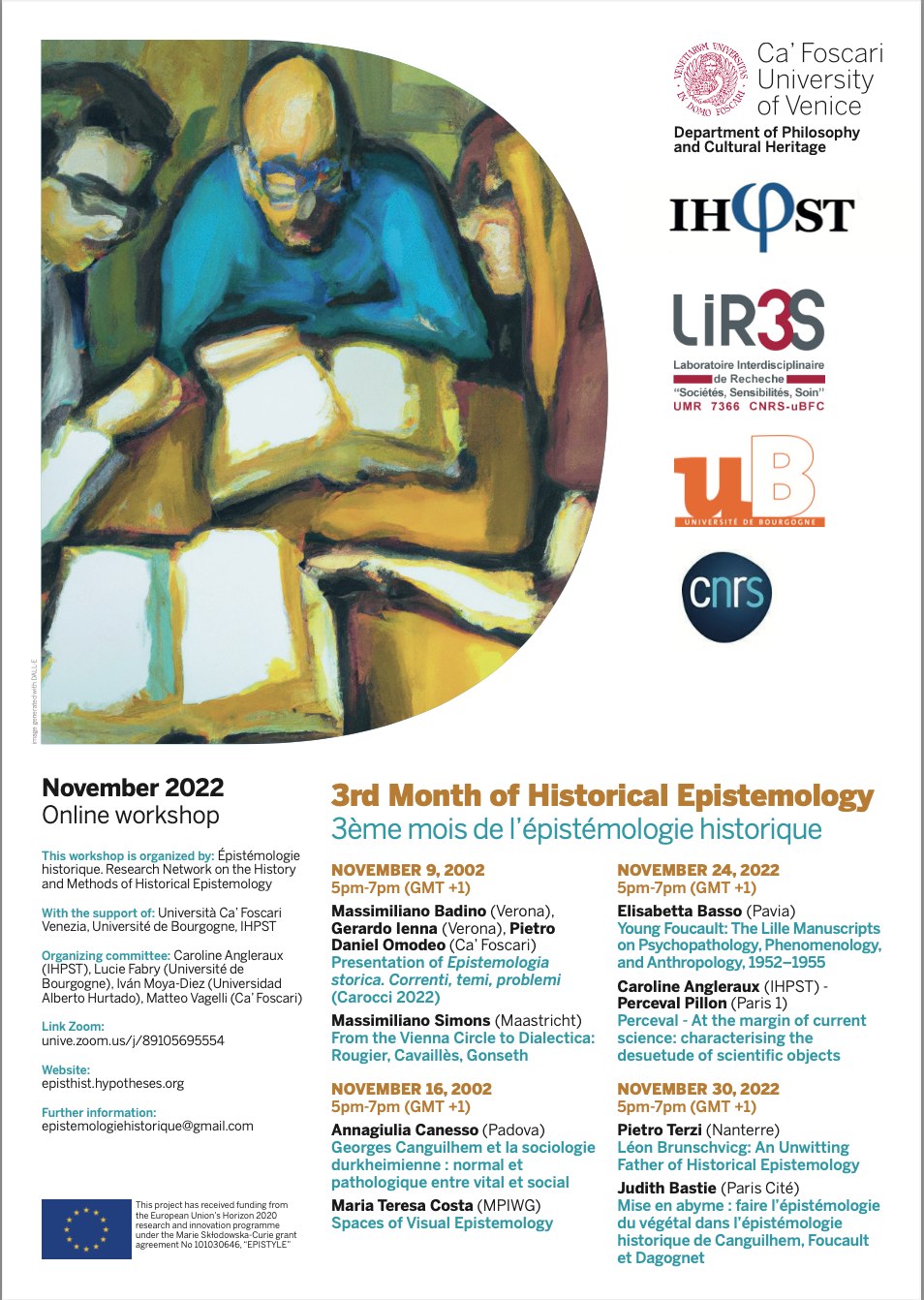
3ème mois de l’épistémologie historique – Novembre 2022

Denton, J.M., Abes, E.S.
The Art of Masked Advocacy: The Care of the Self of Gay College Men Living with HIV (2022) Journal of College Student Development, 63 (4), pp. 383-398.

DOI: 10.1353/csd.2022.0033

Abstract
This arts-based narrative in/queer/y explores the subjectivity of gay college men living with HIV through the stories and art of two participants. Despite their significantly different lives, the two men shared a subjectivity that was also reflected in the lives of other participants. Care of the self reflects Foucault’s search for a way of life that resisted normalizing discourses of identity and served as our conceptual framework. Homophobic AIDS discourse, which manifested as institutional silence about the presence of students living with HIV on college campuses, and homonormative discourses of gay respectability created an environment of contempt. This environment resulted in a care of the self style we call the art of masked advocacy. This art involved advocating for themselves and other students living with HIV while attempting to mitigate contempt. Combating institutional silence and other forms of contempt for gay men living with HIV creates individual and institutional tensions, which we explore. © 2022, Johns Hopkins University Press. All rights reserved.


Vieru, G.
Plateforme de rencontre: Michel Foucault et Michel Houellebecq
(2022) Revista Transilvania, 2022 (6-7), pp. 110-115.

DOI: 10.51391/trva.2022.06-07.13

Abstract
The present text aims to analyse the body concept, as it is illustrated in the novel Platform, by Michel Houellebecq. For this, we will need, first of all, some clarifications of the hybrid literary genre that this novel presents, it constituting the track of our analysis: this new form of autofiction will lead us to the bridges between the novelist and the philosopher Michel Foucault in what regarding the status and power of the body in late postmodernism. Being published in 2001, the novel offers the necessary tracks for such an interpretive analysis, in which certain positions related to sexuality, society and the geopolitical context will be confronted and debated, with a view to confirming or, why not, denying the influence that the French philosopher had, over the years, in the sphere of affirmation of the novelist Michel Houellebecq. © 2022, Complexul National Muzeal Astra Sibiu. All rights reserved.

Author Keywords
autofiction; biopolitics; body; Foucault; Houellebecq

Castro-Gomez, S.
The Pervert’s Guide to Political Philosophy: Agonism and the Ontology of Power
(2022) Critical Horizons

DOI: 10.1080/14409917.2022.2104079

Abstract
This article is a slightly modified version of the first part of Chapter 4 of Revoluciones sin sujeto. Slavoj Žižek’s y la crítica del historicismo posmoderno (Madrid: Akal, 2015) translated by Douglas Kristopher Smith and Nicolas Lema Habash. This text seeks to overcome the scission between Slavoj Žižek and Michel Foucault by challenging the notion that Foucault lacks an ontology of power, beyond contingent historical processes. By exposing the underlying Nietzschean relational ontology of struggle—as distinct from a fundamental, positive grounding—in Foucault’s work, the piece shows how this aspect has been largely misunderstood—including by Žižek himself. Furthermore, it demonstrates how this agonistic ontology of human experience can serve to shed light on Žižek’s notion of the incompleteness of the subject by bringing it into the realm of politics. © Critical Horizons Pty Ltd 2022.

Author Keywords
agonism; foucault; political thought; transcendental subject; Žižek