
Foucault News

News and resources on French thinker Michel Foucault (1926-1984)

Kurtuluş, G. & İnci, M. (2023). NEOLİBERALİZMİN BORÇLU İNSANINA DAİR ELEŞTİREL BİR ÇÖZÜMLEMENİN ÇÖZÜMLEMESİ: SQUID GAME, Marmara Üniversitesi İktisadi ve İdari Bilimler Dergisi, 44 (2) , 303-315 . Retrieved from https://dergipark.org.tr/en/pub/muiibd/issue/74273/1225246

Abstract
Neoliberal politikalardan hareketle, finansın artan rolü ve borçlu bireyin normalleştirilmesi üzerine tartışmalar devam etmektedir. Bununla birlikte, neoliberalizmin inşası üzerine yapılan eleştirel çalışmalar artık sadece akademik araştırmalarla sınırlı kalmamakta; günümüz iletişim araçları aracılığıyla sayıca artmaktadır. Bunun çarpıcı bir örneği, 2021 yılının Eylül ayında bir dijital platform aracılığıyla yayına giren Squid Game dizisidir. Dizide Güney Kore’nin gerçek bir borç krizi yaşadığı yansıtılmaktadır. Aynı zamanda, neoliberalizm altında yoksullaşan bireylerin çaresizliği betimlenmektedir. Bu çalışmanın amacı, neoliberalizmin borçlu insanının iktidar, para ve ölüm ilişkisi çerçevesinde diyalektik bir çözümlemesini ortaya koymaktır. Bu çözümleme, Güney Kore ekonomisinde yaşanan neoliberal dönüşüm sürecini temel almakta ve Squid Game dizisindeki oyun metaforu ile ilişkilendirmektedir.

Keywords
Borç, Foucault, İktidar, Oyun, Para, Squid Game

A critical analysis of the neoliberal debtor: Squid Game

Abstract
Debates continue on the increasing role of finance and the normalization of the debtor individual based on neoliberal policies. Critical studies on the construction of neoliberalism are no longer limited to academic research; increasing through mass media. A dramatical example is the Squid Game series, which was released on a digital platform in September 2021. It is reflected in the series that South Korea is experiencing a real debt crisis. At the same time, the helplessness of individuals impoverished through neoliberalism is depicted as a cause and effect relationship. The aim of this study is to present a dialectical analysis of the debtor of neoliberalism within the framework of the relationship among power, money, and death. This analysis is based on the neoliberal transformation process in the South Korean economy and relates it to the game metaphor in the Squid Game series.

Strausz, Erzsébet (2022) Writing with Foucault: openings to transformational knowledge practices in and beyond the classroom, Critical Studies on Security
DOI: 10.1080/21624887.2022.2134698

ABSTRACT
This article engages questions of authority and authorship in the discipline and the IR classroom, driven by a search for affirmative horizons within critical scholarship and academic practice. Prompted by a series of ‘failures’ attached to the social and disciplinary performance of ‘expertise’ in the context of violent conflict, I explore the practice of writing as it unfolds from Michel Foucault’s lesser cited essays and interviews as a generative, creative resource. I follow Foucault in breaking down the normalised perceptions of the ‘author function,’ revealing writing as an act that diagnoses, discovers, and potentially transforms writer, reader and the social structures that the writing addresses. Foucault’s experimental ethos brings to light the complex life worlds of sense-making through the vehicle of writing. It also invites us to embrace the transgenerational heritage that quietly structures our relationships to knowledge together with the multiple selves that arise and are co-present in the text. I enter such processes of negotiation and transgression in Foucault’s work and my own writing through a series of vignettes, which aim to actualise the ‘method’ these gestures may harbour for making ‘uncommon sense’ and re-inhabiting research and pedagogical practice as continuous, self-reflexive and self-authori(zi)ng journeys.

KEYWORDS:
Foucault, author function, narrative writing, critical pedagogy, creative methods, everyday IR

Adamiak, M.
Being otherwise: On the possibility of a non-dualistic approach in feminist phenomenology
(2022) Technoetic Arts, 20 (1-2), pp. 11-25.

DOI: 10.1386/tear_00078_1

Abstract
This article reflects on the current philosophical tendency to construct non-dualistic subjectivity models in response to the criticism of the traditional authoritarian human subject. Following thinkers such as Emmanuel Lévinas, Michel Foucault or Jacques Derrida, the literature has largely identified traditional metaphysics based on dualistic hierarchies as the major source of violence. Perceiving phenomenology as a method that focuses on the concepts of the lived experience and situatedness, I combine this approach with the feminist calls for dismantling the hierarchical relationship of subjectivity to the world. I draw on the concepts of Sonia Kruks, Linda Martin Alcoff, Sara Heinämaa, Judith Butler, Bonnie Mann and Johanna Oksala to inquire how dualism-overcoming phenomenology can be applied to feminist thought. I focus in particular on the approach that Oksala outlines in her book, Feminist Experiences: Foucauldian and Phenomenological Investigations, where she proposes a transcendental view on feminist experience. Intriguingly, she understands transcendental as situated – historically, culturally and politically. Consequently, my final question concerns the possibility of combining the two usually conflicted approaches: transcendental and historical regarding the fundamental phenomenological distinction between the empirical and the transcendental.

Author Keywords
gender; lived experience; metaphysics; situatedness; subjectivity; transcendentalism

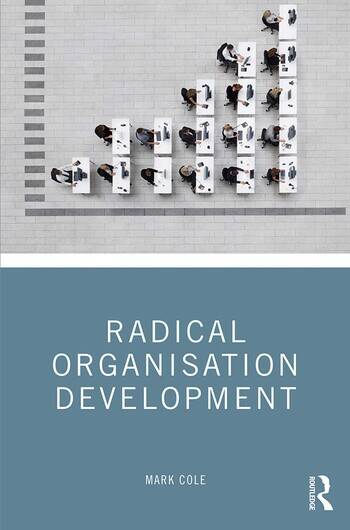
Mark Cole, Radical Organisation Development, Routledge, 2020

Book Description
Contemporary organisation development (OD) in practice draws on sophisticated theory and tools to advance organisational change, using a range of concepts and techniques including positive psychology, appreciation, and active engagement with the workforce. OD is considered to be humanistic and, as a result, progressive. Mark Cole’s original and thought-provoking treatise points at a hole at the heart of OD practice: it fails to consider the role of power in the workplace – and the result is disempowering.

Drawing from critical theory as a radical means to redefine practice, Mark Cole exposes this paradox and reveals the significant limitations and negative impacts of current OD practice. We need to replace the idea of the organisation with a focus on active human organising to enable individuals within systems to effect change from the grassroots up: this concept is Radical OD.

Essential reading for students, practitioners, and academics of OD; the wider HR community, and all with an interest in developing their understanding of organisational life, this ground-breaking manifesto offers unique and challenging insight into the corporate presence of OD – and challenges the willing reader to reimagine the focus and intent of this work.

Table of Contents
Acknowledgements, Chapter 1 – Introduction, Chapter 2 – A Foucauldian preamble, Chapter 3 – A genealogy of the organisationally developed workplace, Chapter 4 – What does OD achieve? Chapter 5 – Towards a truly radical OD practice, Chapter 6 – And we land, where? Epilogue, Index

Author
Mark Cole is an OD practitioner with over 30 years’ experience working with people and change management in organisations. A published author in both books and journals, he currently works at the NHS London Leadership Academy, where he focuses on organisation and leadership development; systems thinking in the workplace, and supporting meaningful and impactful workforce engagement.

Psychiatry and the Selves We Might Become: An Interview with Sociologist Nikolas Rose, Mad in America, 19 August 2020

MIA’s Ayurdhi Dhar interviews the well-known sociologist of medicine, Nikolas Rose, about the role psychiatry plays in shaping how we manage ourselves and our world.

ikolas Rose is a professor of Sociology in the Department of Global Health and Social Medicine at King’s College London. His work explores how concepts in psychiatry and neuroscience transform how we think about ourselves and govern our societies.

Initially training as a biologist, Rose found his subjects unruly: “My pigeons would not peck their keys, and my rats would not run their mazes. They preferred to starve to death.” He moved on to study psychology and sociology and has become one of the most influential figures in the social sciences as well as a formidable critic of mainstream psychiatric practice.
[…]

Rose builds on the work of philosopher Michel Foucault to reveal how concepts in psychiatry and psychology go beyond explanation to construct and construe how we experience ourselves and our world. Consistent with Foucault’s oft-quoted adage, “My point is not that everything is bad, but that everything is dangerous,” Rose’s work avoids simplistic explanations of why and how the mental health fields go awry and instead examines how injustices can happen without unjust people. In this way, his work often transcends critique and imagines new possibilities and ways of thinking about “mental health,” “normality,” “brains and minds,” and, ultimately, the selves we might yet become.
[…]

Dhar: Foucault’s work highlights that it was not simply that doctors had expert psychiatric knowledge, but instead, their stature created expertise. Similarly, it was not that asylums were healing, but because people were put in these places, they came to be seen as places of treatment.

Rose: Foucault points out that doctors gained control of the asylum not because they had great expert knowledge about madness, but because they were considered to be wise people in light of a series of scandals around the commercialization of asylums and their terrible conditions. Europe and North America began to regulate how people got into asylums and decided it was obviously through the doctors because they considered them wise trustworthy people.

Foucault also helped us question the whole idea of “origins.” Birth of the Clinic showed that the doctor’s “clinical gaze” emerges as a consequence of a whole series of contingent things that happened at that time, such as changes in French laws of assistance. When people were sick and needed free healthcare, they had to go into hospitals.
[…]

Herman Westerink (2020) The obligation to truth and the care of the self: Michel Foucault on scientific discipline and on philosophy as spiritual self-practice, International Journal of Philosophy and Theology, 81:3, 246-259,
DOI: 10.1080/21692327.2020.1749871

ABSTRACT
It has often been argued that Foucault’s turn to antique and early Christian care of the self, spiritual self-.practices and truth-telling (parrhesia) results from inquiries into the confession practices and pastoral power structures in the context of a genealogy of the desiring subject. This line of reasoning is in itself not incorrect, but – this article claims – needs to be complemented with an account of Foucault’s philosophical quest for freedom and for conditions, possibilities and modes of thinking and acting differently vis-à-vis the normalizing regimes of power in science and, hence, in philosophy as an academic discipline. In this context a first turn to antique philosophy seen as a ‘way of life’ constructed through ascetic practices can be detected already writings from the late 1960s and early 1970s. Although indeed the project of the history of sexuality moved in a direction than Foucault had foreseen in the first volume published in 1976, earlier reflections on the need for free and critical philosophical thought relative to scientific ‘disciplines’ already prelude the later inquiries into care of the self, self-practices and parrhesia as productive for a critical philosophical attitude.

KEYWORDS: Foucault care of the self truth spirituality discipline critique

Rony K. Pratama, Genealogi Hoaks Indonesia, EA Books, 2021

English abstract and title below

Bagaimana penciptaan dan perubahan makna hoaks dari momen-momen penting yang menandainya? Siapa saja aktor penting yang membentuk hoaks dalam sepuluh tahun terakhir? Bagaimana pesan berantai berisi ancaman santet membuat geger masyarakat? Masih ingat kicauan @TrioMacan2000? Apa agenda ekonomi-politik di balik ramainya industri pemengaruh dan pendengung?

Rony K. Pratama dua tahun terakhir serius mempelajari bidang kajian budaya dan media. Meski sebelumnya fokus di ranah pendidikan bahasa dan sastra Indonesia, perpindahan minatnya itu justru memperluas dimensi penelitian dan penulisan yang belakangan di hasilkan. Penelitian termutakhirnya bertajuk Genealogi Hoaks di Indonesia di bawah bimbingan Profesor Faruk. Sampai sekarang juga masih aktif menulis di CakNun.com. Minimal satu tulisan perminggu. Lima tahun belakangan tulisannya dimuat pula di Kompas, Bernas, Kedaulatan Rakyat, The Jakarta Post, Solo Pos, Jawa Pos, dan jurnal ilmiah terindeks. Karya tulisnya dapat ditengok di researchgate.net/ronykpratama maupun uny.academia.edu/ronykpratama. Dapat disapa via surel ronykpratama@ icloud.com.

Rony K. Pratama, Genealogy of Indonesian Hoaxes

This study aims to examine hoax discourse in the Indonesian context. The two problem formulas studied are as follows. Firstly, how is the discursive formation of hoaxes engendered? Secondly, what is the political economy agenda accompanying the formation process of hoaxes in Indonesia? Using Foucault’s genealogical method, this research explores archives from 2008 to 2021, most taken from online media. The researcher focuses on the state’s dominant power based on their discursive and non-discursive practices, including political events, institutions, and economic processes. Genealogical analysis in this research looks at the process of constituted hoax discourse, and it focuses on power relationships in society as represented through language and practices. The research results are as follows.

Firstly, the hoax discourse endures a narrowing, widening, and shifting, which cannot be separated by the discursive and non-discursive formations that make it up. During the formation process, there were various institutions and authoritative figures: the Indonesian Ulema Council (MUI), Indonesian Press Council (Dewan Pers), Republik of Indonesia State Intelligence Agency (BIN), Indonesian Ministry of Communication and Informatics (Kominfo), Coordinating Ministry for Political, Legal, and Security Affairs of the Republic of Indonesia (Kemenko Polhukam), shaman, police, and cyber security expert who have effectively shaped and defined the form of hoaxes in Indonesia. Moreover, the discursive formations delineate legal discourse, astronomy, religion, Pancasila (Five Principles of the Indonesian state), journalism, and education. All of these discursive formations have been descended from traditional institutions and figures. Secondly, there are two political economy agendas. They are controlling people and their social media. These agendas are carried out by the Jokowi (Indonesian President) regime to create a new developmentalism discourse. Dominating the people and their social media could effectively accelerate the economic and political stability of the developmentalism discourse.

Heterotopia by Natasha Barrette

Review by Agata Kik, The Quietus, March 17th, 2022
Acousmatic composer Natasha Barrette makes musique concrète feel like a thrilling adventure film, finds Agata Kik

[Article includes music from the album]

Heterotopia is an intriguing investigation into the sculpturing and spatialisation of sound, carried out by acclaimed acousmatic musician Natasha Barrett. Released on Persistence of Sound, with a palette embracing musique concrète, field recordings and electroacoustic music, the album refuses to be put into any one category. The sound is so vividly visual and its textures so tactile, Heterotopia feels more like an adventure movie than a mere act of listening.

[…]
Relating to the concept by philosopher Michel Foucault, who’s term ‘heterotopia’ pointed to the fact that there are still spaces in the social system that seem too strange to fit into the rigid regulations and prescribed dynamics of order, Natasha Barrett uses the album as a Foucault’s metaphorical mirror, containing worlds within worlds, reflecting sounds from objects, distorting the images of the material reality and the surrounding environment.

Clifton, J., Jacobs, G., Valeiras-Jurado, J., Vandendaele, A.
Governmentality-in-action The pursuit of happiness and identity-work in graduate career coaching interaction
(2022) Language and Dialogue, 12 (3), pp. 335-359.

DOI: 10.1075/ld.00117.cli

Abstract
Foucault’s notion of governmentality has been the focus of much research. However, little work provides an account of how governmentality is enacted as social practice. Using transcripts of naturally-occurring talk taken from a face-to-face coaching session and text taken from a career consultant’s website as data, the purpose of this paper is to make visible, and thus analysable, the way in which governmentality and the regulation of identities are enacted. In order to do this, we use critical discursive psychology as a method. Findings indicate that the coach is talked into being as an expert who diagnoses a ‘problem’ concerning the coachee’s career path and provides advice on how to solve the ‘problem’. This advice, drawing on wider social Discourses of happiness at work, regulates the identity of the coachee by prescribing acceptable ways of thinking about, and acting on, the self and so enacts governmentality.

Author Keywords
career coaching; critical discursive psychology; deontics; epistemics; identity; interpretive repertoire

Giorgi Vachnadze, Gaming: A Techno-Cultural Archaeology, Blue Labyrinths, January 9, 2023

Part I: A Prototype Demonstration
I would not be the first, nor the last person to take Michel Foucault’s writings on power, bio-politics, techniques of self-transformation, discipline, subjugation, etc., and apply them to the domain of digital games. It may be far from trivial to speak of video games as games of power and social normalization, as forms of organized or staged transgressions, instruments designed for the venting or the production of violence and so forth, but it wouldn’t exactly be a ground-breaking rupture in the literature on game studies either. The close association between gaming and the military-industrial complex has been noted, emphasized and reemphasized by several scholars in the field. Genealogies of Games are still a buzzword (albeit of a certain minor discourse) in academia and for a good reason too. It is not that difficult to see that we are governed through a kind of gaming apparatus – questions of resistance and subversion notwithstanding – it is quite intuitive to think that game narratives, level designs, avatar construction and different aspects of the gamer-subject pragmatics, tend to feed into a particular consumer-citizen disciplinary matrix. But I want to take a different approach.
[read more]

Giorgi Vachnadze is a philosopher specializing in Foucault and Wittgenstein studies. He graduated with a Master’s Degree from the University of Louvain. Former editor and peer-reviewer for the Graduate Student Journal of philosophy “The Apricot”, he currently works at an addiction and rehabilitation centre in Tbilisi (Georgia) and the Tbilisi State University Library. He is a regular contributor to the Lawn Chair Philosophy Foundation, working in parallel on various topics in Media Archaeology, Game Studies, American Pragmatism and Educational Policy.