Foucault News

News and resources on French thinker Michel Foucault (1926-1984)

stuartelden's avatarProgressive Geographies

Mettre en ligne, annoter et exploiter les fiches de lecture de Michel Foucault – Archive ouverte HAL

Marie-Laure Massot, “Mettre en ligne, annoter et exploiter les fiches de lecture de Michel Foucault“. Master. Atelier autour des archives, Centre documentaire du CAPHES, France. 2023. ⟨hal-04057849⟩

Avec près de 20 000 feuillets numérisés et mis en ligne, la plateforme Eman a permis au projet Foucault fiches de lecture de diffuser très largement le fonds Foucault de la BnF. Nous verrons comment cet outil modulaire a pu être adapté, moins pour la production des données de description et d’indexation que pour leur exposition et exploitation. En particulier, nous présenterons la chaîne de traitement et l’articulation avec les autres outils du projet FFL, le prototype de plateforme collaborative et Transkribus, et les développements informatiques réalisés pour Eman au cours du projet.

View original post

Michel Foucault : qu’est-ce que la philosophie?, Actualité: l’univers du livre, 18/04/2023

The first 26 pages of the uncorrected proofs to the book are attached to this article.

Le Discours philosophique propose ainsi une nouvelle manière de faire l’histoire de la philosophie, qui la décentre du commentaire des grands philosophes. […]

Les éditions du Seuil nous en proposent les premières pages

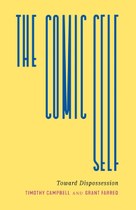
Timothy Campbell and Grant Farred, The Comic Self: Toward Dispossession, University of Minnesota Press, 2023.

Challenging the contemporary notion of “self-care” and the Western mania for “self-possession,” The Comic Self deploys philosophical discourse and literary expression to propose an alternate and less toxic model for human aspiration: a comic self. Timothy Campbell and Grant Farred argue that the problem with the “care of the self,” from Foucault onward, is that it reinforces identity, strengthening the relation between I and mine. This assertion of self-possession raises a question vital for understanding how we are to live with each other and ourselves: How can you care for something that is truly not yours?

The answer lies in the unrepresentable comic self. Campbell and Farred range across philosophy, literature, and contemporary comedy—engaging with Socrates, Burke, Hume, Hegel, Marx, Nietzsche, Heidegger, Derrida, Deleuze, and Levinas; Shakespeare, Cervantes, Woolf, Kafka, and Pasolini; and Stephen Colbert, David Chappelle, and the cast of Saturday Night Live. They uncover spaces where the dispossession of self and, with it, the dismantling of the regime of self-care are possible. Arguing that the comic self always keeps a precarious closeness to the tragic self, while opposing the machinations of capital endemic to the logic of self-possession, they provide a powerful and provocative antidote to the tragic self that so dominates the tenor of our times.

Timothy Campbell is professor of Italian at Cornell University. He is the author of Improper Life: Technology and Biopolitics from Heidegger to Agamben and Wireless Writing in the Age of Marconi (both from Minnesota).

Grant Farred is author of several books, including An Essay for Ezra: Racial Terror in America, Martin Heidegger Saved My Life, and Only a Black Athlete Can Save Us Now (all from Minnesota).

PRAISE FOR THE COMIC SELF
“Intelligent, persuasive, and compelling, The Comic Self transcends disciplinary boundaries, hovering somewhere between philosophy, theory, and criticism. Timothy Campbell and Grant Farred offer a clear notion of the comic self that they then proceed to brilliantly embody in their own writing, ingeniously defining the comic self not in sheer opposition to the tragic self but in a kind of dialectical relation against it.” — Dimitris Vardoulakis, author of Spinoza, the Epicurean: Authority and Utility in Materialism

“A bracing and beguiling set of reflections, intense and playful, on the possibilities and parameters of the comic self. The authors make a passionate and principled plea for dispossession, with one eye trained on its genealogy and another on its charged present, real and virtual.” — Ian G. Balfour, York University

Alice Leal & Philip Wilson (2023) A tale of two disciplines? Philosophy in/on translation, Perspectives, 31:1, 1-15,
DOI: 10.1080/0907676X.2023.2148984

ABSTRACT
We describe the genesis of this special issue on ‘philosophy in/on translation’: a symposium led to the formation of a successful research group. The interface between philosophy and translation studies has become a fruitful research field, as evidenced by the growing number of conferences and publications. Research into translation and philosophy addresses three topics, as identified by Anthony Pym: what philosophers have said about translation; how translation theorists turn to philosophy to support their ideas; and the translation of philosophical texts. We argue for a fourth link: that, following Derrida, the implications of (un)translatability shape the very notion of philosophy. Five future research directions are mapped in detail: the move beyond the western canon, as the academy engages with the process of decolonisation; epistemic justice, as researchers interrogate and reject Anglophone models; substantive theories of translation that will complement analytical enquiry; the use of translation as a philosophical tool; and the new interface between translator studies and philosophy. We describe in detail the contents of the ten chapters of this special issue and show how the authors both investigate phenomena and provide ways of moving research forward. An exciting time lies ahead for those who work in this interdisciplinary field.

KEYWORDS: philosophy, translation, canon, epistemic justice, translation theory, translator studies

Miro Griffiths. Declare Independence. International Journal of Disability and Social Justice. 2023. Vol. 3(1):24-41.
DOI: 10.13169/intljofdissocjus.3.1.0024

Open access

Abstract
This article presents an original and critical interrogation of how disabled activists establish claims and coordinate activities to progress the independent living agenda. The article achieves this by employing Beckett and Campbell’s (2015) concept of ‘oppositional device’, which is used to understand resistance practices and the technologies of power that coalesce around disabled people’s collective action. The article argues that the independent living concept could, similarly, be understood as an oppositional device and this holds potential for furthering the emancipatory claims of disabled people’s social movements. This allows for an understanding of Independent Living Movements as assemblages of technologies that open heterotopias, which engage in the experimentation of what disabled people can be and do through the ideas of independent living. The article draws on empirical data from a study exploring young disabled people’s views and experiences of disability activism across Europe to evidence the claims made.

Bloomfield, M.J., Manchanda, N.
Business, power, and private regulatory governance: Shaping subjectivities and limiting possibilities in the gold supply chain
(2023) Regulation and Governance

DOI: 10.1111/rego.12522

Abstract
To examine how private regulatory governance reproduces a market logic that always already circumscribes possibilities for radical change, we tarry with Michel Foucault’s notion of governmentality and his writings on power. We focus on two major initiatives created to regulate gold supply chains, subjecting their publicly released documents to a discourse analysis. This reveals subtle but tangible examples of how these initiatives discursively shape business preferences and possibilities for engaging with a social change agenda. Through a focus on how power circulating through these initiatives works to shape the identities and interests of business actors themselves, we contribute a new perspective to the literature on business, power, and private regulatory governance, one that highlights the ways through which these discourses both expand and limit business actors’ engagement in setting social agendas and the mixed and sometimes seemingly contradictory implications for the public interest. © 2023 The Authors. Regulation & Governance published by John Wiley & Sons Australia, Ltd.

Author Keywords
business power; discourse analysis; Foucault; gold supply chain; private regulatory governance

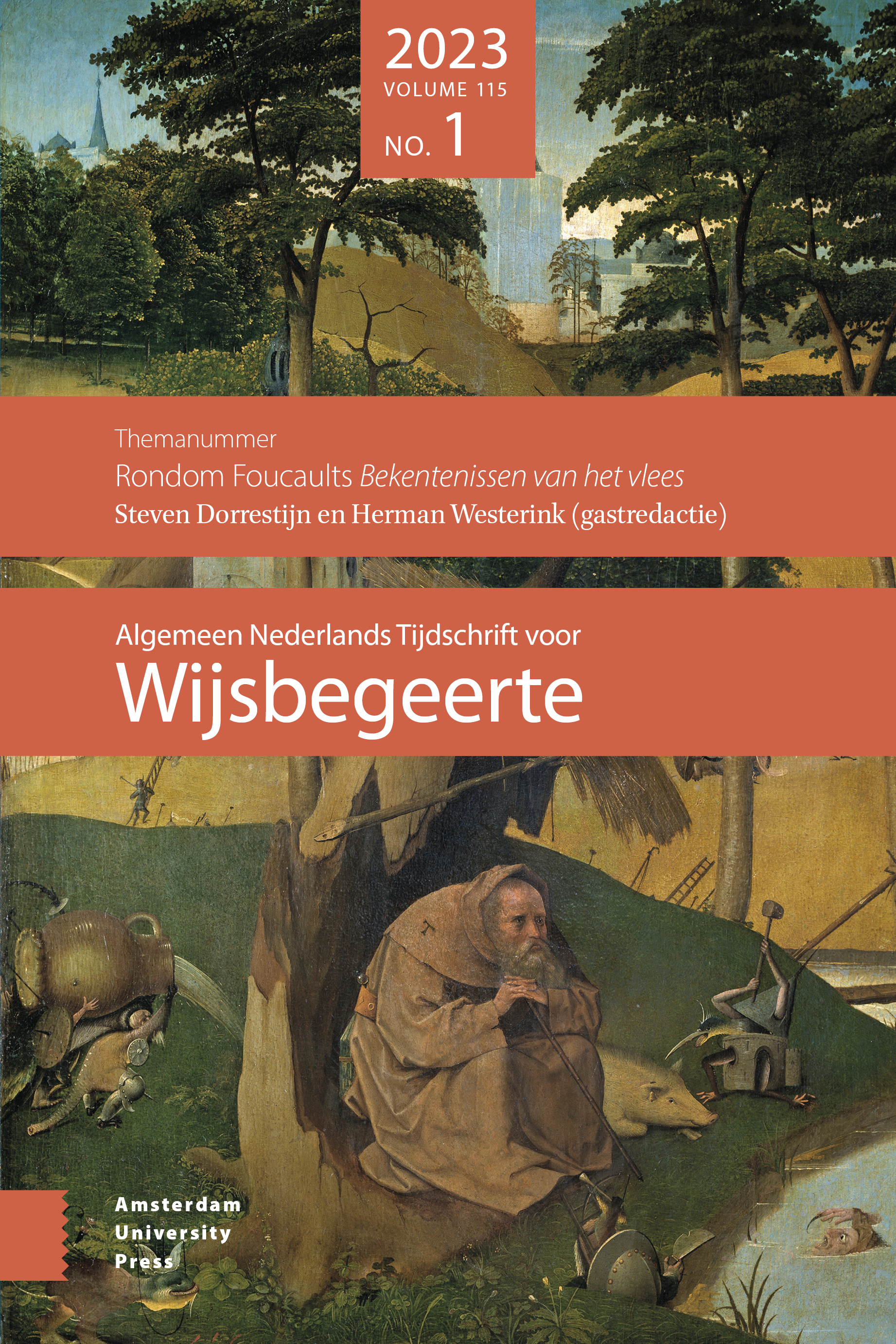
Cover depicting “The Temptation of Saint Anthony” (1500-1525) by Hieronymus Bosch (Museo del Prado, Madrid).

Algemeen Nederlands Tijdschrift voor Wijsbegeerte – Volume 115, Issue 1, 2023

Introduction in English

The focus of this special issue is the 2018 posthumous publication of Michel Foucault’s book manuscript Confessions of the Flesh: History of Sexuality, Volume 4 (Dutch transl. Jeanne Holierhoek, 2020). This study by Foucault examines pastoral care, ethics and sexual desire in early Christianity. Compared to his work on power and knowledge in modernity this meant a shift of period and topic. At a Symposium in 2021, Foucault experts from the Netherlands and Flanders discussed the book from the broad variety of perspectives and disciplines relevant for the book: from philosophy, sexual ethics, feminism and psychoanalysis to the history of religion. Also the importance for present day questions was discussed: for sexuality and gender, ethics as an art of living, and coping with the temptations of technology. The lectures were elaborated into the texts which can now be read in this special issue. The articles are all in Dutch language, with abstracts in English that can be read on this site

Redactioneel
Rondom Foucaults Bekentenissen van het vlees
Authors: Steven Dorrestijn & Herman Westerink
https://doi.org/10.5117/ANTW2023.1.001.DORR

Artikelen

De Onvoltooide
By Jeanne Holierhoek
https://doi.org/10.5117/ANTW2023.1.002.HOLI

Pastorale macht en zelf-technieken: Foucault en de ascese van de woestijnvaders
By Danny Praet
https://doi.org/10.5117/ANTW2023.1.003.PRAE

Foucault and the problematics of the will in Cassian and Augustine
By Herman Westerink
https://doi.org/10.5117/ANTW2023.1.004.WEST

Verzet en maagdelijkheidstechnieken
By Liesbeth Schoonheim
https://doi.org/10.5117/ANTW2023.1.005.SCHO

Wat doet de spirituele strijd in de Bekentenissen van het vlees?
By Machiel Karskens
https://doi.org/10.5117/ANTW2023.1.006.KARS

Van Geert Groote tot Ignatius van Loyola
By Michiel Leezenberg
https://doi.org/10.5117/ANTW2023.1.007.LEEZ

Het geluk van de niet-identiteit
By Marli Huijer
https://doi.org/10.5117/ANTW2023.1.008.HUIJ

‘Subject van zijn daden’: Lacaniaanse reflecties bij een foucaultiaanse levenskunst
By Marc De Kesel
https://doi.org/10.5117/ANTW2023.1.009.KESE

Met Foucault over subjectivering, verleiding en techniek
By Steven Dorrestijn
https://doi.org/10.5117/ANTW2023.1.010.DORR

Recensies
Bruno Latour (2021), Waar ben ik? – Lockdownlessen voor aardbewoners, Amsterdam: Octavo, 158 pp., € 19,50
By Emma Deckers
https://doi.org/10.5117/ANTW2023.1.011.DECK

Frank Meester & Aline D’Haese (2021), De zijkant van de filosofie. Een dialoog over vrouwelijk denken. Amsterdam: Boom, 208 pp., € 22,50
By Katelijne Malomgré
https://doi.org/10.5117/ANTW2023.1.012.MALO

Michel Foucault, Le Discours philosophique, Édition établie, sous la responsabilité de François Ewald, par Orazio Irrera et Daniele Lorenzini – Gallimard/Seuil/EHESS, 2023

Qu’est-ce que la philosophie et quel est son rôle aujourd’hui ? Entre juillet et octobre 1966, quelques mois après la parution des Mots et les Choses, Michel Foucault, dans un manuscrit très soigneusement rédigé mais qu’il ne publiera pas, apporte sa réponse à cette question tant débattue.
À la différence de ceux qui, à l’époque, s’attachent à dévoiler l’essence de la philosophie ou à en prononcer la mort, Foucault l’appréhende, dans sa matérialité, comme un discours dont il convient de dégager l’économie eu égard aux autres discours (scientifique, fictif, ordinaire, religieux) qui circulent dans un contexte donné.

Le Discours philosophique propose ainsi une nouvelle manière de faire l’histoire de la philosophie, qui la décentre du commentaire des grands philosophes. Nietzsche y occupe toutefois une place particulière car il inaugure une conjoncture où la philosophie devient une entreprise de diagnostic du présent. Il revient en effet désormais à la philosophie de dire, à partir de l’« archive intégrale » d’une culture, ce qui en fait l’actualité.

Si L’Archéologie du savoir, consacré aux enjeux méthodologiques d’un tel projet, s’y annonce, nulle part autant que dans Le Discours philosophique Michel Foucault n’aura explicité les ambitions de son programme intellectuel.

Jager, F., Perron, A.
How identity is produced and experienced in the context of mandated community-based mental health care: An application of the theories of Grosz and Foucault
(2023) Nursing Inquiry

DOI: 10.1111/nin.12552

Abstract
Despite changes to research and practice, that, to some degree, acknowledge that people are shaped by their contexts, the treatment of mental illness remains largely focused on interventions that take place at the level of the individual. Conceptualizing mental illness as something that resides in individuals can lead to reliance on neurobiological and psychotherapeutic solutions, and away from conversations about not only contextual causes of mental distress, but also sociopolitical solutions to mental distress. Further, it can lead to the use of mental health interventions that focus on the biology of an individual without a consideration for how those interventions themselves may have psychological, social, or political consequences that act to shape an individual’s identity, agency, and relationship to their community. This paper examines one medicolegal intervention, the community treatment order, using the philosophical work of Grosz and Foucault to consider how this intervention affects the experience and construction of identity, and the impact of this on an individual’s sense of agential membership in a community. This discussion aims to increase understanding of the individual and social implications of interventions for mental illness, and provide a conceptualization of the relationship between identity, agency, and ethics which can inform critical research and nursing practice more broadly. © 2023 John Wiley & Sons Ltd.

Author Keywords
agency; community treatment order; critical research; Elizabeth Grosz; ethics; identity; mental health care; Michel Foucault

terenceblake's avatarAGENT SWARM

1) INTRODUCTION

I am providing a translation of the incipit as reproduced at the end of a pre-publication review of Michel Foucault’s forthcoming book PHILOSOPHICAL DISCOURSE. The review was published online by Philosophy Magazine and discusses the ideas expressed therein chiefly in structuralist-demarcationist terms, given that the book focuses on enouncing the demarcations between philosophy, science, and literature.

This orienting perspective is perfectly normal, but it leaves out Foucault’s struggle with “structuralism” at that time (the manuscript was written between July and October 1966). In his interviews from that period Foucault moves rapidly from endorsing the claim that THE ORDER OF THINGS is structuralist to vehemently denying it. These hesitations exhibit a tension that is implicit not only in Foucault’s texts but in their reception, the tension between structuralism and post-structuralism.

We can see a further tension, closely tied to the first, between articulating the demarcations separating the different types…

View original post 470 more words