Foucault News

News and resources on French thinker Michel Foucault (1926-1984)

stuartelden's avatarProgressive Geographies

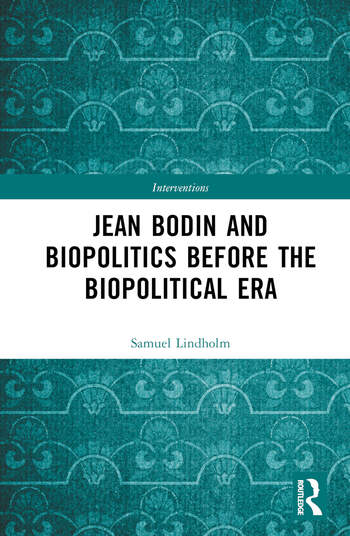
Samuel Lindholm, Jean Bodin and Biopolitics Before the Biopolitical Era – Routledge, September 2023

A prohibitively priced hardback only at this point…

This book offers fresh perspectives on the history of biopolitics and the connection between this and the technology of sovereign power, which disregards or eliminates life.

By analyzing Jean Bodin’s political thought, which acts as a prime example of early modern biopolitics and proves that the two technologies can co-exist while maintaining their conceptual distinction, the author combines Foucauldian genealogy with political theory and intellectual history to argue that Michel Foucault is mistaken in presuming that biopolitics is an explicitly modern occurrence. The book examines Bodin’s work on areas such as populationism; censors; climates, humors, and temperaments; and witch hunts.

This pioneering book is the first English-language volume to focus on the biopolitical aspects of Bodin’s work, with a Foucauldian reading of his political thought. It will appeal…

View original post 10 more words

CFP: MANCEPT Workshop – Causal Histories: The Role of Genealogical Inquiries in Moral, Social and Political Philosophy

Workshop format: in-person (we will consider a small number of online presentations for speakers from overseas)

Abstract deadline: June 5th, 2023

Workshop dates: 12-13 September 2023

Invited speakers: Matthieu Queloz (University of Basel), Alexander Prescott-Couch (University of Oxford), Benjamin De Mesel (KU Leuven), David Owen (Southampton)

Convenors: Francesco Testini (Jagiellonian University), Victor Braga Weber (UCL)

In recent years, the term ‘genealogy’ has been gaining currency in moral, social, and political philosophy, with several authors arguing that attending to the causal histories of certain beliefs, concepts or practices can contribute to their evaluation. Whether, how, and which genealogical methods can contribute to this end, however, is still subject of debate.

The issue cuts across traditional methodological borders. Authors working in the critical theory tradition generally agree that genealogical accounts can reveal something puzzling about their targets – although they disagree both on what these puzzling features are (Haslanger 2012, Srinivasan 2019), and on whether this revelation is an integral or only a propaedeutic component of critique (Koopman 2013, Lorenzini 2020). On the other hand, analytic philosophers tend to look at genealogies with an eye on gaining functional insights about their targets, but disagreements remain as to what these insights amount to and how they can be retrieved (cf. Smyth 2020 and Queloz 2021).

At the applicatory level, the debate is gaining just as much traction, with several authors using genealogies to elucidate, criticize or vindicate certain conceptions of – and views about – terrorism (Erlensbusch-Anderson 2018), adaptive preferences (Enoch 2020), liberalism (Testini 2021), property (Rossi and Argenton 2021), forward-looking responsibility (Alfano 2021) and reasonableness (Lawlor 2022).

This variety shows that genealogical approaches are set to become a key topic of discussion in practical philosophy broadly construed, and such a discussion promise to be a lively one, bringing scholars with different backgrounds together and getting philosophy in closer contact with empirical disciplines such as evolutionary anthropology, sociology, and cultural history, to name but a few.

This workshop aims at gathering scholars working on genealogical methods and their applications to explore potential links and synergies among different lines of enquiry. Topics to be discussed will include (but are not limited to):

  •        What role(s) does historical information play within genealogies that seek to reach normative conclusions? Is there room for philosophical fictions in genealogies? If so, of what kind?
  •        What relevant ends can genealogy pursue within moral, social, and political philosophy? Are any of these ends in tension with one another?
  •       How many varieties of genealogical investigation are to be found within the contemporary philosophical landscape? What (if anything) unites these forms of investigation, and where do the main differences between them lie?
  •        Are some genealogical endeavors self-defeating? How worried should genealogists be about committing the genetic fallacy?
  •        What different kinds of objects can be the target of genealogical enquiries?
  •        Do different objects of inquiry require different methodological approaches?
  •        Should we think of the methods and aims of genealogical inquiry within moral, social and philosophy as being consistent with normative theorization in such fields? If not, why?

Please send an email with an anonymised 600 – 800 word abstract to genealogy.mancept2023@protonmail.com by June 5th, 2023. Please, let us know in the email whether you plan to attend the conference in person or online. Also, please include a separate cover sheet with your paper title, contact details (name, email, institutional affiliation), and whether you intend to participate in person/online.

Pierre Dardot, Haud Guéguen, Christian Laval et Pierre Sauvêtre: Macron et la guerre civile en France, Diakritik, 1 mai 2023

On dit beaucoup de mal de Macron à propos du passage en force de la réforme des retraites. On le dit égotiste, arrogant et tout sauf habile. On oublie qu’il est l’homme de la situation, dont la fonction historique aujourd’hui consiste à poursuivre un projet qui le dépasse. Il convient en effet de se déprendre de la petite analyse « psychologique » pour considérer objectivement une politique qui, pour être brutale et parfois tragiquement irrationnelle, n’en a pas moins un sens précis dans l’histoire de nos sociétés. Les caractéristiques personnelles et même sociologiques d’un individu comptent à l’évidence mais seulement pour avoir fait de Macron ce chef de guerre qu’on admire ou qu’on déteste.
[…]

Certains ont cru à tort que le néolibéralisme n’était qu’une doctrine suffisamment hétéroclite ou incohérente pour ne pas avoir à trop s’en inquiéter. D’autres ont pensé que cette doctrine était déjà passée aux oubliettes et avec elles les politiques et les modes de gouvernement qui y trouvent leur rationalité, comme s’il avait suffi d’en constater les effets catastrophiques sur la nature et la société pour en être définitivement libérés. Autant d’erreurs accumulées d’analyse, qui ont conduit à beaucoup d’aveuglements. Il est urgent que l’on comprenne bien en quoi le néolibéralisme est une doctrine de guerre civile, au sens où Michel Foucault avançait en matière de méthode d’analyse du pouvoir que « la guerre civile est la matrice de toutes les luttes de pouvoir, de toutes les stratégies du pouvoir » (Michel Foucault, La société punitive. Cours au Collège de France, 1972-1973, EHESS-Gallimard-Seuil, 2013, p. 15) Ce que l’actuel gouvernement sait parfaitement bien, puisqu’il la met sciemment et systématiquement en œuvre tout en accusant les divers « ennemis de la république » d’en être responsables, selon un retournement qui a tout du déni.
[…]

Pierre Dardot, Haud Guéguen, Christian Laval et Pierre Sauvêtre sont les coauteurs du Choix de la guerre civile, Une autre histoire du néolibéralisme, Lux, 2021.

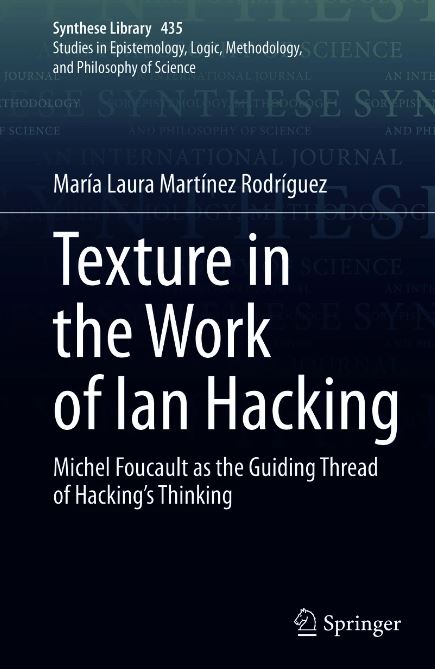
María Laura Martínez Rodríguez, Texture in the Work of Ian Hacking. Michel Foucault as the Guiding Thread of Hacking’s Thinking, Springer, 2021

About this book
This book offers a systematized overview of Ian Hacking’s work. It presents Hacking’s oeuvre as a network made up of four interconnected key nodes: styles of scientific thinking & doing, probability, making up people, and experimentation and scientific realism.

Its central claim is that Michel Foucault’s influence is the underlying thread that runs across the Canadian philosopher’s oeuvre. Foucault’s imprint on Hacking’s work is usually mentioned in relation to styles of scientific reasoning and the human sciences. This research shows that Foucault’s influence can in fact be extended beyond these fields, insofar the underlying interest to the whole corpus of Hacking’s works, namely the analysis of conditions of possibility, is stimulated by the work of the French philosopher.

Displacing scientific realism as the central focus of Ian Hacking’s oeuvre opens up a very different landscape, showing, behind the apparent dispersion of his works, the far-reaching interest that amalgamates them: to reveal the historical and situated conditions of possibility for the emergence of scientific objects and concepts.

Keywords
Ian Hacking’s thinking
Influence of Michel Foucault on Hacking’s work
Key nodes in Ian Hacking’s thought
Ian Hacking styles of scientific thinking & doing
Ian Hacking’s proposal for natural and human sciences
foucault and hacking
scientific realism
the philosophy of Francis Bacon

About the author
María Laura Martínez, PhD, is Adjunct Professor of the Department of History and Philosophy of Science at the Universidad de la República (Uruguay). The focus of her research are the History and Philosophy of Science and the History of Science in Uruguay. She has published articles in those areas and is author of 75 primeros años en la formación de los ingenieros nacionales. Historia de la Facultad de Ingeniería (1885-1960) [The first 75 years in the education of national engineers. History of the School of Engineering (1885-1960)] (2014) and Realismo científico y verdad como correspondencia: estado de la cuestión (2009) [Scientific realism and correspondence theory of truth; state of the art] (2009). She has received the National Prize of Literature in the category Philosophy Essays, from the Ministry of Education and Culture of Uruguay (2016).

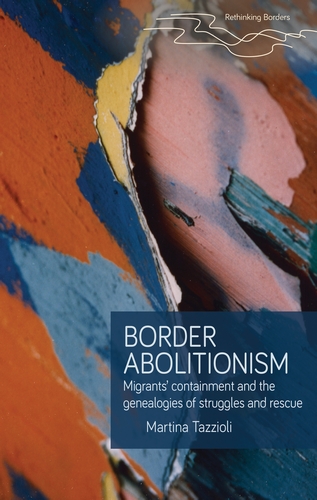
Martina Tazzioli, Border abolitionism. Migrants’ containment and the genealogies of struggles and rescue, Manchester University Press, 2023. Forthcoming July

Building on an abolitionist perspective, this book offers an essential critique of migration and border policies, unsettling the distinction between migrants and citizens. This is the only book that brings together carceral abolitionist debates and critical migration literature. It explores the multiplication of modes of migration confinement and detention in Europe, examining how these are justified in the name of migrants’ protection. It argues that the collective memory of past struggles has partly informed current solidarity movements in support of migrants. A grounded critique of migration policies involves challenging the idea that migrants’ rights go to the detriment of citizens. An abolitionist approach to borders entails situating the right to mobility as part of struggle for the commons.

Contents
Introduction
1 The zero-sum rights’ game: border abolitionism as an analytical gaze
2 ‘Confine to protect’: hybrid spaces of migration containment
3 Participatory confinement: extractive humanitarianism and asylum seekers’ unpaid labour
4 Towards a genealogy of migrant struggles and border violence
5 A history of mountain runaways and rescue: migrants at the Alpine border
Conclusion

Martina Tazzioli is Reader in Politics & Technology at Goldsmiths, University of London

In memoriam: Ian Hacking (1936-2023)
Published: May 10, 2023 Department of Philosophy, University of Toronto

See also the Daily Nous site

It is with deep sadness that the Department of Philosophy announces the passing of one of its most eminent members, Professor Emeritus Ian M. Hacking, CC, FRSC, FBA. The influential scholar, teacher, and prolific author—whose wide-ranging work probed foundational questions about the nature of concepts and who is credited with bringing a historical approach to the philosophy of science—passed away on May 10, 2023, after years of declining health.

Born in Vancouver in 1936, Hacking studied mathematics and physics at the University of British Columbia (BA, 1956) before moving on to the University of Cambridge, where he earned a bachelor’s degree (1958) and a PhD (1962) in Moral Sciences.
[…]

Hacking’s research achievements are legion: he has to his name 13 books translated into more than a dozen languages, as well as hundreds of articles. Uniquely, his work held sway outside of the discipline of philosophy as well. In addition to recognition in the social sciences and humanities, Hacking stood out as a philosopher who also attracted praise and respect in the sciences, seeing several of his essays included in annual collections of the best writing in mathematics. In addition, he found himself in constant demand as a public intellectual, penning pieces for newspapers and magazines such as the New York Review of Books.
[…]
A fuller obituary will be published on the Department of Philosophy site in the coming days.

M. Cecilia Oliveira, Leandro Siqueira, Digitalization between environmental activism and counter-activism: The case of satellite data on deforestation in the Brazilian Amazon, Earth System Governance, Volume 12, 2022.
https://doi.org/10.1016/j.esg.2022.100135.
(https://www.sciencedirect.com/science/article/pii/S2589811622000040)

Open access

Abstract:
This paper analyzes the uses of digital satellite data on deforestation in the Amazon region, drawing on poststructuralist studies of scientific knowledge practices and Science and Technology Studies (STS). Focusing on changes under the government of President Jair Bolsonaro, we argue that populist right-wing rhetoric, policies, and practices towards deforestation in the Amazon must be understood in the context of a broad and sophisticated effort to discredit and dismantle pre-existing knowledge infrastructures and transparency regime. These structures had developed over time with the aim of making deforestation visible and manageable. The dismantling of these structures is part of the effort to establish a competing alethurgy, i.e an assemblage of procedures and rituals that claim to manifest the “truth” about the Amazon. This new alethurgy depends, crucially, on a regime of hypertransparency which enables practices of environmental counter-activism. This new alethurgy promotes an extractivist use of the Amazon in which deforestation is an acceptable price to pay for economic development.

Keywords: Amazon; Satellite; Transparency; Truth regimes; Counter-activism; Alethurgy; Forest digitalization

Gordana Fontana-Giusti: Foucault and the language of architects, Listen Notes, April 20, 2023. Podcast.

In Season 2, Episode 28 of A is for Architecture, Gordana Fontana Giusti discusses her 2013 book, Foucault for Architects, published by Routledge, as part of the Thinkers for Architects series. Gordana is Professor of Architecture and Urban Design at Kent School of Architecture & PlanningUniversity of Kent, where she also serves as Deputy Head of School.

Foucault for Architects ‘concentrates on a number of historical and theoretical issues often addressed by Foucault […] in order to examine and demonstrate their relevancy for architectural knowledge, its history and its practice’. In an AA Files 26 essay from 1993, Paul Hirst suggested Foucualt’s relevance to architecture lay in his breaking down ‘the barrier between the common-sense category of objects and that of discourse: words, explanations, programmes, etc., which are held to be about objects. In architecture this yields the stubborn and conclusive distinction between buildings as objects, and architectural theories, programmes and teaching that are about buildings. This installs a split between architecture and architectural discourse. The building is an object or non-discursive entity around which float the words of discourse.’

Listen to Prof Gordana, and get some answers.
Read more…

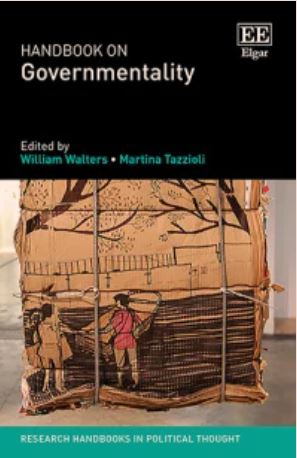
Handbook on Governmentality. Research Handbooks in Political Thought series
Edited by William Walters and Martina Tazzioli. Edward Elgar Publishing 2023

The Handbook on Governmentality discusses the development of an interdisciplinary field of research, focusing on Michel Foucault’s post-foundationalist concept of governmentality and the ways it has been used to write genealogies of modern states, the governance of societal problems and the governance of the self.

Bringing together an international group of contributors, the Handbook examines major developments in debates on governmentality, as well as encouraging further research in areas such as climate change, decolonial politics, logistics, and populism. Chapters explore how governmentality reshapes policy analysis as political practice, the relationship between Foucault’s ideas of government and postcolonial experiences, and how governmentality can illuminate discourse on the green economy and biopolitics. Analysing how contemporary socio-political issues including feminist politics, migration, and racialized medicine are interwoven with the concept of governmentality, this Handbook sheds light on the modern-day uses of Foucault’s work.

Providing a comprehensive overview of research on governmentality, this Handbook will be essential reading for students and scholars of development studies, geopolitics, political economy, organizational studies, political geography, postcolonial theory, and public policy. It will also be a key resource for policy makers in the field looking for a deeper theoretical understanding of the topic.

Keywords: Governmentality; Biopolitics; Neoliberalism; Foucault; Genealogy; Power

Part I: GOVERNMENTALITY: GENESIS, ENCOUNTER, TRANSFORMATION
Full access
Chapter 1: Foucault, governmentality, and the techniques of the self
Daniele Lorenzini

Chapter 2: The yoke of law and the lustre of glory: Foucault and Dumézil on sovereignty
Stuart Elden

Chapter 3: Governmentalizing ‘policy studies’
Carol Bacchi

Chapter 4: Governmentality and international relations: critiques, challenges, genealogies
Hans-Martin Jaeger

Chapter 5: Towards a postcolonial theory of crisis, neoliberal government, and biopolitics from below
Ranabir Samaddar

Part II: TALKING GOVERNMENTALITY

Chapter 6: Governmentality: a conversation with Wendy Brown, Partha Chatterjee and Nikolas Rose
Wendy Brown, Partha Chatterjee, Nikolas Rose, Martina Tazzioli, and William Walters

Chapter 7: Governmentality and beyond: an interview with Colin Gordon
Colin Gordon, Martina Tazzioli, and William Walters

Chapter 8: Governmentality in translation: an interview with Graham Burchell
Graham Burchell, Martina Tazzioli, and William Walters

Part III: GOVERNMENT AND ITS PROBLEMS

Chapter 9: The neoliberal welfare state
Ian Alexander Lovering, Sahil Jai Dutta, and Samuel Knafo

Chapter 10: Governmentality and security: governing life-in-motion
Jef Huysmans

Chapter 11: Secrecy beyond the state: governmentality, security and truth effects
Susanne Krasmann

Chapter 12: Governmentality and the subject of rights
Ben Golder

Chapter 13: Algorithmic governmentality: questions of method
Claudia Aradau

Chapter 14: Logistical power
Brett Neilson

Chapter 15: Governmentality and political ecology
Emanuele Leonardi and Luigi Pellizzoni

Part IV: GOVERNMENTALITY ACROSS NATIONS AND OTHER POLITICAL FORMATIONS

Chapter 16: Diminishing life: racialized medicine, neoliberalism, and precarity in the United States
Jonathan Xavier Inda

Chapter 17: French humanitarianism: governmentality and its limits
Miriam Ticktin

Chapter 18: EUrope’s border ensemble and the disorder of migrant multiplicities
Maurice Stierl

Chapter 19: Hukou and suzhi as technologies of governing citizenship and migration in China
Chenchen Zhang

Part V: GOVERNMENTALITY AND CONTESTATION

Chapter 20: Feminist politics and neoliberal governmentality: from co-option to counter-conduct
Srila Roy

Chapter 21: The practice of parrhēsia and the transformation of managerial governmentality
Richard Weiskopf

Chapter 22: Countering governmentality: enacting diverging territorialities by former enslaved people in Cauca, Colombia (1849-1886)
Cristina Rojas

Chapter 23: Insurgent politics: refugees, sans-papiers and deportees under asylum and migration laws
Clara Lecadet

Morales-Ladrón, M. On docile bodies: silence, control and surveillance as self-imposed disciplines in Anna Burns’ Milkman
(2023) Irish Studies Review

DOI: 10.1080/09670882.2023.2198081

Abstract
Anna Burns, the first Northern-Irish woman to have been awarded the Booker Prize for her novel Milkman in 2018 has been celebrated since then as a lucid and necessary voice in the contemporary panorama. Set in an unknown location in Northern Ireland, at a time when the Troubles were at its peak, the narrative defiantly targets at what appears to be sexual harassment, to further disclose layers of more subtle meanings related to sociopolitical (self-)control and surveillance, in an atmosphere of pathological silence. Informed by Michel Foucault’s theories, developed in his studies Discipline and Punish and The History of Sexuality, this article explores Burns’ novel in light of Foucault’s model of biopower, defined as a “technology of power centered on life,” within which the panopticon will be revisited. I will contend that silence, consequently, surfaces as both the voluntary alternative and the inevitable consequence of the imposition of regulatory practices on docile bodies, on a disempowered microstructure of inmates that facilitates the success of such technology of power. © 2023 Informa UK Limited, trading as Taylor & Francis Group.

Author Keywords
Anna Burns; docile bodies; Northern Ireland; panopticon; the Troubles