
Foucault News

News and resources on French thinker Michel Foucault (1926-1984)

repoJemima Repo (2015) The Biopolitics of Gender. Oxford and New York: Oxford University Press

  • Introduces a new theoretical and methodological approach to gender
  • Conducts a genealogy of gender similar to Foucault’s mid-twentieth century genealogy of sexuality
  • Argues that gender is an apparatus of biopower invented in the postwar period in order to regulate the reproduction of capital and population
  • Demonstrates how gender forges biopolitical connections between sexology, psychiatry, feminism, demography, economics, and public policy
  • Reconsiders the emancipatory potential of the idea of gender for feminist theory and politics today

Description
Michel Foucault identified sexuality as one of the defining biopolitical technologies of the nineteenth and twentieth centuries. As Jemima Repo argues in this book, “gender” has come to be the major sexual signifier of the mid-twentieth and early twenty-first century. In fact, in this historical excavation of the biopolitical significance of the term, she argues that it could not have emerged at any other time. Repo shows that gender is not originally a feminist term, but emerged from the study of intersex and transsexual persons in the fields of sexology and psychology in the 1950s and 1960s.

Prior to the 1950s gender was used to refer to various types of any number of phenomena – sometimes sex, but not necessarily. Its only regular usage was in linguistics, where it was used to classify nouns as masculine, feminine, or neuter. In the mid-twentieth century, gender shifted from being a nominator of types to designating the sexual order of things. As with sexuality in the Victorian period, over the last sixty years, the notion of gender has become an entire field of knowledge. Feminists famously took up the term in the 1970s to challenge biological determinism, and in government, “women” have been replaced by “gender” in policy-making processes that aim to advance equality between women and men. Gender has also become a key variable in social scientific surveys of different socio-political phenomena like voting, representation, employment, salaries, and parental leave decisions.

The Biopolitcs of Gender analyzes the strategies and tactics of power involved in the use of “gender” in sexology and psychology, and subsequently its reversal and counter-deployment by feminists in the 1970s and 1980s. It critiques the emergence of gender in demographic science and the implications of this genealogy for feminist theory and politics today. Drawing on an a wide variety of historical and contemporary sources, the book makes a major theoretical argument about gender as a historically specific apparatus of biopower and calls into question the emancipatory potential of the category in feminist theory and politics.

About the author
Jemima Repo is currently Lecturer in the Politics of Gender at Newcastle University in the UK.

Rosie Smith, Book Review: Foucault’s ‘Wrong-Doing, Truth-Telling’. The Sociological Imagination, 2015

Michel Foucault’s 1981 Louvain lecture series ‘Wrong-Doing, Truth-Telling’ is a wonderfully insightful book. It provides a detailed examination of the role of truth-telling throughout antiquity and its development into a key stone of contemporary European juridical proceedings. Specifically, Foucault investigates, within the discourse of criminal law and criminal justice, the use of ‘avowal’ as a particular form of truth-telling; the process through which an individual identifies themselves as the criminal subject, rather than merely as the author of a crime. Foucault guides the reader through the history of truth-telling within society, how it is constructed and how it affects power, knowledge, and the subject. Using vivid historical, philosophical and literary examples, Foucault constructs a coherent genealogy of the subject (Brion and Bernard, 1981: 271), and how truth-telling aids individuals’ development of a sense of self. The lectures are delivered with great zeal and open a window onto Foucault’s own politicization, particularly his involvement with the French Maoist political party, Gauche Prolétarienne, during the early 1970s. In culmination the reader is provided with an impassioned analysis of “the points where the techniques of the self are integrated into structures of coercion or domination” (1981: 300).

read more

With thanks to Dave Beer for this news

Presentación

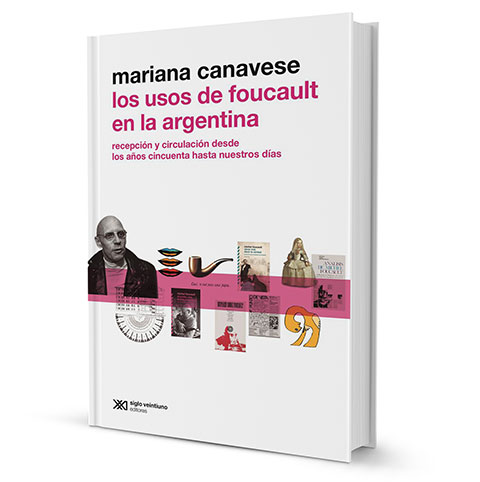
LOS USOS DE FOUCAULT EN LA ARGENTINA
recepción y circulación desde los años cincuenta hasta nuestros días
Mariana Canavese

Participan: Edgardo Castro, Ivana Costa,
Horacio Tarcus y Hugo Vezzetti

Jueves 5 de noviembre, 19 hs
Librería Hernández
Av. Corrientes 1436, C.A.B.A.

los-usos-de-focault-en-la-argentina

Michel Foucault es quizás el filósofo más citado en la Argentina y en el mundo; en sus obras hay palabras clave que atraviesan el discurso académico así como el periodístico y el político. Sin embargo, hasta ahora no se han contado las peripecias de sus usos en el país: quiénes lo leyeron, cuándo y cómo se apropiaron de sus conceptos. Este libro relata ese recorrido, desde los tempranos años cincuenta hasta el presente, atendiendo al modo en que Foucault circuló por diversas disciplinas, en ámbitos institucionales y en espacios de reunión clandestinos, en dictadura y en democracia, entre grupos de izquierda y de derecha.

A partir de un formidable trabajo de archivo y riquísimas entrevistas, Mariana Canavese reconstruye las primeras lecturas, cuando Foucault no era todavía Foucault y su primer libro, Enfermedad mental y personalidad, encontró un lugar en la confluencia de psicoanálisis y marxismo. También muestra cómo, en el clima de radicalización política de los años sesenta, Las palabras y las cosas generó reservas por su impronta estructuralista pero se volvió referencia obligada para quienes buscaban la modernización de las ciencias sociales. Poco después, el contexto de lectura de Vigilar y castigar estaría marcado por el terrorismo de Estado y los dispositivos de represión y control social: Foucault se convirtió entonces en el historiador del castigo y el encierro, de la subjetividad y el poder. En los primeros años ochenta, ya como intelectual consagrado y ampliamente difundido, permitió pensar la crisis de la izquierda argentina y la transición a la democracia.

Pero aún hay otro Foucault: uno del destape –a veces libertario, otras posmoderno– a partir de la primavera democrática, cuando el eje se desplazó hacia la ética, los movimientos sociales y el pluralismo.

Mariana Canavese recupera así la vitalidad del pensamiento foucaultiano, pero sobre todo la vitalidad del campo intelectual argentino que supo hibridar, democratizar y difundir ese pensamiento para intervenir en las disputas locales.

Mariana Canavese es doctora en Historia por la Facultad de Filosofía y Letras de la Universidad de Buenos Aires (UBA) y la École des Hautes Études en Sciences Sociales de París, investigadora del Consejo Nacional de Investigaciones Científicas y Técnicas (Conicet) –en el Centro de Documentación e Investigación de la Cultura de Izquierdas en la Argentina (CeDInCI)– y docente de la carrera de Historia de la UBA. Estudió periodismo en TEA y trabajó como redactora y editora en distintas publicaciones. En Trespuntos, El Dipló, TXT y Ñ, entre otras, publicó notas sobre temas vinculados a la historia, la filosofía, la educación y el ámbito cultural en general. Se especializó en Estudios en Cultura y Sociedad, en el Instituto de Altos Estudios Sociales. Ha participado en distintos proyectos y estancias de investigación en el país y en el exterior. Publicó artículos en revistas académicas nacionales e internacionales, así como capítulos en libros sobre problemas de la historia intelectual argentina y latinoamericana.

canaveseMariana Canavese, Los usos de Foucault en la Argentina. Recepción y circulación desde los años cincuenta hasta nuestros días, Siglo XXI Editores, 2015

(English translation of text below)

Michel Foucault es quizás el filósofo más citado en la Argentina y en el mundo; en sus obras hay palabras clave que atraviesan el discurso académico así como el periodístico y el político. Sin embargo, hasta ahora no se han contado las peripecias de sus usos en el país: quiénes lo leyeron, cuándo y cómo se apropiaron de sus conceptos. Este libro relata ese recorrido, desde los tempranos años cincuenta hasta el presente, atendiendo al modo en que Foucault circuló por diversas disciplinas, en ámbitos institucionales y en espacios de reunión clandestinos, en dictadura y en democracia, entre grupos de izquierda y de derecha.

A partir de un formidable trabajo de archivo y riquísimas entrevistas, Mariana Canavese reconstruye las primeras lecturas, cuando Foucault no era todavía Foucault y su primer libro, Enfermedad mental y personalidad, encontró un lugar en la confluencia de psicoanálisis y marxismo. También muestra cómo, en el clima de radicalización política de los años sesenta, Las palabras y las cosas generó reservas por su impronta estructuralista pero se volvió referencia obligada para quienes buscaban la modernización de las ciencias sociales. Poco después, el contexto de lectura de Vigilar y castigar estaría marcado por el terrorismo de Estado y los dispositivos de represión y control social: Foucault se convirtió entonces en el historiador del castigo y el encierro, de la subjetividad y el poder. En los primeros años ochenta, ya como intelectual consagrado y ampliamente difundido, permitió pensar la crisis de la izquierda argentina y la transición a la democracia.

Pero aún hay otro Foucault: uno del destape –a veces libertario, otras posmoderno– a partir de la primavera democrática, cuando el eje se desplazó hacia la ética, los movimientos sociales y el pluralismo.

Mariana Canavese recupera así la vitalidad del pensamiento foucaultiano, pero sobre todo la vitalidad del campo intelectual argentino que supo hibridar, democratizar y difundir ese pensamiento para intervenir en las disputas locales.


Foucault’s uses in Argentina
Reception and circulation from the fifties to the present day
Mariana Canavese
Buenos Aires, Siglo XXI, 2015

Michel Foucault is probably the most cited philosopher in Argentina and around the world. There are keywords in his work that cross the academic discourse as well as the journalistic and the political one. However, the uses of his work between us were not studied until now: Who read his work? When and how his concepts were appropriated and used? It is in this book that those questions are answered by describing how Foucault participated in Argentina under very different circumstances from the fifties to today.
Mariana Canavese, by using not only vast research but also by performing several interviews, is able to describe the earliest readings when Foucault’s first book, Enfermedad mental y personalidad, found a place within the psychoanalysis and Marxism. Canavese’s book also shows how Las palabras y las cosas not only generated reservations because of its structuralism but also became a mandatory reference for those involved in the social sciences modernization during the sixties. Later, Foucault became the punishment and enclosure historian with his work Vigilar y castigar which was surrounded by State terrorism and its repression and social control mechanisms. During the earlier eighties, Foucault, who was already established and very well recognized, allowed to think the “crisis of Marxism” and the democratic transition in Argentina.
There is yet another Foucault: The one from the democratic spring –sometimes libertarian, others postmodern–, when the focus shifted towards the ethics, the social movements and the pluralism.
Mariana Canavese’s work not only recovers the life within Foucault’s thoughts, but also the life within the Argentinean intellectuals who used those thoughts to participate in the local disputes.

Mariana Canavese received his PhD in History from the Universidad de Buenos Aires (UBA) in Argentina and from the École des Hautes Études en Sciences Sociales in Paris. She is also researcher in the Consejo Nacional de Investigaciones Científicas y Técnicas (Conicet) –at the Centro de Documentación e Investigación de la Cultura de Izquierdas en la Argentina (CeDInCI)–, and teaches History in the UBA. Canavese worked as columnist and editor in different Argentinean publications. She has a specialization in Estudios en Cultura y Sociedad from the Instituto de Altos Estudios Sociales and has participated in numerous research projects in Argentina and abroad. She published articles in local and international academic journals as well as chapters in books about Latin American and Argentinean intellectual history.

PDF of flyer

Seminaire Foucault 2015-2016

Miguelángel Verde Garrido, Contesting a biopolitics of information and communications: The importance of truth and sousveillance after Snowden, Surveillance and society, Vol 13, No 2 (2015)
https://doi.org/10.24908/ss.v13i2.5331

Abstract
This article aims to provide a novel conceptual understanding of the nature of the global mass surveillance policies and practices revealed by whistleblower Edward Snowden in collaboration with the Guardian and Washington Post newspapers. The critical analysis and conceptual reinterpretation of state and corporate surveillance and its impact on the political agency of civil society is multidisciplinary. An intersection of surveillance studies, political philosophy, and global politics/international relations provides an overview of the policies and practices that states and corporations develop and implement in relation to information and communications technologies (ICT). Clarifying how contemporary society is global and digital, it analyzes the way in which political economies inform contemporary policies and practices of surveillance. A critical analysis the relation of political economy to neoliberal governmentality, biopolitical technologies of power, and contemporary regimes of truth, leads to posit that global mass surveillance is a technology of power deployed by a contemporary biopolitics of information and communication. A conceptual reinterpretation of Foucault’s notion of parrhesia and Mann’s notion of sousveillance leads to posit that parrhesiastic sousveillance is a socio-political and technologically-enabled modality of resistance that can resemantize contemporary politics of truth and lead towards a newborn digital agency for global(ized) civil society.

Keywords
Global politics; biopolitics; parrhesia; biopolitics of information and communications; resistance; information and communications technologies (ICT); sousveillance; regime of truth; political economy; states; corporations; civil society

Michel Foucault and the smart city (2015)
Francisco Klauser – Neuchátel University – from The Programmable City
Video of paper

Drawing upon Michel Foucault’s approach to power and governmentality, the paper explores the regulatory dynamics inherent in contemporary data-driven forms of regulation and management-at-a-distance of urban systems. More specifically, channelled through Michel Foucault’s concept of ‘security’, the paper portrays ‘governing through data’ not only as fundamentally reality-derived, relative and plural in scope and scale, but also as inherently flexible and fluid in aim and functioning. This in turn raises a series of critical questions with regard to the novel possibilities of differentiation and prioritisation, the actual adequateness, and the very implications of contemporary governing through data.

Empirically speaking, the paper focuses on the study of two high-profile pilot projects in Switzerland in the field of smart electricity management: iSMART and Flexlast. Both projects rely on massive efforts of data generation, interconnection and analysis, thus allowing the critical investigation of the rationales and problems inherent in the management of urban systems through data.

Foucault 4/14 Daniele Lorenzini | A Dispatch from Paris: “A Little History of Truth in General”

I have followed with great interest, from Paris, the discussions which arose before, during, and after the first three meetings of the seminar “Foucault 13/13”, and I really look forward to “Foucault 4/14”, which is going to be exciting—Linda Zerilli and Anna Lvovsky’s posts on Psychiatric Power are brilliant and challenging. I would like to contribute to these rich discussions by drawing some attention to an aspect of Foucault’s lectures on Psychiatric Power that I have always considered crucial, both for the “discursive economy” of these lectures and in view of the methodological and conceptual “shifts” Foucault introduced a few years later in On the Government of the Living (1979-1980).

At the beginning of his 23 January 1974 lecture of Psychiatric Power, Foucault opens what he himself calls “a parenthesis”—but readers of Foucault’s lectures at the Collège de France have already learnt that what he presents as a parenthesis is very often something quite decisive. Foucault, speaking about the complex and many-sided “mechanism of discipline” that functioned within the asylum in the nineteenth century, argues that its effects introduced a question of truth: “medical knowledge, which again was only a token of power, found itself required to speak, no longer just in terms of power, but in terms of truth” (PP, p. 235). Indeed, as Anna Lvovsky correctly suggests, in Psychiatric Power Foucault delivers an analysis of madness as a battle over truth-production, and in many senses also the hysterics’ “counter-conduct” that will be taken into account by Linda Zerilli can be described in terms of a challenge on the level of truth. This is why, by retracing “a little history of truth in general” (PP, p. 235), Foucault is actually doing something crucial with respect both to the stakes of these lectures and to future developments of his thought.

read more

Paul Beatriz Preciado – ¿La muerte de la clínica?
Published on 7 Apr 2013

En El nacimiento de la clínica (1963), Michel Foucault sugería que a cada modelo de poder corresponde un cuerpo sano y enfermo, una forma específica de gestión de la sexualidad y de la reproducción, una espacialización de las diferencias en la ciudad y una utopía de inmunidad nacional. ¿Cuál sería este

Mathias Schönher, “Deleuze, a Split with Foucault.” Le foucaldien 1, no. 1 (2015): 1–12. DOI: https://doi.org/10.16995/lefou.8 [Note: In 2022, Le foucaldien relaunched as Genealogy+Critique.]

Abstract
In 1977, Deleuze and Foucault found themselves in opposite camps in the public dispute among French intellectuals, resulting in a parting of the ways between two colleagues who had for many years been friends. Deleuze considered the reason for the split to have been their differing ideas on the connection between the historical situation and philosophical thought; in his view, it was occasioned by the debate over the New Philosophers, in which Foucault supported those intellectuals who, according to Deleuze, opposed the creative thinking of philosophy. After Foucault’s death, Deleuze sought to reconcile the two positions, but his attempts only highlighted the depth of the division between them.

Keywords: dispositif, philosophy, power, resistance, revolution, society, television, Deleuze, Foucault