Foucault News

News and resources on French thinker Michel Foucault (1926-1984)

André Glucksmann par Michel Foucault, Le Nouvel Observateur

Le philosophe des “Maîtres penseurs” est mort à 78 ans. Celui de “Surveiller et punir” l’avait lu, pour “le Nouvel Observateur”, en 1977. Voici son texte, dans son intégralité.

Article de Michel Foucault sur “les Maîtres penseurs”,
paru dans “le Nouvel Observateur” du 9 mai 1977
La grande colère des faits

Pour Michel Foucault, comme pour André Glucksmann, il est urgent que la philosophie apprenne à se battre à mains nues, en riant et en criant, contre tous les tenants de l’Etat-Révolution.

Ce qui s’est passé de moins insignifiant dans nos têtes, depuis une quinzaine d’années? Je dirais dans un premier mouvement: une certaine rage, une sensibilité impatiente, irritée, à ce qui se passe, une intolérance à la justification théorique et à tout ce lent travail d’apaisement qu’assure au jour le jour le discours «vrai».

Sur fond d’un décor grêle que la philosophie, l’économie politique et tant d’autres belles sciences avaient planté, voilà que des fous se sont levés, et des malades, des femmes, des enfants, des emprisonnés, des suppliciés et des morts par millions. Dieu sait pourtant que nous étions tous armés de théorèmes, de principes et de mots pour broyer tout cela.

Quel appétit, soudain, de voir et d’entendre ces étrangers si proches? Quel souci pour ces choses frustes? Nous avons été saisis par la colère des faits. Nous avons cessé de supporter ceux qui nous disaient – ou plutôt le chuchotement qui, en nous, disait: «Peu importe, un fait ne sera jamais rien par lui-même; écoute, lis, attends; ça s’expliquera plus loin, plus tard, plus haut.»
Le réel irrationnel

Est revenu l’âge de Candide où l’on ne peut plus écouter l’universelle petite chanson qui rend raison de tout. Les Candides du XXe siècle, qui ont parcouru le vieux monde et le nouveau à travers les massacres, les batailles, les charniers et les gens terrorisés, existent: nous les avons rencontrés, Ukrainiens ou Chiliens, Tchèques ou Grecs. La morale du savoir, aujourd’hui, c’est peut-être de rendre le réel aigu, âpre, anguleux, inacceptable. Irrationnel donc?

suite

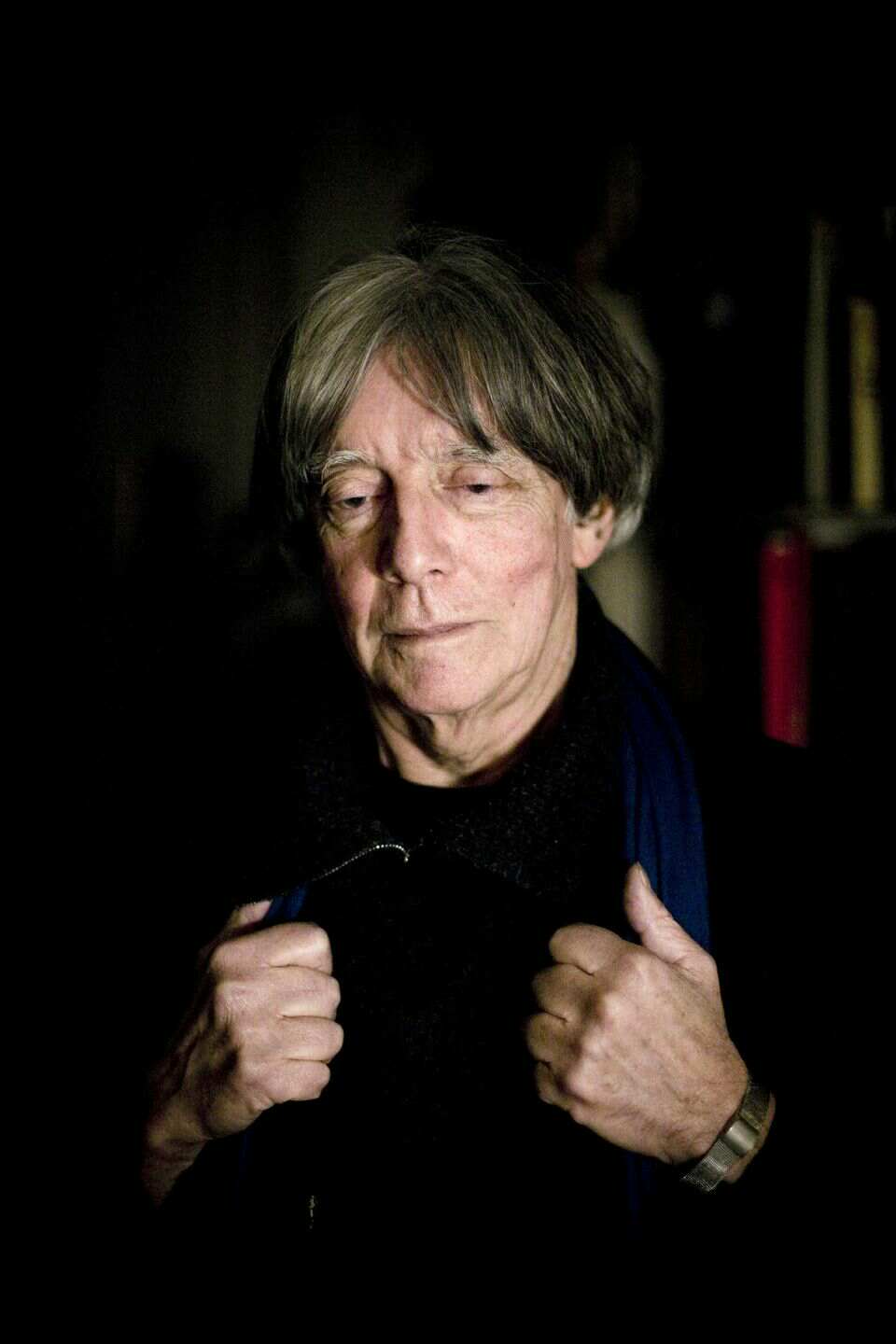
André Glucksmann en 2007 à Paris. Photo Frédéric Stucin pour Libération

André Glucksmann en 2007 à Paris. Photo Frédéric Stucin pour Libération

French philosopher Andre Glucksmann dies at 78, BBC News site

See also The Guardian

En français: Libération

Andre Glucksmann, one of the most prominent figures in French philosophy, has died aged 78.

An associate of Jean-Paul Sartre, he helped provide the intellectual underpinning for the student and worker revolts of May 1968.

He was originally seen as a Maoist but changed his views when he discovered the reality of totalitarianism.

He persuaded Sartre to back his call to help boat people fleeing the communist regime in Vietnam in 1979.

“My first and best friend is no more,” his son Raphael wrote on Tuesday. “I had the incredible luck to know, laugh, debate, travel, play – do all and nothing at all with such a good and brilliant man.”

Andre Glucksmann was born into a Jewish family originally from Poland and his experience of the Nazi occupation of France during World War Two inspired his early involvement with the French Communist party, as well as Maoists who advocated civil war.

In the early 1970s he condemned President Georges Pompidou’s France as “fascist”.

It was when he read The Gulag Archipelago by Soviet writer Alexander Solzhenitsyn in 1974 that his views dramatically changed, Le Figaro reports.

In common with other leading French thinkers such as Bernard-Henri Levy, he soon made a much-publicised break with Marxism. Together they came to be known as the “New Philosophers”.

In 1977, he wrote a stinging attack on communism in Barbarism with a Human Face.

Glucksmann’s thinking focused increasingly on the rights of the individual against the threat of totalitarianism, and he was prominent in promoting human rights in Bosnia, Chechnya and the Middle East, says the BBC’s Hugh Schofield in Paris.

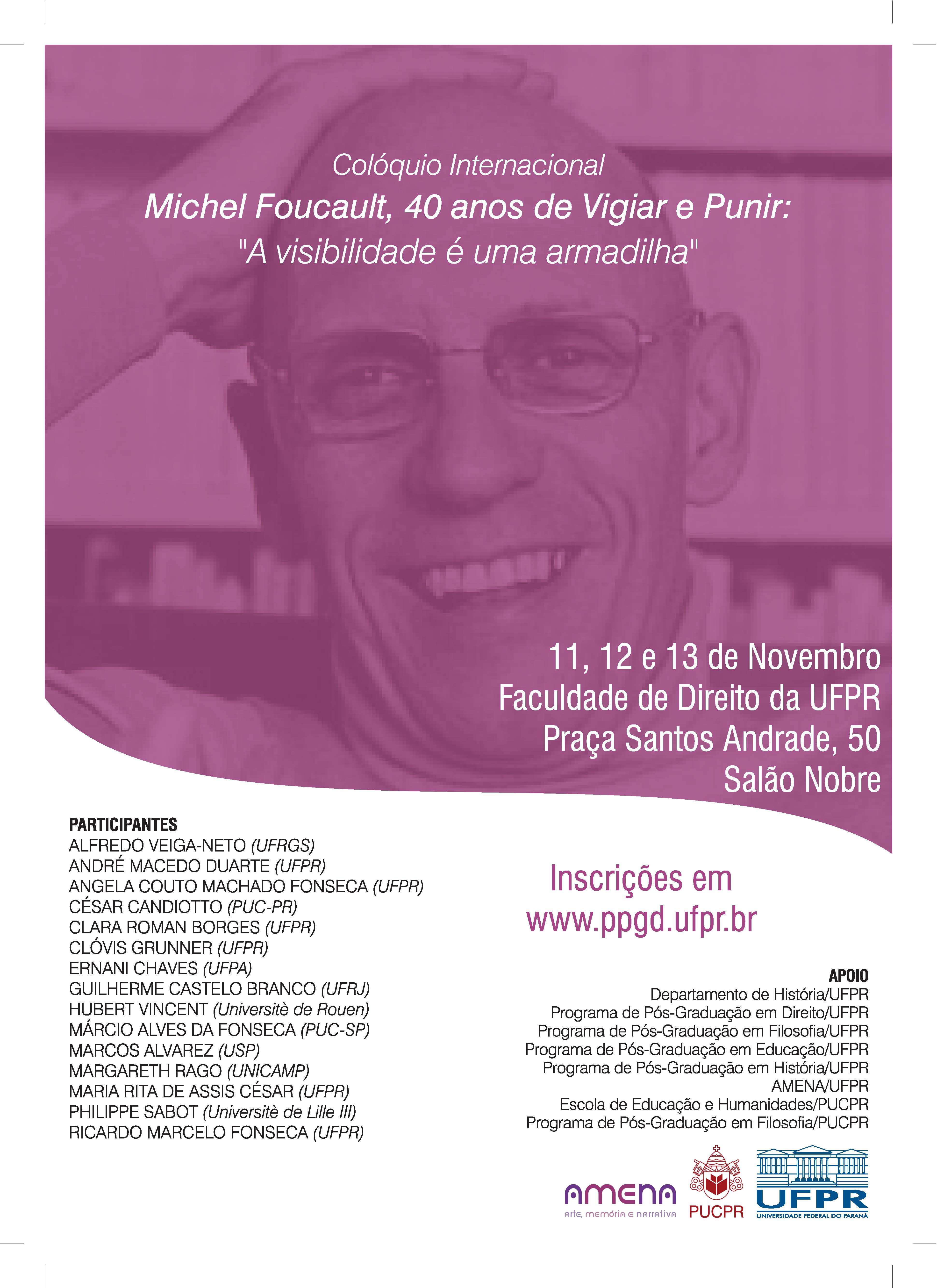
Cartaz Foucault

Colóquio Internacional 40 anos de Vigiar e Punir de Michel Foucault: “A visibilidade é uma armadilha”

Local: Salão Nobre da Faculdade de Direito da Universidade Federal do Paraná – UFPR – Curitiba, PR, Brazil
Data: 11-13/11/2015

Programação

Palestras do dia 11/11 às 14:30:
André Duarte (UFPR)
Ernani Chaves (UFPA)
César Candiotto (PUC-PR)

Palestra da noite de 11/11 às 19:30
Philippe SABOT (Université de Lille III)

Palestras do dia 12/11 às 14:30
Guilherme Castelo Branco (UFRJ)
Marcos Alvarez (USP)
Ricardo Marcelo Fonseca (UFPR)

Palestra da noite de 12/11 às 19:30
Hubert Vincent (Université de Rouen)

Palestras do dia 13/11 às 14:30
Marcio Alves da Fonseca (PUC-SP)
Alfredo Veiga-Neto (UFRGS)
Margareth Rago (UNICAMP)

Deakin University’s European Philosophy and the History of Ideas research group (EPHI) is pleased to be able to host the following workshop:

Problematizing the ‘Problem’ in 20th Century French Thought

PDF flyer

Where: Deakin University, Melbourne City Campus, Level 3, 550 Bourke St., Melbourne.

When: Thursday December 10, 2015, 8.30am-5.30pm

Workshop theme: The workshop will explore how a notion of the ‘problem’ was mobilized in 20th century French philosophy, in various ontologies of problems, in problematization as a philosophical method, and in the deployment of concepts of the problem and the problematic in diverse philosophical programs. Papers will explore the work of Bergson, Marcel, Wahl, Cavaillès, Lautman, Bachelard, Althusser, Hadot, Foucault and Deleuze.

To register: email Sean Bowden s.bowden@deakin.edu.au (please write ‘problems workshop’ in the subject line). All are welcome but registrations are essential.

Registration deadline: December 1, 2015.

Draft program:

8.30-8.35            Welcome
8.35-9.20            Craig Lundy (Wollongong), ‘Bergson’s Problematic Philosophy and the Pursuit of Metaphysical Precision’
9.20-10.05         Sean Bowden (Deakin), ‘Jean Wahl and the Problem of the Concrete’
10.05-10.50        Felicity Joseph (UNE), ‘Beyond philosophical “problems”: Gabriel Marcel’s problem/mystery distinction revisited’
10.50-11.10        Coffee
11.10-11.55        Simon Duffy (Yale-NUS), ‘Lautman on problems as the conditions of the existence of solutions’
11.55-12.40        Knox Peden (ANU), ‘Jean Cavaillès and the Problem of the Object’
12.40-1.30         Lunch
1.30-2.15          Alison Ross (Monash), ‘The errors of history: chance and reason in Bachelard and Foucault’
2.15-3.00          Mark Kelly (WSU), ‘Foucault and Althusser: The Problematic Missing Term’
3.00-3.20          Coffee
3.20-4.05          Matthew Sharpe (Deakin), ‘Between History, Wittgenstein and Phenomenology: The Unique Philosophical Problematic of Pierre Hadot’
4.05-4.50          Jon Roffe (UNSW), ‘Chronostructuralism in The Archeology of Knowledge and Difference and Repetition: some methodological notes on conceiving the reality of problems’
4.50-5.35           Colin Koopman (Oregon), ‘Problematization in Foucault’s Genealogy & Deleuze’s Symptomatology: Or, How to Study Sexuality without Invoking Oppositions’

groulxRichard Groulx, Michel Foucault, la politique comme guerre continuée. De la guerre des races au racisme d’État, Sur le Cours au Collège de France, “Il faut défendre la société”, Paris: Editions l’Harmattan, 2015.

La guerre est-elle un accident des sociétés ou appartient-elle à leur constitution même ? Telle est la question posée par Foucault dans son Cours de 1976 « Il faut défendre la société ». Renversant le célèbre aphorisme de Clausewitz sur « la guerre prolongée par la politique », il démontre comment un « dispositif de guerre » s’est introduit dans le discours politique moderne comme « guerre continuée » ou guerre nécessaire à la fois comme guerre des races, lutte des classes, social racisme et racisme d’État.

repoJemima Repo (2015) The Biopolitics of Gender. Oxford and New York: Oxford University Press

  • Introduces a new theoretical and methodological approach to gender
  • Conducts a genealogy of gender similar to Foucault’s mid-twentieth century genealogy of sexuality
  • Argues that gender is an apparatus of biopower invented in the postwar period in order to regulate the reproduction of capital and population
  • Demonstrates how gender forges biopolitical connections between sexology, psychiatry, feminism, demography, economics, and public policy
  • Reconsiders the emancipatory potential of the idea of gender for feminist theory and politics today

Description
Michel Foucault identified sexuality as one of the defining biopolitical technologies of the nineteenth and twentieth centuries. As Jemima Repo argues in this book, “gender” has come to be the major sexual signifier of the mid-twentieth and early twenty-first century. In fact, in this historical excavation of the biopolitical significance of the term, she argues that it could not have emerged at any other time. Repo shows that gender is not originally a feminist term, but emerged from the study of intersex and transsexual persons in the fields of sexology and psychology in the 1950s and 1960s.

Prior to the 1950s gender was used to refer to various types of any number of phenomena – sometimes sex, but not necessarily. Its only regular usage was in linguistics, where it was used to classify nouns as masculine, feminine, or neuter. In the mid-twentieth century, gender shifted from being a nominator of types to designating the sexual order of things. As with sexuality in the Victorian period, over the last sixty years, the notion of gender has become an entire field of knowledge. Feminists famously took up the term in the 1970s to challenge biological determinism, and in government, “women” have been replaced by “gender” in policy-making processes that aim to advance equality between women and men. Gender has also become a key variable in social scientific surveys of different socio-political phenomena like voting, representation, employment, salaries, and parental leave decisions.

The Biopolitcs of Gender analyzes the strategies and tactics of power involved in the use of “gender” in sexology and psychology, and subsequently its reversal and counter-deployment by feminists in the 1970s and 1980s. It critiques the emergence of gender in demographic science and the implications of this genealogy for feminist theory and politics today. Drawing on an a wide variety of historical and contemporary sources, the book makes a major theoretical argument about gender as a historically specific apparatus of biopower and calls into question the emancipatory potential of the category in feminist theory and politics.

About the author
Jemima Repo is currently Lecturer in the Politics of Gender at Newcastle University in the UK.

Rosie Smith, Book Review: Foucault’s ‘Wrong-Doing, Truth-Telling’. The Sociological Imagination, 2015

Michel Foucault’s 1981 Louvain lecture series ‘Wrong-Doing, Truth-Telling’ is a wonderfully insightful book. It provides a detailed examination of the role of truth-telling throughout antiquity and its development into a key stone of contemporary European juridical proceedings. Specifically, Foucault investigates, within the discourse of criminal law and criminal justice, the use of ‘avowal’ as a particular form of truth-telling; the process through which an individual identifies themselves as the criminal subject, rather than merely as the author of a crime. Foucault guides the reader through the history of truth-telling within society, how it is constructed and how it affects power, knowledge, and the subject. Using vivid historical, philosophical and literary examples, Foucault constructs a coherent genealogy of the subject (Brion and Bernard, 1981: 271), and how truth-telling aids individuals’ development of a sense of self. The lectures are delivered with great zeal and open a window onto Foucault’s own politicization, particularly his involvement with the French Maoist political party, Gauche Prolétarienne, during the early 1970s. In culmination the reader is provided with an impassioned analysis of “the points where the techniques of the self are integrated into structures of coercion or domination” (1981: 300).

read more

With thanks to Dave Beer for this news

Presentación

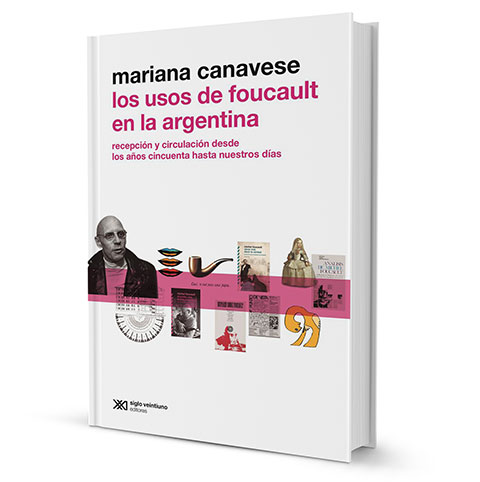
LOS USOS DE FOUCAULT EN LA ARGENTINA
recepción y circulación desde los años cincuenta hasta nuestros días
Mariana Canavese

Participan: Edgardo Castro, Ivana Costa,
Horacio Tarcus y Hugo Vezzetti

Jueves 5 de noviembre, 19 hs
Librería Hernández
Av. Corrientes 1436, C.A.B.A.

los-usos-de-focault-en-la-argentina

Michel Foucault es quizás el filósofo más citado en la Argentina y en el mundo; en sus obras hay palabras clave que atraviesan el discurso académico así como el periodístico y el político. Sin embargo, hasta ahora no se han contado las peripecias de sus usos en el país: quiénes lo leyeron, cuándo y cómo se apropiaron de sus conceptos. Este libro relata ese recorrido, desde los tempranos años cincuenta hasta el presente, atendiendo al modo en que Foucault circuló por diversas disciplinas, en ámbitos institucionales y en espacios de reunión clandestinos, en dictadura y en democracia, entre grupos de izquierda y de derecha.

A partir de un formidable trabajo de archivo y riquísimas entrevistas, Mariana Canavese reconstruye las primeras lecturas, cuando Foucault no era todavía Foucault y su primer libro, Enfermedad mental y personalidad, encontró un lugar en la confluencia de psicoanálisis y marxismo. También muestra cómo, en el clima de radicalización política de los años sesenta, Las palabras y las cosas generó reservas por su impronta estructuralista pero se volvió referencia obligada para quienes buscaban la modernización de las ciencias sociales. Poco después, el contexto de lectura de Vigilar y castigar estaría marcado por el terrorismo de Estado y los dispositivos de represión y control social: Foucault se convirtió entonces en el historiador del castigo y el encierro, de la subjetividad y el poder. En los primeros años ochenta, ya como intelectual consagrado y ampliamente difundido, permitió pensar la crisis de la izquierda argentina y la transición a la democracia.

Pero aún hay otro Foucault: uno del destape –a veces libertario, otras posmoderno– a partir de la primavera democrática, cuando el eje se desplazó hacia la ética, los movimientos sociales y el pluralismo.

Mariana Canavese recupera así la vitalidad del pensamiento foucaultiano, pero sobre todo la vitalidad del campo intelectual argentino que supo hibridar, democratizar y difundir ese pensamiento para intervenir en las disputas locales.

Mariana Canavese es doctora en Historia por la Facultad de Filosofía y Letras de la Universidad de Buenos Aires (UBA) y la École des Hautes Études en Sciences Sociales de París, investigadora del Consejo Nacional de Investigaciones Científicas y Técnicas (Conicet) –en el Centro de Documentación e Investigación de la Cultura de Izquierdas en la Argentina (CeDInCI)– y docente de la carrera de Historia de la UBA. Estudió periodismo en TEA y trabajó como redactora y editora en distintas publicaciones. En Trespuntos, El Dipló, TXT y Ñ, entre otras, publicó notas sobre temas vinculados a la historia, la filosofía, la educación y el ámbito cultural en general. Se especializó en Estudios en Cultura y Sociedad, en el Instituto de Altos Estudios Sociales. Ha participado en distintos proyectos y estancias de investigación en el país y en el exterior. Publicó artículos en revistas académicas nacionales e internacionales, así como capítulos en libros sobre problemas de la historia intelectual argentina y latinoamericana.

canaveseMariana Canavese, Los usos de Foucault en la Argentina. Recepción y circulación desde los años cincuenta hasta nuestros días, Siglo XXI Editores, 2015

(English translation of text below)

Michel Foucault es quizás el filósofo más citado en la Argentina y en el mundo; en sus obras hay palabras clave que atraviesan el discurso académico así como el periodístico y el político. Sin embargo, hasta ahora no se han contado las peripecias de sus usos en el país: quiénes lo leyeron, cuándo y cómo se apropiaron de sus conceptos. Este libro relata ese recorrido, desde los tempranos años cincuenta hasta el presente, atendiendo al modo en que Foucault circuló por diversas disciplinas, en ámbitos institucionales y en espacios de reunión clandestinos, en dictadura y en democracia, entre grupos de izquierda y de derecha.

A partir de un formidable trabajo de archivo y riquísimas entrevistas, Mariana Canavese reconstruye las primeras lecturas, cuando Foucault no era todavía Foucault y su primer libro, Enfermedad mental y personalidad, encontró un lugar en la confluencia de psicoanálisis y marxismo. También muestra cómo, en el clima de radicalización política de los años sesenta, Las palabras y las cosas generó reservas por su impronta estructuralista pero se volvió referencia obligada para quienes buscaban la modernización de las ciencias sociales. Poco después, el contexto de lectura de Vigilar y castigar estaría marcado por el terrorismo de Estado y los dispositivos de represión y control social: Foucault se convirtió entonces en el historiador del castigo y el encierro, de la subjetividad y el poder. En los primeros años ochenta, ya como intelectual consagrado y ampliamente difundido, permitió pensar la crisis de la izquierda argentina y la transición a la democracia.

Pero aún hay otro Foucault: uno del destape –a veces libertario, otras posmoderno– a partir de la primavera democrática, cuando el eje se desplazó hacia la ética, los movimientos sociales y el pluralismo.

Mariana Canavese recupera así la vitalidad del pensamiento foucaultiano, pero sobre todo la vitalidad del campo intelectual argentino que supo hibridar, democratizar y difundir ese pensamiento para intervenir en las disputas locales.


Foucault’s uses in Argentina
Reception and circulation from the fifties to the present day
Mariana Canavese
Buenos Aires, Siglo XXI, 2015

Michel Foucault is probably the most cited philosopher in Argentina and around the world. There are keywords in his work that cross the academic discourse as well as the journalistic and the political one. However, the uses of his work between us were not studied until now: Who read his work? When and how his concepts were appropriated and used? It is in this book that those questions are answered by describing how Foucault participated in Argentina under very different circumstances from the fifties to today.
Mariana Canavese, by using not only vast research but also by performing several interviews, is able to describe the earliest readings when Foucault’s first book, Enfermedad mental y personalidad, found a place within the psychoanalysis and Marxism. Canavese’s book also shows how Las palabras y las cosas not only generated reservations because of its structuralism but also became a mandatory reference for those involved in the social sciences modernization during the sixties. Later, Foucault became the punishment and enclosure historian with his work Vigilar y castigar which was surrounded by State terrorism and its repression and social control mechanisms. During the earlier eighties, Foucault, who was already established and very well recognized, allowed to think the “crisis of Marxism” and the democratic transition in Argentina.
There is yet another Foucault: The one from the democratic spring –sometimes libertarian, others postmodern–, when the focus shifted towards the ethics, the social movements and the pluralism.
Mariana Canavese’s work not only recovers the life within Foucault’s thoughts, but also the life within the Argentinean intellectuals who used those thoughts to participate in the local disputes.

Mariana Canavese received his PhD in History from the Universidad de Buenos Aires (UBA) in Argentina and from the École des Hautes Études en Sciences Sociales in Paris. She is also researcher in the Consejo Nacional de Investigaciones Científicas y Técnicas (Conicet) –at the Centro de Documentación e Investigación de la Cultura de Izquierdas en la Argentina (CeDInCI)–, and teaches History in the UBA. Canavese worked as columnist and editor in different Argentinean publications. She has a specialization in Estudios en Cultura y Sociedad from the Instituto de Altos Estudios Sociales and has participated in numerous research projects in Argentina and abroad. She published articles in local and international academic journals as well as chapters in books about Latin American and Argentinean intellectual history.

PDF of flyer

Seminaire Foucault 2015-2016