Foucault News

News and resources on French thinker Michel Foucault (1926-1984)

‘Society Must Be Defended’ By Scott Jaschik January 16, 2017, Inside Higher Ed

Anthropologists and other scholars plan read-in of Michel Foucault to mark inauguration of Donald Trump.
Many groups of scholars and writers are planning teach-ins or readings for Friday, the day Donald J. Trump will be inaugurated as president of the United States. Others are organizing teach-ins to focus on Trump’s policies.

Some anthropologists are taking a different approach. They are planning events that day in which people — together at locations across the country or virtually connected — will read and discuss a lecture presented by Michel Foucault, the late philosopher, as part of a series he gave at the Collège de France. The lectures have been published as a book, Society Must Be Defended. The read-in idea is being backed not only by the scholars who have organized the events but by the popular anthropology blog Savage Minds and the journals American Anthropologist, American Ethnologist, Cultural Anthropology and Environment and Society.

“This lecture strikes us as very good to think with at this present point: it demands we simultaneously consider the interplay of sovereign power, discipline, biopolitics and concepts of security, and race. In light of the current sociopolitical situation where the reaction to activism against persistent racism has been to more overtly perpetuate racism as political discourse, we need to remember and rethink the role of racism as central to, rather than incidental to, the political and economic activities of the state,” wrote the two scholars who organized the effort in a blog post at Savage Minds. The scholars are Paige West, the Claire Tow Professor of Anthropology, Barnard College and Columbia University, and JC Salyer, term professor of practice at Barnard.

In their blog post, they note that many scholars have, since the election, suggested that it’s time for intellectuals to change the way they act and engage with the public. The idea, which West and Salyer reject, “is that scholars need to somehow change what they are doing, and how they are doing it, in order to face this seemingly new political reality in the Unites States.

“While the latter part of this argument has been addressed by numerous scholars and activists who write and think about race, class, sexuality and inequality more generally — with clear and compelling arguments about how this is not a ‘new’ political reality for many but rather a kind of contemporary culmination and re-entrenchment of the structures of power and oppression that underpin the entirety of the national political project — the former part of the argument has been allowed to stand with little critique. Do we need to change what we do and not just how we do it? Not necessarily.”

They elaborate: “We worry that by focusing on needing to change what we are doing and how we are doing it we lose sight of what we already do really well. We work to understand the world through research, teaching, writing and reading. Along with this, we produce knowledge that allows others to understand the world and to work to change it.” Scholars engage in reading (and talking about what they read) all the time, and so that is a good way to respond to the Trump inaugural, they said.

They proposed — and many other anthropologists are joining in — readings of the 11th lecture in the Foucault book. PDFs of the chapter are available here.

Via email, West and Salyer said that in the days since they made their proposal, read-ins have been planned at four universities, while many others are planning to read the chapter individually and to discuss it online.

Asked about this particular lecture, they said, “We picked this reading because it has a real breadth of ideas that can be used to analyze inequality and violence in the modern nation-state. While it is certainly not the only, or even [the] best, reading that could be used to do this, it presents a lot of ideas that still seem very original, and even provocative, over 40 years later. If we had to pick one quote that challenges us to think about how we conceptualize the relationship of the modern state to people and populations it might be where Foucault is working out the paradoxical nature of the regime of biopower, which kills, or lets die, to improve life and concludes that it is through the dividing practice of racism that the state attempts to square the circle: ‘I am certainly not saying that racism was invented at this time. It had already been in existence for a very long time. But I think it functioned elsewhere. It is indeed the emergence of this biopower that inscribes it in the mechanisms of the state. It is at this moment that racism is inscribed as the basic mechanism of power, as it is exercised in modern states.'”

Asked if they had any fears that supporters of Trump would mock their activity, they said, “No, of course not.”

With thanks to Colin Gordon for this news

foucault-fridge-magnetMichel Foucault fridge magnet for sale from Present Indicative

French philosopher and theorist Michel Foucault makes an interesting magnet. a truly thoughtful gift this magnet also doubles as a finger puppet.

Measures 10cm tall.
A fridge Magnet which is also a finger puppet.

Present Indicative is the sister site of The Literary Gift Company. The Literary Gift Company was launched in 2009 and has over 1000 gifts for book lovers. Present Indicative offers a similar range of unusual and beautiful gifts but with more of an academic twist. We love beautiful, practical and intelligent gifts for thinking people, including clothing, jewellery, games, and much much more.

With thanks to Emma Guion Akdag for this news.

Avelino, N.
Confissão e normatividade política: controle da subjetividade e produção do sujeito
(2017) Revista Brasileira de Ciências Sociais, 32 (93), pp. 1-22.

DOI: 10.17666/329304/2017

Full PDF available in Portuguese

Abstract
This article discusses the displacement in Foucault’s analysis of confession, trying to demonstrate how the focus of analysis goes from mandatory language forms to reflexive and voluntary forms. A possible link between confession and governmentality is proposed in order to think about the production of the political subject. From the reflections of Agamben, on the officium and the ontological device, and Esposito, on the machine of theology-politics and the person’s device, the goal here is to understand the theoretical origin and the modus operandi of obedience in liberal political practice. Retaking the subject-subjection dialectic outlined in the Foucault, Agamben and Esposito’s analysis, as well as the reflections of Philip Pettit and William Connolly on Hobbes and Rawls, this article presents the political subject not as a thinking agent, but as thought object and as the condition of possibility of the Political Theory.

Keywords: Confession; Oath; Subjectivity; Veridiction; Political Theory.

Nildo Avelino, Foucault e a racionalidade (neo)liberal, (2016) Revista Brasileira de Ciência Política, 21, pp. 229-286.

Avelino, N.
Foucault and (neo)liberal rationality
DOI: 10.1590/0103-335220162107

Full PDF available in Portuguese

Resumo
O artigo aborda o debate em torno da reflexão de Michel Foucault acerca do liberalismo e do neoliberalismo. Apresenta de maneira critica alguns trabalhos recentes, na França e nos EUA, que têm concluído sobre a existência de afinidades, especialmente teóricas, entre Foucault e o neoliberalismo, apontando suas fragilidades metodológicas. Procura, em seguida, evidenciar a especificidade genealógica que caracteriza a análise foucaultiana em relação às abordagens concernidas com a denúncia ideológica ou com a valorização ideal do liberalismo. Retoma particularmente os estudos da governamentalidade a partir dos quais Foucault realizou uma descrição histórica do liberalismo e do neoliberalismo em termos de racionalidade governamental. Apresenta-se um quadro sintético da economia de poder liberal na análise foucaultiana em que se verifica a superposição de três racionalidades historicamente localizáveis: razão de Estado, poder pastoral, biopoder. O artigo termina com uma leitura das diferenças entre o liberalismo econômico e o neoliberalismo e as implicações de cada um deles no exercício do poder político.

Palavras-chave: liberalismo; neoliberalismo; governamentalidade; racionalidade; crítica

Abstract
The article discusses the debate about Michel Foucault’s reflection on liberalism and neoliberalism. It presents critically some recent works in France and the USA that has concluded about the existence of affinities, especially theoretical, between Foucault and neoliberalism, pointing out its methodological fragilities. It then seeks to evidence the genealogical specificity that characterizes the Foucaultian analysis in relation at approaches concerned with a kind of ideological denunciation or ideal valuation of liberalism. It particularly retakes the studies of governmentality from which Foucault describes a historical account of liberalism and neoliberalism in terms of governmental rationality. It presents a synthetic figure of the liberal economy of power in the Foucauldian analysis, in which there is a superposition of three historically localizable rationalities: state reason, pastoral power, biopower. The article ends with a reading of the differences between economic liberalism and neoliberalism and the implications of each of them in the exercise of political power.

Keywords: liberalism; neoliberalism; governmentality; rationality; critique.

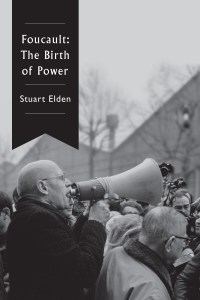
elden-bopStuart Elden, Foucault: The Birth of Power, Polity, 2017

Michel Foucault’s The Archaeology of Knowledge was published in March 1969; Discipline and Punish in February 1975. Although only six years apart, the difference in tone is stark: the former is a methodological treatise, the latter a call to arms. What accounts for the radical shift in Foucault’s approach?

Foucault’s time in Tunisia had been a political awakening for him, and he returned to a France much changed by the turmoil of 1968. He taught at the experimental University of Vincennes and then moved to a prestigious position at the Collège de France. He quickly became involved in activist work concerning prisons and health issues such as abortion rights, and in his seminars he built research teams to conduct collaborative work, often around issues related to his lectures and activism.

Foucault: The Birth of Power makes use of a range of archival material, including newly available documents at the Bibliothèque nationale de France, to provide a detailed intellectual history of Foucault as writer, researcher, lecturer and activist. Through a careful reconstruction of Foucault’s work and preoccupations, Elden shows that, while Discipline and Punish may be the major published output of this period, it rests on a much wider range of concerns and projects.

Table of Contents
Acknowledgements
Abbreviations
Introduction: Out of the 1960s
1. Measure: Greece, Nietzsche, Oedipus
2. Inquiry: Revolt, Ordeal, Proof
3. Examination: Punishment, War, Economy
4. Madness: Power, Psychiatry and the Asylum
5. Discipline: Surveillance, Punishment and the Prison
6. Illness: Medicine, Disease and Health
Conclusion: Towards Foucault’s Last Decade
Notes
Index

About the Author
Stuart Elden is Professor of Political Theory and Geography at the University of Warwick and Monash Warwick Professor in the Faculty of Arts, Monash University.

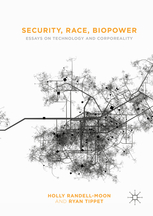
tippetRandell-Moon, Holly, Tippet, Ryan (Eds.) Security, Race, Biopower. Essays on Technology and Corporeality, Palgrave Macmillan, 2016

This book explores how technologies of media, medicine, law and governance enable and constrain the mobility of bodies within geographies of space and race. Each chapter describes and critiques the ways in which contemporary technologies produce citizens according to their statistical risk or value in an atmosphere of generalised security, both in relation to categories of race, and within the new possibilities for locating and managing bodies in space. The topics covered include: drone warfare, the global distribution of HIV-prevention drugs, racial profiling in airports, Indigenous sovereignty, consumer lifestyle apps and their ecological and labour costs, and anti-aging therapies.

Security, Race, Biopower makes innovative contributions to multiple disciplines and identifies emerging social and political concerns with security, race and risk that invite further scholarly attention. It will be of great interest to scholars and students in disciplinary fields including Media and Communication, Geography, Science and Technology Studies, Political Science and Sociology.

Table of contents (10 chapters)

Death by Metadata: The Bioinformationalisation of Life and the Transliteration of Algorithms to Flesh
Pugliese, Joseph

Of Bodies, Borders, and Barebacking: The Geocorpographies of HIV
Pocius, Joshua

Body, Crown, Territory: Geocorpographies of the British Monarchy and White Settler Sovereignty
Randell-Moon, Holly

What Are You Doing Here? The Politics of Race and Belonging at the Airport
Kamaloni, Sunshine M.

Corporate Geocorpographies: Surveillance and Social Media Expansion
Tippet, Ryan

Everyday Modulation: Dataism, Health Apps, and the Production of Self-Knowledge
Nicholls, Brett

Invisible Bodies and Forgotten Spaces: Materiality, Toxicity, and Labour in Digital Ecologies
Taffel, Sy

Domesticating Drone Technologies: Commercialisation, Banalisation, and Reconfiguring ‘Ways of Seeing’
Phan, Thao (et al.)

The Somatechnics of Desire and the Biopolitics of Ageing
Fletcher, David-Jack

Securing Sovereignty: Private Property, Indigenous Resistance, and the Rhetoric of Housing
Kramer, Jillian

Jordi Collet-Sabé, ‘I do not like what I am becoming but…’: transforming the identity of head teachers in Catalonia, Journal of Education Policy, Volume 32, 2017 – Issue 2. Pages 141-158
https://doi.org/10.1080/02680939.2016.1253873

Abstract
The aim of this article is to elucidate how a new system of school and teacher assessment in Catalonia is transforming the conceptions, practices and identity of head teachers, especially younger ones. It begins by considering the impact of global neoliberal policies on educational practices, highlighting their Foucauldian productive nature. It then examines the educational context of Catalonia during the last 30 years, emphasising the changing role of head teachers and the impact of neoliberal governance. This is followed by an account and analysis of in-depth interviews with four head teachers, focusing especially on how the head teacher’s objectives, practices and identities are being transformed, or produced, as a result of the new neoliberal ‘assessment regime’. It ends with a discussion on the importance of refusal and resistance to this process and the need to reconsider basic educational and social questions.

Keywords: Head teacher identity, school assessment, New Public Management, OECD, school governance

Foucault in Ireland
24 March 2017
Royal Irish Academy, Dawson Street, Dublin 2, Ireland
Attendance is free but you are required to register

A symposium focused on the engagement of the ideas of Michel Foucault by scholars working on the island of Ireland. It begins with a roundtable on the recent works on Foucault by Stuart Elden and then has papers from academics working in Ireland or on Irish topics – including criminology, international relations, social work, philosophy, geography, literary studies, cultural studies, English, etc.

Preliminary Programme
9.30. Registration, Royal Irish Academy, Dawson Street, Dublin 2
9.45. Introductions
10.00. Roundtable on Stuart Elden’s Foucault: the birth of power (Polity, 2017) and Foucault’s Final decade (Polity, 2016). With Stuart Elden,
Gerry Kearns, Mick Wilson, and Audronė Žukauskaitė. There will be flyers on the day so that people can order the books at a discount
price.
11.00. Session 1
12.00. Lunch
13.00. Session 2
14.00. Session 3
15.00. Tea
15.30. Session 4
16.30. Final Roundtable
17.30. Reception and book launch for S.E. Wilmer and Audronė Žukauskaitė (eds.), Resisting Biopolitics: Philosophical, Political and Performative Strategies (Routledge, 2016). Trinity College

cover_issue_703_en_usFoucault Studies
Number 22: January 2017:
Foucault and Roman Antiquity: Foucault’s Rome

Editor’s note: I have now returned to the journal, of which I was one of the co-founders, as part of an expanded editorial team. An interview with another of the three founding editors of the journal, Stuart Elden, also appears in this issue, as does a review of his latest book. The opening editorial states:

With this issue of Foucault Studies, a new and markedly expanded editorial team takes over. While Sverre Raffnsøe, Alain Beaulieu, Barbara Cruikshank, Knut Ove Eliassen, Marius GudmandHøyer, Johanna Oksala and Alan Rosenberg continue on the editorial team, Foucault Studies is delighted to welcome Thomas Götselius, Daniele Lorenzini, Hernan Camilo Pulido Martinez, Clare O’Farrell, Rodrigo Castro Orellana, Eva Bendix Petersen and Dianna Taylor as co-editors.

Table of contents

Special Issue on Foucault and Roman Antiquity: Foucault’s Rome

Introduction: Foucault’s Rome
Richard Alston

Lucan, Reception, Counter-history
Ika Willis

Foucault, Sovereignty, and Governmentality in the Roman Republic
Dean Hammer

The Augustan Principate and the Emergence of Biopolitics: A Comparative Historical Perspective
Shreyaa Bhatt

Foucault’s Empire of the Free
Richard Alston

Time for Foucault? Reflections on the Roman Self from Seneca to Augustine
James I. Porter

Articles
From Race War to Socialist Racism: Foucault’s Second Transcription
Verena Erlenbusch

Foucault and Weber on Leadership and the Modern Subject
Tahseen Kazi

Protestation and Mobilization in the Middle East and North Africa: A Foucauldian Model
Navid Pourmokhtari

Translations
Cuvier’s Situation in the History of Biology
Lynne Huffer

Interviews
Foucault and Intellectual History: An interview with Stuart Elden on his book Foucault’s Last Decade (Polity Press, 2016)
Antoinette Koleva

Julian Reid on Foucault – applying his work on war, resilience, imagination and political subjectivity
Kristian Haug

Book Reviews
Stuart Elden, Foucault’s Last Decade (Cambridge: Polity Press, 2016), 272pp, pb £17.99, ISBN: 9780745683928
Kurt Borg

Paul Colilli, Agamben and the Signature of Astrology. Spheres of Potentiality (Lanham: Lexington Books, 2015), i-xx, 214 pp. hard cover, $85.00 (US) ISBN: 978-1-4985-0595-6
Alain Beaulieu

Peter Sloterdijk, Philosophical Temperaments: From Plato to Foucault, trans. Thomas Dunlap (New York: Columbia University Press, 2013), ISBN: 978-0231153737
Jonathan G. Wald

Posts will be intermittent through the month of January. I will still post up any news that is sent on to me directly.