Foucault News

News and resources on French thinker Michel Foucault (1926-1984)

Paul Patton, Foucault on Power and Government
Full text available on academia.edu

Abstract:
Foucault’s lectures in 1976 open with the statement of an intellectual crisis. They proceed to a series of questions about the nature of power and the ways that he has conceived of it up to this point: what is power? How is it exercised? Is it ultimately a relation of force? Only some of these questions are answered in the course of these lectures. His answer to the conceptual questions about the nature of power and the appropriate means to analyze it is not forthcoming until after the discovery of ‘governmentality’ in 1978 and his lectures on liberal and neoliberal governmentality in 1979. This talk aims to retrace his answers to these questions in the light of the published lectures and to examine the consequences of these answers for his overall approach to the analysis power, and for his analysis of liberal and neoliberal governmental power.

Issue: 3-4
Page Numbers: 57-76.
Publication Date: 2016
Publication Name: Sociological Problems (Bulgarian Academy of Sciences), Special Issue edited by Antoinette Koleva, Kolyo Koev, Michel Foucault: New Problematizations

This paper will appear, translated into Bulgarian and in a paper-printed version, in a special issue of the journal Sociological Problems {Социологически проблеми}, a publication of the Bulgarian Academy of Sciences, dedicated to the 90th anniversary of Michel Foucault. This special issue’s editors are Antoinette Koleva
and Kolyo Koev

Neurotechnologies of justice: Neuroscience beyond the courtroom
By Professor Nikolas Rose
, Australian Neurolaw Database, On Soundcloud, March 2017

In this talk I will explore the actual and potential impacts of developments in neuroscience and neurotechnology in the criminal justice system beyond the courtroom. There has beenmuch discussion about the role of genetics and brain scanning in criminal trials and their impact on the legal fiction of free will, although evidencethat genetic or brain based defences succeed in exculpation is equivocal. In this talk, I will focus elsewhere, and explore the impact of claims to be able to ‘read the brain’ in neural lie detection and beyond, the potential uses of novel neurotechnologies for risk assessment, preemptive intervention, and their role in ‘law enforcement’ and ‘crowd control’, and some questions arising from machine learning and artificial intelligence. The challenges posed by the ‘dual use’ potential of some advances in neuroscience, where technologies intended for civilian purposes also have military and security uses, are particularly significant at a time when the boundaries between the criminal justice and the wider security system are increasingly blurred.

O Poder e o Panoptismo da Cidadania, Segundo M. Foucault – Profa. Dra. Olaya Fernandez

21 de agosto de 2017 (segunda-feira)

Conferência – O Poder e o Panoptismo da Cidadania, Segundo M. Foucault

Conferencista: Profa. Dra. Olaya Fernandez – Universidad de La Rioja UR – Espanha

Horário: 19h30min às 22h

Local: Auditório Erico Verissimo, Laboratório Avançado de Tecnologias da Informação e Comunicação (LABTICS) – Setor D2 118. Campus São Leopoldo

A atividade ocorreu como um pré-evento do ‘IX Colóquio Internacional IHU. A Biopolítica como Teorema da Bioética‘.

Isabelle Galichon, Le récit de soi. Une pratique éthique d’émancipation, Ouverture Philosophique, Paris. L’Harmattan, 2018

Les derniers travaux de Michel Foucault peuvent être appréhendés comme une nouvelle grille de lecture pour l’analyse des pratiques d’écriture personnelle dont peut se saisir la théorie littéraire. Dans ses cours au Collège de France sur les pratiques de soi antiques, Michel Foucault ébauche une généalogie de l’écriture de soi : celle-ci ne vise pas à découvrir ce qui est « intus et in cute » comme l’annonçait Rousseau en exergue des Confessions, mais à élaborer un sujet éthique par l’ascèse, par l’exercice de l’écriture. La pratique de l’écriture personnelle, dès lors qu’elle renonce au psychologique, à une « histoire de la personnalité » (Philippe Lejeune) et s’ouvre à une altérité, devient une « pratique de liberté » (Michel Foucault). Face à une épreuve existentielle (le deuil, la maladie), face aux agressions de l’histoire, face à un contexte sociopolitique répressif, le récit de soi en tant que pratique éthique de subjectivation offre un cheminement vers une émancipation que la littérature peut aussi aider à interpréter.

Le récit de soi requiert dès lors une lecture éthique et convoque, nécessairement, pour son analyse, la littérature et la philosophie.

Isabelle Galichon est docteure en littératures française, francophone et comparée, et chercheuse associée à l’EA Telem (Bordeaux-Montaigne). Elle co-dirige un séminaire de recherche au Collège International de Philosophie sur l’écriture de soi. Elle est membre du comité de rédaction de la revue Mémoire en jeu (éd. Kimé).

Video: Alain Badiou and Michel Foucault — Philosophy and Psychology (1965), From the Verso Books blog, 9 January 2018

Watch a televised 1965 discussion between Alain Badiou and Michel Foucault on philosophy and psychology.

A televised 1965 discussion between Alain Badiou and Michel Foucault, under the heading “Philosophy and Psychology,” is available to stream in three parts below. Parts 1 and 2 include English subtitles, while Part 3 does not (Spanish subtitles are available for all three segments).

[…]

A full transcript of the discussion is available in Badiou and the Philosophers: Interrogating 1960s French Philosophy, edited and translated by Tzuchien Tho and Giuseppe Bianco. Tamara Chaplin’s Turning on the Mind: French Philosophers on Television describes the history of L’enseignement philosophique and explores the broader effort to televise philosophy in France.

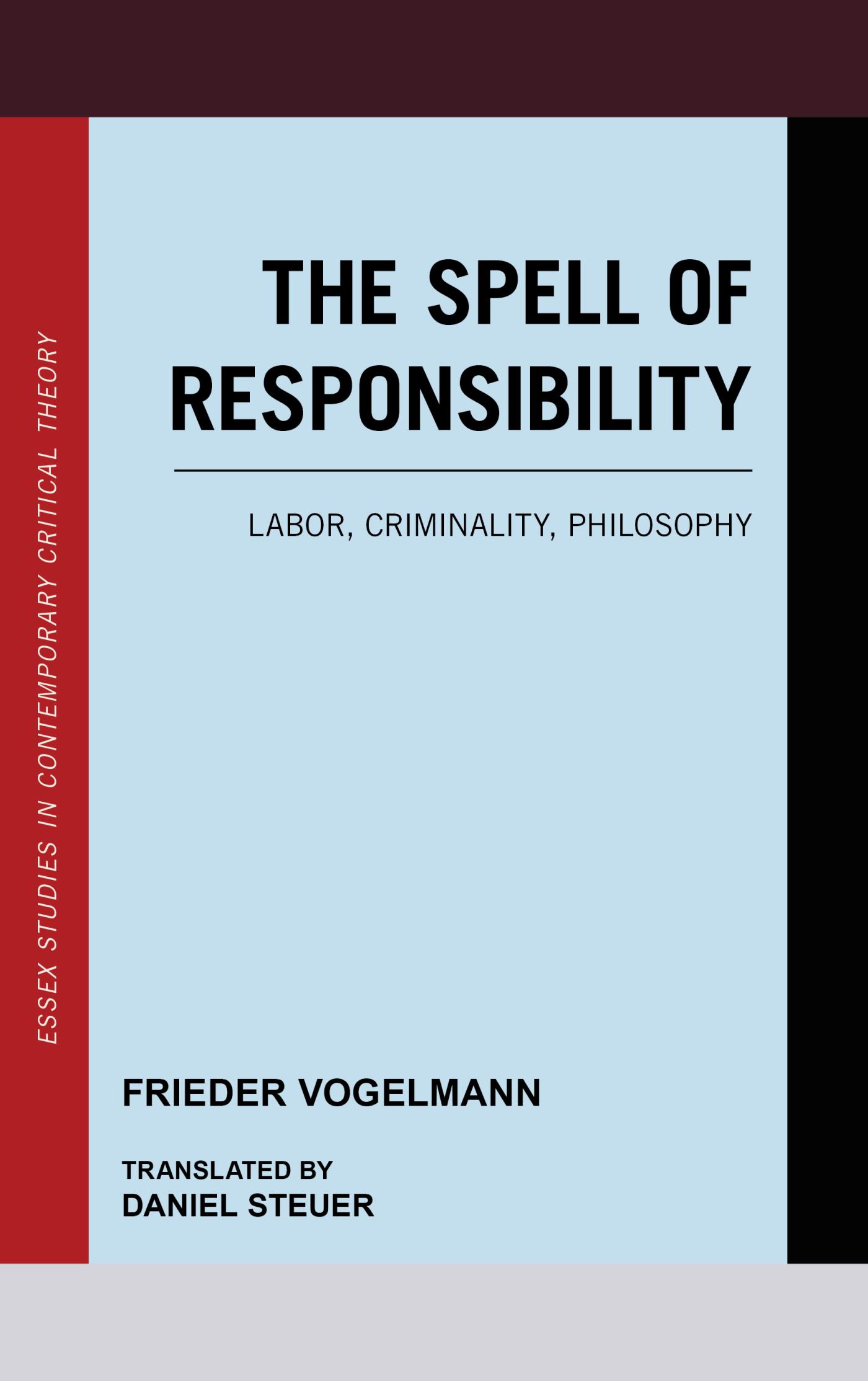
Frieder Vogelmann, The Spell of Responsibility. Labor, Criminality, Philosophy Trans. Daniel Steuer, Bloomsbury, 2017

Most people would agree that we should behave and act in a responsible way. Yet only 200 years ago, ‘responsibility’ was only of marginal importance in discussions of law and legal practice, and it had little ethical significance. What is the significance of the fact that ‘responsibility’ now plays such a central role in, for example, work, the welfare state, or the criminal justice system? What happens when individuals are generally expected to think of themselves as ‘responsible’ agents? And what are the consequences of the fact that the philosophical analysis of ‘responsibility’ focuses almost exclusively on conditions of agency that are mostly absent from real life?

In this book, Frieder Vogelmann demonstrates how large parts of philosophy have fallen under responsibility’s spell, and he uses a Foucauldian approach in an attempt to break it. The three axes of power, knowledge, and self are used in a detailed analysis of the practical regimes of labour (including the welfare state), criminality (including policing, punishment practices, and criminal proceedings), and philosophy, and of the two subject positions required by ‘responsibility’ – those of the attributors and bearers of responsibility – within them. The power relations between these positions, which Vogelmann carefully excavates from the grounds of our practices, reveal that the deck is stacked unevenly from the start.

Giampiero Assumma
THE LOWER WORLD

“The Lower World” is the title of Giampiero Assumma’s photographic long term project (2001-2014) on human alienation within the context of the last six criminal lunatic asylums in Italy, named ‘Ospedale Psichiatrico Giudiziario’ (O.P.G).

These facilities, with the exception of one pioneering institution that was purely a psychiatric hospital, showed the characteristics of penitentiary institutes. That situation represented the evidence of a long standing debate, about crimes when related to mental illness and sentences as a cure, to serve into an institution which combines both medical treatment and strict social control. In recent years a Governmental investigation, reported several cases of violation of human rights, and all the last Italian judiciary mental institutions began their final dismission from 2015 until now.

Beyond the inevitable political foreground, Giampiero Assumma’s approach is quite far from photojournalistic visuals. He offers his own constructive interpretation of mental illness, exposing the vulnerability inherent to the human condition.These images ultimately witness all those shared acts of resistance, that humans have always brought foreword to avoid being deleted from their personal history.

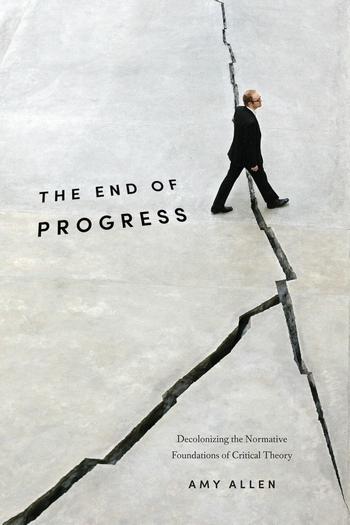
Amy Allen, The End of Progress. Decolonizing the Normative Foundations of Critical Theory, Columbia University Press, 2016 (2017 paperback)

While post- and decolonial theorists have thoroughly debunked the idea of historical progress as a Eurocentric, imperialist, and neocolonialist fallacy, many of the most prominent contemporary thinkers associated with the Frankfurt School—Jürgen Habermas, Axel Honneth, and Rainer Forst—have defended ideas of progress, development, and modernity and have even made such ideas central to their normative claims. Can the Frankfurt School’s goal of radical social change survive this critique? And what would a decolonized critical theory look like?

Amy Allen fractures critical theory from within by dispensing with its progressive reading of history while retaining its notion of progress as a political imperative, so eloquently defended by Adorno. Critical theory, according to Allen, is the best resource we have for achieving emancipatory social goals. In reimagining a decolonized critical theory after the end of progress, she rescues it from oblivion and gives it a future.

ABOUT THE AUTHOR

Amy Allen is Liberal Arts Research Professor of Philosophy and head of the Philosophy Department at Pennsylvania State University. She is the author of The Power of Feminist Theory: Domination, Resistance, Solidarity and The Politics of Our Selves: Power, Autonomy, and Gender in Contemporary Critical Theory, and she is the editor of the Columbia University Press series New Directions in Critical Theory.

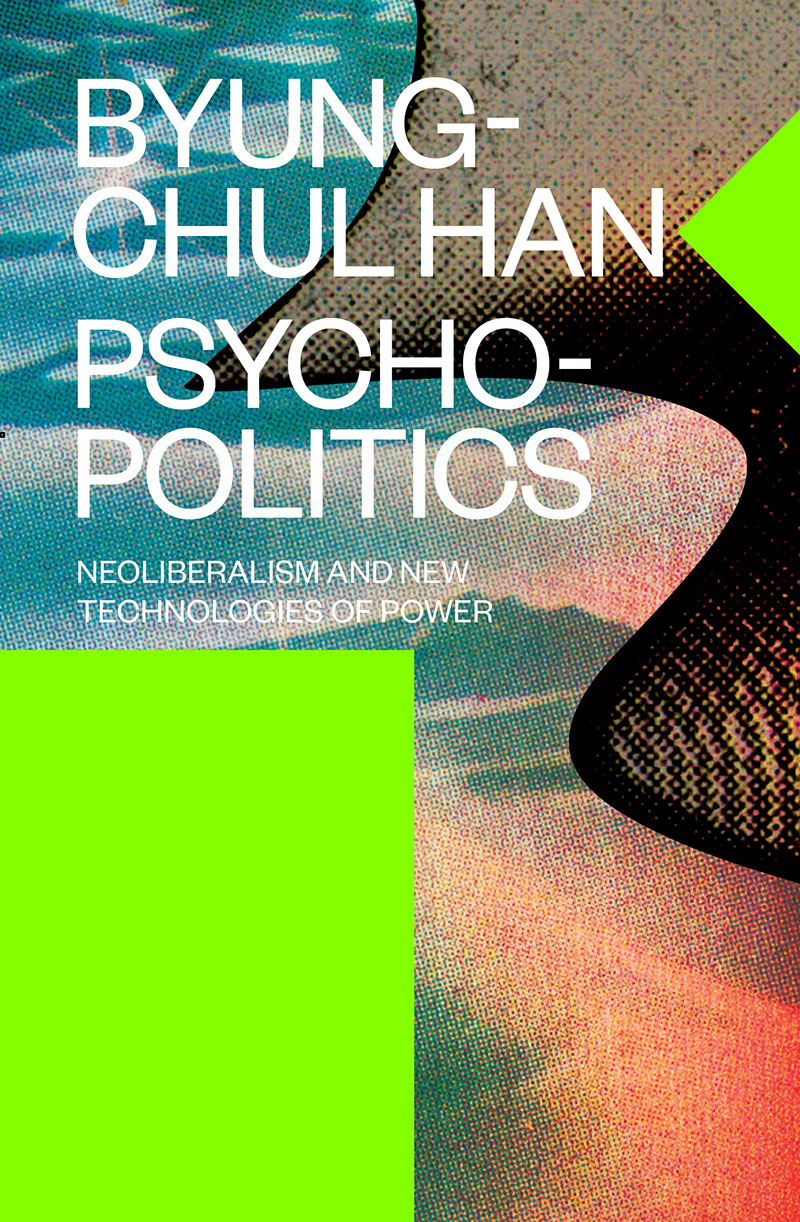
Byung-Chul Han, Psychopolitics. Neoliberalism and New Technologies of Power. Translated by Erik Butler, Verso 2017

See also Review in The Guardian

Exploring how neoliberalism has discovered the productive force of the psyche

Byung-Chul Han, a star of German philosophy, continues his passionate critique of neoliberalism, trenchantly describing a regime of technological domination that, in contrast to Foucault’s biopower, has discovered the productive force of the psyche. In the course of discussing all the facets of neoliberal psychopolitics fueling our contemporary crisis of freedom, Han elaborates an analytical framework that provides an original theory of Big Data and a lucid phenomenology of emotion. But this provocative essay proposes counter models too, presenting a wealth of ideas and surprising alternatives at every turn.

Reviews
“How do we say we? It seems important. How do we imagine collective action, in other words, how do we imagine acting on a scale sufficient to change the social order? How seriously can or should one take the idea of freedom in the era of Big Data? There seems to be something drastically wrong with common ideas about what the word act means. Psychopolitics is a beautifully sculpted attempt to figure out how to mean action differently, in an age where humans are encouraged to believe that it’s possible and necessary to see everything.”

– Timothy Morton

stuartelden's avatarProgressive Geographies

Earlier this month I finished working through Maladie mentale et personnalité, which I discussed beginning in the last update, and have drafted a substantial section analyzing the book. I imagine I can only use a fraction of the quotes I took down in my notes, as at the moment it’s a long section. Only then did I go to the valuable secondary literature on the book, including the work of Macherey, Dreyfus, Gutting, Bernauer, the biographies and so on. Initially I was trying to read it without those filters.

This book is often read either in relation to its 1962 version Maladie mentale et psychologie (the version we have in English), or as a summation of a positon Foucault moved beyond, in this chapter I’m trying to read it as a valuable book in its own right. (The other two aspects will be treated elsewhere in my study.)…

View original post 1,427 more words