Foucault News

News and resources on French thinker Michel Foucault (1926-1984)

Šlesingerová, E.
Biopower imagined: Biotechnological art and life engineering
(2018) Social Science Information, 57 (1), pp. 59-76.

DOI: 10.1177/0539018417745164

Abstract
We are witnessing profound changes in our societies via biosciences, biotechnologization, and digitalization. The influence and application of specific engineering rationality and cybernetic perspectives to the complex systems of living structures and to the language of biology are integral parts of our cultural environment. The biotechnological reproduction of life, bodies and cells, as well as AI-equipped machines, has become normal and sometimes even technically routine in contemporary societies. The biotechnologization of society and the engineering of life have also significantly influenced contemporary art fields, practices and projects. The crucial analytical scope for this article is a specific biotechnological art field – bio art. Bio art includes the works of artists who are intrigued by working with living or semi-living tissues and biotechnologies. Using specific artworks, mainly by Louis Bec, Heather Dewey-Hagborg, and Biononymous, the text investigates current forms of power over life – biopower – that imagine, classify, and govern our societies today, even on molecular and genetic levels. The text analyzes artistic reflections of the processes by which people are governed mainly as the derivatives of the body, biological and genetic data sets. In this context, the article explores artworks inspired by specific biopolitical engineering rationality and surveillance practices enabling naming, fabricating and dealing with life which is synthesized, ethnicized and monitored. © 2017, © The Author(s) 2017.

Author Keywords
bio art; biopower; body; genetic surveillance; life; life engineering; Michel Foucault
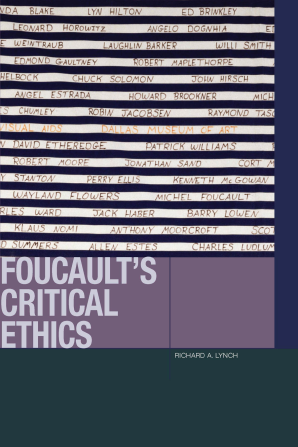
Richard Lynch, Foucault’s Critical Ethics, Fordham University Press, 2016

DESCRIPTION
The central thesis of Foucault’s Critical Ethics is that Foucault’s account of power does not foreclose the possibility of ethics; on the contrary, it provides a framework within which ethics becomes possible. Tracing the evolution of Foucault’s analysis of power from his early articulations of disciplinary power to his theorizations of biopower and governmentality, Richard A. Lynch shows how Foucault’s ethical project emerged through two interwoven trajectories: analysis of classical practices of the care of the self, and engaged practice in and reflection upon the limits of sexuality and the development of friendship in gay communities. These strands of experience and inquiry allowed Foucault to develop contrasting yet interwoven aspects of his ethics; they also underscored how ethical practice emerges within and from contexts of power relations. The gay community’s response to AIDS and its parallels with the feminist ethics of care serve to illustrate the resources of a Foucauldian ethic—a fundamentally critical attitude, with substantive (but revisable) values and norms grounded in a practice of freedom.

Heterotopic space opera | Vue Weekly, September 7, 2017 by Stephan Boissonneault

Editor’s note: old news

Travis McEwen’s exhibit tackles themes in an inventive sci-fi world

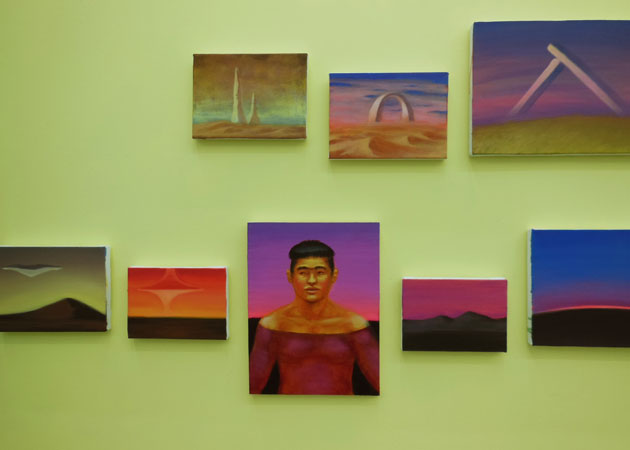
Working in the medium of vibrant painting, Travis McEwen explores the themes of gender identity, queerness, science fiction, and the abstract in his exhibit, The Arch: Plans for a Heterotopic Space Opera.

The exhibit is somewhat focused on the topic of heterotopia, a concept of human geography elaborated by philosopher Michel Foucault. The concept, in layman’s terms, is essentially a space that functions with little to no ruler or power.

“A utopia is a good space that doesn’t exist and a dystopia is a bad space, but a heterotopia is an other space. So, spaces of otherness,” McEwen says. “I like the concept to be a way peripheral people sort of inhabit the larger world, often in smaller communities or through digital platforms. Things like Tumblr or Facebook are good examples of people having a community that occupies digital space, but may not be in physical proximity.”


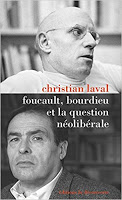
Christian Laval : Foucault, Bourdieu et la question néolibérale
, La Découverte – Mars 2018

Foucault et Bourdieu ont tous deux désigné leur époque comme celle du néolibéralisme. Un terme qui caractérise toujours parfaitement la nôtre. En prenant soin de suivre le contexte propre à chacun, Christian Laval relève, parmi les analyses des deux intellectuels, ce qui se révèle essentiel pour comprendre et combattre cette longévité.

Deux des intellectuels français parmi les plus importants de la seconde moitié du XXe siècle, Michel Foucault et Pierre Bourdieu, ont choisi de caractériser – le premier à la fin des années 1970, le second dans les années 1990 – le moment historique qu’ils traversaient par le même concept : ” néolibéralisme “. Pour autant, leurs parcours théoriques et leurs styles de recherche se sont révélés très différents et, surtout, ils ont l’un et l’autre laissé inachevés leurs travaux sur cette question, rendant cet ouvrage, véritable enquête sur leurs enquêtes, indispensable.

La grande force de ce livre est de faire comprendre, dans une démarche à la fois politique et pédagogique, l’originalité et la cohérence de chacune d’elles, sans oublier leurs points aveugles et leurs limites. L’ouvrage montre en quoi Foucault et Bourdieu éclairent de façon à la fois différente et complémentaire ce qu’est le néolibéralisme.

Et comme celui-ci se prolonge d’une manière à la fois plus manifeste, plus radicale et plus violente, leurs analyses s’avèrent incontournables pour comprendre le mode de pouvoir actuel et pour rouvrir la question : quelle nouvelle politique faut-il inventer pour mener ce combat central du XXIe siècle ?

Christian Laval est l’auteur de nombreux livres, parmi lesquels L’Ambition sociologique (2002), L’école n’est pas une entreprise (2004), L’Homme économique(2007), et, avec Pierre Dardot, La Nouvelle Raison du monde (2009), Marx, Prénom : Karl (2012), Commun (2014) et, plus récemment, Ce cauchemar qui n’en finit pas (2016) et L’Ombre d’Octobre (2017).

Up in smoke: should an author’s dying wishes be obeyed? | Books | The Guardian
Blake Morrison
Sat 10 Mar

Harper Lee never wanted Go Set a Watchman brought out, Sylvia Plath’s diary was burned by Ted Hughes – the controversial world of literary legacies

And then there’s Foucault, the fourth volume of whose major work The History of Sexuality existed only as a first draft when he died in 1984, but has just been released under the title Confessions of the Flesh. “The rights-holders of Michel Foucault considered that the time and the conditions had come to publish this major unreleased work,” the philosopher Frédéric Gros writes in his introduction, though Foucault was clearly opposed. “Pas de publication posthume,” he used to tell friends. “Don’t pull the Max Brod-Kafka trick on me.” It may have been Foucault who was playing a trick, since Brod is the most famous example of an executor serving posterity by denying the author’s wishes. “Dearest Max,” Kafka wrote when he was dying of TB, “Everything that I leave behind in the way of diaries, manuscripts, letters of my own and from others, sketches, etc … should be burned, completely and unread.” But Brod had already told Kafka he wouldn’t oblige him. Throughout their “unclouded friendship”, Brod “never once threw away the smallest scrap of paper that came from [Kafka], no, not even a postcard”, and he wasn’t about to start now. Without Brod, The TrialThe Castle and Amerika would never have been published.

stuartelden's avatarProgressive Geographies

BHI_Foucault_Le_souci_Plat.inddMy review essay of the fourth volume of Foucault’s History of Sexuality, Les aveux de la chair is now available in Theory, Culture and SocietyThe essay will appear in the annual review of the journal later this year, but this version is open access.
Almost thirty-four years after his death, the book Foucault was working on even in hospital is finally published. Histoire de la sexualité 4: Les aveux de la chair, edited by Frédéric Gros, appeared on 8 February 2018 with Gallimard, in the Bibliothèque des Histoires series in which the first three volumes had appeared. The back cover simply has the line of René Char that also appeared on volumes II and III. “The history of men is the long succession of synonyms of the same term [vocable]. To contradict them is a duty”. Can we read this book in straight-forward continuity with those…

View original post 63 more words

L’œuvre de jeunesse de Michel Foucault : psychopathologie, phénoménologie et anthropologie

Appel à participation à un atelier doctoral sur l’œuvre de Michel Foucault
Université de Lübeck, 12-14.07.2018

PDF of call for Papers. French and German

Cet atelier doctoral sera focalisé sur des textes et manuscrits de jeunesse de Foucault, dans le cadre de ses premiers travaux critiques sur les sciences de l’esprit, dont l’édition est en cours de réalisation. La base de ce projet éditorial est un ensemble de manuscrits, traductions, es-quisses de thèse de doctorat et notes de cours jusqu’ici inédits, que Foucault a rédigés dans la période qui va de la fin de ses études à l’École Normale Supérieure (auprès de Maurice Mer-leau-Ponty, Jean Hyppolite et Louis Althusser) à sa thèse de doctorat (Folie et déraison, 1960). Pour expliciter le contexte, rappelons que Foucault a été recruté comme assistant de psychologie à l’Université de Lille en 1952, et qu’il se confronte alors aux problèmes posés par l’anthropologie philosophique, la phénoménologie, la psychologie clinique et la psychopathologie. Il a été formé comme psychologue stagiaire aux techniques de l’électro-encéphalographie et aux méthodes des tests psychologiques à l’Hôpital Sainte-Anne (Paris) et entretient des échanges scientifiques avec les psychiatres Roland Kuhn et Ludwig Binswanger en Suisse. Il écrit Maladie mentale et personnalité (1954), introduit Le Rêve et l’existence de Ludwig Binswanger et traduit le Cycle de la structure de Viktor von Weizsäcker.

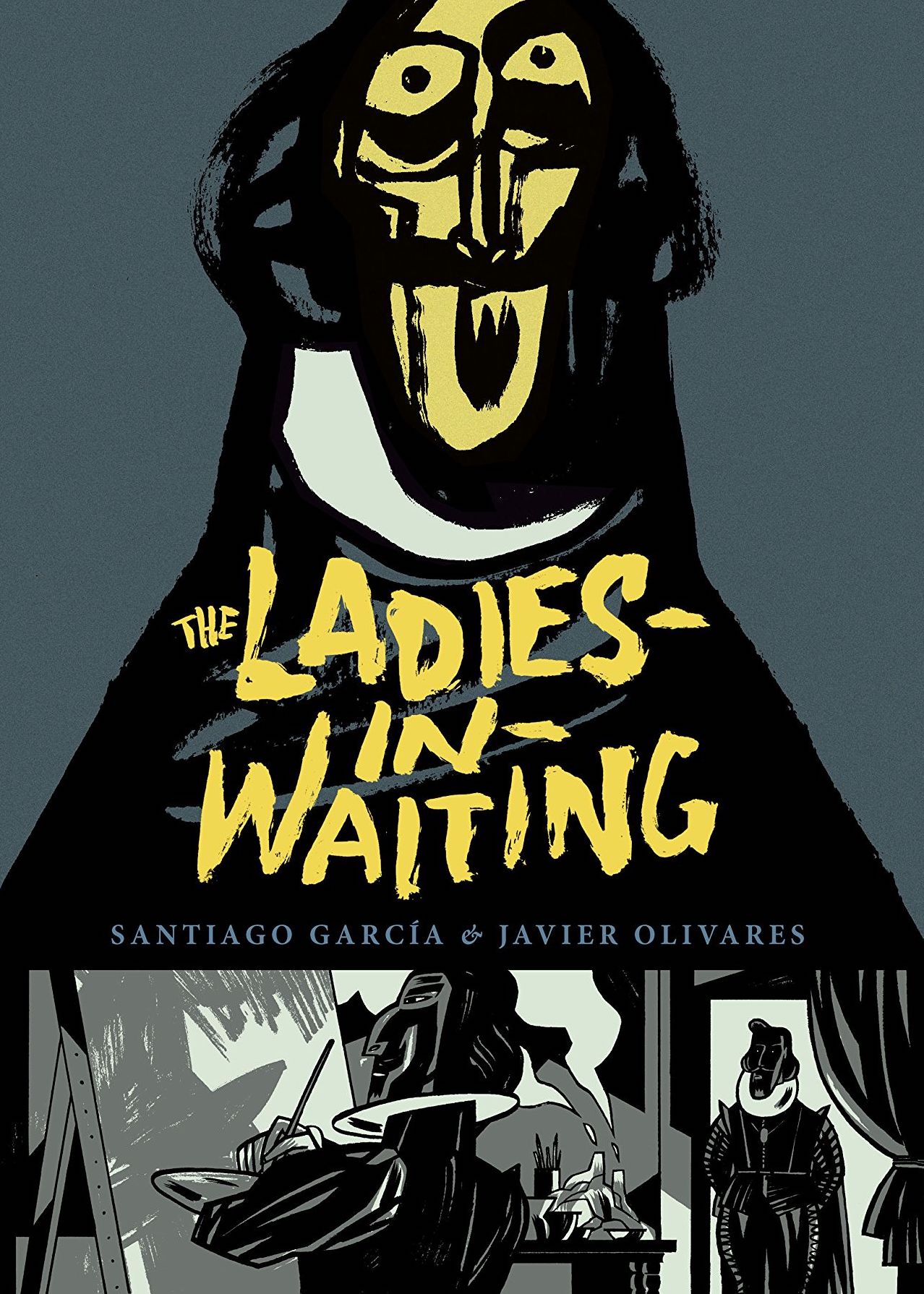
This graphic novel is the biography of a painting. But perhaps it’s really about reality

Review by Debkumar Mitra, Scroll.in, Published Oct 15, 2017

Santiago Garcia and Javier Olivares’s ‘The Ladies-In-Waiting’ tries to lift the veil of mystery over Velázquez’s famous work ‘Las Meninas’.

A fictional account of a mysterious and famous painting and a fragmented history of its birth add up to make for an unusual subject for a graphic novel. Santiago Garcia and Javier Olivares’s The Ladies-In-Waiting is an attempt to unveil the mystery shrouding Spanish painter Diego Rodríguez de Silva y Velázquez’s famous work Las Meninas, while meditating about the Spaniard’s life. A postmodern novel with a touch of pastiche, an absence of verifiable facts, and accounts of events by unreliable witnesses, this graphic narrative is a smörgåsbord of ideas with broad flatline German Expressionist style illustrations.

[…]

Many of the people fascinated by Las Meninas feature in the novel: French philosopher Michel Foucault, artists Francisco Goya, Pablo Picasso, and Salvador Dalí, playwright Antonio Buero Vallejo, and even the little-known American painter William Merrit. These characters appear suddenly, disrupting the narrative flow. Olivares’s use of different styles and colours are a bit shocking at times, as in the case of his depiction of Foucault, for instance. It appears to be a deliberate effort to capture an era through its dominant art style, albeit improvised.

See also this review

Helen Lock, The transformative effect of university-level learning inside prisons | Times Higher Education Features

Prisoners rarely get tertiary lessons, let alone have undergraduates study alongside them, but the results can be profound. Helen Lock reports. March 15, 2018

PDF if you can’t access online

Extracts

[…]

HMP Isis is located in south-east London, not far from Goldsmiths. Although the university has plenty of experience teaching former inmates through its well-established Open Book programme, it started teaching inside prisons only last year, beginning with a successful 10-week pilot programme covering social sciences. The male inmates are all between 18 and 30, so they fall into the typical age range for students. However, they have a variety of prior education levels, to which the courses must be able to adapt. Learning alongside the prisoners are current students from Goldsmiths, taking extra credits or on access courses.

Thomas is very impressed by the response to the programme from her inmates. “They are avid learners, which has been very exciting to see,” she says. “I wanted to get something like this to happen because it’s aspirational – there tends to be a focus on vocational training in prisons, which is important, but this is something different.”

[,,,]

It is hard to overstate the genuinely transformative impact that the course seems to have had on the group. One of the speakers says that by taking part in the course he realised that everything could be questioned and that his opinion was important. Another found that, as a gay man, he identified with the writings of Michel Foucault, and observed that a discussion on the topic of sexuality had led to a shift in the wider group’s attitudes.

[…]

It is nothing new to find teachers and academics working inside prisons; various types of ad hoc education have been on offer to prisoners for years. But formal, university-led lessons such as the programme at Isis have developed only relatively recently in the UK, Clark says. The model that Goldsmiths is using – of undergraduate students learning alongside prisoners – was pioneered in 2014 by Durham University with its Inside/Out criminology module. The following year, the University of Cambridge launched a similar programme, called Learning Together.

[Editor: Update January 2026. Links to Durham and Cambridge programs now only available on the internet archive]

E. Iula, “L’eredità foucaultiana di Judith Butler”, in Rassegna di teologia, 2017 (4), pp. 639-660.

Article on academia.edu

Abstract:
Foucauldian influence on Butler’s work is evident at least in
three points: in the constitution of the subject by a true speech
about sexuality, in the genealogical method and in inheriting the
Foucauldian project itself. The research of the American author
will then deal with deconstructing the current regulatory regimes
and deepening her own vision of gender.

Abstract (italian):
L’influenza foucaultiana nell’opera di Judith Butler appare evidente
almeno in tre punti: nella costituzione del soggetto a
partire dai discorsi veri sulla sessualità, nel metodo genealogico
e, in ultimo, nel farsi erede dello stesso progetto foucaultiano.
Le ricerche dell’autrice americana si occuperanno
poi di decostruire i regimi normativi vigenti e di approfondire
la propria visione del gender.

Index:
Intro
1. Foucault e la sessualità
1.1 Tra la volontà di sapere e il bisogno di parlare
1.2 Le sessualità problematiche
1.3 La svolta: il contro.discorso dell’omosessualità
2. Judith Butler
2.1 Il progetto
2.2 Come è fatto il “gender”?
2.3 Che senso ha resistere?
3. Conclusioni

Emanuele Iula has a PhD from Paris, Centre Sèvres, focused on generativity as a new ethical approach. He teaches Ethics and conflict mediation in Naples.