Foucault News

News and resources on French thinker Michel Foucault (1926-1984)

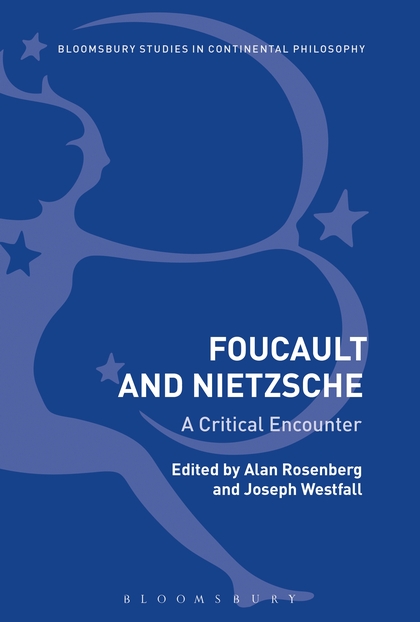
Foucault and Nietzsche: A Critical Encounter (Bloomsbury Studies in Continental Philosophy) Edited by Joseph Westfall and Alan Rosenberg, Bloomsbury Academic, 2018

Foucault’s intellectual indebtedness to Nietzsche is apparent in his writing, yet the precise nature, extent, and nuances of that debt are seldom explored. Foucault himself seems sometimes to claim that his approach is essentially Nietzschean, and sometimes to insist that he amounts to a radical break with Nietzsche. This volume is the first of its kind, presenting the relationship between these two thinkers on elements of contemporary culture that they shared interests in, including the nature of life in the modern world, philosophy as a way of life, and the ways in which we ought to read and write about other philosophers.

The contributing authors are leading figures in Foucault and Nietzsche studies, and their contributions reflect the diversity of approaches possible in coming to terms with the Foucault-Nietzsche relationship. Specific points of comparison include Foucault and Nietzsche’s differing understandings of the Death of God; art and aesthetics; power; writing and authorship; politics and society; the history of ideas; genealogy and archaeology; and the evolution of knowledge.

Table of contents
Acknowledgments

Introduction
Alan Rosenberg (Queens College) and Joseph Westfall (University of Houston-Downtown)

1 ‘Foucault, Nietzsche and the History of Truth’
Paul Patton (UNSW Australia)

2 ‘Nietzsche and Foucault’s “Will to Know”’
Alan D. Schrift (Grinnell College)

3 ‘“We are Experiments”: Nietzsche, Foucault’
Keith Ansell-Pearson (University of Warwick)

4 ‘Nietzsche and Foucault: Modalities of Appropriating the World for an Art of Living’
Alan Rosenberg and Alan Milchman (Queens College)

5 ‘Foucault and Nietzsche: Sisyphus and Dionysus’
Michael Ureand Federico Testa (Monash University)

6 ‘Truth and Becoming Beyond the Liberal Regime’
Jill E. Hargis (California State Polytechnic University, Pomona)

7 ‘Twice Removed: Foucault’s Critique of Nietzsche’s Genealogical Method’
Brian Lightbody (Brock University)

8 ‘The Religion of Power: Between Nietzsche and Foucault’
James Urpeth (University of Greenwich)

9 ‘Nietzsche and Foucault on Power: From Honneth’s Critique to a New Model of Recognition’
João Constâncio and Marta Faustino (Universidade NOVA de Lisboa)
Updated bibliographies :: Heterotopian Studies

Two updated bibliographies related to heterotopia:

  1. General Bibliography gen pdf (updated March 2018)
  2. Under topic headings bibliography topic pdf  (updated March 2018)

Essay on the death of Hayden White
Scott McLemee, Inside Higher Ed, March 9, 2018.

The author of Metahistory, one of the most influential books in the humanities over the past four decades, died Monday. Scott McLemee takes him out of the poststructuralist pigeonhole.

Pursuing such a line of thought meant turning to sources outside history as a profession. The usual shorthand here is to say that White’s thinking converged with the work of structuralist and poststructuralist theorists in Europe — and indeed, White published one of the earliest papers on Michel Foucault to appear in an Anglophone journal. But emphasizing the French connection seriously understates the distinctiveness of the conceptual tool kit he put together. To analyze the modes of storytelling historians found themselves using to narrate the past, he borrowed from Northrop Frye’s The Anatomy of Criticism. For insights into historians’ rhetorical patterns, he turned to Kenneth Burke’s classic essay “Four Master Tropes.” And White’s interest in the aesthetic dimension of historical writing, while owing something to Roland Barthes, seems to have been inspired by Italian philosophers (especially Giambattista Vico and Benedetto Croce) rather than Parisian semioticians.

Shelley L. Tremain, Foucault and Feminist Philosophy of Disability, University of Michigan Press, 2017

Addresses misrepresentations of Foucault’s work within feminist philosophy and disability studies, offering a new feminist philosophy of disability

Description

Accessibility features: The EPUB version includes textual description of images to make visual content accessible to readers with disabilities that affect reading.

Foucault and Feminist Philosophy of Disability is a distinctive contribution to growing discussions about how power operates within the academic field of philosophy. By combining the work of Michel Foucault, the insights of philosophy of disability and feminist philosophy, and data derived from empirical research, Shelley L. Tremain compellingly argues that the conception of disability that currently predominates in the discipline of philosophy, according to which disability is a natural disadvantage or personal misfortune, is inextricably intertwined with the underrepresentation of disabled philosophers in the profession of philosophy. Against the understanding of disability that prevails in subfields of philosophy such as bioethics, cognitive science, ethics, and political philosophy, Tremain elaborates a new conception of disability as a historically specific and culturally relative apparatus of power. Although the book zeros in on the demographics of and biases embedded in academic philosophy, it will be invaluable to everyone who is concerned about the social, economic, institutional, and political subordination of disabled people.

“A much-needed contribution to the general intellectual discussion of disability, to Foucault studies, and to feminist theory. Tremain plows into some central tenets of disability theories and some of the most taken-for-granted feminist criticisms of Foucault. She also indicts professional philosophy in North America for its structural exclusion of disabled scholars. The evidence she presents and the arguments she makes are strong and sound.”
—Ladelle McWhorter, University of Richmond

Foucault and Feminist Philosophy of Disability offers a master class on Foucault and feminist theory as it addresses the dangerous and biased exclusion of disability within academic philosophy. Its most powerful gifts are the tools it gives readers for recognizing the same exclusion and discrimination within their own fields—it is a book that has the potential to change academia.”
—Jay Dolmage, University of Waterloo

“An important work not just for those working on disability, but for anyone working on social justice, broadly understood. It is clearly argued, full of original ideas and insightful argument, and also a significant political intervention into debates over philosophical method. Tremain is unrelentingly materialist and structuralist in her analysis of ableist, sexist, and racist oppression. The book is an urgent call for all of us to do better.”
—Sally Haslanger, Ford Professor of Philosophy and Women’s and Gender Studies, Massachusetts Institute of Technology

“Sets the scene for philosophy of disability and opens new paths for critical disability studies . . . . Tremain carefully corrects misreadings and misappropriations of Foucault among disability theorists and feminists alike, and shows how these thinkers inadvertently reinscribe the status quo when it comes to theorizing disability. In working through the many ways disability is constructed, the book radicalizes philosophical consideration of topics ranging from epistemic injustice to stem cell research.”
—Melinda Hall, Stetson University

Shelley L. Tremain holds a Ph.D. in Philosophy and has taught in Canada, the U.S., and Australia. This book was awarded the 2016 Tobin Siebers Prize for Disability Studies in the Humanities. The author was also the 2016 recipient of the Tanis Doe Award for Disability Study and Culture in Canada.

stuartelden's avatarProgressive Geographies

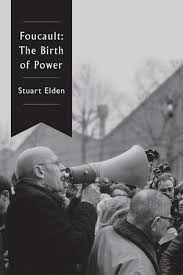
Foucault-The-Birth-of-Power-coverMy 2017 bookFoucault: The Birth of Power is generously reviewed by Audrey Borowski in Politics, Religion & Ideology (requires subscription).

Links to other reviews and discussions of this book, and its companion Foucault’s Last Decade are archived here.

View original post

Ugo Balzaretti, Leben und Macht Eine radikale Kritik am Naturalismus nach Michel Foucault und Georges Canguilhem, Klebebindung (2018)

BESCHREIBUNG
Das Biologische ist, Lévinas zufolge, zum »Herzen des geistigen Lebens« geworden. Davon zeugt sowohl die zunehmende Bedeutung der Biowissenschaften als auch die Verbreitung biologistischer Menschenbilder. Doch liegt der moderne Biologismus mehr noch in einem subtilen Naturalismus, der nicht einfach Geist auf Natur reduziert, sondern in einem naturalistischen Verständnis des Geistes selbst besteht.

Einen theoretischen Anschluss für eine Genealogie der heutigen Herrschaft des bloßen Lebens sucht das vorliegende Buch in den Werken von Michel Foucault und Georges Canguilhem. Dabei wird eine doppelte Strategie verfolgt: Der Begriff des Wahnsinns wird zum einen ins Zentrum von Foucaults Werk gerückt und zum anderen in den Begriff eines unendlichen Lebens überführt. Foucaults Philosophie wird so nicht länger einem Theoriestrang zugeordnet, der von Spinoza bis zu Nietzsche reicht, sondern gehört nunmehr einer von letzterem und Hegel gebildeten Konstellation an. Dadurch eröffnet sich eine kritische Perspektive auf das, was Jean Hyppolite als den die bürgerliche Welt kennzeichnenden Zusammenhang von anthropologischem Reduktionismus, modernem Instrumentalismus und dem Vergessen des spekulativen Charakters der Erfahrung erkannt hat.

Die Verteidigung eines spekulativen Lebensbegriffs im Anschluss an Georges Canguilhem und die gleichzeitige Wiederaufnahme von Auguste Comtes Gedanken einer Bio- und Soziokratie ermöglichen es darüber hinaus, die von Foucault denunzierte technokratische Verflechtung von Biologie und Politik nicht nur den modernen Wissenschaften, die meinen, den Menschen restlos verobjektivieren zu können, sondern auch dem dominierenden nachmetaphysischen Strang der modernen Philosophie entgegenzuhalten. Denn weder eine Philosophie der Praxis noch eine Philosophie der Gesellschaft vermag es, die den Menschen kennzeichnende Spannung zwischen Natur und Freiheit aufzulösen.

UGO BALZARETTI
Ugo Balzaretti hat in Freiburg (Schweiz) Italienische Literatur, Französische Literatur und Romanische Philologie studiert. Nach anschließendem Studium der Philosophie in Berlin und Potsdam und zeitweiliger Tätigkeit als Hauptschul- und Gymnasiallehrer promovierte er 2016 im Fach Philosophie an der Universität Basel.

With thanks to Elisabetta Basso for this news

From the House of the Dead review – formidable performances humanise Janáček’s vision of hell | Music | The Guardian
Tim Ashley
Fri 9 Mar 2018

From the House of the Dead is at the Royal Opera House, London, until 24 March. Box office: 020-7304 4000.

Krzysztof Warlikowski’s new Royal Opera staging of Janáček’s From the House of the Dead, the first in the company’s history, opens with silent but subtitled footage of the philosopher Michel Foucaultheatedly discussing the prison system, which he analysed, attacked and attempted to reform throughout much of his life. A startling opening to a radical if flawed interpretation, it immediately exposes the tensions and problems to follow. The footage rolls over Janáček’s prelude, played with ferocious power by the ROH orchestra under Mark Wigglesworth. But reading Foucault pulls us away from the music, and our focus blurs.

Josh Jones, The Entire Archives of Radical Philosophy Go Online: Read Essays by Michel Foucault, Alain Badiou, Judith Butler & More (1972-2018) | Open Culture, 9 March 2018

Extract

Radical Philosophy has published essays and interviews with nearly all of the big names in academic philosophy on the left—from Marxists, to post-structuralists, to post-colonialists, to phenomenologists, to critical theorists, to Lacanians, to queer theorists, to radical theologians, to the pragmatist Richard Rorty, who made arguments for national pride and made several critiques of critical theory as an illiberal enterprise. The full range of radical critical theory over the past 45 years appears here, as well as contrarian responses from philosophers on the left.
[…]
Badiou’s polemic includes an oblique swipe at Stalinism, a critique Michel Foucault makes in more depth in a 1975 interview, in which he approvingly cites phenomenologist Merleau-Ponty’s “argument against the Communism of the time… that it has destroyed the dialectic of individual and history—and hence the possibility of a humanistic society and individual freedom.” Foucault made a case for this “dialectical relationship” as that “in which the free and open human project consists.” In an interview two years later, he talks of prisons as institutions “no less perfect than school or barracks or hospital” for repressing and transforming individuals.


stuartelden's avatarProgressive Geographies

297Not much is known about Foucault’s time in Hamburg in 1959-60, except that he was working on his translation of Kant’s Anthropology at this time. The preface to History of Madness was also written there. A new piece in German by Rainer Nicolaysen looks at this period in detail, via Foucault Blog

Foucault in Hamburg: Anmerkungen zum einjährigen Aufenthalt 1959/60

.

View original post

Ana Sofia Elias and Rosalind Gill, Beauty surveillance: The digital self-monitoring cultures of neoliberalism (2018) European Journal of Cultural Studies, 21 (1), pp. 59-77.
https://doi.org/10.1177/1367549417705604

Abstract
This article argues that ‘beauty apps’ are transforming the arena of appearance politics and foregrounds a theoretical architecture for critically understanding them. Informed by a feminist-Foucaultian framework, it argues that beauty apps offer a technology of gender which brings together digital self-monitoring and postfeminist modalities of subjecthood to produce an hitherto unprecedented regulatory gaze upon women, which is marked by the intensification, extensification and psychologization of surveillance. The article is divided into four sections. First, it introduces the literature on digital self-tracking. Second, it sets out our understanding of neoliberalism and postfeminism. Third, it looks at beauty and surveillance, before offering, in the final section, a typology of appearance apps. This is followed by a discussion of the modes of address/authority deployed in these apps – especially what we call ‘surveillant sisterhood’ – and the kinds of entrepreneurial subjectivity they constitute. The article seeks to make a contribution to feminist surveillance studies and argues that much more detailed research is needed to critically examine beauty apps. © 2017, © The Author(s) 2017.

Author Keywords
Beauty; digital self-tracking; Foucault; gender; labour; neoliberalism; new media; postfeminism; subjectivity; surveillance