Foucault News

News and resources on French thinker Michel Foucault (1926-1984)

Kaveh L. Afrasiabi, The Skripal Case Through the Lens of Critical Legal Theory, Academia.edu, 2018

How would Michel Foucault interpret the Skripal affair unfolding before our eyes into a major crisis between Russia and the West? This article seeks to draw on the methodology and insights of critical legal theory to analyze and deconstruct the Western narrative of the Skripal case that has resulted in a sharp deterioration of diplomatic relations between Russia and several Western nations following the British government’s formal accusation of Russia as the culprit behind the alleged nerve gas attack on Mr. Sergei Skripal and his daughter, Yulia Skripal, in Salisbury, England, on March 4th.

As a sub-set of modern Western legal tradition, critical legal theory, and with it the methodology of legal deconstruction, enables us to explore in legal narratives the ‘signs’ and ‘traces’ of bias, predisposition of evidence, and the often subtle ‘pile on’ of hidden political agendas in specific legal conjunctures. In contrast to the positivist and mainstream approach in legal studies, this ‘school of legal thought’ relies on the insights and methodological skills provided by the growing literature on critical legal analysis that draws on such critical thinkers as Michel Foucault and Jurgen Habermas. Foucault’s insights on knowledge/power and the disciplinary nature of law in functioning with the requirements of maintaining hegemony, as well as Habermasian understanding of “systematic distortions” in legal discourses and their “validity norms” by the “mediatizing” influence of power (and geopolitics) are relevant to any work seeking to go beyond the self-rationalizing legal postures, by subjecting the latter to critical legal scrutiny and seeking plausible answers from the totality of intrinsic and extrinsic factors, including the domestic and international variables, probed as objectively and dispassionately as possible.

read more

About the author: Kaveh L. Afrasiabi is a political scientist and author of several books — on Iran, the Middle East, UN, and international affairs — and numerous articles including in New York Times, Guardian, UN Chronicle, Harvard International Review, and Der Tagesspiegel. His latest book, co-authored with Nader Entessar is titled Iran Nuclear Accord and the Remaking of the Middle East (Rowman & Littlefield, 2018)

See also:
Benno Premsela Lecture 2017 by Paul B. Preciado

Philosopher, curator and transgender activist Paul B. Preciado gave the 2017 Benno Premsela Lecture during Thursday Night Live! at Het Nieuwe Instituut. Preciado is one of the leading thinkers in the study of gender and sexual politics, in this lecture he addressed architecture as a technology of subject production.

Post-Internet Artists Crack Open Our Technological Past

Editor’s note: old news

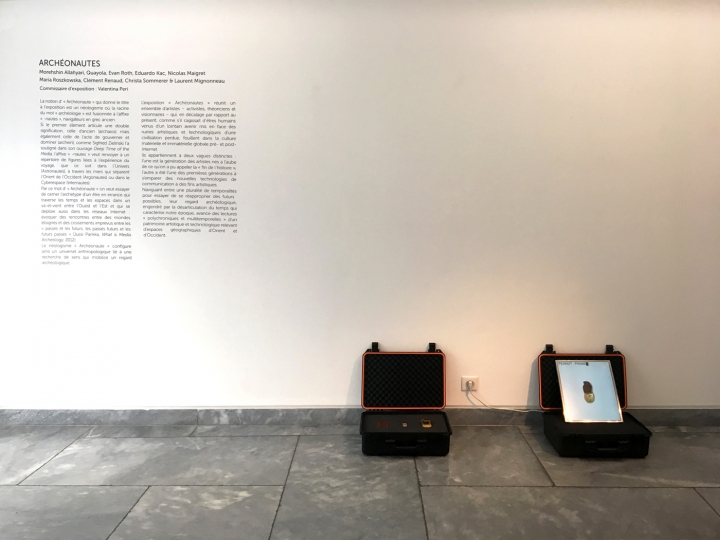
A group show at Paris’s Galerie Charlot uses bygone tools and techniques to explore modern media.

PARIS — Curator Valentina Peri has made smart, cross-generational, idea-based choices when formulating her excellent group show Archéonauts, the best of the Paris season. Citing Michel Foucault’s Archeology of Knowledge, the Siegfried Zielinski essay “Deep Time of the Media,” and Jussi Parikka’s book What is Media Archeology, Peri has created (or identified) something ambitious: the archetype of a wayfarer physically moving back and forth between west and east while surfing on the internet. This multidimensional traveler, who also crosses between the past and the present, is identified by, and possesses, what Peri calls the archeological gaze.

Žitko, M.
Governmentality verus moral economy: notes on the debt crisis
(2018) Innovation, pp. 1-15. Article in Press.

DOI: 10.1080/13511610.2018.1429897

Abstract
In this paper we revisit the concepts of governmentality and moral economy in the context of subordinate or dependent financialization. Michel Foucault and E.P. Thompson have introducted these concepts in order to capture the operational principles of liberal order in the moment of collision struggle with “anti-liberal” discursive forms such as moral economy of the poor or Keynesian economics. Furthermore, both of these concepts aim at capturing and analyzing the key sites of subjectivity formation. Contemporary debt relations as they appear at the level of household represent the point at which structural development of financialized capitalism intersects with the logic of household economy and calls for type of analysis that takes on board insights drawn from heterodox political economy, but move further and captures the norms, morals and practices that, sometimes laterally and indirectly, impact and modify the underlying economic trajectory. © 2018 The European Association for the Advancement of the Social Sciences

Author Keywords
Financialization; governmentality; household debt; moral economy; post-socialism

Keshet, Y., Popper-Giveon, A.
The undisciplined patient in neoliberal society: conscious, informed and intuitive health behaviours
(2018) Health, Risk and Society, pp. 1-18. Article in Press.

DOI: 10.1080/13698575.2018.1432757

Abstract
Applying Foucault’s theoretical concept of discipline, the present article uses the term undisciplined patients to describe those who resist medical authority, defy conventional medical interpretations concerning health risks and adopt non-normative health behaviours. There is considerable scholarly literature available on non-normative health behaviours, such as out-of-hospital birth, refusal to vaccinate or homoeopathy. While differentiating each such issue from the others has its merits, we argue that these health behaviours have much in common and ought to be perceived as a social phenomenon characteristic of Western neoliberal societies, in which health consumers are expected to assume responsibility for their own health behaviours and to avoid health risks. The objective of the research on which this article is based was to explore the common attitudes underlying the health behaviours of undisciplined patients, or, using Foucault’s terminology, determining which technologies of the self they implemented. We conducted in-depth interviews with 10 Jewish Israeli undisciplined patients during 2016. We identified four different practices that undisciplined patients implement: critical awareness of the medical hegemony; willingness to challenge by asking questions, collecting information and involvement in a continuous process of inquiry; using intuition in making health-related decisions and possessing a powerful internal locus of control; and willingness to control their fear and anxiety. Their health behaviours varied widely, including non-normative and normative practises alike, rendering it impossible to address them as one coherent discipline. Situating the social phenomenon of undisciplined patients is of importance to researchers who study risk, as well as to health policy experts. It will also benefit those who study specific non-normative health attitudes and behaviours. © 2018 Informa UK Limited, trading as Taylor & Francis Group

Author Keywords
Foucault; health behaviour; neoliberalism; risk; undisciplined patients

Index Keywords
adult, anxiety, article, attitude to health, awareness, clinical article, continuous process, female, health care policy, human, interview, intuition, locus of control, male, nomenclature, scientist

Editor’s note: John Sturrock was an early commentator French theory and Foucault, cf his 1980 edited book Structuralism and Since. See this article in The Times – but needs a subscription.

John Sturrock, 1930–2017
ADRIAN TAHOURDIN, Times Literary Supplement, September 5 2017

Anyone who met John Sturrock could not but be struck by how English he seemed – both in temperament and in his way of speaking. And yet it was as an expert on modern French literature that he built a reputation as one of the most penetrating critics of recent times. He privately referred to the writers and theorists who, along with Jean-Paul Sartre, dominated the Parisian intellectual scene of the 1960s and 70s – Roland Barthes, Jacques Derrida, Jacques Lacan and Michel Foucault – as “four French frauds”, but this didn’t prevent him from writing illuminatingly and admiringly about their work. Claude Lévi-Strauss, meanwhile, twice accepted John’s invitation to write for the TLS and one of the “frauds”, Foucault, was also asked to contribute to the paper, but he was already terminally ill and replied that he would prefer to spend what time he had left dancing.

read more

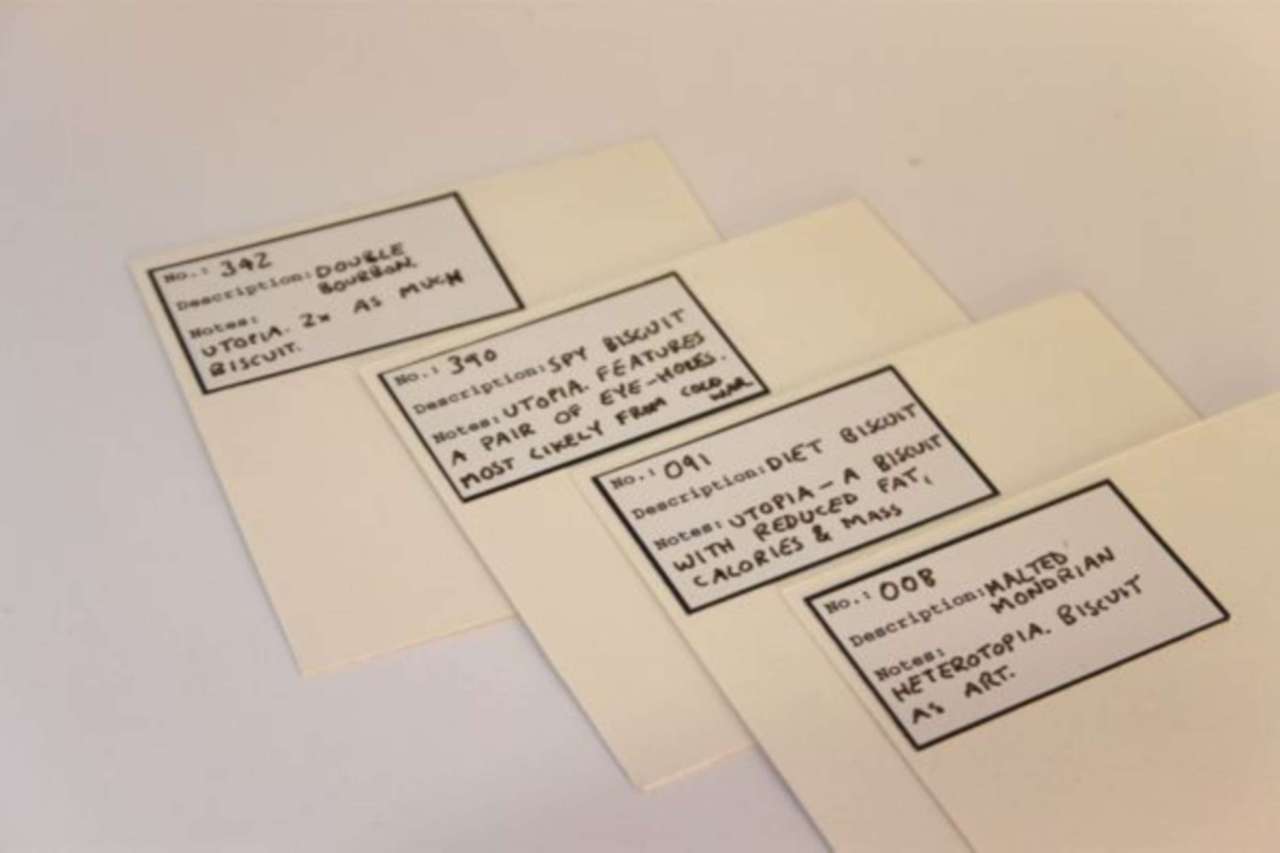
Source: The Biscuit Collection of Michel Foucault | The Dots, Artist William Dalton

A concept that used the format of a limited edition set of prints to communicate Michel Foucault’s philosophies of heterotopias and utopias. Inside the box are 30 photographs of biscuits unusually customised to describe either a heterotopia or a utopia. Foucault’s concepts are explained in a short introduction on the inside of the box.

Foth T, Lange J, Smith K. Nursing history as philosophy—towards a critical history of nursing. Nursing Philosophy. 2018

DOI: 10.1111/nup.12210

Abstract
Mainstream nursing history often positions itself in opposition to philosophy and many nursing historians are reticent of theorizing. In the quest to illuminate the lives of nurses and women current historical approaches are driven by reformist aspirations but are based on the conception that nursing or caring is basically good and the timelessness of universal values. This has the effect of essentialising political categories of identity such as class, race and gender. This kind of history is about affirmation rather than friction and about the conservation of memory and musealization. In contrast, we will focus on how we imagine nursing history could be used as a philosophical, critical perspective to challenge the ongoing transformations of our societies. Existing reality must be confronted with strangeness and the historically different can assume the function of this counterpart, meaning present and past must continuously be set in relation to each other. Thus, critical history is always the history of the present but not merely the pre‐history of the present – critique must rather present different realities and different certainties. In this paper, we use this approach to discuss the implementation of the nursing process (NP) in Germany. The nursing process appears to be a technology that helped to set up an infrastructure ‐ or assemblage ‐ to transform nursing interventions into a commodity exchangable between consumers and nurses in a free market. In our theoretical perspective, we argue that NP was a step in the realization of the German ordoliberal program, a specific variety of neoliberalism. In order to implement market‐orientation in the healthcare system it was necessary to transform hospitals into calculable spaces and to make all performances in the hospital calculable. This radically transformed not just the systems, but the ways in which nurses and patients conveived of themselves.

Brendon Murphy & Jay Sanderson (2018) Soft law, responsibility and the biopolitics of front-of-pack food labels, Griffith Law Review, 26:3, 355-377.

DOI: 10.1080/10383441.2017.1436371

ABSTRACT
Front-of-pack (FOP) food labels are increasingly used by government and industry to provide nutrition information to consumers for the promotion of healthier eating habits. However, quantitative and qualitative research into the effectiveness of FOP food labelling schemes is in its infancy and, at this stage at least, is largely unconvincing. Using Australia’s health star rating system as an exemplar, in this article we provide a novel perspective on FOP food labels and in so doing make two (related) arguments about FOP food labels and in many ways about food label schemes more broadly. The first argument is that FOP food labels enliven a combination of hard and soft law. The second argument, informed by Foucault’s notion of governmentality, is that FOP food labelling functions as a technology of the self. Drawing these two arguments together, we conclude that FOP food labels rely on a distorted rationality, because (i) the main actors in the process – food companies – are placed in a position of self-regulatory actors, fundamentally oriented to an economic rather than biopolitical agenda; and (ii) the biopolitics of population health through FOP food labels assumes particular kinds of rational consumers, when the reality of social life is far more complex.

KEYWORDS: Law, regulation, Foucault, FOP food labels, governmentality, biopolitics

Alister Wedderburn, Tragedy, genealogy and theories of International Relations
(2018) European Journal of International Relations, 24 (1), pp. 177-197.

https://doi.org/10.1177/1354066116689131

Abstract
This article interrogates the role of tragedy within the work of International Relations theorists including Michael Dillon, Mervyn Frost, Richard Ned Lebow and Hans Morgenthau. It argues that a tragic sensibility is a constituent part of much thinking about politics and the international, and asks what the reasons for this preoccupation might be. Noting that a number of diverse theoretical appeals to tragedy in International Relations invoke analytically similar understandings of tragic-political subjectivity, the article problematises these by building on Michel Foucault’s intermittent concern with the genre in his Collège de France lecture series. It proposes that a genealogical consideration of tragedy enables an alertness to its political associations and implications that asks questions of the way in which it is commonly conceived within the discipline. The article concludes by suggesting that International Relations theorists seeking to invoke tragedy must think carefully about the ontological, epistemological, ethical and political claims associated with such a move.

Author Keywords
Foucault; genealogy; International Relations theory; Morgenthau; raison d’état; tragedy; tragic vision