Foucault News

News and resources on French thinker Michel Foucault (1926-1984)

Talcott, Samuel (2014). Errant life, molecular biology, and biopower: Canguilhem, Jacob, and Foucault. History and Philosophy of the Life Sciences. 36, pp. 254-279
doi:10.1007/s40656-014-0023-0

Abstract:
This paper considers the theoretical circumstances that urged Michel Foucault to analyse modern societies in terms of biopower. Georges Canguilhem’s account of the relations between science and the living forms an essential starting point for Foucault’s own later explorations, though the challenges posed by the molecular revolution in biology and Franc ̧ois Jacob’s history of it allowed Foucault to extend and transform Canguilhem’s philosophy of error. Using archival research into his 1955–1956 course on ‘‘Science and Error,’’ I show that, for Canguilhem, it is inauthentic to treat a living being as an error, even if living things are capable of making errors in the domain of knowledge. The emergent molecular biology in the 1960s posed a grave challenge, however, since it suggested that individuals could indeed be errors of genetic reproduction. The paper discusses how Canguilhem and Foucault each responded to this by examining, among other texts, their respective reviews of Jacob’s The Logic of the Living. For Canguilhem this was an opportunity to reaffirm the creativity of life in the living individual, which is not a thing to be evaluated, but the source of values. For Foucault, drawing on Jacob’s work, this was the opportunity to develop a transformed account of valuation by posing biopower as the DNA of society. Despite their disagreements, the paper examines these three authors as different iterations of a historical epistemology attuned to errancy, error, and experimentation.

Keywords
Canguilhem Jacob Foucault Error Life Biopower Molecular biology

Talcott, Samuel. (2017). The Education of Philosophy: From Canguilhem and The Teaching of Philosophy to Foucault’s Discipline and Punish, Philosophy Today, Volume 61, Issue 3 (Summer 2017).
doi: 10.5840/philtoday2017918168

Abstract: This paper questions the widespread assumption that education can and should mold students to socially desirable ends. It proceeds by sketching an important part of the intellectual history informing Foucault’s genealogy of this assumption’s emergence in a disciplinary society. This history involves Georges Canguilhem, Foucault’s elective master. And in the relation between the writings of master and student, we find a different exemplification of education, namely, as a thoroughly dialogical and philosophical activity undertaken for the sake of freedom. Examining this historical relation also (1) establishes Canguilhem’s international importance as a philosopher because of his role in the 1953 UNESCO report on The Teaching of Philosophy; (2) helps clarify Foucault’s understanding of philosophical activity as problematization and his understanding of normativity; and (3) helps think about education and the history of philosophy without looking for master theorists, but rather philosophical schools.

stuartelden's avatarProgressive Geographies

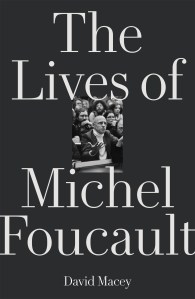
Macey---Lives-of-Foucault-(dragged)-650f6b95125d9c2c43a563be8ebe9690.jpgDavid Macey’s biography, The Lives of Michel Foucault will appear in a reissued edition with Verso in January 2019, with an afterword by me.

When he died of an AIDS-related condition in 1984, Michel Foucault had become the most influential French philosopher since the end of World War II. His powerful studies of the creation of modern medicine, prisons, psychiatry, and other methods of classification have had a lasting impact on philosophers, historians, critics, and novelists the world over. But as public as he was in his militant campaigns on behalf of prisoners, dissidents, and homosexuals, he shrouded his personal life in mystery. In The Lives of Michel Foucault — written with the full cooperation of Daniel Defert, Foucault’s former lover — David Macey gives the richest account to date of Foucault’s life and work, informed as it is by the complex issues arising from his writings. In this new…

View original post 23 more words

O’Thomas, Mark (2018) There’ll always be an England – Butlins, Brexit and the Heterotopic Body.Journal of European Popular Culture 9 (1).

http://gala.gre.ac.uk/id/eprint/19492

Abstract

This article addresses the role of entertainment and performance in the holiday camp today as a way of understanding its interface with contemporary concerns around the impact of mass immigration and consequent emerging nationalisms. Focussing on the British Butlins holiday camp, which still maintains its original base in the English north-east coastal town of Skegness, the article builds on the work of earlier studies of leisure camps (and camps in general), in locating the function of entertainment as a key engine in driving forward a sense of ‘England’ which is at the same time nostalgic and isolationist. Within the context of the UK referendum result on June 15 2016 to exit the European Union, alongside recent concerns of new manifestations of racism and the marginalisation of foreign nationals working in the UK, the paper addresses the paradox of the use of a mode that has the capacity to engender empathy as a way of objectifying the Other and consolidating a notion of a single sovereign state. Ultimately, while acknowledging the contribution made by contemporary philosophers such as Giorgio Agamben to the field, the paper revisits and finds Foucault’s notion of heterotopias as a more dextrous way of conceiving of the ways in which entertainments are planned, produced and performed at British leisure camps today.

With thanks to Heterotopian Studies for this news

Daniele Lorenzini (2018), Governmentality, subjectivity, and the neoliberal form of life, Journal for Cultural Research
https://doi.org/10.1080/14797585.2018.1461357

Abstract
In this paper, I argue that the appropriate answer to the question of the form contemporary neoliberalism gives our lives rests on Michel Foucault’s definition of neoliberalism as a particular art of governing human beings. I claim that Foucault’s definition consists in three components: neoliberalism as a set of technologies structuring the ‘milieu’ of individuals in order to obtain specific effects from their behavior; neoliberalism as a governmental rationality transforming individual freedom into the very instrument through which individuals are directed; and neoliberalism as a set of political strategies that constitute a specific, and eminently governable, form of subjectivity. I conclude by emphasising the importance that Foucault’s work on neoliberalism as well as the ancient ‘ethics of the care of the self’ still holds for us today.

Keywords: Critique, Foucault, governmentality, neoliberalism, subjectivity

Henderson, J.
Post-critical writing praxis as a qualitative researcher
(2018) International Journal of Qualitative Studies in Education, pp. 1-10. Article in Press.

DOI: 10.1080/09518398.2017.1422292

Abstract
The intention of this paper is to unsettle our habits of scholarly writing and reading, from within the grids of intelligibility of Western, rationalist materiality, so as to make visible what we/I no longer often see: the academic writing and publishing constraints that discipline our assemblages of knowledge. Taking poststructuralist articulations of the ‘critical’ and ‘ethical’ as heuristics for developing a praxis of critical deconstructive authoring, where agency is coterminous with, not external to, the event of writing, it puts to work Foucault’s perspective that the subject is a form, not a substance, (Foucault, 1984, p. 290) to explore one way of crafting ‘an academic subject yet to come’ (Ball, 2016, p. 2). Beginning with a brief consideration of the normative mechanisms that govern scholarly writing, it then uses some of the conceptual tools of Foucault, Derrida and Spivak to unfold and vindicate spaces in the grids of governance for reforming the subject. © 2018 Informa UK Limited, trading as Taylor & Francis Group

Author Keywords
deconstructive authoring; qualitative research; rationalist materiality; Western; writing praxis

Editor: I am working on amalgamating my old michel-foucault.com Foucault resources site with Foucault News and am bringing across the ‘quotes of the month’ from the old site as ‘quotes of the week’ here. I have commented briefly on some of these quotations (as well as others) on my own personal writing blog. You can find what I have brought across from my old site so far under ‘Foucault resources’ in the top menu bar (more to come).

‘It seems to me that the real political task in a society such as ours is to criticise the workings of institutions, which appear to be both neutral and independent; to criticise and attack them in such a manner that the political violence which has always exercised itself obscurely through them will be unmasked, so that one can fight against them.’

Noam Chomsky and Michel Foucault, (2011) [1974]. Human Nature: Justice vs Power. The Chomsky-Foucault Debate(London: Souvenir Press), Edited by Fons Elders, p. 49.

Ball, M. (2018). Mariana Valverde (2017) Michel Foucault. Oxon: Routledge.. International Journal For Crime, Justice And Social Democracy, 7(1), 143-145. DOI: 10.5204/ijcjsd.v7i1.469

See also QUT eprints

Abstract

In this short and accessible volume, Mariana Valverde adopts the unenviable task not only of surveying Michel Foucault’s contributions to criminology and criminal justice but also of summarising relevant parts of the voluminous Foucaultian scholarship which has appeared since his death. Despite some minor critiques to which I shall return , the book is an important contribution and particularly a good reference tool.


Mariana Valverde, Michel Foucault, Routledge, 2017

This book explores the theoretical contribution of Michel Foucault to the fields of criminology, law, justice and penology. It surveys both the ways in which the work of Foucault has been applied in criminology, but also how his work can be used to understand and explain contemporary issues and policies. Moreover, this book seeks to dispel some of the common misconceptions about the relevance of Foucault’s work to criminology and law.

Mariana Valverde clearly explains the insights that Foucault’s rich body of work provides about different practices found in the fields of law, security, justice, and punishment; and how these insights have been used or could be used to understand and explain issues and policies that Foucault himself did not write about, including those that had not yet emerged during his lifetime.

Drawing on key texts by Foucault such as Discipline and Punish, and also lectures he gave at the College de France and Louvain Criminology Institute which offer a more nuanced account of the development of criminal justice, Mariana Valverde offers the essential text on Foucault and his contribution and continued relevance to criminology. This book will be important reading for students and scholars of criminology, law, sociolegal studies, security studies, political theory and sociological theory.

Antti Saari, Emotionalities of rule in pedagogical mindfulness literature, Journal of Management, Spirituality & Religion, 15:2, 141-154.
DOI: 10.1080/14766086.2017.1359796

Abstract
Since the turn of the millennium, mindfulness discourses have penetrated various areas of governing health, well-being, and happiness. A recent sub-genre of popular mindfulness literature is teaching and parenting. This sub-genre includes technologies of the self that inculcate responsible, autonomous subjects who control their own emotions and are present, authentic, and available. The article uses the concept of the fold to analyze the way mindfulness discourses aid in constituting a notion of a private sphere of subjective autonomy in teaching and parenting while also demonstrating that subjectivity is an area of governmental intervention in neoliberal rule.

Keywords: Teaching, mindfulness, governmentality, emotions