Foucault News

News and resources on French thinker Michel Foucault (1926-1984)

Behrendt, S. This Is Not an Improvisation: Letitia Landon and the Slipperiness of Taxonomy (2019) European Legacy, 24 (3-4), pp. 283-300.

DOI: 10.1080/10848770.2018.1562667

Abstract
Writing in 2007, in The Wordsworth Circle, Jeffrey Robinson remarked on the “ephemerality” of improvisational poetry, its fundamental resistance to being “preserved.” Printed poetry is typically regarded as “fixed” and static: what any poem represents as improvisation is, at best, only a record, executed in a fixed medium, of a performance whose infinite variability is inherent in the nature of improvisation itself. Partly an homage to Rene Magritte’s This is Not a Pipe (1928–29) and to Michel Foucault’s 1973 essay on that painting, and using as a test case The Improvisatrice (1825), the long poem by Letitia Elizabeth Landon, herself a devotee of interdisciplinary and multimedia performance, this essay considers the physical, structural, and methodological challenges and limitations posed to printed “word art” by works that purport to be, or aspire to the condition of, “improvisations.” The improvisatrice who is the poem’s narrator claims to be both a painter and a songstress, but her “speech,” captured and rendered in printed words by Landon (who ventriloquizes that speech), can neither “be” nor even “represent” a work produced (“performed”) in visual art or vocal song. In her long poem Landon effectively creates a literary trompe l’oeil, an illusion that depends for its “completion” upon the reader’s implied participation in that performative act of completion. In the process, Landon’s poem reveals the fundamental incompatibility of improvisational literary production with the performative nature of improvisation. © 2019, © 2019 International Society for the Study of European Ideas.

Author Keywords
British Romanticism; illusion; Improvisation; interdisciplinary; Letitia Elizabeth Landon; multistability; narrative/narrativity; performance/performativity; poetic voice; poetry; women writers
Mitchell Dean, What is Economic Theology? A New Governmental-Political Paradigm? (2019) Theory, Culture and Society, 36 (3), pp. 3-26.
https://doi.org/10.1177/0263276418787622

Abstract
Countering claims of its impossibility, this paper argues for economic theology as an intelligible figure of contemporary political rationality and organization, and a distinctive analytical strategy in relation to forms of liberal and neoliberal governmentality and the contemporary management of social life. As an analytical strategy, it has two arms: an institutional one, drawing upon Michel Foucault’s work on the pastorate; and a conceptual one, following from Giorgio Agamben on oikonomia, order and providence. Economic theology was the arcana of 20th-century debates on both political theology and governmentality and a condition for their emergence. It formed the horizon of Carl Schmitt’s intervention of a political theology in response to Max Weber, and, as the pastorate, it was for Foucault the historical background of the emergence of the liberal arts of government. While appearing as a new paradigm, it thus has a measure of priority over our more established ones. Furthermore, to the extent that economic theology comes to occupy the place of political rationality in contemporary liberal-democratic societies, the political becomes less a rational public sphere and more a form of public liturgy. © The Author(s) 2018.

Author Keywords
Agamben; economy; Foucault; liturgy; neoliberalism; pastorate; Schmitt

Clare Butler, Working the ‘wise’ in speech and language therapy: Evidence-based practice, biopolitics and ‘pastoral labour’
(2019) Social Science and Medicine, 230, pp. 1-8.

https://doi.org/10.1016/j.socscimed.2019.03.038

Abstract
This paper examines how power and knowledge are involved in the workings of speech and language therapy and in the work of speech and language therapists (SLTs). The paper draws on Foucault for its conceptual frame, with reference to his exposition of governmentality, biopolitics and pastoral power. Based on interviews with thirty-three SLTs in the UK, the findings show that evidence-based practice (EBP) is ever-present in speech and language therapy, despite its apparent absence; and that its power circulates in a multitude of ways. EBP as a process, and not an outcome, was workable. When competent practice was at risk, however, the SLTs challenged the dominance of EBP by saying it needed to ‘get real’ but then were troubled when it did. Working the ‘wise’ – those people involved with the client, including the SLTs themselves – was key to speech and language therapy; as was the making of subjects into biopolitical objects. At its most rewarding, but also most personally challenging, the work of SLTs involves mediating between different ways of being in the world and reimagining life, personhood and citizenship; to capture this complex labour process, the paper introduces the term ‘pastoral labour’. © 2019 Elsevier Ltd

Author Keywords
Biopolitics; Evidence-based practice; Foucault; Governmentality; Pastoral power; Reflective practice; Speech and language therapy; UK

Index Keywords
conceptual framework, ethics, knowledge, labor, language, power relations; adult, article, citizenship, evidence based practice center, human, human experiment, interview, male, personhood, speech and language rehabilitation, speech language pathologist; United Kingdom

Ostrowicka, H., Stankiewicz, Ł. The truths of business and the lies of academia: the order of discourse on higher education in Poland
(2019) Higher Education Research and Development, 38 (3), pp. 609-622.

DOI: 10.1080/07294360.2018.1545746

Abstract
This article presents the results of an analysis of hierarchization strategies in public debate over unemployment among university graduates. The aim of the investigation was to grasp the way that discourse controls interact with one another to produce and reinforce a particular ‘truth’ about the university. The objects of our analysis were the ways of identifying the following places by the media actors: (a) the privileged positions from which the truth of a given social order is told and within which the common good may be expressed, and (b) the positions which are opposed to the latter and from which only a particular interest and ‘populist’ demands can be articulated. These two categories in the debate were successively filled by the following groups: entrepreneurs (bearing witness to the truth about the low level of instruction at universities) and the representatives of the social sciences and humanities defending themselves against these accusations. The diversity of argumentative strategies was revealed at the three levels of the order of discourse: hierarchization of responsibility, hierarchization of access to the truth, and hierarchization of interests. © 2018, © 2018 HERDSA.

Author Keywords
Discourse analysis; Foucault; media discourse; strategies of hierarchization

Xue Yujie, Camera above the Classroom, Sixth Tone, Mar 26, 2019

See also this article on the background of Sixth Tone magazine.

BEIJING — Jason Todd first discovered his school’s secret on the internet.

It was late September 2018, less than a month after high school had started. Jason was idly scrolling through his news feed on the Chinese microblogging site Weibo when he saw a trending hashtag — #ThankGodIGraduatedAlready — and clicked it.

Under the hashtag, someone had posted a photo depicting a bird’s-eye view of a classroom. Around 30 students sat at their desks, facing the blackboard. Their backpacks lay discarded at their feet. It looked like a typical Chinese classroom.

Except for the colored rectangles superimposed on each student’s face. “ID: 000010, State 1: Focused,” read a line of text in a green rectangle around the face of a student looking directly at the blackboard. “ID: 000015, State 5: Distracted,” read the text in a red rectangle — this student had buried his head in his desk drawer. A blue rectangle hovered around a girl standing behind her desk. The text read: “ID: 00001, State 3: Answering Questions.”
[…]

According to law professor Hu Lin, the lack of consent in the use of the surveillance systems creates an imbalance of power. “The schools hold the power to evaluate, punish, and expel,” he says. “The parents won’t sacrifice the students’ futures by standing up against the schools, which leaves the students in the most vulnerable position.”

Hu refers to the panopticon, a circular prison discussed by French philosopher Michel Foucault in his book “Discipline and Punish,” in which inmates are observed by a single watchman but cannot tell if and when they are being watched, forcing them to act as if they are always being watched. To Hu, using systems like CCS will have the same impact, encouraging students to simply act like they’re behaving.

Pensar con Foucault hoy
Compiladores: Agustín Colombo, Cristina López, Marcelo Raffin, UNSAM Edita, 2019

Michel Foucault murió en 1984 pero su obra no ha dejado de expandirse y suscitar interés y discusión. Con la publicación de los cursos dictados en el Collège de France entre 1970 y 1984, durante las últimas dos décadas, el interés de los estudios se desplazó hacia conceptos como los de gubernamentalidad y biopolítica. En el marco de las actividades desarrolladas en torno de los aniversarios de la publicación de Las palabras y las cosas y La voluntad de saber, el foco del debate se centró nuevamente en sus libros. Releídos en la actualidad, esclarecidos y enriquecidos por los aportes de Dichos y escritos, los cursos publicados y los materiales del “Fonds Foucault”, Pensar con Foucault hoy ofrece aristas inexploradas de esos libros, a la vez que los somete a la prueba del presente.

Autores:
Philippe Sabot, Cesar Candiotto, Thiago Fortes Ribas, Cristina López, Tuillang Yuing Alfaro, Senda Sferco, Luciano Nosetto, Daniel Verginelli Galantin, Arianna Sforzini, Agustín Colombo, Orazio Irrera, Frédéric Gros, Marcelo Raffin, Luis Félix Blengino, André Duarte y Maria Rita César

stuartelden's avatarProgressive Geographies

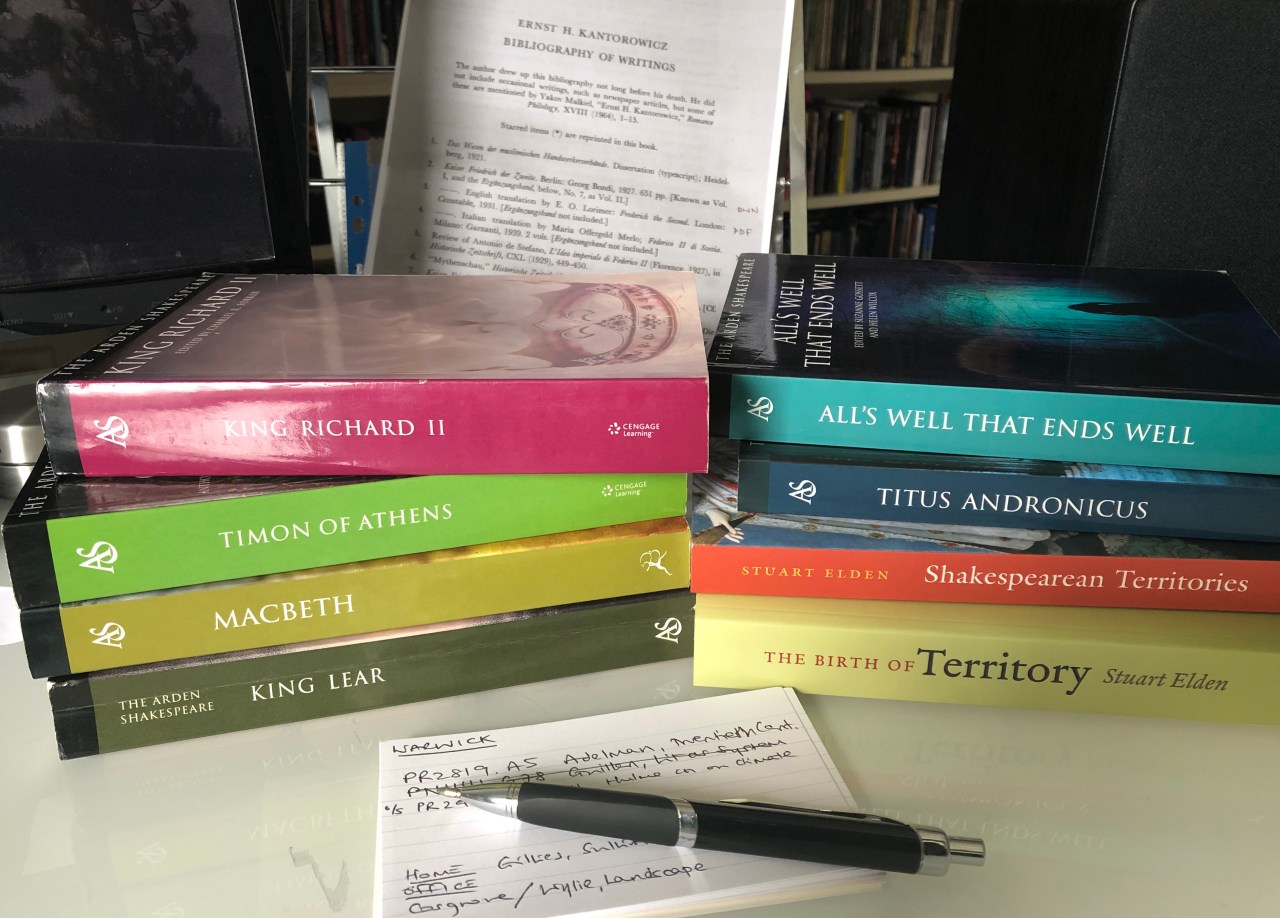
Shakespeare.jpgI have three upcoming talks on Shakespeare.
The first is the Fourth Denis Cosgrove lecture in the GeoHumanities, to be given at the British Academy on 23 May 2019, 6.30pm. I was asked to speak about the Shakespearean Territories book, and I will say something about that, but I’m also going to go a bit further with this work on Shakespeare and geography, and think about landscapes figure, or don’t, in some of his plays. I’ll speaking about King Lear, Macbeth and Timon of Athens, with some mention of other plays. The lecture and drinks reception are both free, but registration is required.

I’ll then be giving two papers on the oath in Shakespeare, drawn from what I hope will be a longer manuscript. There will be a bit of overlap between the two, but hopefully not much. The first will a plenary lecture to the Association for Philosophy…

View original post 146 more words

Institut français de recherche sur le Japon
Published on Jun 18, 2018
Conférence donnée à la Maison franco-japonaise le 21 mai 2018

Conférenciers : Mathieu POTTE-BONNEVILLE (ENS Lyon, Institut français), Patrice MANIGLIER (univ. Paris Nanterre)
Modérateur: Mathieu CAPEL (UMIFRE 19- MFJ)

Dans la préface qu’il rédige en 1972, pour la réédition de son Histoire de la folie, Michel Foucault se moque gentiment de la prétention de l’auteur à définir d’avance la manière dont ses livres seront reçus : « Je suis l’auteur ; regardez mon visage et mon profil ; voici à quoi devront ressembler toutes ces figures redoublées qui vont circuler sous mon nom… ». De fait, plus de trente ans après sa disparition, l’image de la pensée de Foucault a profondément changé et sa transformation se poursuit, pour quatre raisons au moins :

– Le corpus des textes publiés et des archives accessibles ne cesse de s’étendre (modification que la publication du quatrième volume de L’Histoire de la sexualité, Les Aveux de la chair, accentue fortement cette année) ;
– L’histoire des courants intellectuels et des débats politiques qui ont environné son œuvre se précise, faisant apparaître d’autres découpes et d’autres filiations (ainsi la question de l’appartenance de Foucault au structuralisme, discutée de son vivant, apparaît rétrospectivement sous un nouveau jour) ;

– Les questions que l’actualité du XXIe siècle met au centre de la discussion incitent à relire autrement ses textes. Elles incitent à se demander ce que devient la lecture que Foucault propose du pouvoir (à l’heure du retour des politiques de puissance), quel usage faire de sa réflexion sur la gouvernementalité (alors que le néolibéralisme s’impose) ou sur la littérature (à l’ère de l’autofiction) ;

– Les usages que les chercheurs contemporains font de Foucault dans de nombreux domaines (de la philosophie à la sociologie, de l’anthropologie à l’esthétique) contribuent à lui donner une nouvelle signification.

S’interroger sur le devenir de l’œuvre de Foucault au XXIe siècle, ce n’est donc pas tracer le profil d’une œuvre enfin définitive, mais une constellation d’interprétations en mouvement. C’est un tel panorama, nécessairement provisoire, que nous tenterons de proposer au travers de ce dialogue à deux voix.

Editor: After the terrible news of the fire and because the banner of Foucault News is an image of Le Stryge, one of the chimera on top of Notre-Dame, I am reposting the photo below which appeared on the Facebook page of La Cinémathèque française. This article on the BBC news site lists what has survived and what hasn’t.

Update 2/5/19. It would appear the chimera, notably Le Stryge in the banner, didn’t survive – but a Dutch company has already put together a 3D print.

Claude Mauriac in his memoir Le Temps Immobile describes watching Maurice Clavel, the journalist, playwright and author lecturing on Foucault at Notre-Dame, praising his anti-humanist Kantian stance in The Order of Things. (David Macey, The Lives of Michel Foucault, Penguin Random House, p.192)

Donations are already flooding in to rebuild the cathedral.
Déjà plus de 750 millions d’euros de dons pour reconstruire Notre-Dame, L’Obs, 16 April 2019

An interesting and beautifully written philosophical and moral reflection with the signature ‘Un curé de campagne en visite à Paris’, provoked by the experience of being in Paris during the fire.
Sauvons la cathédrale du cœur. Pour un autre usage de Notre-Dame-de-Paris, Lundimatin, 16 April 2019.

What interested me in the article below was not so much the account of Donald Trump’s latest exploits as the description of the technical expertise needed to fight the fire.
Experts deride Trump’s Notre Dame firefighting advice as ‘risible’, The Guardian, 17 April 2019.
Guillermo Rein, professor of fire science at Imperial College in London, praised the work of the French firefighters.

“The fire brigade had to be aggressive fighting the big roof fire with the aerial ladders designed for high-rise buildings, but at the same time be gentle with the vulnerable structure of the stone vaults and walls. They did a fine job, and how they tackled this fire will probably be studied in the years ahead.”

With thanks to Luca Paltrinieri for posting the three informative links above on his Facebook page.

For a photo of the chimera looking down on the fire, see the ‘about’ page on this blog.

Charles Laughton in The Hunchback of Notre Dame (1939)

stuartelden's avatarProgressive Geographies

books.jpg

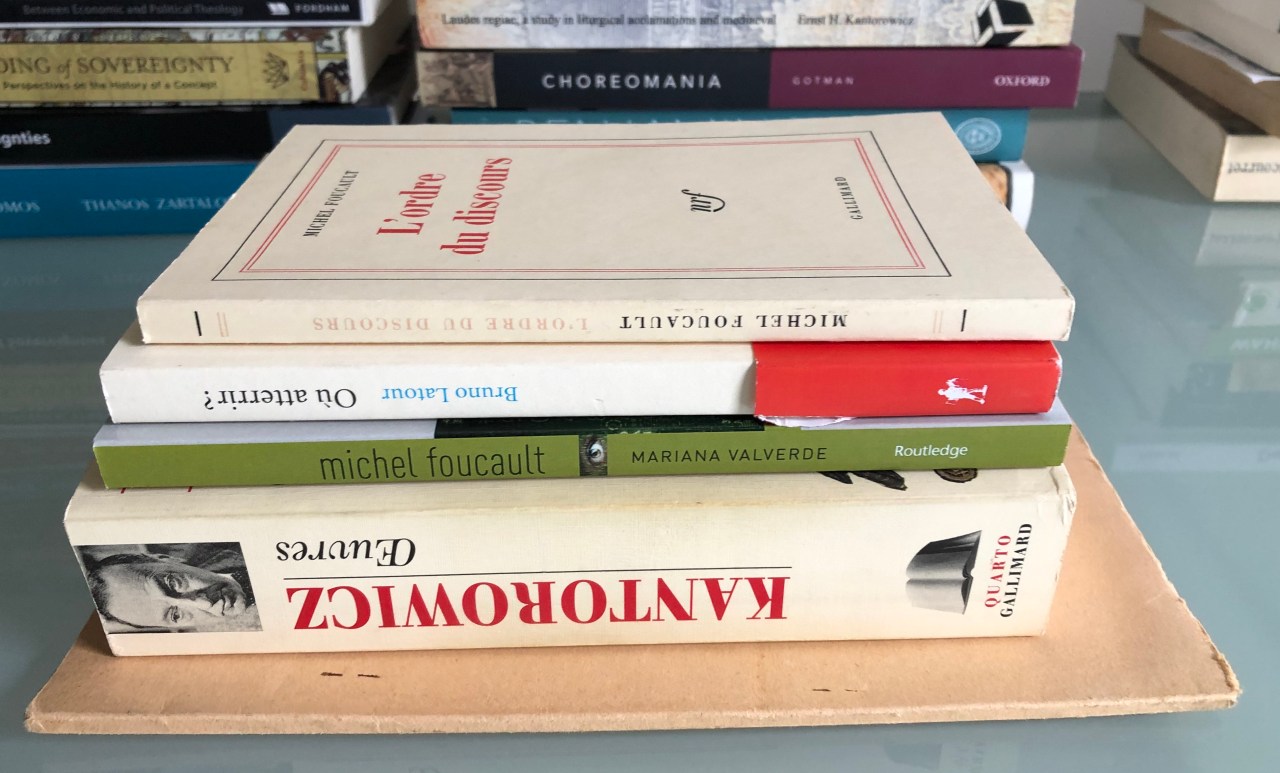
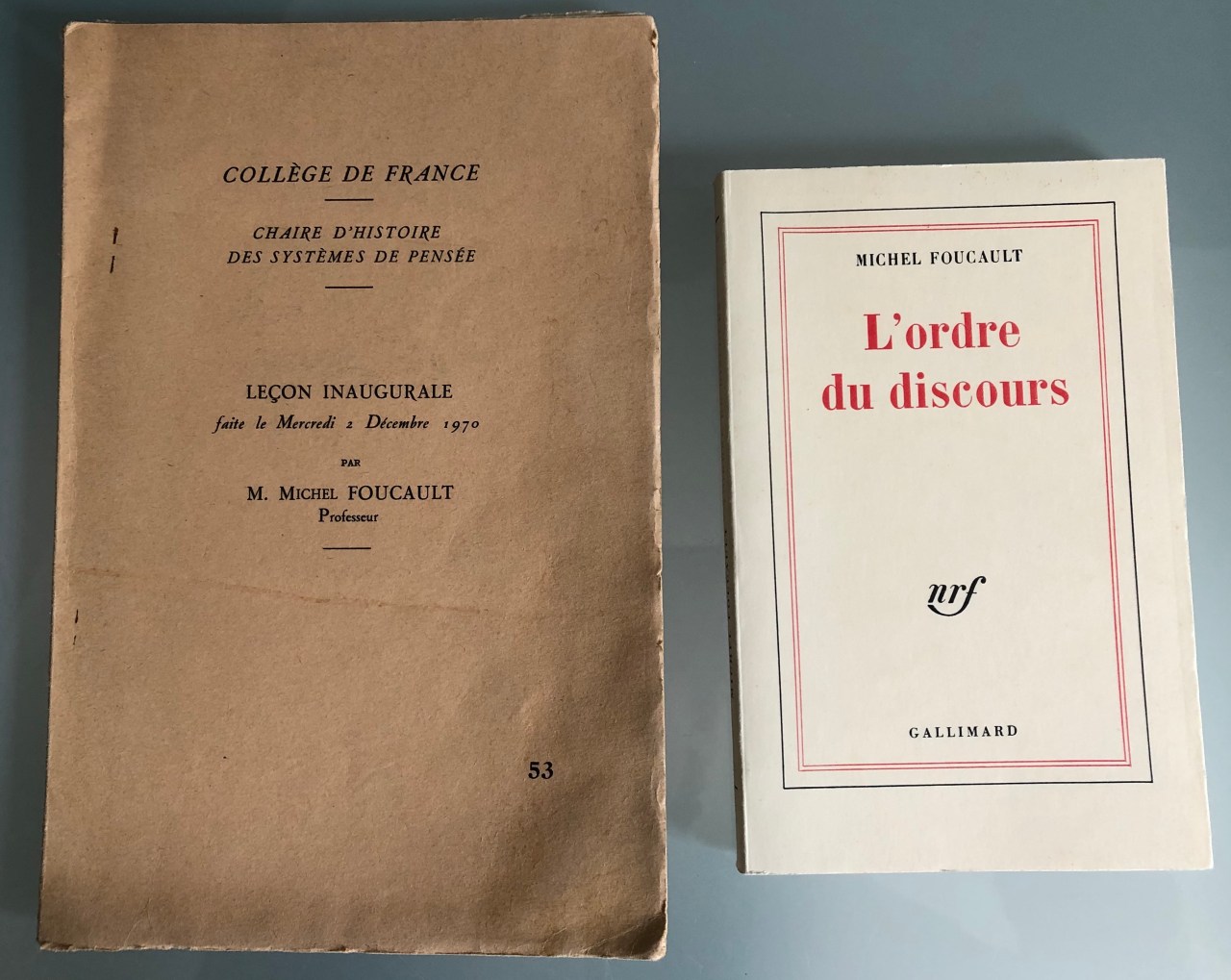
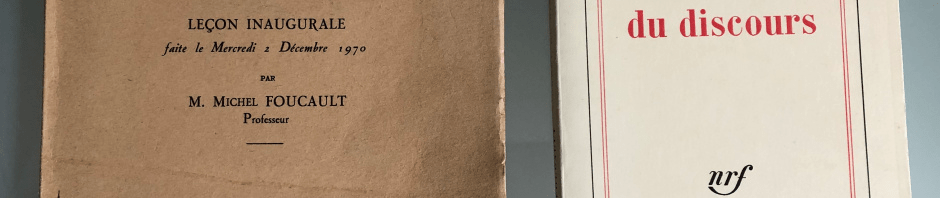
Bruno Latour’s Où atterrir?, Mariana Valverde’s study of Michel Foucault, now in paperback, and Ernst Kantorowicz, Oeuvres – which i mainly got for the biography by Alain Boureau. Also in the pile is a second-hand copy of Foucault’s L’ordre du discours – and the Collège de France publication of that lecture. I had no idea that the latter actually existed until recently, when I was alerted to differences between the versions. The original is very hard to find. I plan to make a systematic comparison of the two texts – which is why I’ve bought a copy of the Gallimard version to mark up. When I do, I’ll post about it here – previous such textual comparisons can be found here.

L'ordre du discours.jpg

View original post