Foucault News

News and resources on French thinker Michel Foucault (1926-1984)

Cseke, Á. (2019). Au sujet de l’édition de Michel Foucault, Le courage de la vérité. Quelques remarques du traducteur hongrois. Le Foucaldien, 5(1), 2.
DOI: 10.16995/lefou.58

Open access. Article in French

Abstract
This article examines the text edition of the last course that Michel Foucault delivered at the Collège de France before his death in 1984 (Le courage de la vérité, 2009). Based on the author’s own translation of Foucault’s lectures into Hungarian, it aims to show and to analyze some technical and philological difficulties, problems and/or questions regarding the French edition of the text as well as their reappearance in the English, German and Italian translation of Le courage de la vérité.

Keywords: Foucault, Gros, The courage of truth, translation, text edition

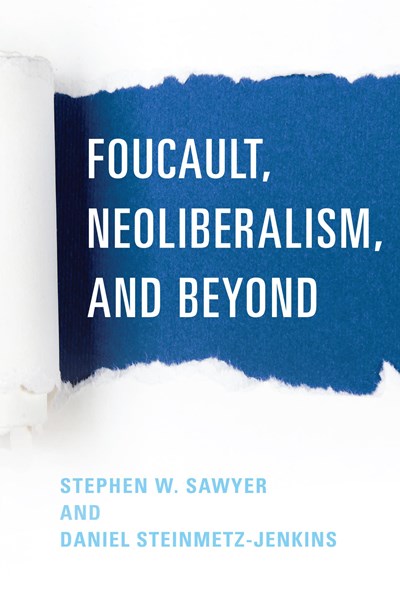
Foucault, Neoliberalism, and Beyond
Edited by Stephen W. Sawyer and Daniel Steinmetz-Jenkins
London: Rowman & Littlefield International. Publication Date: Apr 2019

Few philosophers have garnered as much attention globally as Michel Foucault. But even within this wide reception, the consideration given to his relationship to neoliberalism has been noteworthy. However, the debate over this relationship has given rise to a great deal of polemics and confusion.

This volume brings together leading figures in the field to provide a reliable guide to one of the most controversial subjects in recent continental thought. It puts across the case for Foucault’s importance for post-colonial, race, queer and feminist studies, among other areas, and opens up his relationship to neoliberalism to offer a broader picture of tensions brewing within the left more generally.

Contents

Introduction: Stephen Sawyer and Daniel Steinmetz-Jenkins

Chapter 1: Michael C. Behrent, Neoliberalism: The Highest Stage of Anti-Humanism?

Chapter 2: Serge Audier, Is Foucault a Good Guide for Understanding, Critiquing and Combatting Neoliberalism?

Chapter 3: Daniel Zamora, Finding a “Left Governmentality”: Foucault’s Last Decade

Chapter 4: Aner Barzilay, Rereading the Birth of Biopolitics in Light of Foucault’s Early Reading of Marx

Chapter 5: Dotan Leshem, Foucault, Genealogy, Critique

Chapter 6: Duncan Kelly, Michel Foucault on Phobie d’État and Neoliberalism

Chapter 7: Claudia Castiglioni, Foucault, Neoliberalism, and the Iranian Revolution

Chapter 8: Luca Paltrinieri, Neoliberal Selves: Human Capital Between Bourdieu and Foucault

Chapter 9: Judith Revel, Not Fostering Life, and Leaving to Die

Reviews
This volume dismantles any simple link between Foucault and neoliberalism, leaving us with parts for reassembly into politics of our own.
Quinn Slobodian, Associate Professor of History, Wellesley College

Foucault’s lectures on liberal and neoliberal governmentality at the end of the 1970s have provoked multiple controversies over the evolution of his thought and politics. This excellent collection of essays provides a wealth of historical detail and analysis that helps to situate these lectures in relation to their time and to the trajectory and sources of his thought. This book is indispensable for an informed appreciation of Foucault’s work during this period and its relation to a key moment in French and global history.
Paul Patton, Hongyi Chair Professor of Philosophy, Wuhan University

In recent political debate, the question of Michel Foucault’s notoriously ambiguous relationship to neoliberalism has become a cypher for all kinds of contemporary preoccupations on the left. But do we really know what Foucault was responding to? This volume performs the immensely valuable work of historicizing Foucault’s relationship to Marxism, neoliberalism and the so-called second left. Making no attempt to definitively resolve the question of Foucault’s political sympathies, the papers in this volume meticulously document the unique political challenges of the late 1970s and manage to be all the more illuminating about our contemporary predicament. This brilliant volume will transform the tenor of contemporary debate around Foucault, neoliberalism, and the revolutionary left.
Melinda Cooper, Associate Professor in the School of Social and Political Science, University of Sydney

Vladislav Suvák (2019) Patočka and Foucault: Taking Care of the Soul and Taking Care of the Self, Journal of the British Society for Phenomenology, 50:1, 19-36, DOI: 10.1080/00071773.2018.1495402

ABSTRACT
The paper deals with Jan Patočka’s and Michel Foucault’s influential interpretations of the ancient Greek approach to care (epimeleia). At first sight, it might seem that Foucault’s care of the self is opposed to Patočka’s care of the soul. On closer reading, however, it becomes clear that the two interpretations lead to similar conclusions, as exemplified by the way the two authors interpret Plato’s Laches: both of them see it in relation to the issue of how to live one’s life. Further on, the paper deals with the development of Patočka’s understanding of care of the self and his approach to the philosophy of history. It is revealed that Foucault’s approach to history is opposed to Patočka’s on a number of issues. Despite their diverging opinions, however, the two authors problematize the ancient Greek care of the self as an important issue in Western culture, emphasizing the therapeutic role of contemporary philosophy along the way.

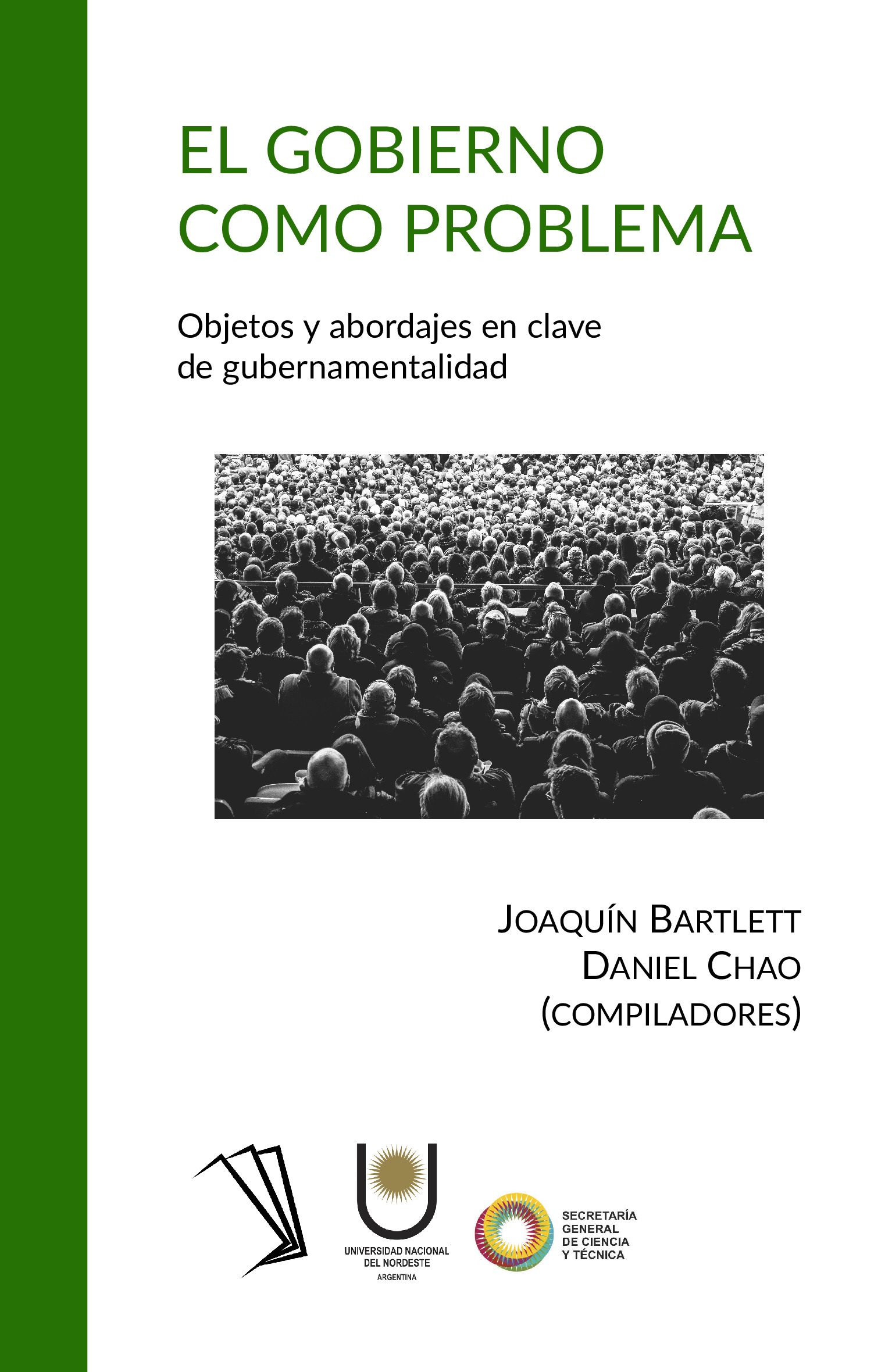
Bartlett, J. y Chao, D. (comps.) (2019). El gobierno como problema: objetos y abordajes en clave de gubernamentalidad. Buenos Aires: TeseoPress.

Sinopsis
Esta obra se refiere de distintas maneras a los estudios en gubernamentalidad. Así, contiene reflexiones que expanden y profundizan determinados desarrollos de Foucault al respecto, ya sea trabajando en una continuidad a partir de sus tesis acerca del neoliberalismo norteamericano e indagando en la relación del derecho con el gobierno del mercado, ya sea pensando la dimensión estratégica del análisis de las racionalidades gubernamentales. También resultan materia de estudio aquí las obras de Carol Bacchi y Nikolas Rose: se rescata en el primer caso el desarrollo particular de la noción de problematización y se detectan en el segundo las regularidades analíticas que componen la trayectoria intelectual del autor. Por último, se indaga en fenómenos empíricos puntuales relativos al gobierno de los públicos y a las características del management en la organización del trabajo.

Sus autores pertenecen al Grupo de Estudios en Gubernamentalidades del Centro de Estudios Sociales (Universidad Nacional del Nordeste).

Acerca de los compiladores
Joaquín Bartlett es licenciado en Relaciones Laborales y maestrando en Ciencias Sociales. Su acercamiento a los estudios en gubernamentalidad se liga al tema y corpus de su tesis de Maestría, que versa sobre el análisis del management como forma de gobierno. Ha publicado artículos sobre el tema en diversas revistas. Se desempeña como JTP en la cátedra Metodología de la Investigación en Cultura de la Licenciatura en Gestión y Desarrollo Cultural de la Facultad de Artes, Diseño y Ciencias de la Cultura (UNNE) y como auxiliar de primera en la cátedra Sociología de la Licenciatura en Relaciones Laborales de la Facultad de Ciencias Económicas. Es integrante del Consejo Editorial de la publicación anual De Prácticas y Discursos. Cuadernos de Ciencias Sociales del Centro de Estudios Sociales, y es investigador categoría V del Programa de Categorización.

Daniel Chao es doctor en Ciencias Sociales y especialista en historia regional. Su vinculación con los estudios en gubernamentalidad se liga al análisis sobre los veteranos de la guerra de Malvinas como sujeto-objeto de problematizaciones gubernamentales en posguerra, cuestión abordada en su tesis doctoral. Asimismo, sobre el tema ha publicado artículos y capítulos de libros. Actualmente se desempeña como adjunto a cargo del Seminario de Tesina de la Carrera de Comunicación Social (Facultad de Humanidades, Universidad Nacional del Nordeste), y es becario doctoral por el Instituto de Investigaciones Geohistóricas (UNNE-CONICET).

Michel Foucault: Um pensamento em movimento, Revista de filosofia Aurora, V. 31, N. 52 (2019)

SUMÁRIO

Editorial
Léo Peruzzo Júnior, Cesar Candiotto, Antonio Valverde

DOSSIÊ
De Foucault à Butler, en passant par Sartre : l’impossibilité du « nous » ?
Philippe Sabot

Crítica e coalizão: repensar a resistência com Foucault e Butler
André Duarte, Maria Rita de Assis César

Modes de subjectivation et pratiques de liberté autour du « Délit de solidarité »
Senda Ines Sferco

Focos y desenfoques en la analítica del poder: Apuntes metodológicos
Adán Salinas Araya, Tuillang Yuing

De que vida trata a Biopolítica? Considerações sobre a inversão foucaultiana da máxima aristotélica
Marcos Nalli

Soberania e Biopolítica: dos nexos entre poder soberano e biopoder no pensamento político de Michel Foucault e de seus usos na atualidade
André Constantino Yazbek

Foucault e as dramaturgias de Édipo-Rei
Fabiano Incerti

Verdade-acontecimento e alteração no pensamento de Michel Foucault
Daniel Verginelli Galantin

Parresia e confissão: uma genealogia do sujeito moderno
Salma Tannus Muchail, Márcio Alves da Fonseca

Subjetivação e veridição no cristianismo e na antiguidade greco-romana
Vera Portocarrero

L’empire de l’involontaire et la volonté de n’être pas gouverné
Orazio Irrera

Do “sujeito de desejo” ao “sujeito do desejo”: Foucault leitor de Santo Agostinho
Ernani Pinheiro Chaves

A arqueologia e seus limites
Monica Loyola Stival

Ralf Havertz, Right-Wing Populism and Neoliberalism in Germany: The AfD’s Embrace of Ordoliberalism (2019) New Political Economy, 24 (3), pp. 385-403.
https://doi.org/10.1080/13563467.2018.1484715

Abstract
This article analyses the ambiguous relation between right-wing populism and neoliberalism in Germany. It concentrates on the connections between and convergence of right-wing populism and ordoliberalism, a specific type of neoliberalism that was developed by the Freiburg School since the late 1920s and which the new right-wing populist party Alternative for Germany (AfD) explicitly focuses on in its economic programme. In its attempt to analyse the affinity of the AfD to ordoliberalism, this study relies on Michel Foucault’s account of ordoliberalism in his book The Birth of Biopolitics and his concept of governmentality. It was found that the AfD wants to bring ordoliberalism into service of an authoritarian project in Germany and beyond. This economic approach combines neoliberalism with authoritarian forms of government through the governmentalisation of the state. Ordoliberals prescribe a regulatory framework for the economy which is centred on the creation of a competitive order. It is meant to produce and justify social differences. Right-wing populists connect the economic differentiation system provided by ordoliberalism with the differentiation systems of nation, race, religion and culture. Thus, the neoliberal principle of competition is used not only to justify inequality among German citizens but also among European countries. © 2018 Informa UK Limited, trading as Taylor & Francis Group.

Author Keywords
Alternative for Germany (AfD); authoritarian liberalism; neoliberalism; ordoliberalism; right-wing populism

Whyte, J.
The invisible hand of Friedrich Hayek: Submission and spontaneous order
(2019) Political Theory, 47 (2), pp. 156-184.

DOI: 10.1177/0090591717737064

Abstract
Friedrich Hayek’s account of “spontaneous order” has generated increasing interest in recent decades. His argument for the superiority of the market in distributing knowledge without the need for central oversight has appealed to progressive democratic theorists, who are wary of the hubris of state planning and attracted to possibilities for self-organization, and to Foucaultians, who have long counseled political theory to cut off the King’s head. A spontaneous social order, organized by an invisible hand, would appear to dispense with arbitrary power and foster creativity and individual liberty. This article challenges this view by highlighting the centrality of submission to Hayek’s account of spontaneous order. It shows that Hayek struggles to obscure the providentialism underpinning the account of social order he derives from Adam Ferguson and the Scottish Enlightenment. Nonetheless, his own account of spontaneous order relies on faith in the workings of the market, and submission to unintelligible market forces. © The Author(s) 2017.

Author Keywords
Adam Ferguson; Friedrich Hayek; Michel Foucault; Spontaneous order; Submission

Valerie Harwood and Nyssa Murray, Strategic discourse production and parent involvement: including parent knowledge and practices in the Lead My Learning campaign
(2019) International Journal of Inclusive Education, 23 (4), pp. 353-368.

https://doi.org/10.1080/13603116.2019.1571119

Abstract
Parent involvement in a child’s education is usually viewed as integral for building educational participation. Critical work has examined the complexity of issues that work to exclude certain social and cultural ‘groups’, as well as practices that can work to build inclusion. This article sets out to contribute to the latter by examining how an approach we term strategic discourse production offers possibilities for practices of subjectivation that can deviate from the dominant discourse that portray parents who experience educational disadvantage as ‘not involved’ or ‘not engaged’ in their children’s learning. Drawing on Foucault’s work on practices of subjectivation, the article outlines the adaptation of social marketing techniques to create strategic discourse production. The article discusses Lead My Learning, an example of strategic discourse production that was guided by Australian Aboriginal Protocols. By drawing on Foucault’s concepts of subjectivation and procedures of truth as well as his work on subjugated knowledges, strategic discourses of parental involvement in their children’s education were produced. The article argues that this creates possibilities for an otherwise to be articulated, for parents to experience practices of subjectivation that prompt possibilities for forms of avowal that articulate their inclusion in the learning of their children. © 2019, © 2019 Informa UK Limited, trading as Taylor & Francis Group.

Author Keywords
Poverty and education; subjectivation; parent involvement; Foucault

Myles, D., Cherba, M., Millerand, F.
Situating Ethics in Online Mourning Research: A Scoping Review of Empirical Studies, (2019) Qualitative Inquiry, 25 (3), pp. 289-299.

DOI: 10.1177/1077800418806599

Abstract
In the past decade, social media have put mourning practices at the forefront of daily life in ways that challenge assumptions made about the public disclosure of information often construed as being highly intimate. This article examines how researchers conceive online mourning in empirical studies and how such conceptions inform (or not) methodological and ethical decisions. Through a scoping review, we identified 40 empirical papers addressing online mourning. Our analysis shows that, while online mourning practices have overwhelmingly been problematized in terms of privacy and publicness within the current literature, ethical issues relating to their analysis have been scarcely addressed in empirical research. In line with Foucault’s work on the dispositif, we then examine the performative role of privacy and data sensitivity in the context of online mourning research (notably in relation to consent procurement) and discuss our findings in light of emerging trends in context-based ethics. © The Author(s) 2018.

Author Keywords
mourning; research ethics; social media

Frost, T. The dispositif between Foucault and Agamben
(2019) Law, Culture and the Humanities, 15 (1), pp. 151-171.

DOI: 10.1177/1743872115571697

Abstract
This article interrogates the specter of resistance in the writings of Giorgio Agamben and Michel Foucault, arguing they open up divergent ways of theorizing resistance to power. This article’s focus is on both philosophers’ use and interpretation of the dispositif, or apparatus, which controls and orders subjects, and which is the target for forms of resistance. Whereas for Foucault resistance is a practice existing as a transcendent possibility for any individual, Agamben reads such transcendent forms of resistance as ultimately reinforcing the control of the dispositif, arguing that only a turn to ontology and immanent politics can resistance be meaningful. © The Author(s) 2015.

Author Keywords
Agamben; Dispositif; Foucault; Immanence; Life; Resistance; Transcendence