Foucault News

News and resources on French thinker Michel Foucault (1926-1984)

Knauft, B.M. Self-possessed and Self-governed: Transcendent Spirituality in Tibetan Tantric Buddhism
(2019) Ethnos, 84 (4), pp. 557-587.

DOI: 10.1080/00141844.2017.1313289

Abstract
Among Tibetan Buddhist tantric practitioners, including in the U.S., visualisation and incorporation of mandala deities imparts a parallel world against which conventional reality is considered impermanent and afflicted. Tantric adepts aspire through meditation, visualisation, and mind-training to dissolve normal selfhood and simultaneously embrace both ‘conventional’ and ‘ultimate’ reality. Ethics of compassion encourage efficient reengagement with conventional world dynamics rather than escaping them: the transcendental ‘non-self’ is perceived to inform effective and compassionate waking consciousness. Transformation of subjective ontology in tantric self-possession resonates with Foucault’s late exploration of ethical self-relationship in alternative technologies of subjectivation and with Luhrmann’s notion of transcendent spiritual absorption through skilled learning and internalisation. Incorporating recent developments in American Tibetan Buddhism, this paper draws upon information derived from a range of scholarly visits to rural and urban areas of the Himalayas, teachings by and practices with contemporary Tibetan lamas, including in the U.S., and historical and philosophical Buddhist literature and commentaries. © 2017, © 2017 Informa UK Limited, trading as Taylor & Francis Group.

Author Keywords
ontology; selfhood; spirit possession; spirituality; tantra; Tibetan Buddhism

Ralph Tafon, Fred Saunders and Michael Gilek, Re-reading marine spatial planning through Foucault, Haugaard and others: an analysis of domination, empowerment and freedom
(2019) Journal of Environmental Policy and Planning, 21 (6), pp. 754-768.

https://doi.org/10.1080/1523908X.2019.1673155

Open access

Abstract
Marine spatial planning (MSP) has emerged as a radical approach to achieving sustainable development objectives at sea. While critics challenge its avowed radicalness, often through highlighting dominative processes, more insidious mechanisms of restricted agency remain under-elaborated, as are the productive power and potential of planning. This paper offers a more robust and balanced reading of MSP/power. First, drawing on Haugaard, we read MSP as providing actors with dispositional power to act in concert, thus entailing a move from the risks of ‘resource rush’ to structuring, which facilitates predictability and promotes agency. However, MSP’ing may also restrict agency when (1) powerful actors misuse opportunities for concerted action to pursue sectoral goals; (2) planning fantasies and the planner’s cognitive limitation sustain dominative power-relations; and (3) in setting the boundaries of MSP, bias is mobilized in favor of vested interests. We thus deploy Foucault’s notion of freedom, to analyze the relationship between ‘steering’ and resistance subjectivities, and his concept of parrhesias to consider to what extent, an ethico-political planner may contribute towards more equitable processes and outcomes. We conclude that besides the planner, the state as the ultimate authority in MSP must intervene substantively to minimize differentials in the distribution of actors’ social resources. © 2019, © 2019 The Author(s). Published by Informa UK Limited, trading as Taylor & Francis Group.

Author Keywords
agency; domination; empowerment; Foucault and Haugaard; Marine spatial planning

stuartelden's avatarProgressive Geographies

Term 1 is when I do most of my teaching, but I’ve been doing a little bit of work on my The Early Foucault manuscript most days. I’ve mainly been reworking the organisation of the second half of the text. Chapter 6 discusses the writing of History of Madness, mainly in Uppsala; Chapter 7 the time in Warsaw and Hamburg, with the work on the Kant translation and introduction; Chapter 8 the defence of the theses, publishing the History of Madness and its initial reception. The concluding chapter discusses the revision of Maladie mentale et personnalité into Maladie mentale et psychologie in 1962, and the abridgment of History of Madness in 1964 for the 10/18 series. It also points towards themes that Foucault would work on in the 1960s, which will be the topic of my planned fourth book in this series.

Foucault’s thesis defence is interesting. The…

View original post 1,096 more words

Theoretical puppets: A is for Archaeology (2019), Nov 24, 2019

Michel Foucault from A to Z. Foucault talks about his identity as a “surface guy”, while being confronted with his indebtedness to Wittgenstein and Abel Rey.

Philippe Artières, Le dossier sauvage, Verticales, Octobre 2019

« Enquêter sur des archives qui auraient été rassemblées par Michel Foucault. Déplier chacune de ses pièces pour suivre la trace d’individus qui se sont retirés du monde au XIXe et au XXe siècle. Redécouvrir, en marge du dossier, que dans une forêt des Vosges, il est un autre ermite qui a marqué mon enfance.
Lors du dépouillement de cette généalogie sauvage, il arrivera que je me perde, mais n’est-ce pas le propre du chercheur que de s’aventurer en un territoire où plus il avance plus ce qu’il croyait savoir se dérobe sous ses pas. » [Ph.A.]

*******

From the outset Philippe Artières stages himself receiving a file entitled «Wild Lives» which seems to have been gathered by Michel Foucault. This unpublished collection contains bundles of documents on individuals who withdrew from the world in the 19th and 20th centuries. Among the photocopies and handwritten-notes by the philosopher, three folders contain more abundant material: press clips and a report from the Royal Academy of Medicine of 1865 regarding Laurent, aka the «Var Savage» who at the time was the subject of a media and scientific frenzy; also notes, manifestos and testimonies (partially translated from English) on an American mathematician, aka TJK, who fled to the Montana forests in the early 1970s; and finally, the portrait of a hermit dressed in a cassock at the end of the 19th century who, isolated in the Forez mountains, was murdered there by Ravachol.
What was Foucault looking for by bringing together these three figures from different eras and with different aspirations? For those who have been exploring Foucauldian sources for a long time, these case-studies are both familiar and surprising. They remind the author of Jean, a man who lived in the woods and had an important impact on his young years. While in college, Philippe Artières devoted a short text to this marginal man from the Vosges; and although not part of the original corpus of the file, it naturally finds its place. As the story unfolds, one begins to wonder how real this posthumous file is.
A documentary investigation, an introspective narrative and a fictional maze, one reads The Wild File as if an adventure novel in a country of archives.

Connor J Cavanagh, Political ecologies of biopower: diversity, debates, and new frontiers of inquiry, Journal of Political Ecology, Vol 25, No 1 (2018)

DOI: https://doi.org/10.2458/v25i1.23047

Open access

Abstract
This article reviews recent literature on the political ecologies of conservation and environmental change mitigation, highlighting the biopolitical stakes of many writings in this field. Although a large and apparently growing number of political ecologists engage the concept of biopower directly – in its Foucauldian, Agambenian, and various other formulations – recent writings across the humanities and social sciences by scholars utilizing an explicitly biopolitical lens provide us with an array of concepts and research questions that may further enrich writings within political ecology. Seeking to extend dialogue between scholars of biopolitics, of political ecology, and of both, then, this article surveys both new and shifting contours of the various ways in which contemporary political ecologies increasingly compel us to bring the very lives of various human and nonhuman populations, as Foucault once put it, “into the realm of explicit calculations.” In doing so, ‘new frontiers’ of biopolitical inquiry are examined related to: i) species, varieties, or ‘multiple modes’ of governmentality and biopower; ii) critical (ecosystem) infrastructure, risk, and ‘reflexive’ biopolitics; iii) environmental history, colonialism, and the genealogies of biopower, and iv) the proliferation of related neologisms, such as ontopower and geontopower.

PhD course
Discourse Studies and Method: Using Discourse-Theoretical Analysis and Discursive-Material Analysis

Editor: Update 24 February 2026. Link above to the archived page on the Wayback Machine

About the course

Course title: Discourse Studies and Method: Using Discourse-Theoretical Analysis and Discursive-Material Analysis

Course coordinator and leader: Professor Nico Carpentier

Course credits: 5 credits

Course timing: The course will be organised on 10 February – 14 February 2020

Course location: Charles University, Prague, Czech Republic

Course background and purpose

The course aims to discuss two methods in the field of discourse
studies: Discourse-theoretical analysis (DTA) and Discursive-material analysis (DMA). Both are grounded in so-called high theory, with discourse theory as its main starting point, but with elements of actor network theory and new materialism. This course will start with an introduction to these theoretical models, but will then move on to their analytical deployment in communication and media studies research.
Special attention will be spent on the creation of a theory-grounded analytical model to guide the research. Apart from attending lectures, participants will be expected to participate in both theoretical and research-driven workshops.

Learning outcomes

On completion of this course successful students will be able to:

On completion of this course successful students will be able to:

  • have a deeper understanding of the field of discourse studies, and in particular of its discourse-theoretical component
  • have a deeper understanding of the theoretical relationship between the discursive and the material
  • know how to translate discourse-theoretical models into analytical practice, through the use of the notion of the sensitizing concept (applied to discourse theory, and to discourse-theoretical rereading of other theories)
  • be able to set up an analytical model for a discourse-theoretical analysis and a discursive-material analysis

Teaching and evaluation

The one-week course will be organised in 10 teaching slots, combining lectures and workshops. These workshops are partially theoretical (presenting an article or chapter), and partially research-driven (presenting an analytical model).
A certificate (with a grade “Pass”) is given after 1) attendance of minimally 8 meetings, 2) a working group theoretical presentation, 3) an individual case study presentation.

Available participant slots and costs

A total number of 20 participant slots are available. The participation fee is 50 Euro, and only covers course attendance. Participants are required to pay themselves for their travel and accommodation costs, and all other expenses.

Registration

The registration for Discourse Studies and Method PhD course opens on 1 November 2019, and closes when the maximum number of participants has been reached.

To register for this course, Filip Šourek (at sxufil@gmail.com) has to be emailed the following three documents:
• A motivation letter
• A brief description/abstract of the ongoing (PhD) research (including
the current stage of the research)
• A CV (including information about your university affiliation and your
contact information)

Payment

The fee for course participation is 50 Euro. Selected participants will be informed about the payment procedure. The deadline for fee payment is 1 February 2020.

Contact information

• Registration: Filip Šourek at sxufil@gmail.com
• Course content: Nico Carpentier at nico.carpentier@fsv.cuni.cz

Course readings

Main reading:

Carpentier, Nico (2017) The Discursive-Material Knot: Cyprus in Conflict and Community Media Participation. New York: Peter Lang.

Secondary readings:

Butler, Judith (1993) Bodies that matter. On the discursive limits of ‘sex’. New York, London: Routledge.
Dolphijn, Rick, van der Tuin, Iris (2012) New materialism: Interviews and cartographies. Ann Arbor: Open humanities press.
Glynos, Jason, Howarth, David (2007) Logics of critical explanation in social and political theory. London and New York: Routledge.
Howarth, David (2000) Discourse. Buckingham, Philadelphia: Open University Press.
Howarth, David (2012) “Hegemony, political subjectivity, and radical democracy”, in Simon Critchley and Oliver Marchart (eds.) Laclau: A critical reader. London: Routledge, pp. 256-276.
Howarth, David, Stavrakakis, Yannis (2000) “Introducing discourse theory and political analysis”, in David Howarth, Aletta J. Norval and Yannis Stavrakakis (eds.) Discourse theory and political analysis. Manchester:
Manchester University Press, pp. 1-23.
Laclau, Ernesto, Chantal Mouffe (1985) Hegemony and Socialist Strategy:
Towards a Radical Democratic Politics. London: Verso.
Latour, Bruno (2005) Reassembling the social. An introduction to Actor-network-theory. Oxford: Oxford University Press.
Mouffe, Chantal (2005) On the Political. London: Routledge.
Philips, Louise, Jørgensen, Marianne W. (2002) Discourse Analysis as Theory and Method. London: Sage.
Spivak, Gayatri Chakravorty (1988) “Can the subaltern speak?”, in Cary Nelson and Lawrence Grossberg (eds.) Marxism and the Interpretation of Culture. Urbana and Chicago: University of Illinois Press, pp. 271-313.
Torfing, Jacob (1999) New Theories of Discourse. Laclau, Mouffe and Žižek. Oxford: Blackwell.

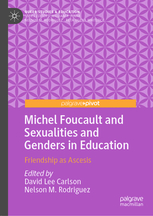
Carlson, David Lee, Rodriguez, Nelson M. (Eds.) Michel Foucault and Sexualities and Genders in Education. Friendship as Ascesis, Palgrave Macmillan, 2019

This book examines, within the context and concerns of education, Foucault’s reflections on friendship in his 1981 interview “Friendship as a Way of Life.” In the interview, Foucault advances the notion of a homosexual ascesis based on experimental friendships, proposing that homosexuality can provide the conditions for inventing new relational forms that can engender a homosexual culture and ethics, “a way of life,” not resembling institutionalized codes for relating. The contributors to this volume draw from Foucault’s reflections on ascesis and friendship in order to consider a range of topics and issues related to critical studies of sexualities and genders in education. Collectively, the chapters open a dialogue for researchers, scholars, and educators interested in exploring the importance and relevance of Foucault’s reflections on friendship for studies of schooling and education.

David Lee Carlson is Associate Professor of Qualitative Research in the Mary Lou Fulton Teachers College at Arizona State University, USA. His current research focuses on the ways in which the post-qualitative movement continues to problematize the onto-epistemology of research methodologies.

Nelson M. Rodriguez is Associate Professor of Women’s, Gender, and Sexuality Studies in the School of Humanities and Social Sciences at The College of New Jersey, USA. His current research areas span queer studies and education, critical masculinity studies, and Foucault studies.

Aldo Avellaneda y Guillermo Vega, (eds.) Conductas que importan. Variantes de análisis de los Estudios en Gubernamentalidad. EUDENE 2018.

Presentation: Wednesday, 27, 18:30. Salón de Actos, Facultad de Humanidades, Universidad Nacional del Nordeste, Argentina.

Resumen
Los así llamados Governmentality Studies (Estudios en Gubernamentalidad) vieron la luz en el año 1991, si convenimos en otorgar crédito suficiente a la designación que Colin Gordon, Graham Burchel y Peter Miller emplearon para denominar una compilación de artículos que se hacían eco, de una u otra manera, del concepto foucaulteano de gobierno. En efecto, en la clase del primero de febrero de 1978 dictada en el Collège de France, Foucault se había enfocado en las artes de gobierno como modo específico de articulación de las relaciones de poder y en la gubernamentalidad como grilla de inteligibilidad de las mismas, dando de esta manera un giro vertiginoso sobre las estrategias de análisis de los modos de pensar y programar el ejercicio del poder político

Contratapa
Entre 1978 y 1979, Foucault dicta dos cursos en el Collège de France, en los que pone de relieve los conceptos de «artes de gobierno» y de «gubernamentalidad» como herramientas de análisis de los modos en que se ejerce el poder político sobre la población. En los noventa, en Francia y en el mundo de habla inglesa, esta analítica dio origen a una serie de trabajos cuyas contribuciones conceptuales y metodológicas expandieron el campo de este nuevo enfoque. Desde entonces, los Estudios en Gubernamentalidad han alcanzado un profuso desarrollo fundamentalmente en el mundo anglosajón.
Este libro se propone hacer de los Governmentality Studies un objeto de interés, para reflexionar sobre sus posibilidades, virtudes y limitaciones. Es con este sentido que reúne una serie de trabajos de un grupo de investigadores pertenecientes a distintas universidades argentinas. Al mismo tiempo, aspira a poner en manos de los lectores de habla hispana artículos de algunos de los referentes extranjeros de esta línea de pensamiento, a la fecha, no traducidos al castellano. Finalmente, espera que la travesía de sus «territorios» −desde lo conceptual, pasando por los nuevos campos de abordaje, a lo operativo− problematice efectivamente los modos de pensar y comprender nuestras realidades.

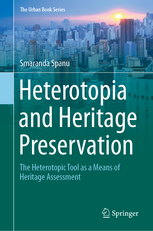
Smaranda Spanu, Heterotopia and Heritage Preservation. The Heterotopic Tool as a Means of Heritage Assessment. Springer, 2020
This book approaches the field of built heritage and its practices by employing the concept of heterotopia, established by the French philosopher Michel Foucault. The fundamental understandings of heritage, its evolution and practices all reveal intrinsic heterotopic features (the mirror function, its utopic drive, and its enclave-like nature). The book draws on previous interpretations of heterotopia and argues for a reading of heritage as heterotopia, considering various heritage mechanisms – heritage selection, conservation and protection practices, and heritage as mnemonic device – in this regard. Reworking the six heterotopic principles, an analysis grid is designed and applied to various built heritage spaces (vernacular, religious architecture, urban 19th century ensembles). Guided through this theoretical itinerary, the reader will rediscover the heterotopic lens as a minor, yet promising, Foucauldian device that allows for a better understanding of heritage and its everyday practices.