Foucault News

News and resources on French thinker Michel Foucault (1926-1984)

Chris Methmann, “The Sky Is the Limit: Global Warming as Global Governmentality.” European Journal of International Relations 19, no. 1 (March 2013): 69–91.
https://doi.org/10.1177/1354066111415300

Open access

Abstract
The concept of governmentality has gained significant influence among scholars of International Relations. Recently, however, there is a growing literature engaging critically with the notion of a global governmentality. This article seeks to inform this debate with insights from global climate change politics as a paradigmatic case for applying governmentality to global politics. Drawing on an analysis of the Clean Development Mechanism, it makes three arguments, which seek to refine the global governmentality concept. First, governmentality does not necessarily centre on the notion of the ‘population’, but can also function as a governmentality of other ‘technological zones’. Second, the seeming failure of a governmentality in its own terms is better understood within a ‘post-foundational’ framework of depoliticization. Third, governmentality and sovereignty are not mutually exclusive. Instead, the former allows the latter to ‘govern at a distance’. The Clean Development Mechanism illustrates these points perfectly. Although it is based on a global ‘carbon governmentality’, it is able to conduct individual conduct directly. Its apparent failure in terms of carbon emission reductions is in fact a success of depoliticizing climate politics, excluding fundamental social structures. And although it is based on an international treaty, it establishes an advanced liberal government of the climate.

Keywords
Clean Development Mechanism, climate change, depoliticization, governmentality
Biagio Carrano, Balkanism, the European image of the Balkans, Serbian Monitor, 13/08/2019

An analysis of the Balkanist mentality, which, in a way, we all take with us when we think about the Balkans.

A premise that is almost a spoiler: if you want to read something lighter, go immediately to the related article dedicated to Balkanology. And if you really want to read this one too, then I must immediately abuse your patience by proposing the distinction between Balkan and Balkanology. (in order to make the article somewhat lighter, some explanatory notes are given at the end and indicated with a circle °)

Balkanism as a dispositif of power

The Balkans is inspired by Edward W. Said’s classic book “Orientalism”. In it the Arab-American scholar has shown how the political and academic “discourse” on a territory and its inhabitants is always inscribed in an asymmetrical power relationship between those who write, study, describe, represent and the subjects represented by these activities. So we had the construction of Western stereotypes about the East (especially, in Said’s book, about the Near East) that justified the colonialism and then the neocolonialism of the Western powers. In the wake of Said’s studies, the reference text about the Balkans is Maria Todorova’s “Imagining the Balkans“, in which the Bulgarian scholar reconstructs the Balkanism of the major European countries towards this part of the continent, that is, the representation of the Balkans as a primordial environment from the physical and ancestral point of view to the social one, economically backward, with people as victims and heritage of the Ottoman rule and therefore with cultures that tend to be different from those forged by Catholic Latinity and Central European Enlightenment.

As in the case of orientalism, Balkanism starts from the observation of the local economic backwardness to the point of attributing it even to a delay in the anthropological evolution of the inhabitants (Said, pg. 204).

read more

Erick Bengel, A One-Man Show Repackages Michel Foucault for the Age of Trump, November 11, 2019, Hyperallergic

This article is part of a series of pieces covering or inspired by the French Institute Alliance Française’s Crossing the Line festival, produced in collaboration with the Arts & Culture MA concentration at Columbia University’s Graduate School of Journalism.

Editor: Update 13 February 2026. Link above to Festival is the archived page on the Wayback Machine

[…]
This experimental effort — one of many events in French Institute Alliance Française’s Crossing the Line festival — ran two nights in mid-September at Cooper Union.

A one-man show, starring Guillaume Bailliart and staged in French, Disorder dramatizes an unrecorded but notable event in 20th century philosophy: Foucault’s delivering “The Order of Discourse” at the Collège de France, his inaugural lecture there, on December 2, 1970, in which he gives his longstanding focus on discourse a political spin by looking at the institutions that control it

Editor: Update 13 February 2026. Link in paragraph above to the archived page on the Wayback Machine

[…]

Editor: “la critique, ce sera l’art de l’inservitude volontaire, celui de l’indocilité réfléchie. La critique aurait essentiellement pour fonction le désassujetiissement dans le jeu de ce qu’on pourrait appeler, d’un mot. la politique de la vérité”
Michel Foucault, Qu’est-ce que la critique? Suivie de La culture de soi, Vrin, 2015, p.39

inservitude
dans le cadre de la saison culturelle Liberté ! Bordeaux 2019

du mercredi 19 juin au dimanche 26 janvier 2020
Arc en rêve centre d’architecture
Entrepôt
7 rue Ferrère
33000 Bordeaux

Et si l’architecture, discipline de la contrainte, ne cessait de s’inventer dans l’indiscipline des utopies créatrices, des auteurs et des usages ?
Entre l’avènement politique des Lumières et celui des totalitarismes du XXe siècle, où en sommes-nous dans l’art de l’inservitude volontaire, de l’indocilité réfléchie¹?
Le philosophe Guillaume le Blanc invite à ces questions.
inservitude les met en exposition avec la liberté en ligne de mire comme matériau essentiel de l’architecture, porteuse d’alternatives potentielles.

inservitude réunit une somme d’œuvres de référence internationale, comme autant d’expériences de la pensée et de la création architecturale qui expriment une vision du monde, en empruntant les chemins détournés qui vont à la rencontre des ailleurs, là où l’imprévu, la liberté et la beauté se retrouvent. Ces manières de faire, de dire, sont le fruit du travail d’architectes, urbanistes, paysagistes, ingénieurs, designers, géographes, philosophes, qui racontent ici et maintenant, une histoire du Monde.

[…]

Can architecture, a discipline defined by constraint, constantly reinvent itself via undisciplined creative utopias, architects, and modes of use? Between the political advent of the Enlightenment and that of 20th century totalitarianism, where do we stand in the art of “voluntary inservitude” and “reflexive indocility?¹?

The philosopher Guillaume le Blanc invites us to address these questions, and the exhibition inservitude explores the question of freedom as an essential raw material for architecture that offers potential alternatives.

inservitude brings together a selection of international projects in which thinking and architecture express an alternative vision of the world, treading unexplored paths that lead to places where the unexpected, freedom and beauty converge.

These ways of doing and saying things are the result of the work of architects, planners, landscape designers, geographers and philosophers who tell a story about the world, here and now.

Paul Horton, School bullying and bare life: Challenging the state of exception
EDUCATIONAL PHILOSOPHY AND THEORY, Volume: 51 Issue: 14, 2019, Pages: 1444-1453

https://doi.org/10.1080/00131857.2018.1557043

Despite a vast amount of research into school bullying and the widespread implementation of anti-bullying policies and programs, large numbers of students continue to report that they are routinely subjected to bullying by their peers. In this theoretical article, I argue that part of the problem is that there has been a lack of critical discussion of the theoretical foundations upon which such studies are based. Drawing on recent theoretical contributions within the field of school bullying, the work of anthropologist James C. Scott, and the work of philosophers Michel Foucault and Giorgio Agamben, I take particular issue with the notion of power that has long been a foundational pillar of bullying definitions. Utilizing a Foucauldian understanding of power, I argue that rather than focusing on the power imbalance involved in bullying relations, focus instead needs to shift onto the role that bullying plays in power relations. Reimagining Agamben’s figure of homo sacer as a victim of school bullying, I consider the ways in which some individuals are reduced to bare life and forced into a state of exception whereby social laws are no longer deemed applicable. The article concludes with a discussion of how this state of exception might be challenged.

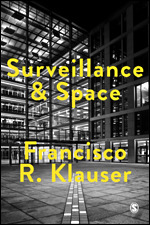
Francisco Klauser, (2017) Surveillance and space, London: SAGE Publications Ltd

The digital age is also a surveillance age. Today, computerized systems protect and manage our everyday life; the increasing number of surveillance cameras in public places, the computerized loyalty systems of the retail sector, geo-localized smart-phone applications, or smart traffic and navigation systems. Surveillance is nothing fundamentally new, and yet more and more questions are being asked:

  • Who monitors whom, and how and why?
  • How do surveillance techniques affect socio-spatial practices and relationships?
  • How do they shape the fabrics of our cities, our mobilities, the spaces of the everyday?
  • And what are the implications in terms of border control and the exercise of political power?

Surveillance and Space responds to these modern questions by exploring the complex and varied interactions between surveillance and space.  In doing so, the book also advances a programmatic reflection on the very possibility of a ‘political geography of surveillance’.

Introduction: Governing the Everyday in the Digital Age
Part I: Conceptual foundations
Chapter 1: Surveillance and the Everyday
Chapter 2: Surveillance and Mediation
Chapter 3: Surveillance and Power
Chapter 4: Surveillance and Space

Part II: Spatial Logics of Surveillance
Chapter 5: Punctual, Linear and Planar Logics of Surveillance
Chapter 6: Surveillance relating to Fixity and Flexibility, Enclosure and Openness
Chapter 7: Spherical Attributes of Surveillance

Part III: The Functioning of Surveillance in its Relation to Space
Chapter 8: Surveillance, Authority and Expertise
Chapter 9: Policy Mobilities and Exemplification in Surveillance Matters

Part IV: The Socio-spatial Implications of Surveillance
Chapter 10: Spatial Distancing and Separation
Chapter 11: The Orchestration and Automatic Production of Space

Conclusion: Towards a Political Geography of Surveillance

de Bilbao Fabienne, « Le diagnostic comme symptôme », Cliniques méditerranéennes, 2019/2 (n° 100), p. 103-115.
DOI : 10.3917/cm.100.0103

La maladie d’Alzheimer est une maladie organique : tel est le dogme positiviste actuellement dominant. Cependant, le manque de fiabilité du diagnostic et les échecs répétés à trouver des traitements efficaces incitent à remettre en question l’hégémonie de ce dogme. Ceci est d’autant plus urgent qu’un dépistage de masse s’organise pour poser des diagnostics de plus en plus précocement. Ici, l’hypocrisie serait de se dire que c’est toujours pour le bien du patient qu’il est diagnostiqué. En accord avec la thèse foucaldienne sur la circularité propre au savoir et au pouvoir, le diagnostic, comme pratique discursive, constitue l’exercice d’un pouvoir qui produit des effets cliniques. Ces effets participent à la constitution d’un savoir qui renforce en retour ce pouvoir. Un discours qui créerait les conditions favorables à faire exister ce qu’il affirme. Sous couvert d’une rationalité emprunte de moralité, ce savoir-pouvoir, dont on devine l’impact mortifère, revêt des allures de sacrifice : celui du sujet inconscient. Il serait un partenaire actif du refoulement. C’est à ce titre que nous envisagerons l’acte diagnostic comme le symptôme du clinicien.

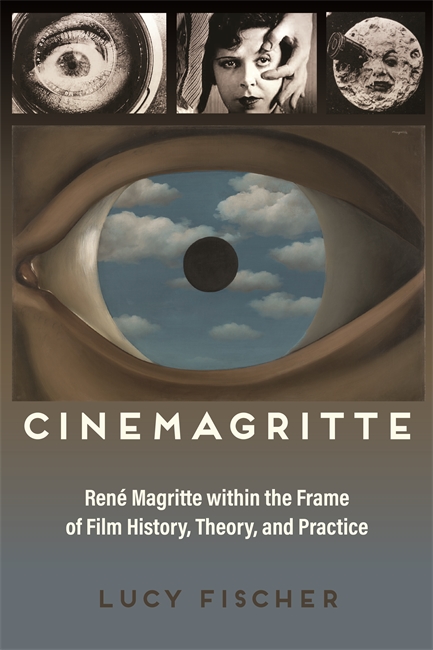
Lucy Fischer, Cinemagritte. René Magritte within the Frame of Film History, Theory, and Practice, Wayne State University Press, 2019.

Cinemagritte: René Magritte within the Frame of Film History, Theory, and Practice investigates the dynamic relationship between the Surrealist modernist artist René Magritte (1898–1967) and the cinema—a topic largely ignored in the annals of film and art criticism. Magritte once said that he used cinema as “a trampoline for the imagination,” but here author Lucy Fischer reverses that process by using Magritte’s work as a stimulus for an imaginative examination of film.

While Fischer considers direct influences of film on Magritte and Magritte on film, she concentrates primarily on “resonances” of Magritte’s work in international cinema—both fiction and documentary, mainstream and experimental. These resonances exist for several reasons. First, Magritte was a lover of cinema and created works as homages to the medium, such as Blue Cinema (1925), which immortalized his childhood movie theater. Second, Magritte’s style, though dependent on bizarre juxtapositions, was characterized by surface realism—which ties it to the nature of the photographic and cinematic image. Third, Magritte shares with film a focus on certain significant concepts: the frame, voyeurism, illusionism, the relation between word and image, the face, montage, variable scale, and flexible point of view. Additionally, the volume explores art documentaries concerning Magritte as well as the artist’s whimsical amateur “home movies,” made with his wife, Georgette, friends, and Belgian Surrealist associates. The monograph is richly illustrated with images of Magritte’s oeuvre as well as film stills from such diverse works as The Eternal Sunshine of the Spotless Mind, Eyes Without a Face, American Splendor, The Blood of a Poet, Zorns Lemma, The Island of Dr. Moreau, The Draughtsman’s Contract, and many more.

Cinemagritte brings a novel and creative approach to the work of Magritte and both film and art criticism. Students, scholars, and fans of art history and film will enjoy this thoughtful marriage of the two.

Lucy Fischer is Distinguished Professor Emerita of Film and Media Studies at the University of Pittsburgh. She is the author/editor of twelve scholarly books and has worked in curatorial positions at The Museum of Modern Art (NYC) and the Carnegie Museum of Art (Pittsburgh). She is the former president of the Society for Cinema and Media Studies and is the recipient of fellowships from the National Endowment for the Arts and for the Humanities.

Zhao, W. ‘Observation’ as China’s civic education pedagogy and governance: an historical perspective and a dialogue with Michel Foucault, Discourse
Volume 40, Issue 6, 2 November 2019, Pages 789-802

DOI: 10.1080/01596306.2017.1404444

Abstract
This paper examines China’s civic education discourses from a historical and cross-cultural perspective. It unpacks observation as a political–cultural–spatial pedagogy, underpinning Confucius’ educational envisioning, Mao’s domination in the Cultural Revolution Movement, and Xi’s China/ese Dream propaganda. Drawing upon Foucault’s provocation of the Western gaze, this paper historicizes Confucius, Mao, and Xi’s discourses to explicate a Chinese observation diagram. With Confucius, observation works as an onto-hermeneutic principle, grounding China’s cosmology and sovereign-subject governance. With Mao, observation becomes a panoramic domination-surveillance mechanism, which, coupled with a Confucian punitive shame, empowers the proletarian mass in excluding-purging the bourgeois as class enemies. With Xi, observation turns into a symbolic governing technology of self, subjecting its citizenry to re-branded Confucian values toward realizing a participatory China/ese Dream. In so doing, this paper shows the parallels and contradistinctions between the Chinese observation and the Western gaze in historically and structurally ordering knowledge production and social-educational governance.

KEYWORDS: Observation, civic education, Foucault’s gaze, Confucius’ vision, Mao’s Cultural Revolution Movement, China/ese Dream

Lorenza Mezzapelle Making a case for research-based art, The Concordion, November 5, 2019

[Editor: Update 26 February 2026. Link above is to the archived page on the Wayback Machine]

The Empty S(h)elf is on display at Artexte, at 2 Ste-Catherine St. E, Suite 301, Montreal, Quebec, Canada, until Jan. 25, 2020. The gallery is open Wednesday to Friday from 12 to 7 p.m., and Saturday from 12 to 5 p.m.

Angela Grauerholz explores the significance of the artists’ book
“Culture is linked to the book.” This set of words stands alone in a vibrant red font against a vast white wall. The phrase is broad, it can be interpreted in many ways. The words are small and the gallery space at Artexte, in downtown Montreal, appears empty.

The Empty S(h)elf is the first part of a new series by Angela Grauerholz, a Montreal-based graphic artist and designer, and co-founder of Artexte. The works create a dialogue surrounding the purpose of books and research in relation to the artist’s relationship with books and libraries.

The title The Empty S(h)elf refers at once to two notions: the empty library, one of Grauerholz’s fears for the future in an increasingly digital age; and the empty self, the idea of the “inner void.”

[…]
References attributed to renowned novelists and philosophers Umberto Eco, Jorge Luis Borges, Marshall McLuhan, Michel Foucault and Aristotle are among the gathered writings and documents. Through these, Grauerholz explores the creation of the text and a foundation for visual art.
[…]