Foucault News

News and resources on French thinker Michel Foucault (1926-1984)

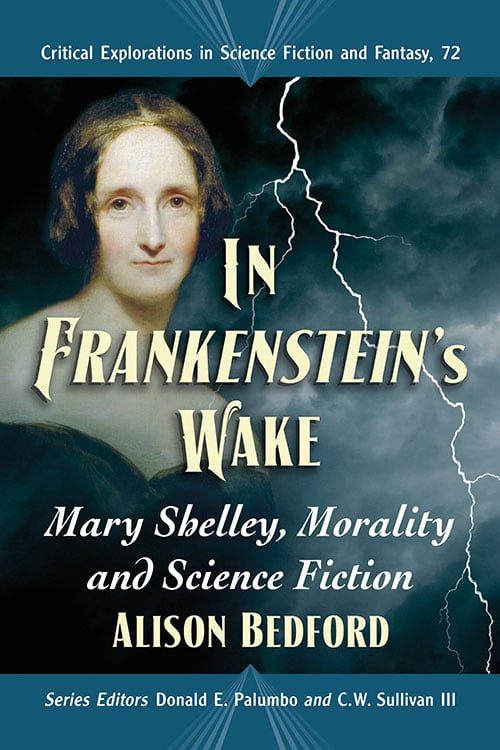
Alison Bedford, Donald E. Palumbo, C.W. Sullivan III, In Frankenstein’s Wake. Mary Shelley, Morality and Science Fiction, McFarland, 2021

Just over 200 years ago on a stormy night, a young woman conceived of what would become one of the most iconic images of science gone wrong, the story of Victor Frankenstein and his Creature. For a long period, Mary Shelley languished in the shadow of her luminary husband, Percy Bysshe Shelley, but was rescued from obscurity by the feminist scholars of the 1970s and 1980s.

This book offers a new perspective on Shelley and on science fiction, arguing that she both established a new discursive space for moral thinking and laid the groundwork for the genre of science fiction. Adopting a contextual biographical approach and undertaking a close reading of the 1818 and 1831 editions of the text give readers insight into how this story synthesizes many of the concerns about new science prevalent in Shelley’s time. Using Michel Foucault’s concept of discourse, the present work argues that Shelley should be not only credited with the foundation of a genre but recognized as a figure who created a new cultural space for readers to explore their fears and negotiate the moral landscape of new science.

Authors
Alison Bedford is a sessional lecturer at the University of Southern Queensland in Toowoomba, Australia. She is also a secondary school English and history teacher. Her research interests and publications focus on Romantic and Victorian fiction and pedagogy for the teaching of history.

Donald E. Palumbo is a professor of English at East Carolina University. He lives in Greenville, North Carolina.

C.W. Sullivan III is Distinguished Professor of arts and sciences at East Carolina University and a full member of the Welsh Academy. He is the author of numerous books and the on-line journal Celtic Cultural Studies.

stuartelden's avatarProgressive Geographies

The French Programme: How Theory Came to London – Colm McAuliffe on the 1973 ICA festival that sparked British interest in Francophone structuralist and post-structuralist thought.

March 1973: two months after Britain joins the European Economic Community, the French historian of ideas Michel Foucault is scheduled to give a lecture in London. Foucault is one of the star attractions of the French Programme, a month-long series of lectures and screenings at the Institute of Contemporary Arts. Jacques Derrida, Gilles Deleuze, Felix Guattari, and Tzvetan Todorov are among the other avatars of Francophone structuralist and post-structuralist thought appearing throughout the month, described in the French newspaper Combat as “the most important French cultural event ever organised in Britain”, and one which has been almost entirely funded by the British Government, eager to foster positive cultural relations between Britain and its sister nations in the Common Market.[continues here]

View original post

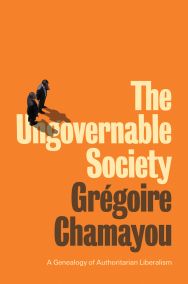
Grégoire Chamayou, The Ungovernable Society. A Genealogy of Authoritarian Liberalism, Translated by Andrew Brown, Polity 2021

Rebellion was in the air. Workers were on strike, students were demonstrating on campuses, discipline was breaking down. No relation of domination was left untouched – the relation between the sexes, the racial order, the hierarchies of class, relationships in families, workplaces and colleges. The upheavals of the late 1960s and early 1970s quickly spread through all sectors of social and economic life, threatening to make society ungovernable. This crisis was also the birthplace of the authoritarian liberalism which continues to cast its shadow across the world in which we now live.To ward off the threat, new arts of government were devised by elites in business-related circles, which included a war against the trade unions, the primacy of shareholder value and a dethroning of politics. The neoliberalism that thus began its triumphal march was not, however, determined by a simple ‘state phobia’ and a desire to free up the economy from government interference. On the contrary, the strategy for overcoming the crisis of governability consisted in an authoritarian liberalism in which the liberalization of society went hand-in-hand with new forms of power imposed from above: a ‘strong state’ for a ‘free economy’ became the new magic formula of our capitalist societies.The new arts of government devised by ruling elites are still with us today and we can understand their nature and lasting influence only by re-examining the history of the conflicts that brought them into being.

French original

Via Progressive Geographies

Anthropology News website. 2019. “How to Spark Joy by Tidying Up Your Thesis.” May 20, 2019.
DOI: 10.1111/AN.1174
Open access

Before we can begin revising your thesis, you must make the decision that you want to revise it. Once you make that step, this process will only need to happen one time, because then you will be working on a well-organized paper, and you will want to keep it well organized. But you should not jump in and just start tidying. Instead, take some time to imagine the life you will have after your thesis is done.
[..]
Then, go through the list one by one and ask yourself if each theorist sparks joy. For example, if Foucault no longer sparks joy for you, take a moment to thank him for his service in helping to get your thinking to the point where it is now, and then let him go.
[…]

The new issue of Philosophical Inquiries (IX, 1-2021)  features a Focus section discussing Ian Hacking’s philosophy,  his arguments on the combination between history and philosophy of science, on experimental realism, on scientific stability and on the disunity of the sciences. The Focus section is edited by Matteo Vagelli and Marica Setaro. The issue also presents Gaston Bachelard’s introduction to his Le rationalisme appliqué translated into English for the first time.

TABLE OF CONTENTS:
[Focus section]
Ian Hacking and the Historical Reason of the Sciences

Matteo Vagelli and Marica Setaro
Introduction

David Hyder
Naturalism, Pragmatism and Historical Epistemology

Manolis Simos and Theodore Arabatzis
Ian Hacking’s metahistory of science

Massimiliano Simons and Matteo Vagelli
Were experiments ever neglected? Ian Hacking and the history of philosophy of experiment

Jacqueline Sullivan
Understanding stability in cognitive neuroscience through Hacking’s lens

[Past Present]

Lucie Fabry
Le rationalisme appliqué. A dialogical philosophy: Bachelard’s “Introduction” to Le Rationalisme appliqué

Gaston Bachelard
The dialogical philosophy. La philosophie dialoguée

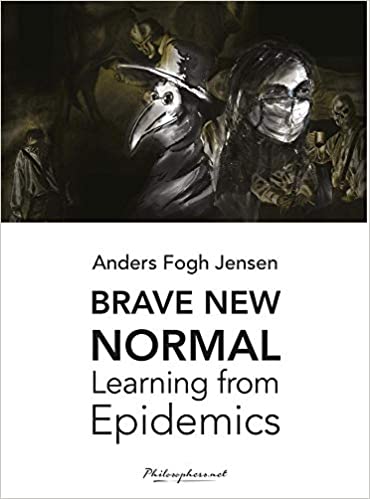
Anders Fogh Jensen, Brave New Normal, Filosoffen, 2021

(See also earlier post)

The book is an introduction to the history of Epidemics through the analytical lens of Foucault.

Throughout history, epidemics have repeatedly posed a single, provocative question: ‘Organise or die – what will you do?’ This book explores how different societies have answered. In ten concise, good-humoured chapters, the philosopher Anders Fogh Jensen tells the story of epidemics and control from the 13th century to the present. The book places the coronavirus pandemic into a historical perspective. It illuminates a range of strategies used to combat epidemics and the thinking behind them, and shows how epidemics inspire and act as catalysts for the brave new normal.

Anders Fogh Jensen (born 1973) is a Danish philosopher with a Diplomé d’Études Approfondies from the Sorbonne and a PhD from the University of Copenhagen. He is also a playwright, public speaker, author and the originator of concepts such as ‘the project society’ and ‘pseudowork’ to describe the society of today. A frequent commentator on matters philosophical on the radio, on TV and in newspapers, Anders has written several books, some of which have been translated into English, among these The Project Society (2012) and Pseudowork (2021). His plays include De danser alene (They Dance Alone), about the individual and life in the project society. Anders has also lectured at universities in Denmark for many years.

Guillaume Lachenal, Ranger façon Marie Kondo ou Michel Foucault ? Liberation, 11 décembre 2019

J’ai arrêté de lire la Magie du rangement, le best-seller de la coach japonaise en économie domestique, au moment où il faut jeter ses feuilles de paye – il faut vraiment venir d’un pays qui ne croit plus à la retraite pour écrire une chose pareille. Chez nous, terre de démographie florissante, de grands appartements et d’administration dysfonctionnelle (tout cela relativement au Japon), mieux vaut les garder dans ses coffres – et aller manifester.

[…]
La seconde réponse, plus subtile, donne raison à la gourou japonaise : la perte est en fait une condition nécessaire de la connaissance. L’histoire des collections et des archives doit se comprendre par son envers : celle de la sélection et de la destruction volontaire d’informations. C’est un lieu commun d’archivistes, qui jettent autant qu’ils peuvent : se souvenir de tout, c’est ne se souvenir de rien. […]

La pensée médicale moderne est, en son fondement, une pratique du tri (et de la mise à la benne). Ce sont les données manquantes qui rendent le savoir possible. Marie Kondo égale Michel Foucault.
[…]

Fraser, G. Foucault, governmentality theory and ‘Neoliberal Community Development’ (2020) Community Development Journal, 55 (3), pp. 437-451.

DOI: 10.1093/cdj/bsy049

Abstract
It is widely accepted that Michel Foucault’s ‘governmentality lectures’ constituted a seminal moment in the history of neoliberal studies. In an analysis which was original and prescient, Foucault framed neoliberalism, not only in terms of a set of economic policies based on monetarism, de-regulation and privatisation, but also as a productive power, which arguably, marked the beginnings of a new paradigm in the governance of human beings. Drawing upon my own empirical research, which was based on a case study of community development in the context of local government in the UK, I apply ideas associated with Foucault and governmentality theory to the field of contemporary practice. I argue that community development has been fundamentally transformed by practices associated with neoliberalism and new managerialism, and that a model of practice which can broadly be characterised as ‘neoliberal community development’ has emerged along with a changing sense of professional identity. In an analysis indebted to governmentality theory, community development emerges not so much as a social profession rooted in the needs and aspirations of communities as a technology of government which is deployed by local states to facilitate neoliberalisation, austerity and the marketisation of public services.

Index Keywords
governance approach, local government, management practice, marketing, neoliberalism, public service, social theory, theoretical study; United Kingdom

Isaev, I., Kornev, A., Lipen, S., Zenin, S.
The “machine of power” and aspects of political balance
(2020) Quaestio Rossica, 8 (3), pp. 979-992.

DOI: 10.15826/qr.2020.3.507

Abstract
This article explores the historical pattern of the evolution of power technologies. The methodological basis relies on the philosophical movements of the twentieth century (phenomenology, structuralism, etc.) and works by P. Bourdieu, C. Lefort, N. Luhmann, D. Naisbitt, P. Sloterdijk, M. Foucault, O. Spann, F. G. Jünger, N. Elias, and a number of other authors. The creation of technologies for managing society and complex power mechanisms (“power machines”) are a general pattern of social development. The notion of dynamic power balance acts as a mandatory attribute of the management of society and focuses political activity on the constant consideration of numerous phenomena, circumstances, and interests. The state, as the main instrument of political management, seeks to constantly strengthen its power both within and without, and to spread it ever more to new spheres of social relations and territories. But over time, first in the sphere of international law, universal principles are recognised that establish the limits of power and assume the impossibility of strengthening the power of any one state (the idea of political balance of sovereign national states). In domestic politics, the increasing degree of agreement and gradually developing mechanisms of consensus contribute to the reduction of the role played by direct violence and the emergence of a system of institutions that were perceived as legitimate. Previous spontaneous processes and collisions of opposing forces are translated into technical, organisational, normative language – and political dynamics – into static social structures. Chaos and uncertainty are replaced by ideas about the desired ideal and order. The new “power machine” also receives a new justification that is no longer transcendent, but rather rational and technological. Constantly improving and becoming more complex, the “power machine” becomes ever more effective. The “technical” regularities of the organisation and functioning of political power, which determine the new social role of the “power machine”, come to the fore. The state, which is organised into a mechanism with supreme political power and absolute authority, has a decisive influence on the development of society. The transition from a dynastic to a bureaucratic state depersonalises the “power machine”. The figure of a monarch with absolute power dissolves in the hierarchy of numerous officials vested with power. The organisation of power to a large extent separates carriers or subjects of power from their decisions. There is no visible mechanism of power and subordination and the opposite interests of the ruling and the governed. Further, in the twentieth-century industrial revolutions, the “power machine” is forced to adapt to new social realities, i. e. to “network” relations where communication and connections between people and their groups become fundamental. This leads to the creation of new management structures with a plurality of centres. © 2020 Ural Federal University. All rights reserved.

Author Keywords
Apparatus of power; Machine of power; Power; Sovereignty; State; Technology of power

stuartelden's avatarProgressive Geographies

Foucault and Christianity – a really interesting online resource from Niki Kasumi Clements, as part of the research for her book Foucault the Confessor.

As part of my research on Michel Foucault’s engagement with early Christian texts, I have been tracing his citational practices from 1974-1984 through his published works; gradually I will include citations from Foucault’s meticulous notes in his archives at theBibliothèque nationale de France. The 2018 posthumous publication,L’Histoire de la sexualité IV: Les aveux de la chair, edited by Frédéric Gros, is included; the 2021 translation by Robert Hurley,Confessions of the Flesh, contributes to the need to understand Foucault’s complex navigation of Christian texts and practices.

Currently processing the textual references Foucault makes to mainly early Christian texts in his monographs and Collège de France lectures between 1974 and 1984, the following dynamic data visualizations were built in Python by…

View original post 114 more words