Foucault News

News and resources on French thinker Michel Foucault (1926-1984)

Bregham Dalgliesh, Critique as Critical History, Palgrave Macmillan, 2017

Description
This book presents the first sustained articulation of a Foucauldian œuvre. It situates Foucault’s critique within the tradition of Kant’s call for a philosophical archaeology of reason; in parallel, it demonstrates the priority in Foucault’s thought of Nietzsche over Heidegger and the framing of reason against an ontology of power. Bregham Dalgliesh hereby claims that at the heart of the Foucauldian œuvre is the philosophical method of critical history. Its task is to make the will to know that drives thought conscious of itself as a problem, especially the regimes of truth that define our governmentalities. By revealing the contingency of their constituent parts of knowledge, power and ethics, Dalgliesh demonstrates that critical history offers an alternative mode of critique to the hithertofore singular reading of the intellectual heritage of enlightenment, while it fosters an agonistic concept of freedom in respect of our putatively necessary limits.

Author
Bregham Dalgliesh is associate professor at the University of Tokyo, Japan. He previously taught in Canada, the U.K. and France, where he remains an associate researcher of LASCO (Laboratoire Sens et Compréhension du monde contemporain) at the Institut Mines-Télécom. He has published widely across disciplines, with the task of philosophical critique taken up through an engagement with the multifarious effects of technoscience on the human condition.

Robb L., Deane F. (2021) Smart Cities as Panopticon: Highlighting Blockchain’s Potential for Smart Cities Through Competing Narratives. In: Wang B.T., Wang C.M. (eds) Automating Cities. Advances in 21st Century Human Settlements. Springer, Singapore. https://doi.org/10.1007/978-981-15-8670-5_12

Abstract
This chapter argues that the narratives of smart cities demonstrate the potential value of blockchain technologies. Drawing upon competing narratives within the cultural imaginary, both the ‘dream’ of a better city, and the ‘fear’ of an oppressive structure will highlight the need to consider both Bentham and Foucault’s Panopticon. The term ‘panopticon’ is defined and explored within the context of blockchain technology. In doing so three concepts are identified: the enabling nature of a panopticon; the use of a blockchain-enabled-panopticon to encourage human flourishing; and the ability for technology such as this to enhance standards above a basic minimum of the law. This chapter suggests that understanding smart cities, panopticon and blockchain, may allow for a better account for competing narratives of fear that can lead to a deeper understanding of how this technology can be deployed. © Springer Nature Singapore Pte Ltd. 2021.

Author Keywords
Blockchain; Cultural imaginary; Law and society; Law and technology; Panopticon; Smart cities; Supply chain; Technology

Orsini, G., Smit, S., Farcy, J.-B., Merla, L.
Institutional racism within the securitization of migration. The case of family reunification in Belgium
(2021) Ethnic and Racial Studies.

DOI: 10.1080/01419870.2021.1878249

Abstract
Institutional Racism (IR) in Europe is rarely mentioned in studies of race-based discrimination. Yet, structural racism occurs within most European societies. Due to the increasing securitization of immigration, countries have introduced several (in)formal strategies to exclude foreign populations. Given that, we propose an updated way of conceptualizing IR to uncover contemporary manifestations and practices of structural racist discrimination in a European country. By concentrating on the case of Belgium and, in particular, on family reunification, we first operationalize Agamben’s “state of exception” to show how exceptional measures applying to non-nationals conflict with other constitutional and international legal frameworks. As we discuss, such incompatible legal tools generate space for racist considerations to drive judicial decisions involving non-nationals. Second, in relying on Foucault’s governmentality, we explore migrants’ everyday experience of administrative discrimination–as the same procedures are implemented differently on foreigners of diverse nationalities. © 2021 Informa UK Limited, trading as Taylor & Francis Group.

Author Keywords
Belgium; governmentality; Institutional racism; multilevel; securitization of migration; state of exception

Qazi, M.H., Javid, C.Z.
Educational parlance of equity and inclusivity and students’ gendered national identity constructions in public schools in Islamabad, Pakistan (2021) International Journal of Inclusive Education.

DOI: 10.1080/13603116.2021.1889051

Abstract
This exploratory qualitative study problematises how Pakistan’s public-school education shapes female identities, employing compulsory school textbooks. Drawing on Foucault’s Discourse Analysis and other selected notions, the study also analyses 12 teachers’ and 424 students’ perspectives on this. The findings highlight Pakistani females’ disproportionate and gendered stereotypical social representations in textbooks, which the teachers further reinforce through teaching/social practices in schools. Discursively constructed, most students identify with these and reproduce them when conceptualising an ideal Pakistani woman. The study also underlines how an education system, apparently promising equity and inclusiveness, can be incredibly exclusive, ‘guiding’ the country’s 50% female population to make homemaking their destiny. This education perpetrates social othering, encourages self-righteousness and privileges men over women. Social ramifications of this education entail exclusion and disempowerment of Pakistani women as a social category. This has serious implications for certain sustainable development goals SDGs, 2030, inter alia. © 2021 Informa UK Limited, trading as Taylor & Francis Group.

Author Keywords
gender stereotypes; Gendered identities; identity construction through school education; inclusivity; students’ agency

terenceblake's avatarAGENT SWARM

“To the extent that, in spite of everything, I was an academic, a professor of philosophy, what remained of traditional philosophical discourse disturbed me in the work I had done on madness. There is a lingering Hegelianism there. To exhibit objects as derisory as police reports, internment procedures, and the cries of the mad is not enough to exit from philosophy. For me Nietzsche, Bataille, Blanchot and Klossowski were ways of exiting from philosophy.

In the violence of Bataille, in the sort of insidious and disturbing softness of Blanchot, in Klossowski’s spirals, there was something that began with philosophy, put it into play and into question, then left it, and returned again…Something like the theory of breaths in Klossowski is connected by God knows how many threads to the entirety of Western philosophy. And then, through the staging, the formulation, the way in which all that functions in Le Baphomet…

View original post 32 more words

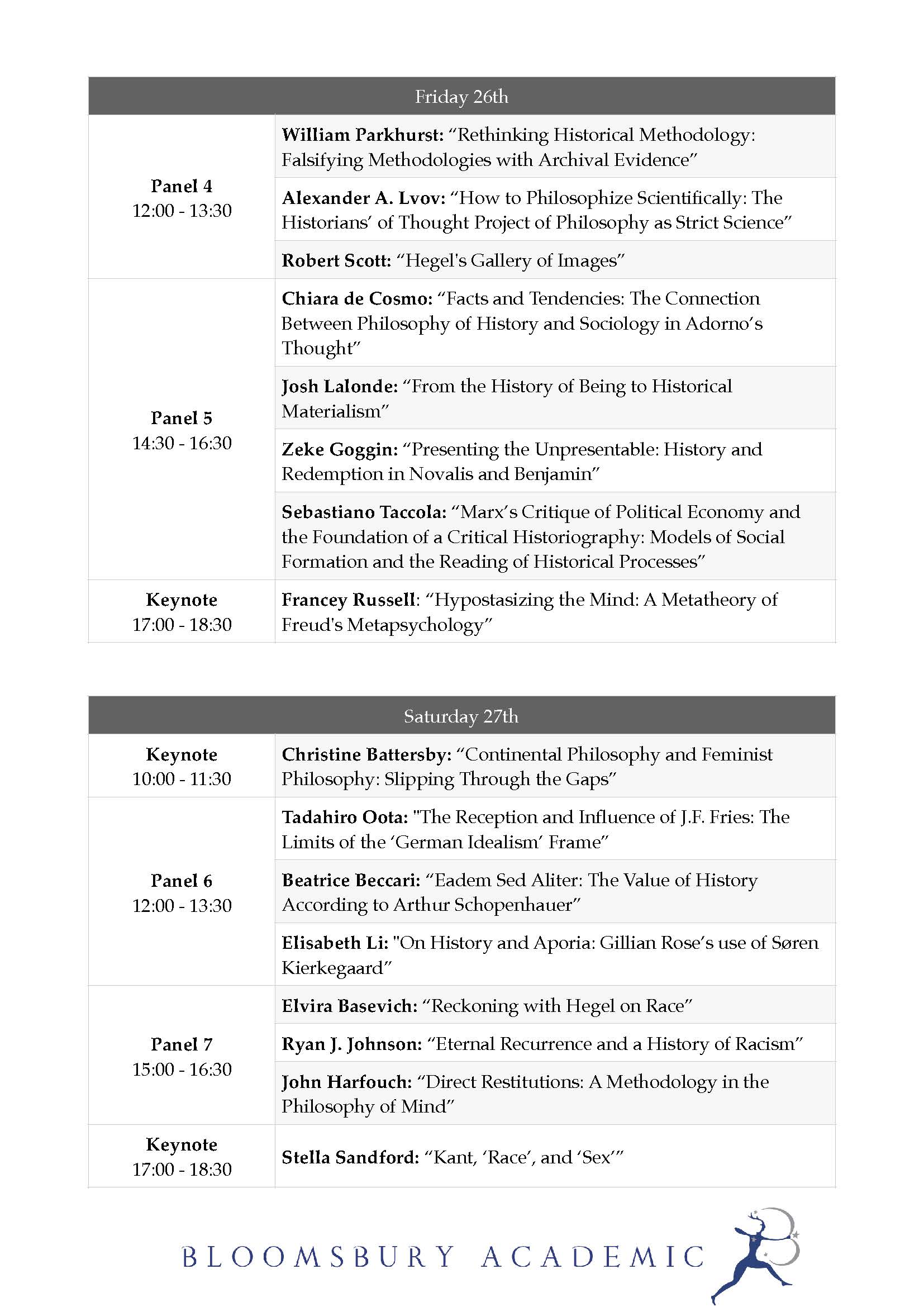
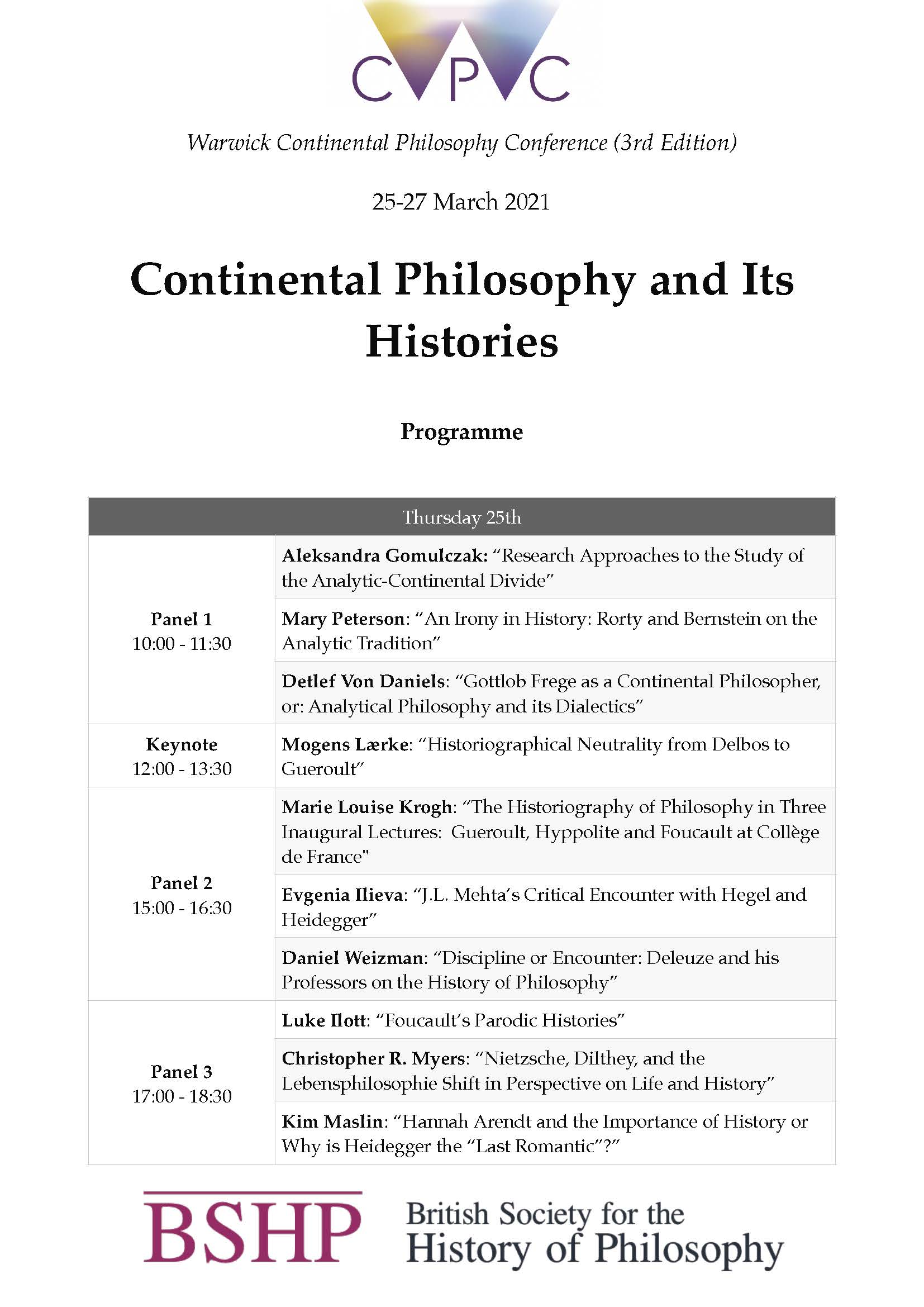
Warwick Continental Philosophy Conference 2020/21:
Continental Philosophy and its Histories
Online event
25-27 March 2021
University of Warwick (UK)
(Covid Postponement of WCPC 2020)

Registration

Amo-Agyemang, C.
Unmasking resilience as governmentality: towards an Afrocentric epistemology
(2021) International Politics

DOI: 10.1057/s41311-021-00282-8

Abstract
This paper is a discussion of how indigenous Afrocentric epistemologies proffer critiques and alternative to neoliberal discourses of resilience and what differences it makes for the study of International Politics. There has been an epistemological shift in recent times towards resilience as a form of governance aimed at enhancing the agency and adaptive capacity of populations. This has necessitated the mainstreaming and theorisation of local systems of ontology. Importantly, the current emphasis privileges how societies absorb and manage natural exigencies of life. The underlying assumption of this shift in the contemporary critical and policy discourse is that indigenous forms of ‘‘knowledge’’ and indigeneity can enhance the ability of local actors to navigate the uncertainties of a globalised world. I question this assumption by highlighting the fact that the apparent epistemological interest in local ontology is a crisis resolution strategy that has become necessary after the universal neoliberal project faced crisis and rejection. Given this, the promotion of resilience epistemology is meant to extend the reach of global actors into the deep recesses of peripheral systems and to instruct how resistance can be reduced. This makes resilience a technology or strategy of governmentality, a new emerging form of governance agenda. Given that the globalisation crisis for neoliberalism has not abated, the only insurance of Africa will be to formalise and own its ontology of resilience strategies to insulate its populations from external pressures of disruption. © 2021, The Author(s), under exclusive licence to Springer Nature Limited part of Springer Nature.

Author Keywords
Afrocentricity; Foucault; Governmentality; Indigeneity; Neoliberal governance; Resilience

David Langwallner: Human Rights In A Coronavirus Panopticon, Broadsheet, 10 March 2021

Now of course we live in perilous times worldwide for the justice system and one can have far too much faith in legal processes to protect us as the rule of law and the cause of human rights diminishes and the gatekeepers have to enforce ever more draconian legislation. Constrained by the literal application of rules they often disagree with in civilised societies and by a worldwide society descending into borderline anarchy.

In this respect Jeremy Bentham developed the model prison The Panopticon of which Kilmainham in Dublin was an example to enforce 24 hour surveillance. not ultimately adopted due to its inhumane qualities.

Now modern society has become a worldwide Panopticon, as Foucault saw happening, and as the people of Cork in the peaceful protest last Saturday expressed beautifully.
[…]

Zaidi, Z., Bush, A.A., Partman, I.M. et al. From the “top-down” and the “bottom-up”: Centering Foucault’s notion of biopower and individual accountability within systemic racism. Perspectives on Medical Education (2021).

https://doi.org/10.1007/s40037-021-00655-y
Open access

First paragraph
In the wake of worldwide events coalescing in 2020, the presence of anti-Black racism in the United States was made visible to those abroad and its egregiousness made more explicit to some citizens previously unaware of it in the U.S. In addition to the onset of the COVID-19 pandemic exposing deep-seated structural health disparities between white and non-white communities, a global mass uprising emerged in response to George Floyd’s death [1, 2]. In ways that could not have been anticipated even a few years earlier, segments of American society have had to reckon with the pervasive, powerful forces of white supremacy and the ways society and its structures have disadvantaged racially minoritized groups. In this wide-sweeping shift, medical education and medicine have also grappled with these issues, especially the ways in which medical education perpetuates institutional racism.

Ponzo, J., Marino, G.
Modelizing epistemologies: Organizing Catholic sanctity from calendar-based martyrologies to today’s mobile apps
(2021) Semiotica

DOI: 10.1515/sem-2019-0089

Abstract
The Catholic concept of “sanctity” can be thought of as a “cultural unit”(Eco) composed of a wide variety of “grounds”(Peirce) or distinctive features. The figures of individual saints, i.e., tokens of sanctity, are characterized by a particular set of grounds, organized and represented in texts of different genres. This paper presents a semiotic study of texts seeking to offer an encompassing view of “sanctity” by listing all the saints and supplementing their names with a short description of their lives emphasizing the grounds characterizing each of them. The analysis focuses on a seminal liturgical text, the Martyrologium Romanun (1584-2004), and the first official encyclopedia of saints, the Bibliotheca Sanctorum (1961-2013), as well as a sample of digital texts and media such as websites and mobile apps. While the first text offers a dogmatic perspective on sanctity and saintly figures and the second offers a historical and culturological one, websites succeed in reconciling the two paradigms into a single syncretic form of interactive fruition in which the more up-to-date encyclopedic model subsumes the traditional calendar one and, in the case of apps, adds a glocal dimension, enhancing situated cognition. The analysis shows that the introduction of the encyclopedic genre and subsequent proliferation of digital repertoires is connected to a shift in the Catholic “episteme”(Foucault) of sanctity and a growing tendency to consider saints as not (only) religious characters and objects of cult, but (also) as historical individuals and components of a culture and, consequently, as suitable objects of critical discourse. © 2021 Walter de Gruyter GmbH, Berlin/Boston 2021.

Author Keywords
Bibliotheca Sanctorum; Catholic saints; encyclopedia; epistemology; Martyrologium Romanum