Foucault News

News and resources on French thinker Michel Foucault (1926-1984)

Fawzy, R.M.
Commodification of the Egyptian New Capital: A Semio-Foucauldian Landscape Analysis (2021) Space and Culture.

DOI: 10.1177/1206331221991323

Abstract
Signs in the urban landscapes are never neutral; they always enact connections to power relations and social hierarchies. By examining the New Administrative Capital of Egypt’s (NAC) advertising billboards, the current study relates itself to the literature of Linguistic Landscape (LL). The study examines the NAC from a semio-discursive perspective. More specifically, it relies on the tools of Semiotic Landscape (SL) to discuss how the landscape of Cairo is represented as a heterogeneous contested space, and how the semiotic resources of its real-estate billboards epitomize Foucauldian principles of heterotopia. The study maintains that the different semiotic resources deployed in the NAC billboards commodify urban space by indexing heterotopic power relations. It is found that spatial commodification of the New Capital is embodied in two heterotopic tropes: “silent” space and “carnival” space. That is, the NAC billboards promote the consumption of the urban space by selling the heterotopic experiences of silence, and carnival-like tempo-spatiality. The study has found that the space of the NAC is semiotically presented in the landscape of Cairo as heterotopic through promoting “different” spatial experiences. To put it differently, the NAC billboards are perceived as antithesis to their landscapes of emplacement, the landscape of Cairo. © The Author(s) 2021.

Author Keywords
Foucault; heterotopia; linguistic landscape; NAC; semiotic landscape; spatial commodification

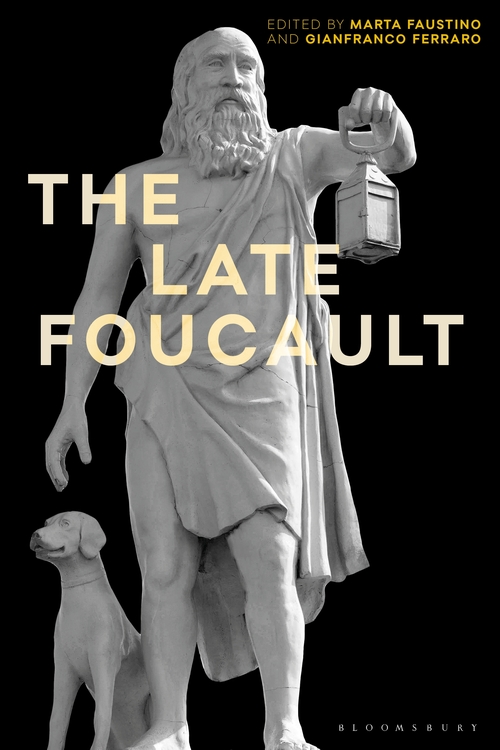
Marta Faustino & Gianfranco Ferraro (eds.), The Late Foucault. Ethical and Political Questions, Bloomsbury, 2020

Description
Michel Foucault is one of the most important and controversial thinkers of the twentieth century and one of the leading figures in contemporary Western intellectual life and debate. The recent publication of his last lecture courses at the Collège de France (1981-1984), together with the short texts, essays, and interviews from the same period, have sparked new interest in his work, allowing for a new understanding of his philosophical trajectory and challenging several interpretations produced over the last few decades.

In this later phase of his thinking, Foucault deepens and expands the course of his preceding works on the genealogy of subjectivity, while at the same time adding a significant ethical and political dimension to it. His focus on the ancient ethics of care of the self and technologies of self-constitution during this period adds important nuances to his previous positions on power, truth, and subjectivity, shedding new light on his philosophical endeavour as a whole and situating his reflections at the centre of current moral debates.

Focusing on the last stage of Foucault’s thought, this book brings together international scholars to relaunch the critical debate on the significance of Foucault’s so-called “ethical turn” and to discuss the ways in which the perspectives offered by Foucault in this period might help us to unravel modernity, giving us the tools to understand and transform our present, ethically and politically.

Brendon Murphy, Regulating Undercover Law Enforcement: The Australian Experience, Springer, 2021

This book examines the way in which undercover police investigation has come to be regulated in Australia. Drawing on documentary and doctrinal legal analysis, this book investigates how, in the space of a single decade, Australian law makers set out to regulate one of the most difficult aspects of police: undercover investigation. In so doing, the Australian experience represents a paradigm model. And yet despite its success, it is a system of law and practice that has a dark side – a model of investigation to relies heavily on activities that are unlawful in the absence of authorisation. It is a model that is as much concerned with the surveillance and control of police as it is with suspected criminal conduct.

The book aims to locate the Australian experience in comparative perspective with other major common law jurisdictions (the United Kingdom, Canada and New Zealand), with a view to contrast strengths, similarities and weaknesses of these models. It is argued that the Australian model, at the pragmatic level, offers a highly successful model for regulatory structure and practice, providing a significant model for successful regulation. At the same time, the model that has been introduced raises important questions about how and why the Australian experience evolved in the way that it did, and the implications this has for the relationship between citizen and state, the judiciary and the executive, and broader questions about the protections offered by rights discourse and jurisprudence.

This book aims to document the law, policy and practices that shape undercover investigations. In so doing, it aims to not only articulate the way in which the law regulates these activities, but also to move on to consider some of the fundamental questions linked to undercover investigations: how did regulation happen? By what means of regulation? What are the driving policy issues that give this field of law its particular complexion? What are the implications? Who gains, and who loses, by which means of power?

The book offers unique insights into a largely unknown aspect of modern covert policing, identifying a range of practices, the legal framework, controversies and powers. By locating these practices in a rich theoretical context, informed by risk and governmentality scholarship, this book offers a legal and theoretical explanation of one of the most controversial forms of policing.

Brendon Murphy is Senior Lecturer in Law at the Thomas More Law School, Australian Catholic University. He has previously been appointed as Senior Lecturer at the University of Newcastle, and Associate Professor at the University of Canberra. As an academic, his doctoral research examined the regulation of covert investigation in Australia, with emphasis on the legal, policy and theoretical aspects of controlled operations. His PhD was given honourable mention by the Royal Society of New South Wales as an outstanding thesis in 2016. He has published widely in the field of criminal law and procedure, law and society, and legal theory. He was contributing author to National Security, Surveillance and Terror in Palgrave MacMillan’s Crime Prevention and Security Management Series, and Criminal Law Perspectives published by Cambridge University Press. He is the current serving academic member of the New South Wales Law Society’s Specialist Accreditation Board for Criminal Law.

Alessandro Baccarin, Archeologia dell’erotismo. Ascesa ed oblio dell’ars erotica greco-romana. Edizioni Efesto (2020)

Descrizione
Nel grande naufragio della letteratura greco-romana uno spazio particolare occupa la manualistica erotica. Si trattava di un genere letterario importante, che solo una lettura distorsiva e anacronistica può ascrivere alla pornografia. L’autorialità che rese celebre questo genere era composta per lo più da figure femminili, donne come Filenide di Samo, la più antica autrice di un manuale erotico greco, o l’egiziana Elefantide, autrice amata dall’imperatore Tiberio. Autrici la cui dimestichezza con la filosofia rendeva possibile scrivere un libro di “tecnica erotica”.

Scopo di questo libro non è solo ricostruire questo genere letterario perduto, ma anche recuperare quella koiné culturale e artistica che possiamo definire come “ars erotica” greco-romana. Si tratta di riprendere la prospettiva e l’archivio genealogico del Foucault della Storia della sessualità, e di recuperare ad una storia dello sguardo e della quotidianità un’esperienza dell’erotico altra. Una storia dell’erotismo capace di fornire al lettore esperto e a quello meno esperto uno sguardo d’insieme sull’erotismo nel mondo antico, venendo così a colmare un vuoto che da troppo tempo caratterizza il mondo degli studi classici e filosofici.

Alessandro Baccarin vive e lavora a Roma. I suoi campi di studio interessano la storia, l’antropologia e la filosofia antica. Si è interessato anche di studi di genere, del pensiero di Michel Foucault, e nell’ambito degli studi classici di geografia antica. Attualmente sta conducendo ricerche di ampio respiro sul sogno e sull’oniromantica pre-moderna. E’ autore di Il sottile discrimine. I corpi tra dominio e tecnica di sé, Ombre Corte, Verona 2015, e coautore con Paolo Vernaglione Berardi di Quaderni di archeologia filosofica, Volume primo, Edizioni Efesto, Roma 2019). I suoi saggi e interventi sono presenti in riviste scientifiche e in Laboratorio di Archeologia Filosofica, sito web di discussione pubblica di cui ha contribuito alla fondazione.

Frias, F.J.L., Dattilo, J.
The influence of power on leisure: Implications for inclusive leisure services (2021) International Journal of Environmental Research and Public Health, 18 (5), art. no. 2220, pp. 1-14.

DOI: 10.3390/ijerph18052220

Abstract
Many people experience domination as they encounter oppression and marginalization because of power differentials limiting their leisure. We rely on Foucault for guidance to examine connections between power and opportunities for people to be included in leisure and recognize that, like Foucault, we experience privilege. Considering such privilege, we explore power and people connections, scrutinize ways power influences leisure, and examine methods to promote or resist power to increase leisure. Drawing on the analysis of power and leisure, we examine how discourse influences leisure and identify ways to facilitate inclusive leisure. We consider these aspects via Allen’s (1998) modalities of power-over, power-to, and power-with. Analyzing these modalities, we address barriers to leisure associated with power, strategies people use to engage in resistance through leisure, and ways inclusive leisure might occur. We conclude that each person can make positive contributions and offer inclusive leisure. © 2021 by the authors. Licensee MDPI, Basel, Switzerland.

Author Keywords
Foucault; Inclusion; Leisure; Power

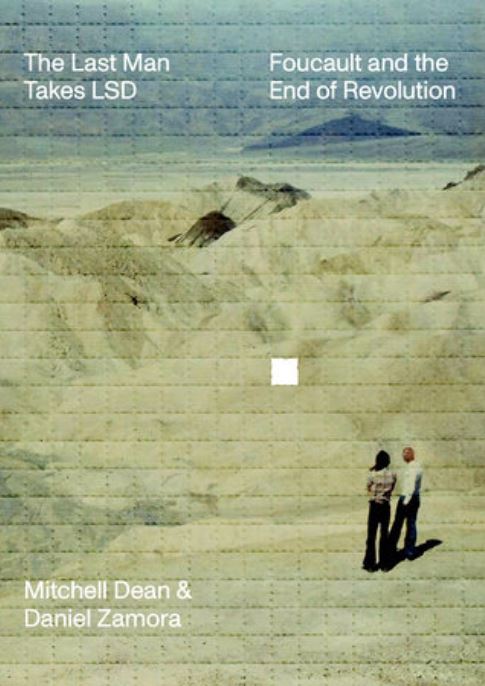
Mitchell Dean & Daniel Zamora, The Last Man Takes LSD Foucault and the End of Revolution, Verso, forthcoming May 2021.
ISBN: 9781839761393

In May 1975, Michel Foucault took LSD in the southern Californian desert. He described it as the most important event of his life, which would lead him to completely rework his History of Sexuality. His focus now would be less on changing power relations in society but rather on the experiments of subjectivity and the stylization of existence. Through this lens, he would reinterpret the social movements of May ’68 and embrace anti-totalitarianism as an alternative to socialism and revolution. He would also come to appreciate the possibilities of autonomy offered by a new force on the French political scene that was neither of the left nor the right: neoliberalism. Part intellectual history, part critical theory, this book challenges the way we think about both Foucault and progressive politics today.

Carlo Salzani
COVID-19 and State of Exception: Medicine, Politics, and the Epidemic State, Paris Institute for Critical Thinking, 12 March 2021

Open access

The article analyzes the paradigm of the state of exception which has been evoked in relation to the exceptional measures adopted against the COVID-19 pandemic around the world, with particular reference to the works of Michel Foucault and Giorgio Agamben. In Agamben, the medicalization of politics analyzed by Foucault is complemented by a theory of sovereignty derived from Carl Schmitt that identifies in the state of exception the original political relation. His recent and much criticized attacks against the exceptional anti-COVID-19 measures must thus be read and understood within the wider context of his politico-philosophical project.

CARLO SALZANI is Guest Scholar at the Messerli Research Institute of the University of Vienna, Austria. His recent publications include the volumes Animality in Contemporary Italian Philosophy (2020), co-edited with Felice Cimatti, and Saramago’s Philosophical Heritage (2018), co-edited with Kristof K.P. Vanhoutte.

Adriany, V., Newberry, J.
Neuroscience and the construction of a new child in early childhood education in Indonesia: A neoliberal legacy
(2021) Current Sociology.

DOI: 10.1177/0011392120985875

Abstract
Neuroscience has become a new ‘truth’ in early childhood education across the globe, including in Indonesia. This article aims to demonstrate how the alignment of neuroscience discourse and the legacy of neoliberalism constructs a new form of childhood in Indonesia. The conceptual framework of brain science, predicated on biological determinism, suggests that the brain will significantly influence not only children’s development in the present but also will have an impact in the future. Neuroscience is also based on the idea of transparency. Beneath this conceptual framework lies the idea that a child’s mind can be made visible through both technological means and standardized development measures. Global neoliberal discourse reinforces this techno-scientific approach through the concept that stimulating children’s development facilitates economic growth in a country. This instrumental use of child development contrasts with the paradigm which emphasizes children’s agency. This article is based on ongoing and previous fieldwork from both authors. Using Foucault’s concept of discourse and disciplinary power, the authors argue that neuroscience has become the truth that hides societal issues such as poverty as well as becomes a form of surveillance that constructs a child as being open to the adult gaze and surveillance. The findings will also illuminate the tension and negotiation between local values and global values in assembling a new form of childhood in Indonesia. © The Author(s) 2021.

Author Keywords
childhood; children; discourse; neoliberalism; Neuroscience

Kim, J.
Rethinking public administration and the state: a Foucauldian governmentality perspective
(2021) International Review of Public Administration.

DOI: 10.1080/12294659.2021.1889102

Abstract
Public administration as a field of study (PA) has long suffered from a chronic identity crisis. Against such a background, by adopting Michel Foucault’s governmentality perspective, this paper critically examines the key assumptions and orientations of public administration and its relationship with the state. The basic arguments are that PA’s silence about the nature of the state has led to the chronic identity crisis and that PA has yet to offer a coherent vision for redefining itself in the context of governing the state and for constituting and engaging the citizens, especially in their counter-conducts amid the governing practices of public administration. Based upon such arguments, it proposes to redirect our attention to the exercise of power across the administrative encounters and explores a future direction for rethinking administrative practices. © 2021 The Korean Association for Public Administration.

Author Keywords
conduct; counter-conduct; governmentality; Public administration; the state

Minca, C., Rijke, A., Pallister-Wilkins, P., Tazzioli, M., Vigneswaran, D., van Houtum, H., van Uden, A.
Rethinking the biopolitical: Borders, refugees, mobilities…
(2021) Environment and Planning C: Politics and Space

DOI: 10.1177/2399654420981389

Abstract
This Symposium reflects on the growing relevance of biopolitical perspectives in camps studies, border studies, refugee studies, and in particular in research at the intersection between mobility studies and political geography. The five interventions accordingly engage with questions regarding the use of biopolitics as an analytical framework, but also as a pervasive strategy and governmental tool in Western societies. Through an analysis of several empirical cases – most notably hotspots on the Greek Aegean Island, refugee’s forced hyper mobility in Europe, speech acts connected to the ethnic cleansing of the Rohingya people in Myanmar and the ‘voluntary return’ policies in Europe, and the paper borders created by visa systems – the authors indicate new possible fields of enquiry related to the biopolitical critically inspired by the work of authors such as Giorgio Agamben and Jasbir Puar, while also clearly restating the fundamental importance of Foucault’s original contribution to any biopolitical analytical framework today. © The Author(s) 2021.

Author Keywords
Biopolitics; borders; mobilities; refugees