Foucault News

News and resources on French thinker Michel Foucault (1926-1984)

Oolite Arts Announces Summer Exhibition: “Where There is Power”
MIAMI BEACH, Florida, USA, Artfix Daily, July 13, 2021

This summer starting July 21, Oolite Arts presents “Where There is Power”, an exhibition about the many ways that artists access, spy upon, expose, memorialize, and occasionally trouble the machinations of power.

Where there is power is co-organized by Amanda Bradley, programs manager at Oolite Arts, and Réne Morales, chief curator at Pérez Art Museum Miami. “When I was first invited to do the show last summer, the world really felt like it was on fire,” said Réne Morales. “Between the pandemic, the movement for Black lives, ongoing trauma from the last administration and election, and crises at the border, the societal powers that structure and regulate our lives were clearly becoming unstable. So, we wanted to put together a show that would respond to the political instability and volatility of the times.” The exhibition’s title refers to a famous quote by the philosopher Michel Foucault: “Where there is power, there is resistance.”

The Miami-based artists featured in the exhibition include José Álvarez, Asif Farooq, Edny Jean Joseph, Francisco Masó, Yucef Merhi, Reginald O’Neal, Rodolfo Peraza, Chire Regans, Tony Vázquez-Figueroa, Judi Werthein, Agustina Woodgate, Antonia Wright and Ruben Millares.
[…]
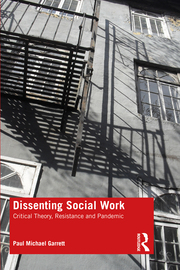
Paul Michael Garrett, Dissenting Social Work. Critical Theory, Resistance and Pandemic, Routledge, 2021

Book Description
This book, from one of international social work’s leading radical educators, provides a richly compelling argument for the profession to become more critical and dissenting.

Addressing the troubled times in which we find ourselves, Garrett’s book examines a broad range of theoretical frameworks and draws on diverse writers, such as Marx, Foucault, Brown, Zuboff, Rancière, Wacquant, Arendt, Levinas, Fanon and Gramsci. The author’s panoramic vision encompasses Ireland, the United Kingdom, the United States, Algeria, Israel/Palestine and China. Timely, lively and accessible, this book speaks directly to some of the main preoccupations of our era. Readers will be encouraged to relate developments in social work to key themes circulating around migration, the threat of neo-fascism, surveillance culture, colonialism, the Black Lives Matter movement and the COVID-19 pandemic. Imbued with a sense of hope for a brighter future, this book encourages a new generation of social work students to recognise and examine the importance of critical theory for understanding the structural forces shaping their lives and the lives of those with whom they work and provide services.

This book is vital, indispensable and essential reading for social work students and other readers, throughout the world, seeking to make the connection between social work, social theory and sociology.

Table of Contents
Preface and acknowledgements

Chapter 1. Introduction

Chapter 2. Questioning the world of ‘appearances’: Karl Marx

Chapter 3. Neoliberalism, human capital and biopolitics: Michel Foucault and Wendy Brown

Chapter 4. Surveillance capitalism: Shoshana Zuboff

Chapter 5. Equality NOW: Jacques Rancière

Chapter 6. Critical Scholarship and neoliberal penality: Loïc Wacquant

Chapter 7. Dissenting with the arch-contrarian: Hannah Arendt

Chapter 8. Remembering that African, Asian and Palestinian lives matter: Emmanuel Levinas

Chapter 9. It is becoming ‘impossible to breathe’: Frantz Fanon

Chapter 10. Social work’s Chinese future?: Antonio Gramsci

Chapter 11. Conclusion

Hillier, Jean, and Jason Byrne. “Is Extermination to Be the Legacy of Mary Gilbert’s Cat?” Organization 23, no. 3 (May 2016): 387–406. https://doi.org/10.1177/1350508416629455.

Abstract
Once imported to Australia as rodent controllers, cats are now regarded as responsible for a second wave of mammal extinction across the continent. Utilising the Foucauldian concept of biopolitics, we investigate critically the institutional field of cat regulation in Australia, exemplified by the Western Australian Cat Act 2011 and the Federal Environment Minister’s 10-year campaign to eradicate feral cats. Analysis of the biopolitical dispositif of ferality, and its elements of knowledge, subjectivation and objectivation and power processes, illustrates the dispositions through which what might be regarded as felicide has become organisational practice. We propose alternative practices emphasising the productive potentialities of biopolitics.

Keywords
Animals, biopolitics, cats, feral, management, regulation

stuartelden's avatarProgressive Geographies

Now that marking is complete, and the end of term is here,it’s been great to regain time and focus forthis work. Some of the nice comments I had aboutThe Early Foucaulthelped to encourage this. I’m not tired of this book, but I am impatient to move it forward, at least to get it to a point where all that remains is archival work once travel becomes possible again without periods of self-isolation.

I had some productive days at the British Library in June, across a couple of visits. The length of the visits means that I’m largely using the time to check small details or survey works which I might need to read in more detail. Some of this work was looking at the books Foucault reviewed or otherwise referenced.

I continue to work on Foucault’s literary essays in the first half of the 1960s, along…

View original post 1,378 more words

stuartelden's avatarProgressive Geographies

Alain Brossat et Daniele Lorenzini (dir.), Foucault et… Les liaisons dangereuses de Michel Foucault – Vrin, August 2021

Michel Foucault est un philosophe qui, loin de plancher sur d’autres philosophes, avance avec et contre eux – et contre pas moins qu’avec, au vu du caractère distinctement agonistique de sa pensée.
Dans ce volume, il « dialogue » successivement avec douze philosophes et écrivains de tous les temps – des auteurs dont les œuvres soutiennent et traversent la sienne, dans une perpétuelle tension. Chacune de ces encontres est mise en scène par un spécialiste de Foucault. Tout se joue autour du « et » : de Foucault et Platon à Foucault et Althusser ou Genet en passant par Machiavel, Hegel, Said et bien d’autres. Le « et », ici, rapproche et éloigne à la fois.
Selon cette approche, l’œuvre perd son caractère de forteresse pour devenir un nœud, dans un réseau : celui de la philosophie vivante qui se…

View original post 24 more words

Michel Foucault from A to Z. Foucault on Population, Environment, and “Umwelt”

Weinreich, Spencer J. “Panopticon, Inc.: Jeremy Bentham, Contract Management, and (Neo)Liberal Penality.” Punishment & Society, (July 2021). https://doi.org/10.1177/14624745211023457.

Abstract
This essay revisits Jeremy Bentham’s Panopticon, perhaps the foundational figure of the study of the prison, to recover a dimension of the project wholly omitted in Michel Foucault’s canonical reading in Discipline and Punish. Nowhere does Foucault mention Bentham’s insistence that the prison be run by a private contractor. With Bentham’s penal theory characteristically derived from his account of human psychology, the contract and private profit are essential to the functioning of the Panopticon, because they align the jailer’s duty with their self-interest. Bentham built profit and market imperatives into the fabric of the Panopticon, always envisioned as a place of economic production. The contract-Panopticon and its political economy are vital antecedents to the neoliberal penality theorized by Loïc Wacquant and Bernard E. Harcourt, even as they problematize the statism inherited from Foucault and the chronological implications of the prefix “neo.” Bentham was only the theorist of a marketization of governance pervasive in his own time and ever since, raising the question of whether punishment has ever been a purely state function.

Keywords
contract, Discipline and Punish, Jeremy Bentham, market, Michel Foucault, neoliberalism, Panopticon, privatization

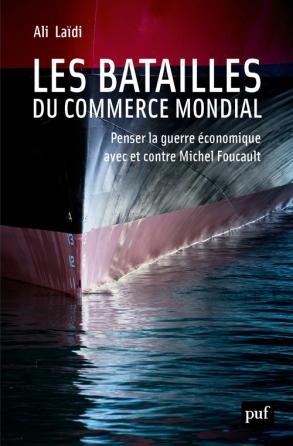
Ali Laïdi, Les batailles du commerce mondial. Penser la guerre économique avec et contre Michel Foucault, PUF 2021

Résumé
À partir des outils conceptuels légués par Michel Foucault, il s’agit d’établir l’existence de la guerre économique, un concept rejeté jusqu’à présent par le monde académique et médiatique. Mais depuis l’élection de Trump en 2016, – un président américain qui aime la guerre commerciale –, le Brexit et les impacts économiques de la crise du Covid, les élites politiques et économiques ne peuvent plus nier son existence. L’auteur s’appuie sur l’un des plus grand intellectuel français du XXe siècle, Michel Foucault, pour montrer la généalogie de la guerre économique dans l’Histoire, sa pertinence face au concept de pouvoir et sa prolongation dans le champ civil et économique en temps de paix. Mais il analyse également comment Michel Foucault n’a pas perçu qu’une société où tous les individus sont les entrepreneurs de leur propre vie entraîne une concurrence féroce qui ne se règle pas uniquement dans les prétoires mais aussi sur les champs de bataille économique.

Ali Laïdi est docteur en sciences politiques, chroniqueur à France 24, responsable du Journal de l’Intelligence économique et chercheur associé à l’École de pensée sur la guerre économique (EPGE) Son dernier ouvrage Le Droit, nouvelle arme de guerre économique. Comment les Etats-Unis déstabilisent les entreprises européennes (Actes Sud, 2019) a reçu le Prix HEC/Manpower Étudiant et le Prix du Jury Turgot.
Il est notamment l’auteur de Les secrets de la guerre économique (Seuil, 2004) ; Retour de flamme. Comment la mondialisation a accouché du terrorisme (Calmann-Lévy, 2006) ; Les États en guerre économique (Seuil, 2010), Prix Turgot IES 2010 ; Aux sources de la guerre économique (Armand Colin, 2012) ; Histoire mondiale de la guerre économique (Perrin, 2016).

Jonathan Fanara, « La Machine ne ferme jamais les yeux » : techno-surveillance, Le Mag du Ciné, 6 juin 2021

Review in English

Dans La Machine ne ferme jamais les yeux (Delcourt/Encrages), Yvan Greenberg, Joe Canlas et Everett Patterson se penchent sur les technologies de surveillance et la manière dont nos données privées sont exploitées de manière croissante. Pour ce faire, ils transitent par le FBI, la NSA, le maccarthysme ou encore les nouvelles technologies.

Edward Snowden et Olivier Tesquet l’ont chacun verbalisé à leur manière : les technologies de surveillance prennent une importance souvent insoupçonnée dans nos existences. L’ancien employé à la NSA a démontré à quel point les gouvernements et leurs agences de sécurité pouvaient s’immiscer dans l’intimité de leurs concitoyens. L’essayiste français a quant à lui énoncé les fondements d’une vie privée rabotée par les caméras de surveillance, les drones, les applications mobiles, la capture des données numériques ou encore des objets devenus anodins comme Google Home ou l’Apple Watch. La Machine ne ferme jamais les yeux nous plonge aux sources bibliques et historiques (Judas, le cheval de Troie…) de la surveillance, puis radiographie son extension progressive jusqu’à la situation actuelle, où le commercial, le technologique et le politique concourent sans distinction à notre mise à nu.

[…]
L’objet de l’album outrepasse néanmoins ces seules questions, puisqu’on y assiste par exemple à la rencontre fictive entre George Orwell, père de la novlangue et de Big Brother, et Michel Foucault, tirant notamment de la surveillance panoptique de Jeremy Bentham toute une série de vocables et d’expressions censés témoigner de réalités sociologiques nouvellement établies et étayées (parfois par ses propres soins).
[…]

Kovačević, V., Malenica, K.
Heterotopia and Postmodern Community in the Context of Migration and Relationship Towards Migrants
(2021) Italian Sociological Review, 11 (1), pp. 63-86.

DOI: 10.13136/isr.v11i1.415

Abstract
This work approaches the issue of migration of the Arab population to Europe within the idea of postmodern community and the concept of heterotopia. The social and historical context (of globalization and migration) imposes necessity to discuss the community and postmodern circumstances. In this paper we refer to Foucault’s heterotopic elements within the context of migrations; places of refuge, shelters and migrants’ asylums present certain heterotopias of our society; absolute other places that give a mirror-like mixing experience. Our analysis shows how the underlying motives for resolving some of the key social problems of contemporary Europe and new community formation are not (just) at the level of social forms, but in the vital transformation of people, their lives and relations towards the Other.

Author Keywords
heterotopia; migrants’ asylums; postmodern community