Foucault News

News and resources on French thinker Michel Foucault (1926-1984)

Robert Mitchell, Infectious Liberty: Biopolitics between Romanticism and Liberalism, Fordham University Press, 2021

Open access
Review in Foucault Studies

Abstract
Infectious Liberty traces the origins of our contemporary concerns about public health, world population, climate change, global trade, and government regulation to a series of Romantic-era debates and their literary consequences. Through a series of careful readings, Robert Mitchell shows how a range of elements of modern literature, from character-systems to free indirect discourse, are closely intertwined with Romantic-era liberalism and biopolitics.

Eighteenth- and early-nineteenth century theorists of liberalism such as Adam Smith and Thomas Malthus drew upon the new sciences of population to develop a liberal biopolitics that aimed to coordinate differences among individuals by means of the culling powers of the market. Infectious Liberty focuses on such authors as Mary Shelley and William Wordsworth, who drew upon the sciences of population to develop a biopolitics beyond liberalism. These authors attempted what Roberto Esposito describes as an “affirmative” biopolitics, which rejects the principle of establishing security by distinguishing between valued and unvalued lives, seeks to support even the most abject members of a population, and proposes new ways of living in common.

Infectious Liberty expands our understandings of liberalism and biopolitics—and the relationship between them—while also helping us to understand better the ways creative literature facilitates the project of reimagining what the politics of life might consist of.

Infectious Liberty is available from the publisher on an open-access basis.
Mona Lilja, Constructive Resistance. Repetitions, Emotions, and Time, Rowman & Littlefield.

See review in Foucault Studies

This book examines constructive resistance practices that range from street protests to the use of photographic images, and displays their role in local and global political processes. By building on a rich selection of interview material and other empirical research, the book elaborates on different cases of constructive resistance, where close attention is paid to the productive qualities that are involved. It offers new perspectives on the undertakings of different epistemic battles that occur around current issues such as gender, nationalism, climate change, migration and the right to land, and explores personal narratives, artistic expressions and public statements that are utilized as means of resistance, and performed in order to negotiate different established truths.

More specifically, the book discusses the discursive struggles regarding migrant bodies, where artifacts that pertain to the hardship are presented in Swedish museums; the Preah Vihear temple conflict between Cambodia and Thailand; the border conflict in West Sahara; the self-making of (self-defined) women politicians in Cambodia; and climate activism communication. Through discussions on the importance of figurations, posters, narratives, photographs, artifacts and buildings in the establishing of contemporary discussions and world views, the book inquires how and why these representations are (re)imparted with meaning and the effect that this has.

The book does not only illustrate different forms of resistance, but also contributes theoretically to our understanding of repetitions, emotions and time, which are properties that must be embarked upon in order to capture the various dimension of resistance. Given that the type of constructive resistance that is expanded upon is about processes of significations, the time aspect—how alternative truths are repeated and thereby established over time—becomes crucial. And, resistance has a temporality of its own; for example, close authorities are instantly resisted here and now, while meaning-making resistance suffers from the inescapable time-lag of processes of signification. In all forms of resistance, emotions prevail as an important engine of political struggles and, as is displayed in this book, emotions are an important means of constructive resistance.

Posselt, G. (2021). Self-Care and Truth-Telling: Rethinking Care with Foucault. Le Foucaldien, 7(1), 10.
DOI: http://doi.org/10.16995/lefou.107

Abstract
Although the care of the self looms large in Michel Foucault’s later works, his analyses are largely neglected in current debates on care. This may be due to the fact that Foucault’s work has so far been read primarily as an ethics and aesthetics of the self, concerned less with common care activities than with individualistic practices of self-cultivation. Against this background, I argue that in Foucault the care of the self is pervaded by the presence of the Other. This becomes clear as soon as one links the care of the self with the concept of parrhesia, which signifies a form of truth-telling in which the individual confronting the Other with the truth constitutes herself as the subject of a discourse of truth. It is precisely by associating the care of the self with parrhesia that the genuinely critical and emancipatory potential of each becomes effective in the first place. This makes it possible not only to detach the concept of care from its close entanglement with the private sphere and to reframe it in political terms but also to envisage a critical attitude that is based both on the care of the self and others and on the concern for truth.

Keywords: alterity, care, critique, ethics, parrhesia, politics, Michel Foucault

Udi Greenberg, Review: The Lost Worlds of Edward Said, The New Republic, April 13, 2021

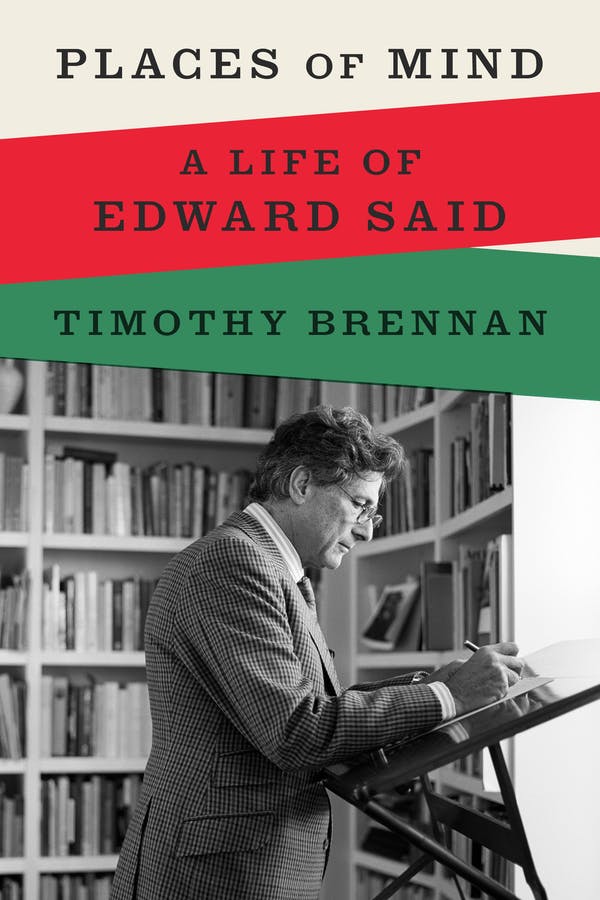
Timothy Brennan, Places of Mind: A Life of Edward Said, Farrar, Straus and Giroux, 2021.

Exiles often have conflicting feelings about their adoptive society, and Edward Said was no exception. As a Palestinian in the United States, he recognized the country’s pervasive racism and violence, but he also knew its educational system made his career as a renowned and prosperous thinker possible. His life was indeed filled with paradoxes and contradictions. He was one of the twentieth century’s most influential anti-colonial writers, who mostly studied his colonizers’ literature; a proponent of Palestinian liberation who wrote in English and mostly for English-speaking audiences.
[…]

In its most impressive chapters, Places of Mind reconstructs Said’s participation in these two revolutions. The first was post-structuralism. Under the influence of philosopher Jacques Derrida, a group of French scholars launched blistering attacks on Europe’s intellectual traditions. Even after the Enlightenment, they claimed, Europe remained obsessed with enshrining hierarchies and binaries (between men and women, “primitive” and “civilized”); the most urgent task was to dismantle those. While Said is not always associated with this school today, he was among the first to embrace it in the English-speaking world. He took part in the early conferences on post-structuralism in the U.S. and was one of the first to utilize its concepts in his writings. He borrowed especially from Michel Foucault and his provocative depiction of the link between knowledge and power. Artists and thinkers, Foucault claimed, were rarely individuals who challenged authority. Most of the time, they reproduced and reinforced their society’s structures of authority, making them seem natural and even benevolent.
[…]

J M Moore, Review: Penal Theories and Institutions: Lectures at the College de France 1971–1972, The British Journal of Criminology, Volume 62, Issue 1, January 2022, Pages 254–256,
https://doi.org/10.1093/bjc/azab044

Extract
Between 1970 and his death in 1984 (with the exception of a sabbatical in 1977), Michel Foucault delivered an annual series of lectures at the Collège de France. Using tape recordings as well as Foucault’s and others’ notes, the lectures have, since 1997, been published in French (with English translations appearing from 2003). The second lecture series, Penal Theories and Institutions, delivered between November 1971 and March 1972, is the final set of lectures to be published. It is not surprising these lectures have been published last. There were no recordings of the lectures and the editor, Bernard Harcourt, has recreated them from Foucault’s notes. Foucault’s original notations have been included, with crossed out passages detailed in the footnotes. These footnotes are supplemented by extensive endnotes providing context and links to Foucault’s wider scholarship and social activism.
[…]

Museum Thresholds The Design and Media of Arrival
Edited By Ross Parry, Ruth Page, Alex Moseley. Routledge 2020. Copyright year 2018.

Editor: I came across this volume doing a search on Richard Rogers, one of the two architect behind the Georges Pompidou centre in Paris, (the other was Renzo Piano). Richard Rogers has just died.

Richard Rogers, Architect Behind Landmark Pompidou Center, Dies at 88

Book Description
Museum Thresholds is a progressive, interdisciplinary volume and the first to explore the importance and potential of entrance spaces for visitor experience. Bringing together an international collection of writers from different disciplines, the chapters in this volume offer different theoretical perspectives on the nature of engagement, interaction and immersion in threshold spaces, and the factors which enable and inhibit those immersive possibilities.

Organised into themed sections, the book explores museum thresholds from three different perspectives. Considering them first as a problem space, the contributors then go on to explore thresholds through different media and, finally, draw upon other subjects and professions, including performance, gaming, retail and discourse studies, in order to examine them from an entirely new perspective. Drawing upon examples that span Asia, North America and Europe, the authors set the entrance space in its historical, social and architectural contexts. Together, the essays show how the challenges posed by the threshold can be rethought and reimagined from a variety of perspectives, each of which have much to bring to future thinking and design.

Combining both theory and practice, Museum Thresholds should be essential reading for academics, researchers and postgraduate students working in museum studies, digital heritage, architecture, design studies, retail studies and media studies. It will also be of great interest to museum practitioners working in a wide variety of institutions around the globe.

Shahzada Rahim, Debunking the Sovereignty: From Foucault to Agamben, Modern Diplomacy, October 25, 2021

“Citing the end of Volume I of The History of Sexuality, Agamben notes that for Foucault, the “threshold of modernity” is reached when politics becomes bio-politics—when power exercises control not simply over the bodies of living beings, but, in fact, regulates, monitors, and manufactures the life and life processes of those living beings.” For Agamben, the term politics in the western context is effectively a politics of Sovereignty and consequently, for Agamben, Sovereignty itself is inherently bio-political.

In the latter context, the term bio-politics is not modern rather it is ancient. Here, Agamben comes in disagreement with Hannah Arendt and Michel Foucault. Perhaps, this is why, Agamben dedicated his widely cited work “Homo Sacer” to reconcile the bio-political theory of Hannah Arendt and Michel Foucault to grasp the decisive moment of the Modernity. In order to reconcile the bio-political theory of Hannah Arendt and Michel Foucault, Agamben uses the concept of “Bare Life” or “Sacred Life“.
[…]

Alain Brossat, Son cœur mis à nu – l’impossible biographie de Michel Foucault, Ici et Ailleurs, 11 août 2017 (Première publication : avril 2009)

Il m’a fallu un peu de temps avant de déceler le piège que comportait l’invitation qui m’a été adressée par Stéphane Nadaud à venir parler ici autour d’un énoncé en apparence excitant, voire sulfureux – « Foucault et le sexe ». Un piège qu’il aura bien fallu s’efforcer de déjouer, une fois détecté… En quoi consiste ce piège, cela s’énonce aisément : soit il s’agit de présenter un exposé académique sur ce que Foucault a élaboré au fil de son Histoire de la sexualité inachevée, un genre d’exercice auquel je m’efforce de me soustraire autant que je le peux (vous êtes, ici, assez grands pour lire les livres par vous-mêmes et en faire votre profit, non moins que moi) ; soit il s’agit de faire vibrer la corde de l’ « existentiel » en tentant d’entrelacer vie et œuvre, de faire apparaître de supposées « contaminations » de l’œuvre par la vie, la vie personnelle, envisagée sous son angle à la fois le plus intime, le plus dérobé et donc le plus affriolant, pour le chercheur, la vie personnelle sous l’angle du sexe – si ce n’est, directement, la « vie sexuelle ». Or, il se trouve que cette seconde option, contrairement à ce qu’on pourrait imaginer, m’est apparue encore plus triste et rebutante que la première, tant j’en réprouve les prémisses, disons, théoriques, et, davantage encore, peut-être, tant je ne parviens à y associer aucun désir – désir de voir, de savoir, de me faire enquêteur dans cette direction.

Il me fallait donc trouver un moyen de ne pas saisir ces deux perches qui m’étaient tendues et tenter d’imaginer un moyen de dégagement… Plus facile à dire qu’à faire. J’étais dans cet embarras lorsque m’est revenu en mémoire un livre au vague parfum de scandale, en France du moins, et que j’avais durablement négligé de lire pour cette raison même – la biographie de Foucault publiée au début des années 1990 par un universitaire états-unien, James Miller et intitulée, tout un programme, The Passion of Michel Foucault. Je me suis donc dit, au vu de la « mauvaise réputation » de ce livre, qu’il pourrait constituer un bon truchement pour détourner la commande qui m’était adressée et j’ai donc entrepris de la lire avec soin, dans sa version originale, en anglais – puisqu’il semblerait que la version française publiée par les Editions Plon soit quelque peu caviardée, à la demande des héritiers de Foucault. C’est donc de ce livre que je vais vous parler, espérant que ce sera une façon utile de traiter « de biais » le sujet que les organisateurs du séminaire ont annoncé.
[…]

The Telos Press Podcast: Linus Recht on Foucault, Plato, and the Ethics of the Self in the Internet Age
By Telos Press, Tuesday, December 14, 2021

In today’s episode of the Telos Press Podcast, David Pan talks with Linus Recht about his article “After Desire: Foucault’s Ethical Critique of Psychological Man and the Foucauldian Ethos of the Internet Age,” from Telos 196 (Fall 2021). In their conversation they discussed Foucault’s critique of the psychological self and his search for a form of selfhood that would allow for continual reinvention and the discovery of new pleasures; how a reading of Platonic psychology demonstrates the weakness of Foucault’s critique of the psychological self as a historical construct; how contemporary social media has translated Foucault’s ethics of the self into reality; and how the ubiquity of mobile phones and similar devices in our everyday life, particularly the way that they subject us to a constant stream of distracting stimuli, suggests that Foucault’s notion of what the self could be might actually be a recipe for misery.

If your university has an online subscription to Telos, you can read the full article at the Telos Online website. For non-subscribers, learn how your university can begin a subscription to Telos at our library recommendation page. Print copies of Telos 196 are available for purchase in our online store.

Wishing everybody a Happy Christmas and New Year.