Foucault News

News and resources on French thinker Michel Foucault (1926-1984)

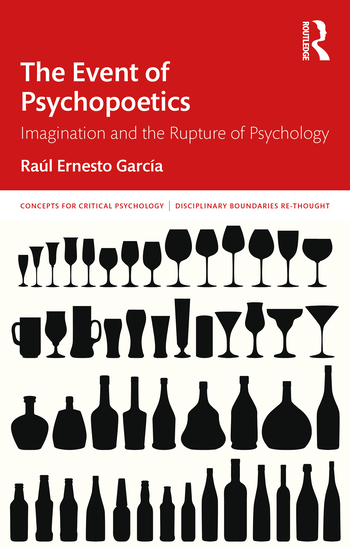
Raúl García, The Event of Psychopoetics. Imagination and the Rupture of Psychology, Routledge, 2021

The Event of Psychopoetics overviews and investigates the notion of psychopoetics, a sociopsychological event that involves re-creative slips and that emerges under certain cultural conditions and power relations in the context of everyday interaction and through certain modes of dialoguing and conversing.

This transdisciplinary text takes the reader through the thought processes of Deleuze, Guattari, Agamben, Maffesoli, Foucault, Butler, Haraway, and Braidotti, among others, addressing debates that are integral to the critique of psychology and its devices of subjectivization and normalization. Garcia takes a unique approach by reflecting on how psychopoetics contrasts institutionalized dialogues, while constantly emphasizing the generative and transformative potency of social worlds effectuated in the impetuous play of poetics. The book combines the rigor of academic research with the creative display of ideas that open diverse, suggestive lines of reflection on everyday interlocution and its possibilities of reinvention, modes of social existence, and the relation between subjectivity and the designs of power.

A truly unique reading experience, this book is ideal for students, instructors, and researchers in the fields of philosophy, social psychology and sociological thought, discourse studies, literary theory, and cultural analysis.

Raúl Ernesto García is a tenured, full-time professor/researcher in the Faculty of Psychology at the Universidad Michoacana de San Nicolás de Hidalgo in Morelia, México. His general areas of research include theory and critique of cultural and discursive processes and subjectivization; and studies of the concept of dialogue and conversation and their current utilization in interventive apparatuses of the psychological complex. García has also published numerous specialized articles and book chapters on the aforementioned topics, as well as the book El diálogo en descomposición (2008), an essay on the emergence and transformations of the concept of dialogue in philosophical milieus and social thought.

stuartelden's avatarProgressive Geographies

My optimistic idea of having a complete, even if very rough, draft of The Archaeology of Foucault before Christmas didn’t happen. I’d liked the idea of having a complete text, which I could then print and leave for a while when on holiday, and return to edit before term started again. But end of term stuff, a pile of marking, and some home renovation work which meant I couldn’t work properly derailed that plan. In addition, I was given access to some lectures which I didn’t know still existed, and that took up a lot of time – valuable, certainly, but unexpected.

I did have a good break over Christmas, without looking at the files or Foucault books, and returned to work for two weeks either side of the New Year before the start of term. The break helped get the momentum to complete the draft of the chapter on

View original post 797 more words

Daher-Nashif, S. (2021). In sickness and in health: The politics of public health and their implications during the COVID-19 pandemic. Sociology Compass,
https://doi.org/10.1111/soc4.12949

Abstract
Politics is a major player in health, sickness, and death affairs. This article reviews the role of politics in public health and its impact on health outcomes, mortality ratios, and death scenarios amongst the most vulnerable populations. Furthermore, the article explains the reasons behind the absence of politics from health and public health discourses; and examines the role of politics during the mis/management of COVID-19 pandemic. Drawing on Foucault’s biopower, Mebmbe’s necropolitics, and Butler’s precarity, the article illuminates how public health policies are highly political insofar as they offer some individuals access to life but create possibilities of death for others. During COVID-19, politics enabled governors to put at risk the most vulnerable groups, the precariat, namely refugees, asylum seekers, stateless, and immigrants, the majority of whom were impoverished. The article presents COVID-19 as an example of a crisis that unmasks these politics, claiming that these politics are not new but rather a continuum of previous invisible policies that COVID-19 unmasked and intensified. The article describes how the politics of health entail privileging individuals with capital value who can benefit the state’s interests and maintains its power.

Kaveh Dastooreh, The Aesthetics of Life: More than Ethics and Morality -video documentary (2022)
In Kurdish with subtitles.

Kaveh Dastooreh, The Aesthetics of Life: More than Ethics and Morality. Studies in Philosophy and Education (2021).
https://doi.org/10.1007/s11217-021-09812-6

Abstract
This paper explores the general characteristics of the aesthetics of life. Our approach will be in thinking about the aesthetics of life as a domain independent from the realms of ethics and morality. This thesis discusses some of the theoretical debates around those concepts. The notion of ‘pleasure’ in those practices will be discussed as the one that gives shape to ‘the art of life’. Pleasure also makes it possible for a person to perform these practices for a long period of time; what we call the ‘life-long character of the aestheticization of life’.

However, this effort endeavors to demonstrate another central theme of this style of life; the individual/social character of those practices is the one that exemplifies ‘the art of life’. Thinking simultaneously about ‘oneself’ and the ‘other’ is the main concept that helps us the most to appreciate these practices. These debates are elaborated further in some case studies that have been researched between 2016 and 2019. These are real examples of peoples’ lived experiences who, in different ways, try to give meaning to their lives by turning their existence into a work of art.

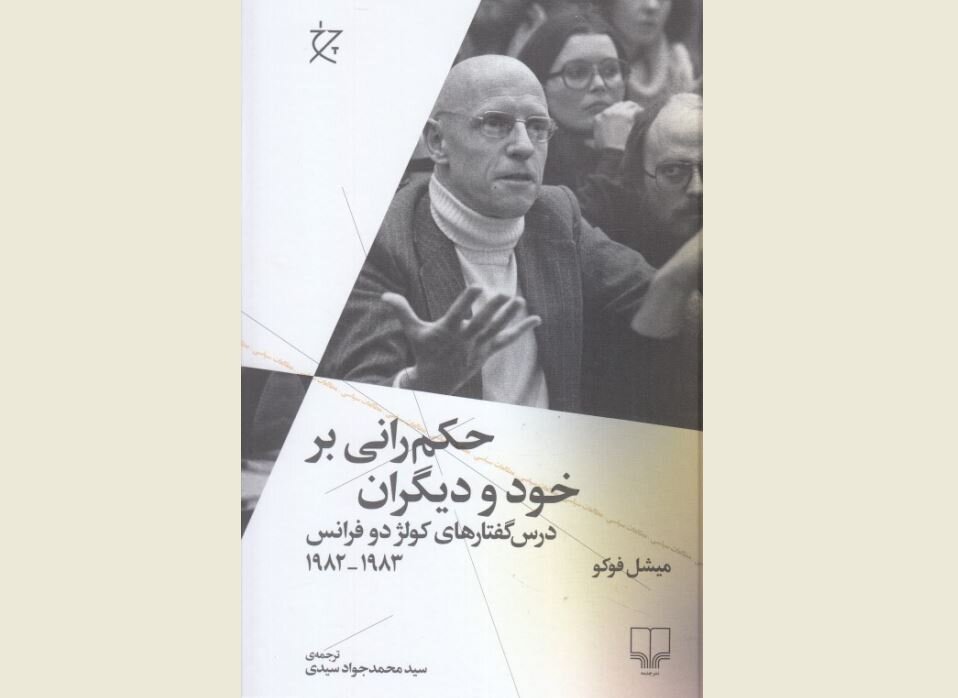
Michel Foucault’s speech on notion of parresia published for Persian readers, Tehran Times, December 28, 2021 –

Cheshmeh is the publisher of the book rendered into Persian by Seyyed Mohammad-Javad Seyyedi.

The book launches an inquiry into the notion of parresia and continues his rereading of ancient philosophy.

Through the study of this notion of truth-telling, of speaking out freely, Foucault re-examines Greek citizenship, showing how the courage of the truth forms the forgotten ethical basis of Athenian democracy.

The figure of the philosopher king, the condemnation of writing, and Socrates’ rejection of political involvement are some of the many topics of ancient philosophy revisited here.
[…]

Oleg Barabanov, Pandemic and Climate, History and Values: Results of the Valdai Club Expert Programme, 28 December 2021

In 2021, the coronavirus pandemic continued to be one of the most important events. Naturally, its influence on world politics and society remained the main focus of the Valdai Discussion Club experts.

[…]

The pandemic and its socio-political consequences, even after the release of this book, remained the centre of attention of the Club’s experts in 2021. One of the topics was the global Covid-19 vaccination policy. Roman Reinhardt analysed vaccine diplomacy and its contradictions . Djoomart Otorbaev warned against being overly optimistic that the vaccine would solve all problems. The complex issue of the impact of vaccination on human rights was also raised in our publications. In July 2021, a special Valdai Club conference was dedicated to this problem, with the participation of experts from the Council of Europe and the European Court of Human Rights.

Another important topic was the social impact of the pandemic. Apostolos Veizis in his article “From Sprint to Marathon” raised the issue of the long-term impact of the pandemic on socially vulnerable groups: the poor, refugees and other marginalised people. Ekaterina Savorskaya considered the paradoxes of the pandemic’s influence on green transformation; as these two seemingly unrelated things share many indirect connectionsRichard Sakwa turned to the analysis of value categories and studied the impact of the pandemic on the perception of the concept of the common good, and on the dynamics of interaction between civil society and the state. Also in the focus of our attention was the attitude of citizens to medical assessments and forecasts regarding the pandemic, the problem of doctors’ participation in political strategies to calm society used by the authorities, and its possible ethical ambivalence. This issue was closely related to the problem of citizens’ trust in the authorities, the psychological and behavioural alienation of society from the state and the formation of the concept of what we called “medical totalitarianism”. We analysed this concept in the context of Michel Foucault’s well-known theory of “biopower”. This set of problems was reflected in the relevant sections of the large annual report of the Valdai Discussion Club, titled “The Age of Pandemic: Year Two. The Future Is Back”, published in October 2021.


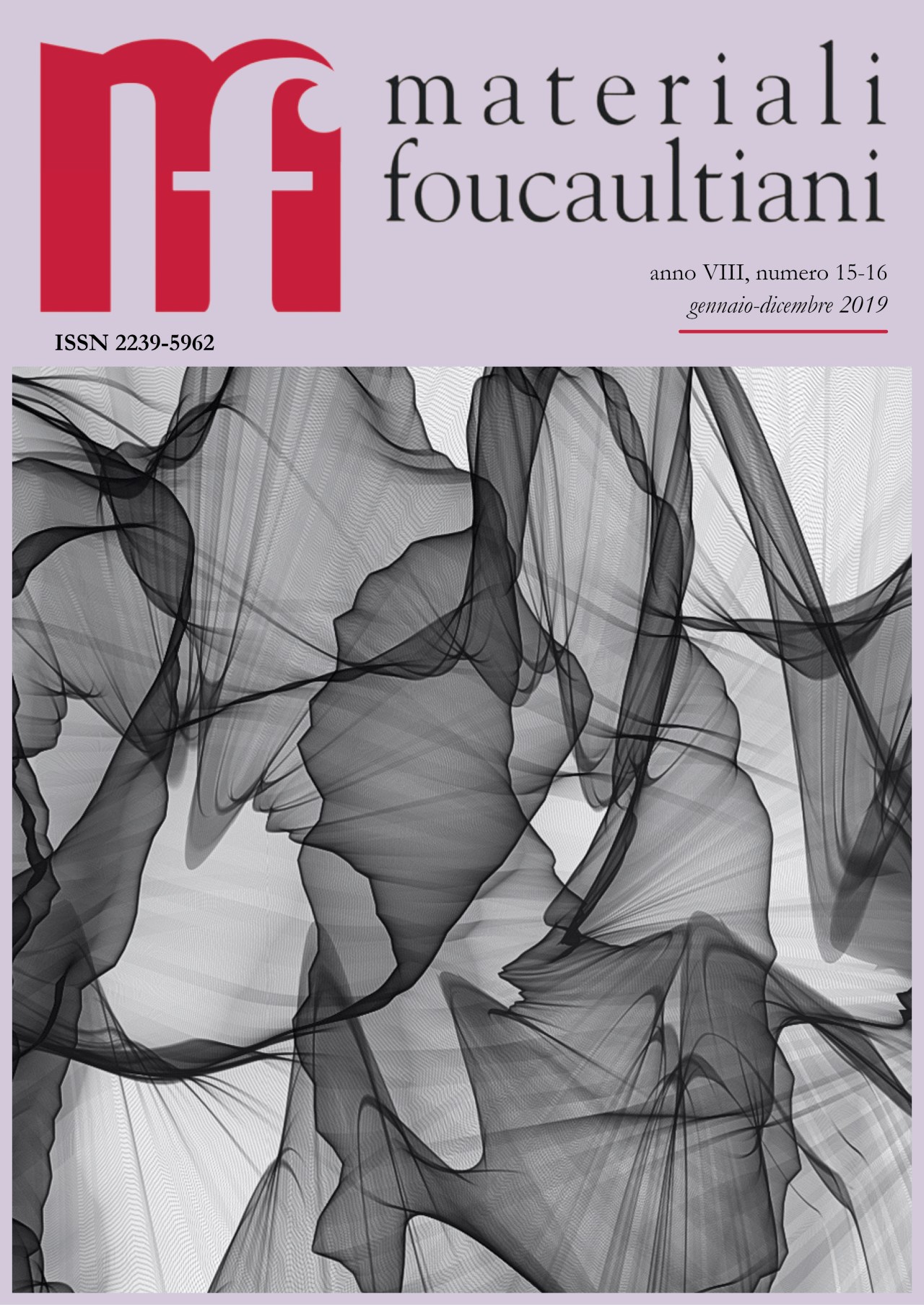
materiali foucaultiani
volume VIII, numero 15-16 (gennaio-dicembre 2019)
Vie, violence, pouvoir. Figures et frontières de la biopolitique

(sous la direction de Philippe Sabot)
Open access

Valentina Antoniol, Cesar Candiotto, Amaury Delvaux, André de Macedo Duarte & Maria Rita de Assis Cesar, Marion Farge, Marcelo Raffin, Philippe Sabot, David Simard, Carolina Verlengia, Stéphane Zygart
Recensioni – Sandrine Alexandre, Antonio Del Vecchio, Marco Ferrari, Giulia Guadagni

Introduction : Vie, violence, pouvoir. Enjeux et problèmes (pp. 5-17)
Philippe Sabot

Une genèse problématique du bio-pouvoir : le discours historico-politique (pp. 19-37)
Amaury Delvaux

Foucault, une pensée de la force. Sur la nécropolitique et la violence, au-delà de l’Un (pp. 39-57)
Valentina Antoniol

Biopolitique : usages et évolutions d’un outil théorique (pp. 59-77)
Carolina Verlengia

Violence, pouvoir et psychiatrie. Du « grand renfermement » à la « psychiatrisation de la vie quotidienne » (pp. 79-94)
Marion Farge

D’un retour au concept de dispositif de sexualité. Foucault, Butler et les luttes contemporaines (pp. 95-111)
André de Macedo Duarte & Maria Rita de Assis Cesar

La santé sexuelle, point aveugle de l’histoire foucaldienne de la sexualité (pp. 113-129)
David Simard

Les nouvelles frontières de la biopolitique après Foucault. La problématique de la migration de survie (pp. 131-143)
Cesar Candiotto

Pouvoir sur la vie et droits humains (pp. 145-162)
Marcelo Raffin

Droit, vie, anti-violence : configurations contemporaines (pp. 163-184)
Stéphane Zygart

Recensioni
Être juste avec quoi ? | C. Hoffman e J. Birman, Lacan et Foucault à l’épreuve du réel, Langage, Paris 2018 (pp. 187-195)
Marco Ferrari

Contro Foucault, per una critical theory lacaniana | N. Bou Ali, R. Goel (a cura di), Lacan contra Foucault. Subjectivity, Sex and Politics, Bloomsbury, London/New York 2019 (pp. 197-205)
Giulia Guadagni

Soggetti nel discorso: per una psicanalisi resistente | C. Cavallari, Foucault con Lacan. La produzione discorsiva del soggetto, Galaad Edizioni, Giulianova 2019 (pp. 207-217)
Antonio Del Vecchio

Un autre matérialisme pour un autre féminisme | A. Benoit, Trouble dans la matière. Pour une épistémologie matérialiste du sexe, Paris, Éditions de la Sorbonne, 2019 (pp. 219-226)
Sandrine Alexandre

stuartelden's avatarProgressive Geographies

At the end of each year I’ve posted a list of academic books I liked (2013,2014,2015,2016,2017,2018, 2019, 2020). The criteria was simply that they were published in that year (or late the previous year), and that I read and appreciated them. Some of these are books I reviewed or endorsed, and some are by friends and colleagues. It’s of course biased by my interests and prejudices. I’m sure I’ve missed loads of other great books, and haven’t yet read all the ones I’ve bought or been sent, butI can at least say that these are all worth reading.

Rowland Atkinson, Alpha City: How London was Captured by the Super-Rich (Verso)

Huw Beynon and Ray Hudson, The Shadow of the Mine: Coal and the End of Industrial Britain (Verso)

Alain Brossat and Daniele Lorenzini (eds.) Foucault et……

View original post 335 more words

Gandy, M. (2021), The zoonotic city: Urban Political Ecology and the Pandemic Imaginary. International Journal of Urban and Regional Research, First published: 07 December 2021
https://doi.org/10.1111/1468-2427.13080
Open access

Abstract
In the context of the Covid-19 pandemic this article takes a longer view of the evolving relationship between urbanization and the range of zoonotic diseases that have spread from animals to humans. I suggest that the existing interpretation of epidemiological transitions remains overly Eurocentric and requires a more nuanced conception of global environmental history. Similarly, the conceptualization of urban space within these teleological schemas has relied on a narrow range of examples and has failed to fully engage with networked dimensions to urbanization. At an analytical level I consider the potential for extending the conceptual framework offered by urban political ecology to take greater account of the epidemiological dimensions to contemporary urbanization and its associated pandemic imaginary. I examine how contemporary health threats intersect with complex patterns of environmental change, including the destruction of biodiversity (and trade in live animals), the co-evolutionary dynamics of viruses and other pathogens, and wider dimensions to the global technosphere, including food production, infrastructure networks, and the shifting topographies of peri- or ex-urban contact zones.