Foucault News

News and resources on French thinker Michel Foucault (1926-1984)

Magwa, L., Mohangi, K.
Using theoretical frameworks to analyze democratic student–teacher engagement and autonomous learning for academic achievement in Zimbabwe
(2022) Frontiers in Education, 7, art. no. 925478

DOI: 10.3389/feduc.2022.925478

Abstract
Positive student–teacher engagement that fosters independent and supported learning is the fulcrum for academic success. This paper investigates stakeholder opinions on the intrinsic importance of a democratic student–teacher relationship and autonomous learning in mediating students’ academic progress in Zimbabwean secondary schools. This case study’s qualitative data was gathered through interviews and focus groups. We used Foucault’s theory of power relations and the self-determination theory of motivation to frame our findings. The 40 participants from two secondary schools were general teachers (n = 12), guidance and counseling teachers (n = 2), educational psychologists (n = 2), and form 5 students (n = 24), selected through purposive sampling techniques. The data were analyzed using the thematic content analysis approach. Findings revealed participants’ perceptions that democratic student–teacher relationships and autonomous learning opportunities may serve as a panacea to enhance students’ participation, motivation, and overall academic performance. The study recommends in-service training to teachers regarding policies, directives, and public acts that inform and educate on how student–teacher relationships may be enhanced to foster autonomous learning. Future longitudinal studies could investigate the long-term effects of positive student–teacher engagement and teacher-supported autonomous learning on student academic achievement. Copyright © 2022 Magwa and Mohangi.

Author Keywords
academic achievement; autonomous and guided learning; Foucault’s theory of power relations; self-determination; student-teacher relationship

Beyribey, T.
Terrorism as a conceptual site for power struggles: problematization of terrorism in Turkey in the 1970s
(2022) European Journal of International Relations

DOI: 10.1177/13540661221131432

Abstract
In critical terrorism analysis, (counter-)terrorism is thought to be a discursive formation of power/knowledge comprised of some security experts from governments, the media, and academics. However, this one-sided articulation ignores the struggles in the concept of terrorism between historical narratives and counter-narratives, and it may be understood as a conceptual site where different political actors interpret it universally to strengthen or resist preexisting power relations. This article proposes that the problematization of terrorism can be studied by evaluating opposing narratives produced by political actors aiming to assert their power positions, drawing on Foucault’s analysis of problematization. From this theoretical perspective, this article examines how terrorism was problematized in relation to political violence in Turkey between 1971 and 1977, and how political actors used the concept of terrorism as a site for power struggle to gain dominant positions or weaken others, insofar as discrete ideological attitudes (communism and neo-fascism/racism, respectively) were abnormalized by universalizing them as a part of “international” terrorism. In this sense, the article contends that examining terrorism as a “universalized” site of power struggle can improve the analytical framework of critical terrorism studies by integrating the possibility of counter-narratives and, as a result, contradictions in the terrorism discourse. © The Author(s) 2022.

Author Keywords
1970s; Critical terrorism studies; political violence; problematization; Turkey

Puggioni, R.
Reading the COVID-19 emergency with and beyond Foucault: The liberal subject and everyday practices of mobility
(2022) Politics

DOI: 10.1177/02633957221130263

Abstract
Since the COVID-19 outbreak in early 2020, most analyses have used a Foucauldian perspective to investigate the disciplinary and surveillance mechanisms that (il/liberal) states introduced to contain the spread of the virus. Focussing on the Italian context, I suggest that, despite the mobility restrictions, the government retained overall its liberal rationality. Italian institutions did not aim to create a state of police nor to transform subjects into docile bodies. By reading the COVID-19 emergency with Foucault, I suggest approaching COVID-19 restrictions through the concept of governmentality, and propose that Italian institutions, at different levels, structured people’s fields of action by persuading, encouraging, and incentivising certain behaviours during the pandemic. However, I also suggest reading the COVID-19 emergency beyond Foucault by engaging with the work of Michel de Certeau and investigating the many ‘antidisciplinary practices’ through which people ‘metaphorized’ dominant (disciplinary) norms. © The Author(s) 2022.

Author Keywords
de Certeau; governmentality; immobility; Italy; lockdown; quotidian practices

Jordi Collet-Sabé & Stephen J. Ball (2022) Beyond School. The challenge of co-producing and commoning a different episteme for education, Journal of Education Policy, Published online: 15 Dec 2022

DOI: 10.1080/02680939.2022.2157890

ABSTRACT
This paper develops previous work in which we deployed a form of Foucauldian critique to clear a space in which it might be possible to think education differently. Here, in that space, we are hoping to ‘get lost’ in some unexplored spaces of possibility. We sketch some starting points, some ‘lines of flight’ for such thinking. To do this, we identify a concatenation of three crises and discuss briefly their inter-relationship. But the paper focuses primarily on education. The first of these crises, COVID, offers a moment, a space, in which we might think of ourselves, others, and the world differently. The second, climate, brings to bear a pressing urgency for change in the way that we think of our relation to the world in practical, political and epistemological ways. The third, education in relation to crises, is an opening within which some thinking might be undertaken about what it means to be educated, and in which the relation between education, community and sustainability, in a variety of senses, might be pursued. In the final sections, using concepts from Foucault, Olssen, Lewis and others, we seek to find inspiration from and an accommodation between Foucault’s self-formation and commoning – a practice of collaborating and sharing to meet every day needs and achieve the well-being of individuals, communities, and environments – as a new way to think education beyond modern episteme.

KEYWORDS: COVID climate crisis education school Foucault self-formation commoning

Lars Erik Løvaas Gjerde, (2022). Biopolitical and juridical creations of the quarantine hotel: A discourse analysis of the Norwegian case. Acta Sociologica. First published online November 24, 2022
https://doi.org/10.1177/00016993221136038

Abstract
The quarantine hotel is one of several political instruments used to control the spread of Covid-19 in diverse countries, from Norway to China. I apply discourse analysis to map the discursive struggle to define the quarantine hotel in Norway. The government and other key political actors channel a biopolitical discourse constituting the quarantine hotel as necessary to protect the Norwegian population from imported contagion. This discourse’s meaning is contested by a juridical counter-discourse articulated by lawyers and travellers, which constitutes the quarantine hotel as imprisonment/internment and a breach of rights. Travellers tend to combine this with a biopolitical counter-discourse, dismissing the quarantine hotel’s biopolitical properties, strengthening the juridical critique. These discourses are important resources in a transnational, ongoing struggle, where the prize is the legitimacy of the politics of Covid-19, and the very ordering of the post-pandemic world.

stuartelden's avatarProgressive Geographies

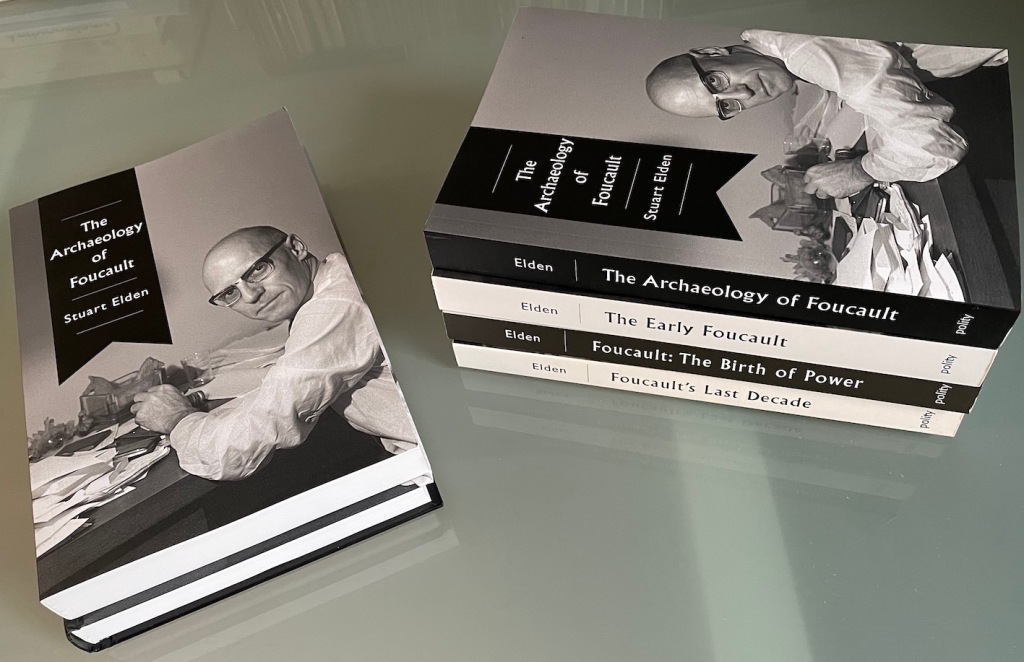
Stuart Elden, The Archaeology of Foucault – Polity, December 2022

The fourth and final book in my series of studies of Foucault’s career is now published in the UK. US and rest of the world will follow in early 2023. Polity’s books are distributed by Wiley, and they should be able to deliver worldwide.

Here’s the back cover description of the book:

On 20 May 1961 Foucault defended his two doctoral theses; on 2 December 1970 he gave his inaugural lecture at the Collège de France. Between these dates, he published four books, travelled widely, and wrote extensively on literature, the visual arts, linguistics, and philosophy. He taught both psychology and philosophy, beginning his explorations of the question of sexuality.

Weaving together analyses of published and unpublished material, this is a comprehensive study of this crucial period. As well as Foucault’s major texts, it discusses his travels to Brazil…

View original post 489 more words

Aaron Zielinski (2022) The Imaginary Force of History: On images, the Imaginary, and Myths in Foucault’s Early Works, Critical Review, Published online: 09 Dec 2022

DOI: 10.1080/08913811.2022.2151709

ABSTRACT
In manuscripts and unpublished articles written in the 1950s, Foucault developed a notion of myth that was intimately linked to what he called “imaginary forces,” a notion that he framed as a new critical approach. Its most important functions lie in exposing how mythological narratives naturalize social processes, and in developing a skeptical stance towards the allegedly liberating function of truth. This notion of myth is central in History of Madness, but it features most prominently in a passage that was omitted from the first English translation. Here, Foucault criticizes the narrative that Enlightenment psychiatry told about its own origins, which naturalized social processes. The young Foucault’s notion of myth is strikingly similar to the Marxist notion of second nature.

Keywords:
Foucault, Hegel, Marx, image, myth, second nature, critical theory

Du, Y.
“Working the government” Poverty alleviation resettlement in two Yi villages, Sichuan, China
(2022) Geoforum, 136, pp. 153-160.

DOI: 10.1016/j.geoforum.2022.09.008

Abstract
Resettlement studies in China and globally draw upon Michel Foucault’s description of governmentality, classing resettlement programmes as power-laden activities, in which planning practices reorganise the built environment and life arrangements and redefine the identities of relocated populations to achieve political and economic objectives. However, few studies on resettlement in China have conducted an in-depth analysis of local resistance to the tactics of governmentality. This article builds on the literature on the governmentality of resettlement and develops a theoretical framework of resistance to governmentality, “working the government”, by combining insights from Michel Foucault and Erving Goffman, applying the framework to empirical evidence. This is achieved through analysis of the micro-politics of power in poverty alleviation resettlement (PAR) programmes in two Yi villages in Leshan and Liangshan Prefectures, Sichuan Province, and close examination of innovative tactics of resistance developed by local Yi minorities. The study shows that resettled households re-utilised and took advantage of elements of the resettlement programme, adapted those elements to their new ends and separated themselves from the subjectivities imposed by the programmes. © 2022 Elsevier Ltd

Author Keywords
China; Governmentality; Poverty alleviation; Resettlement; Resistance

Index Keywords
planning practice, poverty alleviation, resettlement policy, state role; China, Leshan, Liangshan, Sichuan

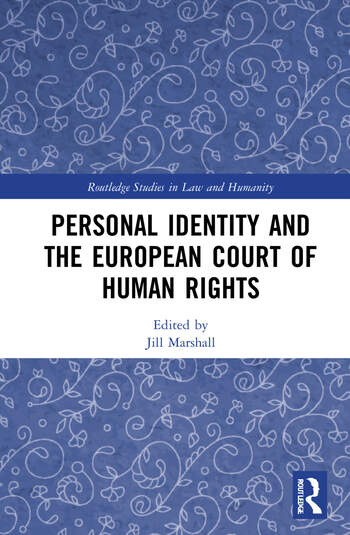
Deirdre McGowan, Foucault and the Limits of Identity Rights In Marshall, J. (Ed.). Personal identity and the European court of human rights. Routledge (2022).

Introduction
[…]
Foucault does not deny the materiality of human existence, but he does challenge the notion that it has a fixed essence to which specific identities or characteristics can be attributed, arguing that ‘[n]othing in man, not even his body is sufficiently stable to serve as a basis of self-recognition or for understanding other men.’3 He rejects a fixed identity for himself and throughout his work characterises the categorisation of individual subjectivity into identity categories as normative and exclusionary. He recognises that identity categories exist and have real meaning and impact in the world. His purpose is to unsettle the assumptions about human nature that underpin identity classifications and to create spaces of freedom within which individuals might shape their lives beyond the reach of normalising power.

These spaces of freedom are often what is at issue in contemporary identitybased human rights claims as plaintiffs seek to expand the limits of the right to an identity in order that it might better reflect their lived experience.4 In pushing the boundaries of what law recognises as a protected identity characteristic, progressive human rights lawyers seek to bring law to a place where it can recognise the inherent ‘messiness’ of human life.5 However, law rarely captures the full breadth of experience, always tending toward a unified subject that might be more easily categorised and understood. It is this unitary subject that Foucault views with suspicion, and understandably so.
[…]

‘[Raymond Roussel] said that after his first book he expected that the next morning there would be a kind of aura around his person and that everyone in the street would be able to see that he had written a book. This is the obscure desire harboured by everyone who writes. It is true that the first text one writes is neither written for others, nor because one is what one is: one writes to become other than what one is. One tries to modify one’s way of being through the act of writing.’ (trans. mod.)

Michel Foucault (1987) ‘An interview with Michel Foucault by Charles Ruas’. In Death and the Labyrinth: The World of Raymond Roussel. Tr. C. Ruas. London: The Athlone Press, p.182.