Foucault News

News and resources on French thinker Michel Foucault (1926-1984)

Weiskopf, R.
Dis/organising visibilities: Governmentalisation and counter-transparency
(2023) Organization, 30 (2), pp. 326-344.

DOI: 10.1177/1350508421995751

Abstract
This paper situates organisational transparency in an agonistic space that is shaped by the interplay of ‘mechanisms of power that adhere to a truth’ and critical practices that come from below in a movement of ‘not being governed like that and at that cost’ (Foucault, 2003: 265). This positioning involves an understanding of transparency as a practice that is historically contingent and multiple, and thus negotiable and contested. By illustrating the entanglement of ‘power through transparency’ and ‘counter-transparency’ with reference to the example of Edward Snowden’s whistleblowing, the paper contributes to the critique of transparency and to debates on the use of Foucauldian concepts in post-panoptic contexts of organising. By introducing the notion of ‘counter-transparency’, the paper expands the conceptual vocabulary for understanding the politics and ethics of managing and organising visibility. © The Author(s) 2021.

Author Keywords
Counter-conduct; Parrhesia; Snowden; surveillance; transparency; visibility; whistleblowing

Mapping Philosophy as a Way of Life – An Ancient Model, a Contemporary Approach

See Seminar Program

“Mapping Philosophy as a Way of Life: An Ancient Model, a Contemporary Approach” is an Exploratory Project funded by the Portuguese Foundation for Science and Technology (FCT).

Context
Over the past few decades, the idea of philosophy as a way of life (PWL) has given rise to several lively philosophical debates. Pierre Hadot forged the expression to emphasise the performative potential of philosophy and the role it can ideally play in transforming – rather than merely theorising about – life. In his most influential works, Hadot argues that in antiquity philosophy was not simply a set of theories or doctrines, but a practice, an art of living, a way of life that aimed at spiritual progress and transformation towards the good or flourishing life. Even though this conception and practice of philosophy was particularly typical of antiquity, Hadot, along with Foucault, stresses its reappearance in several modern and contemporary authors and describes it as his own ideal model of philosophical practice. Inspired by the work of Hadot and Foucault, recent scholarship has stressed the current metaphilosophical relevance of PWL and argued for the need of recasting this model in the face of the academic, social, political and cultural challenges of our times.
[…]

The project
This project aims to explore the potential of PWL on these two fronts as a condition for further work on the topic and new applications of PWL. The project is divided into three parts, each of which corresponds to an open question in the current debate on the topic.

The first and preliminary phase will be devoted to the conceptual and metaphilosophical analysis of PWL, aiming to determine its distinguishing marks and main differences from other conceptions of philosophy.

The second and longer phase will apply the framework defined in the previous phase and apply it to key moments and authors of the history of philosophy, underscoring and contrasting particular arts of living and practices of self-transformation from antiquity to contemporary thought. Our aim in this main phase of the project is to draw a cartography of different arts of living across the history of Western thought, in order to appraise the hermeneutic value of PWL and pave the way for a comprehensive reading of the history of philosophy through the lens of PWL, as suggested by Hadot and Foucault, and several scholars working in their wake.

The third and last phase will adapt the materials obtained in the previous phase to the wider non-specialized audience and develop a PWL lecture course and five outreach events, in order to experiment the obtained results and evaluate the impact of a PWL approach in teaching and outreach of philosophy.

Outputs
The main output of the project will be the mentioned cartography of different arts of living or ways of life across the history of Western philosophy, which will be published as a Handbook on the Art of Living in a top academic publishing house. Besides that, we will organize a virtual seminar and two international scientific events. The project and its outcomes are conceived as a propaedeutic work to further developments and applications of PWL, not only in the field of philosophy but also in other areas to which philosophy conceived as an art of living might be useful and complementary, such as pedagogy, psychology, and consulting, as well as literature and comparative studies in western-eastern philosophical and/or spiritual traditions.

Team and funding
The project is funded by the FCT (Portuguese Foundation for Science and Technology) and will have a duration of 18 months. It will be carried out by a team of experts in ancient, modern and contemporary philosophy, all of whom have experience with the theme of philosophy as a way of life, including members of the research line on the art of living of the research group Forms of Life and Practices of Philosophy (IFILNOVA) and some of the main interlocutors in the current debate on the topic, in partnership with five consultants and several international networks and institutions currently working on topics related to this project.

Call for Papers

Hannah Arendt and Michel Foucault: A Comparison of their Historical Methodologies
The Journal of the Philosophy of History

Click on the Call for papers menu item

The Journal of the Philosophy of History plans a special issue to explore Arendt and Foucault’s approaches to historical method (broadly conceived) and intellectual history, and, relatedly, their approaches to modernity and ‘critique’ in general.

The status of Hannah Arendt and Michel Foucault as theorists have never been higher, to the extent that both thinkers now have journals dedicated solely to their thought. Furthermore, scholars have to some extent begun to explore the potential common ground between them, in particular focusing on the different ways in which Arendt and Foucault conceptualize power, subjectivity, and the self. Much less, however, has been said about the possible comparison of Arendt and Foucault’s thoughts on the nature of tradition, modernity, history, politics, and the Enlightenment, or their common intellectual influences – notably Kant and Nietzsche. But drawing the two together makes considerable sense, both for contemporary reasons, and, relatedly, for more scholarly ones.

In contemporary terms, Arendt and Foucault both addressed questions that are of considerable current relevance, notably the impact of technology on the possibility for creating a common ‘world’ for humans to inhabit and make authentic individual choices, and on the conditions that enable there to be a flourishing public space for dialogue. On a more scholarly level, this raises questions which both tackled about how much ‘emancipation’ is possible in modernity and its aftermath – to what degree is ‘authentic’ (political) action still a worthy and plausible goal? This in turn suggests enquiries, undertaken by both theorists, about how to investigate a Western ‘tradition’ that they see as much defined by discontinuity as by continuity – not least to see the degree to which its concepts (such as ‘liberty’ and ‘authority’) can still be fruitfully used, and the extent to which they retain their original meanings. More specifically, this also raises questions about how both theorists conceptualize the Enlightenment: to what extent can it be said that both Arendt and Foucault seek to retain aspects of its modernizing program, while jettisoning its metaphysical commitments and its more naïve progressive assumptions? The following questions may help to sharpen these points:

How far can Arendt and Foucault’s stress on historical discontinuity bring them fruitfully into dialogue? To what extent can Arendt’s emphasis on the ‘breakdown’ of the Western tradition and its implications for history be usefully compared to Foucault’s conception of genealogy? How far can Arendt and Foucault’s approaches to intellectual history be tied to their common interest in Kant and/or Nietzsche? To what extent do Arendt and Foucault try to uphold aspects of the Enlightenment while rejecting its metaphysical foundations? Do the turn of both Arendt and Foucault to ancient Greece reveal commonalities or differences in the way that they view Western history?

Papers (c.8,000 words) are to be submitted by 1st February 2024. Papers will be reviewed by the editor of the special issue and at least one external reviewer. The final revised papers are due 1st June 2024. Guidelines can be found on the journal’s webpage. The special issue will be edited by Dr Edmund Neill (Associate Professor of Modern History, Northeastern University, London).

Potential participants are invited to send abstracts of up to 500 words emailed as an attachment by 1st May 2023. Authors will be notified of decisions within one month of this deadline. Please email your abstract and direct enquiries to Dr. Edmund Neill edmund.neill@nulondon.ac.uk

Suggestions for papers might include (but are not limited to):

Arendt and Foucault on Modernity and Post-Modernity
Arendt and Foucault on the Enlightenment
Arendt and Foucault – Intellectual History and Critique
Arendt and Foucault – Debts to Marx and/or Nietzsche
Arendt and Foucault and the ancient Greeks
Arendt and Foucault on Tradition and Critique
Arendt and Foucault as ‘Conservatives’
Arendt and Foucault on the relationship of History, Social Sciences and other Discourses
Arendt and Foucault on the History of Resistance
Arendt and Foucault on the history of power relations

Michel Foucault, What is Critique? & The Culture of the Self
Edited by Henri-Paul Fruchaud and Daniele Lorenzini.
Introduction and critical apparatus by Daniele Lorenzini & Arnold I. Davidson
Translated by Clare O’Farrell, The University of Chicago Press

Forthcoming late 2023, early 2024

This volume is part of The Chicago Foucault Project

Description (adapted from the French).

On May 27, 1978, Michel Foucault gave a lecture to the Société française de Philosophie situating his approach within the perspective opened up by Kant’s article, “What is the Enlightenment?” (1784). He strikingly defines critique as an ethico-political attitude which adopts the art of not being governed quite so much. This volume presents the critical edition of this lecture for the first time. In English, this is a new translation of this important text with an extensive critical apparatus.

This volume also presents a previously unpublished lecture titled “The Culture of the Self”, delivered in English at the University of California, Berkeley on April 12, 1983. This is the only instance in which Foucault establishes a significant link between his reflections on the Aufklärung and his analyses of Greco-Roman antiquity. In the days following this lecture, Foucault also took part in three public discussions with the Departments of Philosophy, History and French at Berkeley – the first two in English and the third in French. In these, he elaborated on his lecture and returned to several aspects of his philosophical journey. These previously unpublished discussions are appearing for the first time in English.

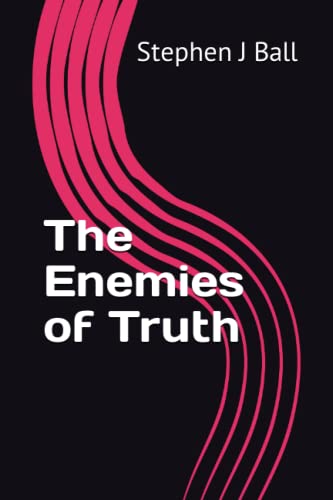
Stephen J. Ball, The Enemies of Truth (novel). Independently published, March 2023

Staverley is in Paris. He is teaching, walking the city and searching for a missing student. Back in Watermouth his colleagues are being blackmailed and threatened. In both places there are mysteries to be solved and Staverley cannot stop himself from getting involved. But this time there are messy entanglements between politics and violence. He may be out of his depth. He may be in danger.

This novel features Foucault in various ways and several of his peers.

Number 4 in the Staverly book series.
Stories of detection featuring university lecturer Staverley. Beginning in the 1980s the series follows the involvement of Staverley in a series of crimes he attempts to solve using methods from the social sciences.

Stephen J. Ball
Stephen J Ball is Emeritus Professor of Sociology of Education at the Institute of Education, University College London, where he was previously the Karl Mannhiem Professor of Sociology of Education. Before IOE Stephen Ball was at KCL and the University of Sussex where he also obtained his MA and D.Phil degrees. He is a British Academy Fellow, a Fellow of the Society of Educational Studies, and a laureate of Kappa Delta Phi. He holds visiting positions at the Universities of Copenhagen and Glasgow and has honorary degrees from the Universities of Turku and Leicester.

He writes sociology and crime fiction – read The Death of an External Examiner (2020)

Stephen Ball was born in London and now splits his time between London and Catalunya, with his wife Trinidad, who is an artist. When not being a sociologist Stephen walks, watches birds and films and listens to Jazz.

Special Issue: Foucault, Corporate Social Responsibility and Corporate Sustainability, Sustainability, March 2023
Open access

Kaspar Villadsen (Copenhagen Business School) and Johannes Lundberg (Århus University) have guest-edited a special issue of the journal Sustainability with the title: “Foucault, Corporate Social Responsibility and Corporate Sustainability”.

The Special Issue eplores themes like the ESG discourse, Green Transition, CSR, Pension Investment Management, Algorithmic Trading, Corporate Reporting, Sustainable Healthcare Education, as well as potentials and limitations in Foucault’s thinking in relation to these current issues.

It contains contributions from:
Timothy Luke, Johannes Lundberg, Darlene Himick, Tony Sandset and Eivind Engebretsen, William Morgan, Henrik Nielsen and Kaspar Villadsen, and Jeremy Tauzer.

Articles
Villadsen, K.; Lundberg, J. Guest Editors, Introduction to Special Issue: ‘Foucault, Corporate Social Responsibility, and Corporate Sustainability’. Sustainability 2023, 15(6), 5110; https://doi.org/10.3390/su15065110.

Himick, D. When Aging and Climate Change Are Brought Together: Fossil Fuel Divestment and a Changing Dispositive of Security. Sustainability 2023, 15(5), 4581; https://doi.org/10.3390/su15054581.

Morgan, W. Finance Must Be Defended: Cybernetics, Neoliberalism and Environmental, Social, and Governance (ESG). Sustainability 2023, 15(4), 3707; https://doi.org/10.3390/su15043707

Nielsen, H.; Villadsen, K. The ESG Discourse Is Neither Timeless Nor Stable: How Danish Companies ‘Tactically’ Embrace ESG Concepts. Sustainability 2023, 15(3), 2766; https://doi.org/10.3390/su15032766

Sandset, T.; Engebretsen, E. Sustainable Healthcare Education as a Practice of Governmentality?. Sustainability 2022, 14(22), 15416; https://doi.org/10.3390/su142215416

Luke, T. Investment and Rapid Climate Change as Biopolitics: Foucault and Governance of the Self and Others through ESG. Sustainability 2022, 14(22), 14974; https://doi.org/10.3390/su142214974

Lundberg, J. Agency Theory’s ‘Truth Regime’: Reading Danish Pension Funds’ Decisions Regarding Shell from the Perspective of Agency Theory. Sustainability 2022, 14(22), 14801; https://doi.org/10.3390/su142214801

Tauzer, J. CSR and the Hermeneutical Renovation of Foucault’s Toolbox. Sustainability 2023, 15(5), 4682; https://doi.org/10.3390/su15054682

François Cusset
(French) Theory: An Anti-American American Invention, Paris Institute for Critical Thinking, June 8 2022

If French Theory is American, it is so in the sense of being an errant concept, caught up in a continuous process of blurring, relocation, and deconstruction. The story of my own book, French Theory, bears witness to this fact, having allowed me to explore French Theory’s US beginnings in artists’ squats and alternative bookstores, its enlisting in political struggles in the Global South, and its difficulties in re-entering France, where it has been relabeled théorie americaine. Still, we would be amiss if we didn’t also acknowledge the ways in which French Theory was indeed reconfigured in America—through the attachment of a group label to quite incommensurable theories, the academicization of thinkers who had resisted or been denied this fate in France, and, finally, the understanding that texts ought to lead to action rather than more and more texts.

[…]
The infinitely smaller adventure of my own book, titled French Theory (itself an account of what goes by this name in terms of intellectual history and epistemic battles), bears witness to the above. I have to tell my own side of the story here—and do apologize for that. I first realized that some Americans had fallen in love with some of these obscure texts and concepts I myself had studied as a Paris student when I got to run the French Publishers’ Agency in New York City in the mid-1990s: working on deals for English-language rights as the agent of major French publishers, I was bewildered to discover that a new, abstruse essay by Derrida or an unpublished, posthumous manuscript by Foucault was of more interest to the few US publishers ready to take the risk of translation (and there are few) than bestselling French novels or trade nonfiction—
[…]

Lee H., Lee T.
The TraceTogether Matrix Has You – Surveillance, Rationalisation and Tactics of Governance in Singapore’s COVID-19 App
(2022) Platform, 9.2 (Special Issue), pp. 77 – 91

Open access

ABSTRACT:
In the heat of the COVID-19 pandemic, Singapore rolled out TraceTogether; a contact-tracing mobile app that uses proximity sensing to track the movements of its population. TraceTogether was initially voluntary, and used solely for contact tracing. By December 2020, the system became mandatory. This sparked a mass adoption that made TraceTogether possibly the most successful application in Singapore’s Smart Nation initiative. When it emerged in January 2021 that the data had been used by the police for criminal investigation, images of a totalitarianism sprang to mind, where technology permits the state an invasive awareness of the movement of individuals. In this paper, we defer from common arguments that Singaporeans are intrinsically trusting of the government or have been conditioned to accept ‘Big Brother’ modes of surveillance. Instead, we argue that the success of TraceTogether reflects a Singapore society that, through the rationalisation of surveillance, willingly participates in their own surveillance. In uncovering the genealogy of media discourse that surrounds TraceTogether, we highlight that it is the regular practice of voluntary surveillance, of subscribing oneself to the apparatuses of state control, rather than specific technologies, that characterises the Singapore surveillance state. We describe a matrix of reason, layered-on and normalised through media discourse, that exemplifies what Foucault has termed ‘governmentality’, which asserts a government’s power of control not over, but within, citizens. © Creative Commons Attribution 3.0 Australia licence.

AUTHOR KEYWORDS: Covid-19; Genealogy; Governmentality; Media discourse; Singapore; Surveillance

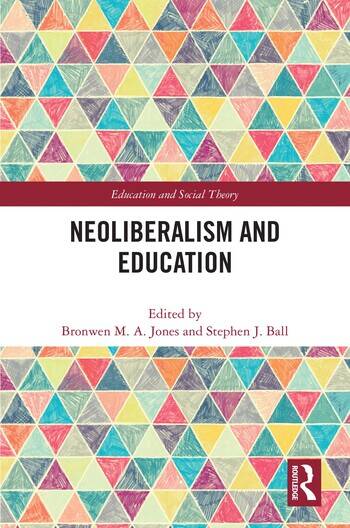
Bronwen M.A. Jones, Stephen J. Ball (eds), Neoliberalism and Education, Routledge, 2023. Forthcoming

The ongoing neoliberalisation of education is complex, varied and relentless. It involves increasingly diverse material and structural changes to curriculum, pedagogy and assessment and at the same time transforms how we are made up as educational subjects. It rearticulates what it means to be educated. This collection brings together creative and unanticipated examples of the adoption and adaptation of neoliberal practice, both collective and individual. These examples not only demonstrate the insidiousness of neoliberal reform but also suggest that its trajectory is uncertain and unfixed. The intention is that these examples might embolden education scholars and practitioners to think differently about education.

This book is shaped by a reading of the processes of the neoliberalisation of education as a dispositif. This heterogeneous dispositif encompasses and spans an uneven, miscellaneous and evolving network of educational regimes of knowledge, practice and subjectivities, as well as artifacts and non-human actants. The papers included address different aspects or points within this complex arrangement at different levels and in different sectors of education. They have been chosen to illustrate the evolving and multi-faceted penetration of market thinking and practice in education and also points of deflection and dissent. They also offer coverage of some of the uneven geography of neoliberalisation. They consider the potential for the production of subjectivities to provide the ‘wriggle’ room that can exist to refuse or subvert neoliberal identities. This book will have appeal across the social sciences and specifically to those working in education.
The chapters included here were originally published in various Taylor & Francis journals.

Carol Carpenter, Power in Conservation. Environmental Anthropology Beyond Political Ecology, Routledge, 2020

Book Description
This book examines theories and ethnographies related to the anthropology of power in conservation.

Conservation thought and practice is power laden—conservation thought is powerfully shaped by the history of ideas of nature and its relation to people, and conservation interventions govern and affect peoples and ecologies. This book argues that being able to think deeply, particularly about power, improves conservation policy-making and practice. Political ecology is by far the most well-known and well-published approach to thinking about power in conservation. This book analyzes the relatively neglected but robust anthropology of conservation literature on politics and power outside political ecology, especially literature rooted in Foucault. It is intended to make four of Foucault’s concepts of power accessible, concepts that are most used in the anthropology of conservation: the power of discourses, discipline and governmentality, subject formation, and neoliberal governmentality. The important ethnographic literature that these concepts have stimulated is also examined. Together, theory and ethnography underpin our emerging understanding of a new, Anthropocene-shaped world.

This book will be of great interest to students and scholars of conservation, environmental anthropology, and political ecology, as well as conservation practitioners and policy-makers.

Table of Contents

1. Introduction
2. Discourses and their Power in Foucault
3. Seminal Works on the Power of Discourses
4. Discourses of Conservation
5. The Triangle in Foucault
6. Sovereignty, Discipline, and Governmentality in Ethnographies
7. States and Centers, Simplifying and Calculating
8. Articulations between Knowledges in Ethnographies
9. Subject Formation in Foucault
10. Subject Formation in Ethnographies
11. Capitalism and Neoliberal Governmentality in Foucault
12. Cultivating Neoliberal Subjects in Ethnographies
13. The Economy in Ethnographies
14. The Invisibility of Implementation and Governmentality
15. Practices of Assemblage and Assemblages of Effects
16. Universals, Collaborations, and Global Agreements
17. World-Making in the Anthropocene
18. Conclusion

Carol Carpenter is Senior Lecturer in the School of Forestry and Environmental Studies at Yale University, US. She is co-editor of Environmental Anthropology: A Historical Reader (2007).