Foucault News

News and resources on French thinker Michel Foucault (1926-1984)

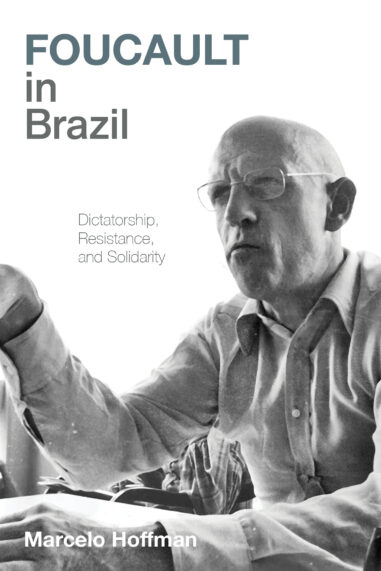
Marcelo Hoffman, Foucault in Brazil. Dictatorship, Resistance, and Solidarity, University of Pittsburgh Press, forthcoming February 2024

Philosopher Michel Foucault’s cultural criticism crosses disciplines and is well known as an influence on modern conceptions of knowledge and power. Less well known are the five trips he took to Brazil between 1965 and 1976. Although a coup in 1964 had installed a military dictatorship, Foucault kept his opinion on the Brazilian government largely to himself until October 23, 1975. On that date, he delivered a manifesto at a student assembly in São Paulo expressing his solidarity with students and professors protesting a wave of arrests and torture. This manifesto caught the government’s attention and became the focal point of the dictatorship’s surveillance of Foucault. Foucault in Brazil explores the production of the public antagonism between the philosopher and the dictatorship through a meticulous consideration of each of his visits to Brazil. Marcelo Hoffman connects history, philosophy, and political theory to open new ways of thinking about Foucault as a person and thinker and about Brazil and authoritarianism.

ABOUT THE AUTHOR
Marcelo Hoffman is a lecturer in the Department of Political Science of the Dyson College of Arts and Sciences at Pace University in New York City. He is the author of two books, Militant Acts: The Role of Investigations in Radical Political Struggles and Foucault and Power: The Influence of Political Engagement on Theories of Power.

A Philosophy of Silence: Charles E. Scott’s ‘Telling Silence’ (Nietzsche, Foucault, and Poeisis), Acid Horizon podcast, 9 October 2023.

Charles E. Scott, Telling Silence. Thresholds to No Where in Ordinary Experiences, SUNY Press, November 2023.

Description
In Telling Silence, Charles E. Scott speaks of silence, often indirectly, in such ways as to create occasions in which people might become more aware of silence in their experiences of themselves and the world around them. The core question of the book is: how can people be aware of silence without turning it into a thing and losing it? Lack of awareness of silence is lack of awareness of a major dimension of lives, both human and nonhuman. Attunements with silence enable attunements with being alive in the fragility that invests even the strengths of living beings. Telling Silence performs this attunement in descriptive accounts and instances of non-reflective awareness, awareness that does not deliberate or ponder. In twenty-three “fragments,” poems, stories, and ways of thinking and speaking are brought together to intensify intimations of silence telling of itself.

Charles E. Scott is Distinguished Professor of Philosophy, Emeritus, Vanderbilt University and Emeritus Professor of Philosophy, Pennsylvania State University. He is the author of numerous books including Living with Indifference, The Lives of Things, and The Time of Memory.

Eli B. Lichtenstein (2023) “Explanation and evaluation in Foucault’s genealogy of morality,” European Journal of Philosophy 31, no. 3, 731-747, DOI: http://dx.doi.org/10.1111/ejop.12809

Abstract:
Philosophers have cataloged a range of genealogical methods by which different sorts of normative conclusions can be established. Although such methods provide diverging ways of pursuing genealogical inquiry, they typically converge in eschewing historiographic methodology, in favor of a uniquely philosophical approach. In contrast, one genealogist who drew on historiographic methodology is Michel Foucault. This article presents the motivations and advantages of Foucault’s genealogical use of such a methodology. It advances two main claims. First, that Foucault’s early 1970s work employs a distinct genealogical method, which borrows from contemporary historiographic models of explanation to expand the range of objects that are proper to genealogical accounts of historical change. I demonstrate how Foucault modifies two central commitments of Nietzsche by broadening the dimensions of genealogical inquiry and explanation. Second, that historical method has normative relevance for genealogy, insofar as different historiographic choices can lead to different normative conclusions. I motivate this second claim by explaining how Foucault’s multidimensional genealogical method expands both (a) the range of objects that are subject to evaluative assessment, and (b) the set of possible prescriptive recommendations that follow from such assessment.

Michel Foucault, La legge del pudore,
a cura di Caro Gervasi e Lorenzo Petrachi, Orthotes Editrice, Napoli-Salerno 2023, 160 pp., 16 euro (collana: Teoria sociale)

Questa raccolta presenta per la prima volta la conversazione radiofonica tra Michel Foucault, Jean Danet e Guy Hocquenghem nota con il titolo La loi de la pudeur inquadrandola nell’insieme di testi cui appartiene, vale a dire la petizione del 26 gennaio 1977 e la lettera aperta alla Commissione di riforma del codice penale dello stesso anno. Al centro di queste ultime, la questione della regolazione dei rapporti sessuali tra adulti e minori. La fama e la ricezione di questa conversazione sono infatti legate a filo stretto al riemergere insistente di quei documenti nell’ambito di una polemica che coinvolge non solo Foucault, ma che arriva ad abbracciare l’intera eredità del Maggio ’68. L’esigenza di far parlare da sé questi scritti non affiora esclusivamente a valle delle controversie, ma scaturisce anche dal loro valore storico, documentario e in sostanza defamiliarizzante. Soffermarsi sulle trasformazioni che hanno presieduto all’affermarsi delle nostre evidenze può portare a condurre una riflessione, oggi indifferibile, sulla nozione di consenso, sul suo significato, il suo potenziale e i sui suoi limiti, nonché sulle pratiche cui affidiamo il nostro bisogno di giustizia.

Chiude la raccolta un’appendice volta a delucidare le circostanze storiche della redazione dei testi presentati, avvalendosi anche del ricorso a materiale ancora inedito. Saggi di Antoine Idier, Gert Hekma, Caro Gervasi e Lorenzo Petrachi.

Indice
Nota introduttiva
Fonti

La legge del pudore
In merito a un processo
45 Lettera aperta

Appendici
Al rogo Hocquenghem?
di Antoine Idier

Gli anni ’70 e i miti dell’infanzia, 62 – 2. Il femminismo, l’infanzia, la sessualità, 66 – 3. La lettera aperta del 1977 e il consenso, 80

Michel Foucault davanti alla Commissione di riforma del codice penale
di Antoine Idier

Considerazioni storiche sull’amore dei giovani
di Gert Hekma

Postfazione
L’infanzia come sistema politico
di Caro Gervasi e Lorenzo Petrachi

Michel Foucault, The Japan Lectures. A Transnational Critical Encounter. Presented and introduced by John Rachmann, Routledge, Forthcoming 2024.

This book makes available, for the first time in English, lectures and interviews that Foucault gave in Japan in 1978, reconstructing their context, and isolating the question of their singular relevance for us today. In these forgotten lectures, in a free and often informal style, Foucault explores, together with his Japanese interlocutors, what it would mean to take up, from outside Europe, the questions he was raising at the time about Revolution and Enlightenment in the traditions of European critical thought. In a series of wide-ranging discussions, on sexuality and its history, non-Christian forms of spirituality, new forms of political movements, and the role of knowledge, power, and truth in them, Foucault examines these questions in relationship to Asia. He had hoped these questions, very much debated at the time in postwar Japan, would be the start of new forms of translation, publication, and exchange. At the heart of the lectures is thus a search for the creation of a new sort of transnational collaboration, recasting the history of European colonialism and opening to a philosophy no longer simply Western, yet to come.

The Japan Lectures thus contribute to the new scholarship in Asian and in translation studies which has long since moved away from earlier “Area Studies”; at the same time, it participates in the new scholarship about Foucault’s own work and itinerary, following the publication of an extraordinary wealth of materials left unfinished or unpublished by his untimely death. In these ways, The Japan Lectures help us to better see the implications of Foucault’s work for philosophy in the 21st century.

Table of Contents
Acknowledgments
Foucault in Asia: An Introduction
THE JAPAN LECTURES
1. Power and Knowledge
2. Sexuality and Politics
3. Disciplinary Society in Crisis
4. The Analytic Philosophy of Power
5. Sexuality and Power
6. The Theater of Philosophy
7. Methodology for a Knowledge of the World: How to Get Rid of Marxism
8. Michel Foucault and Zen: A Stay in a Zen Temple
Foucault in Japan: An Interview with Shiguéhiko Hasumi

Reviews
“A fascinating excursion into Foucault’s thought in the late 1970s, in which Japan is an ‘enigma’ that works to clarify his own thoughts. In his presentations to Japanese audiences, the reader overhears Foucault explaining his thinking to himself in an engaging and often personal manner.”
Carol Gluck, George Sansom Professor of History, Columbia University.

” ‘The end of the era of Western philosophy.’ Foucault was often less guarded abroad and would drop gems in conversation with foreign scholars that he might not have shared in France. These brilliant Japan Lectures are a case in point. In a wide-ranging set of talks delivered in Japan in 1978 – ranging over topics from sexuality, to discipline, to power, knowledge, and philosophy– Foucault revealed himself and his ongoing thought processes. Expertly edited by John Rajchman and beautifully translated, these Japan Lectures offer a new window into his work.”
Bernard E. Harcourt is a chaired professor at Columbia University and the École des hautes études en sciences sociales in Paris and has edited a range of works by Foucault in French and English, including the Gallimard Pléaide edition of Surveiller et punir.

“A fascinating rediscovery of Foucault in Asia. The Japan Lectures presents an exclusive collection of the French philosopher’s lectures, interviews, and conversations during his trips to postwar Japan, available for the first time in English translation. This book transforms our understanding of Foucault and his reflections on the limits of Western thought by posing a fundamental question: Will the philosophy of the future emerge outside Europe?”
Lydia H. Liu, Wun Tsun Tam Professor in the Humanities, Columbia University, author of The Freudian Robot.

Suijker, C.A.
Foucault and medicine: challenging normative claims (2023) Medicine, Health Care and Philosophy

DOI: 10.1007/s11019-023-10170-y

Abstract
Some of Michel Foucault’s work focusses on an archeological and genealogical analysis of certain aspects of the medical episteme, such as ‘Madness and Civilization’ (1964/2001), ‘The Birth of the Clinic’ (1973) and ‘The History of Sexuality’ (1978/2020a). These and other Foucauldian works have often been invoked to characterize, but also to normatively interpret mechanisms of the currently existing medical episteme. Writers conclude that processes of patient objectification, power, medicalization, observation and discipline are widespread in various areas where the medical specialty operates and that these aspects have certain normative implications for how our society operates or should operate. The Foucauldian concepts used to describe the medical episteme and the normative statements surrounding these concepts will be critically analyzed in this paper. By using Foucault’s work and several of his interpreters, I will focus on the balance between processes of subjectification and objectification and the normative implications of these processes by relating Foucault’s work and the work of his interpreters to the current medical discipline. Additionally, by focusing on the discussion of death and biopower, the role of physicians in the negation and stigmatization of death is being discussed, mainly through the concept of biopower. Lastly, based on the discussion of panopticism in the medical discipline, this paper treats negative and positive forms power, and a focus will be laid upon forms of resistance against power. The discussed aspects will hopefully shed a different and critical light on the relationship between Foucault’s work and medicine, something that eventually can also be deduced from Foucault’s later work itself. © 2023, The Author(s).

Author Keywords
Biopower; Foucault; Medicalization; Medicine; Normativity; Objectification

Index Keywords
article, human, male, medicalization, physician, social stigma

Václav Rut (2023) Václav Havel’s Search for Emancipatory Governmentality, Critical Horizons, DOI: 10.1080/14409917.2023.2262342

ABSTRACT
This paper deals with the political philosophy of Václav Havel, mainly its relation to ethics and what Michel Foucault called governmentality. Besides using his analytical framework, Foucault’s politics are engaged with to highlight similar trajectories of two intellectuals dealing with related dilemmas of ethics and politics. As a dissident of communist Czechoslovakia Havel, developed a profound critique of modernity, but also discovered technologies of the self, exclusive to dissidents, which empowered them in their moral struggle against the regime. The Velvet Revolution in 1989 ascended Havel to the presidency of the republic, a position from which he quickly embraced and disseminated neoliberal governmentality. The final section deals with Havel’s use of human rights in the later years of his presidency, being a justification for military interventions and comparing them to Foucault’s conceptualisation of rights. Human rights discourse is the culmination of Havel’s lifelong quest for the ethical foundation of politics and it is the source of most difficulties and potentialities associated with this project.

KEYWORDS:
Havel Foucault governmentality dissidence neoliberalism

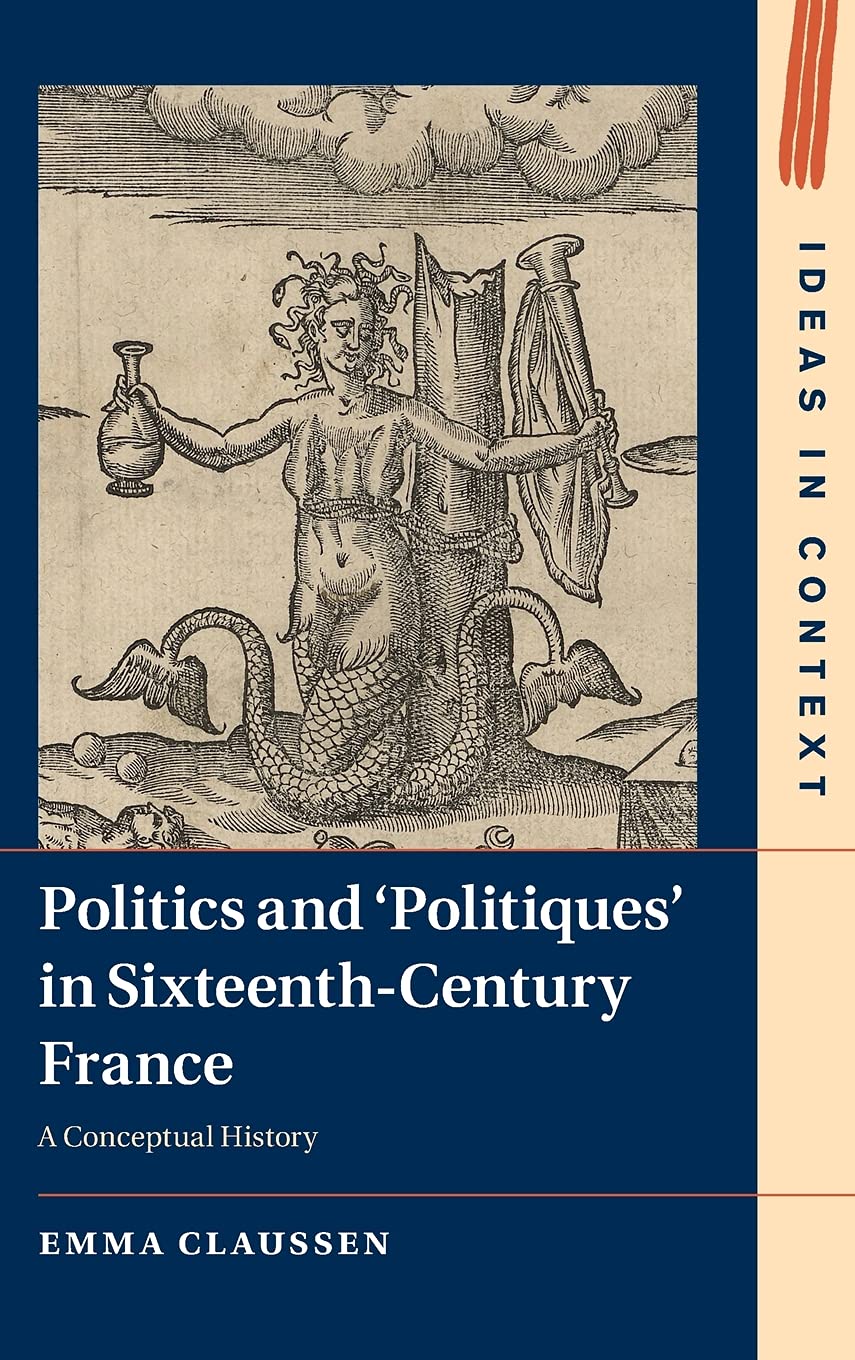
Claussen, Emma. Politics and ‘Politiques’ in Sixteenth-Century France: A Conceptual History. Ideas in Context. Cambridge: Cambridge University Press, 2021.

During the French Wars of Religion, the nature and identity of politics was the subject of passionate debate and controversy. The word ‘politique’, in both sixteenth-century and contemporary French, refers to the theory and practice of politics – ‘la politique’ – and the statesman or politician – ‘le politique’ – who theorised and practised this art. The term became invested with significance and danger in early modern France. Its mobilisation in dialogues, treatises, debates, and polemics of the French Wars of Religion was a crucial feature of sixteenth-century experiences of the political. Emma Claussen investigates questions of language and power over the course of a tumultuous century, when politics, emerging as a discipline in its own right, seemed to offer a solution to civil discord but could be fatally dangerous in the wrong hands. By placing this important term in the context of early modern political, doctrinal and intellectual debates, Emma Claussen demonstrates how politics can be understood in relation to the wider linguistic and conceptual struggles of the age, and in turn influenced them.

Emma Claussen (2022) ‘Est-ce vivre?’ The Politics of Living in La Boétie and
Montaigne, Early Modern French Studies, 44:1, 70-85.

DOI: https://doi.org/10.1080/20563035.2022.2076314

Abstract
This article explores Étienne La Boétie’s discussion of the unfree life, with and against Montaigne’s accounts of life in the Essais. In De la servitude volontaire, La Boétie responds to writing on life in his source texts, such as Seneca’s ‘On the Brevity of Life’: the life of servitude is almost antithetical to any ‘good life’, and indeed is scarcely life at all. Giorgio Agamben’s concept of ‘bare life’ and Orlando Patterson’s characterisation of slavery as ‘social death’ elucidate La Boétie’s characterisations of the deprived life in servitude. Montaigne’s differently weighted reflections on painful, reduced, or tyrannised lives at the end of Book II allow that lives that are ‘less than good’ (not least his own, while suffering ‘subjection’ to kidney stones) may nonetheless be worth living. These approaches are part of the broader interest in early modern political thought in minimal definitions of the good life, and/or negative accounts of life.

KEYWORDS: Montaigne, La Boétie, politics, servitude, slavery, life