Foucault News

News and resources on French thinker Michel Foucault (1926-1984)

Interview/podcast Daniele Lorenzini, The Force of Truth, Critique, Genealogy, and Truth-Telling in Michel Foucault, New Books Network, Nov 1, 2023

A groundbreaking examination of Michel Foucault’s history of truth.

Many blame Michel Foucault for our post-truth and conspiracy-laden society. In this provocative work, Daniele Lorenzini argues that such criticism fundamentally misunderstands the philosopher’s project. Foucault did not question truth itself but what Lorenzini calls “the force of truth,” or how some truth claims are given the power to govern our conduct while others are not. This interest, Lorenzini shows, drove Foucault to articulate a new ethics and politics of truth-telling precisely in order to evade the threat of relativism. The Force of Truth: Critique, Genealogy, and Truth-Telling in Michel Foucault (U Chicago Press, 2023) explores this neglected dimension of Foucault’s project by putting his writings on regimes of truth and parrhesia in conversation with early analytic philosophy and by drawing out the “possibilizing” elements of Foucault’s genealogies that remain vital for practicing critique today.

Host
Dr. Richard Grijalva is an ACLS Emerging Voices Postdoctoral Fellow with the Center for Mexican American Studies (CMAS) at the University of Texas at Austin.

Hannah Lyn Venable – Madness in Experience and History. Interview with Giorgi Vachnadze on the Silence of Savoir channel, October 28 2023

Professor Venable is an Assistant Professor of Philosophy at University of Mary. Dr. Venable specializes in History of Philosophy, Continental Philosophy (including Phenomenology, Post-modernism, Recent French philosophy), Aesthetics, Ethics, Philosophy of Psychology and Philosophical Theology.

In this installment of the Silence of Savoir we discuss Professor Venable’s latest contribution to Foucault and Merleau-Ponty studies, Phenomenology, Psychology and Genealogical History as we dive into her new book: “Madness in Experience and History: Merleau-Ponty’s Phenomenology and Foucault’s Archaeology

Giorgi Vachnadze, Review: Hannah Lyn Venable: Madness in Experience and History, Phenomenological Reviews, Tuesday October 31st 2023

Open access

It would be fitting, perhaps to start speaking of Madness in Experience and History by refusing to begin at the beginning and stepping right into the centre oscillating towards the periphery through a long and patient outwards spiral. The battleground of reason and unreason, the site of power and resistance; a space where the inside of the embodied subject meets the outside of institutional constraints; the structures offered up by history to consciousness – is the concept of the Flesh. “Flesh, for Foucault, unifies the discursive practices of society and the techniques of the self, bringing together the practices which act on the self with those which are acted by the self” (Venable, 2021).

read more

Sergei Prozorov, Biopolitics After Truth. Knowledge, Power and Democratic Life, Edinburgh University Press, 2021. 2023 paperback

  • Critically re-examines canonical theories of biopolitics in the post-truth context
    Argues for a positive role of truth-telling in the democratisation of biopolitical governance
  • Undertakes a genealogical investigation of the origins of the contemporary post-truth regime in early post-communist politics
  • Puts forward an innovative theory of the speech act of truth-telling in democratic biopolitics
  • Draws on familiar examples from contemporary politics such as Vladimir Putin, Donald Trump, Greta Thunberg and Brexit

What makes post-truth politics so difficult to resist is its apparently democratic character that claims to challenge bureaucratic depoliticisation, the rule of experts and the disappearance of alternatives to the hegemonic policy. Sergei Prozorov refutes this interpretation, arguing that the post-truth ideology leads to the degradation of the public sphere that is essential to democratic governance. Rather than enable resistance to expertise-based biopolitical governmentalities, truth denialism dissolves the only framework where their contestation and transformation could take place. In contrast, Biopolitics after Truth argues for a positive role of truth-telling in the democratisation of biopolitical governance.

With thanks to Progressive Geographies for this news

Hannah Lyn Venable, Madness in Experience and History. Merleau-Ponty’s Phenomenology and Foucault’s Archaeology, Routledge, 2022

Description
Madness in Experience and History brings together experience and history to show their impact on madness or mental illness. 

Drawing on the writings of two twentieth-century French philosophers, Maurice Merleau-Ponty and Michel Foucault, the author pairs a phenomenological approach with an archaeological approach to present a new perspective on mental illness as an experience that arises out of common behavioral patterns and shared historical structures. Many today feel frustrated with the medical model because of its deficiencies in explaining mental illness. In response, the author argues that we must integrate human experiences of mental disorders with the history of mental disorders to have a full account of mental health and to make possible a more holistic care.

Scholars in the humanities and mental health practitioners will appreciate how such an analysis not only offers a greater understanding of mental health, but also a fresh take on discovering value in diverse human experiences.

Michel Serres, Hermes I: Communication, Translated by Louise Burchill, Introduction by Paul A. Harris, University of Minnesota Press, 2023

For the first time in English, the introductory volume in a major French philosopher’s groundbreaking series of poetic transdisciplinary works

Volume one of this first English translation of Michel Serres’s foundational series establishes a new way to think about the production of knowledge during the late twentieth century. With Hermes I, we observe a singular poetic philosopher seeking to bridge the gap between the liberal arts and the sciences through a profound mathematical and poetic fable regarding information theory, history, and art.

Lucie Kim-Chi Mercier, Zwischen Formalismus und Geschichte: Serres und Foucault in Clermont-Ferrand, In: Michel Serres Das vielfältige Denken, Eds Reinhold Clausjürgens and Kurt Röttgers, Brill, 2020, Pages: 193–211
DOI: https://doi.org/10.30965/9783846765142_013

First paragraph
In diesem Beitrag möchte ich zwei Autoren einander annähern, die wir vielleicht nicht gewohnt sind, zusammen zu lesen: Michel Serres und Michel Foucault. Von 1960 bis 1966 lehrten sie am Philosophie-Departement zu Clermont-Ferrand, wohin Jules Vuillemin beide eingeladen hatte, Jahre in denen sie sehr regelmäßig ihre laufenden Arbeiten diskutierten. Diese Periode deckt sich mit dem Schreiben von Les mots et des choses (1966) für den einen, von Le système de Leibniz et ses modèles mathématiques (1968) für den anderen – die noch im gleichen Jahr verteidigte und veröffentlichte Doktorats- These von Michel Serres –, zwei Bücher, die ein bemerkenswertes Echo in der philosophischen Welt der Zeit hatten, aber denen nur wenige gründliche Studien gewidmet worden sind. Über die Freundschaft dieser zwei Schüler von Canguilhem hinaus ist die Möglichkeit der Annäherung zwischen ihren Werken auf ihre damalige Ambition zurückzuführen, sich als Reflexion des Strukturalismus anzubieten. Tatsächlich wollten die beiden Bücher das Auf- kommen des Strukturalismus in einer langen Wissensgeschichte der Human- wissenschaften (Foucault) und der exakten Wissenschaften (Serres) situieren. Ihre Originalität besteht in der Art und Weise, die Probleme/Fragen/Themen des Strukturalismus im Inneren des klassischen Zeitalters wiederzufinden. Und zwar derart, dass die beiden Werke an vielen Punkten übereinstimmen, auch wenn die Archäologie von Foucault die „Autoren“ erledigt und umgekehrt das Buch von Serres die traditionelle Erscheinungsweise einer Monographie auf- recht erhält.


materiali foucaultiani, volume X, numero 19-20 (gennaio-dicembre 2021)

Open access

SOMMARIO

L’ambiente del governo. Biopolitica ed ecologia politica
a cura di Andrea Angelini, Orazio Irrera, Benedetta Piazzesi

Introduzione. La biopolitica e il clima della storia (pp. 5-18)
Andrea Angelini, Orazio Irrera, Benedetta Piazzesi

Gouvernementalité et écologie (pp. 19-44)
Emanuele Leonardi, Luigi Pellizzoni

L’impasse de l’antinaturalisme en écologie politique (pp. 45-66)
Ferhat Taylan

L’incidente nucleare di Fukushima e il controllo biopolitico della popolazione (pp. 67-85)
Yoshiyuki Sato

Foucault nell’Antropocene. Biopolitica e geopotere (pp. 87-103)
Paolo Missiroli

Histoire des fôrets à l’époque moderne. Perspectives de repolitisation de la pensée écologique (pp. 105-133)
Judith Bastie

Saggi

La verità della confessione (pp. 137-163)
Philippe Büttgen

Parlar franco oggi. Alcune questioni sulla parresia nell’ultimo Foucault (pp. 165-187)
Carlo Crosato

« Wo wird die Schöpfung selbst aufhören ? ». La cosmologie de Kant au défi des épistémaï foucaldiennes (pp. 189-209)
Jérôme Lamy

Bourse de recherche internationale Imec/Centre Michel Foucault 2024

Lire l’appel sur le site du Centre Michel Foucault

L’IMEC et le Centre Michel Foucault lancent un appel à chercheur pour l’attribution de la troisième Bourse IMEC/Centre Michel Foucault

L’Institut Mémoires de l’édition contemporaine (IMEC) préserve et met en valeur une collection exceptionnelle d’archives dédiée à l’histoire de la pensée et de la création contemporaine. Depuis sa fondation, l’IMEC contribue au rayonnement de la recherche sur la vie littéraire, éditoriale, artistique et intellectuelle. Dans ce cadre, l’IMEC souhaite renforcer sa politique de coopération professionnelle et scientifique avec le monde de la recherche, et en particulier auprès des chercheurs internationaux.

Objet de la bourse
Ouverte prioritairement à un.e doctorant.e/PhD candidate, fondée sur une invitation en résidence et dotée de 2.000 euros, cette première « Bourse IMEC/Centre Michel Foucault » sera dédiée à une recherche originale portant sur la pensée de Michel Foucault, ses influences et son rayonnement.

L’œuvre foucaldienne permet d’interroger l’ensemble du champ des sciences humaines et sociales. Dans le cadre magnifique de l’Abbaye d’Ardenne, les collections de l’IMEC proposent de nombreuses ressources au premier rang desquelles les archives et la bibliothèque du Centre Michel Foucault, les archives de maisons d’édition, de revues et d’auteurs en dialogue avec la pensée de l’auteur des Mots et des choses.

Confié à l’IMEC en 1997, le fonds du Centre Michel Foucault est constitué des enregistrements des cours donnés par Michel Foucault au Collège de France, auxquels viennent s’ajouter certains séminaires donnés aux États-Unis, des entretiens et des émissions radiophoniques. On y trouve également les manuscrits de quelques articles, de la correspondance et des dossiers de presse. Une très importante bibliothèque d’études est associée aux documents d’archives.

Sélection des candidatures
La « Bourse IMEC/Centre Michel Foucault » est ouverte prioritairement à un.e chercheur/se doctorant.e, issu.e d’une université ou d’une grande école internationale.

Parmi les critères retenus, figurent :
• l’intérêt du sujet et la qualité du dossier présenté, l’originalité de la démarche critique et documentaire, son lien avec les archives conservées à l’IMEC ;
• le parcours académique et les publications du candidat ;
• les recommandations de professeurs et spécialistes du domaine.

Le.La lauréat.e sera désigné.e par un comité supervisé par le Président du Conseil scientifique de l’IMEC ou son.sa représentant.e et le président du Centre Michel Foucault ou son.sa représentant.e, qui rendra ses instructions et ses avis à la directrice générale de l’IMEC.

Statut du chercheur « Bourse IMEC/Centre Michel Foucault »
Inscrit.e dans une université ou une grande école internationale, le.la lauréat.e sera invité.e en résidence à l’Abbaye d’Ardenne pour l’équivalent d’une durée de 2 mois. Le.La lauréat.e recevra une bourse d’un montant de 2.000 (deux mille) euros.

Le.La lauréat.e bénéficiera du service d’orientation et de conseil de l’Institut ainsi que des instruments de recherche réalisés pour l’ensemble des fonds et collections. Il.Elle bénéficiera de la gratuité des titres d’accès.

Le.La lauréat.e sera invité.e à contribuer aux publications de l’IMEC, en particulier aux Carnets de l’IMEC, et sur tous supports de diffusion de l’Institut ainsi que sur le site internet du Centre Michel Foucault.

Un contrat co-signé entre la directrice générale de l’IMEC et le.la lauréat.e formalisera le statut du boursier. La « Bourse IMEC/Centre Michel Foucault » n’est attribuée qu’une seule fois dans le cadre de ce contrat.

Évaluation
L’attribution de la bourse de recherche est soumise à une obligation de résultats.

Un compte rendu sera remis par le chercheur à l’issue de sa résidence et communiqué au Conseil scientifique de l’Institut.

Un article de 15.000 à 20.000 signes sera publié conjointement sur le site du Centre Michel Foucault et celui de l’IMEC.

Une conférence sera donnée dans un cadre à définir (éventuellement à l’occasion des journées doctorales du Centre Foucault).

Candidature
L’appel pour la « Bourse IMEC/Centre Michel Foucault » s’adresse prioritairement aux chercheurs.ses doctorant.e.s/PhD candidates, spécialisé.e.s en sciences humaines issu.e.s d’une université ou d’une grande école internationale.

La candidature doit être transmise par voie électronique à l’adresse suivante :
appelbourseimec@imec-archives.com

Un accusé de réception non automatisé est adressé dans les 10 jours ouvrés suivant la date de réception.

Le dossier de candidature se compose des pièces suivantes :
• Fiche de candidature à remplir (jointe)
• Curriculum vitae et lettre de motivation du candidat
• Publications du candidat
• Note d’intention entre 5.000 et 8.000 signes maximum
• Une lettre de soutien du directeur/de la directrice de recherche
• Une lettre de soutien d’une personnalité du monde académique

Le dossier sera exclusivement adressé au format PDF, sous forme d’un seul fichier.

L’objet du mail devra indiquer : nom et prénom du candidat et la mention « Candidature Bourse IMEC/Centre Michel Foucault ».

Merci de bien vouloir noter que tout dossier incomplet ne sera pas étudié.

Le format maximum autorisé est de 500 Ko.

En l’absence d’accusé de réception, les candidats sont invités à renouveler leur envoi et à écrire à l’adresse appelbourseimec@imec-archives.com

calendrier/
Date limite de dépôt des dossiers : 15 décembre 2023
Désignation lauréat·e : 15 janvier 2024
Durée de la résidence : 2 mois

bourse Imec/Centre Michel Foucault/
Date limite de réception des dossiers : 15 décembre 2023
À transmettre par voie électronique – en format pdf exclusivement et en un seul fichier– à l’adresse suivante : appelbourseimec@imec-archives.com
L’objet du mail devra indiquer : nom et prénom et mention Candidature Bourse Imec/Centre Michel Foucault.
Les pièces suivantes devront obligatoirement être jointes à la fiche de candidature :

Curriculum vitae et lettre de motivation du candidat,
Note d’intention entre 3.000 et 5 000 signes maximum
Une lettre de soutien d’une personnalité du monde académique.
Merci de bien vouloir noter que tout dossier incomplet ne sera pas étudié.
Le format maximum autorisé est de 500 Ko.
En l’absence d’accusé de réception, les candidat·e·s sont invité·e·s à renouveler leur envoi et à écrire à l’adresse appelbourseimec@imec-archives.com
fiche de candidature/
Nom :
Prénom :
Date de naissance :
Nationalité :
Adresse postale :
Téléphone :
Adresse électronique :

Université d’inscription :
Adresse
Code postal / Ville

Sujet de thèse :

Directeur·rice de thèse :

Résumé de l’argumentaire de recherche (10 lignes) :

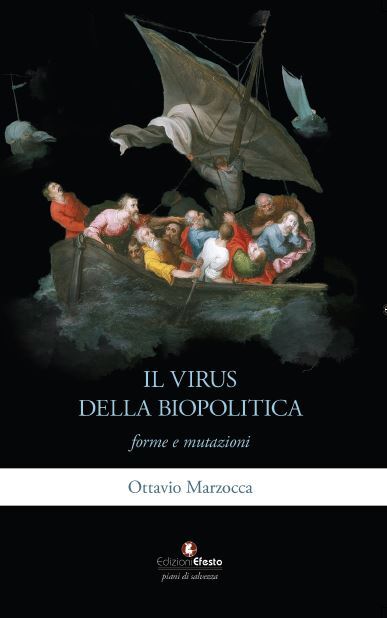
Ottavio Marzocca, Il virus della biopolitica: forme e mutazioni, Edizioni Efesto (2023)

La pandemia ha confermato che la biopolitica è una forma essenziale della politica dominante. Essa tuttavia non ne è il “paradigma”, ma è parte di un insieme di tecniche di governo, in cui il primato della razionalità economica s’intreccia con la pervasività delle pratiche biomediche. Questo libro discute l’idea che una vocazione biopolitica segni fin dalle origini la nostra civiltà e riporta la biopolitica al suo legame con la modernità, alle mutazioni che essa subisce con il variare delle forme di governo e, in particolare, con l’egemonia della cultura liberale e neoliberale. Esso, infine, mostra i fallimenti cui la biopolitica sembra destinata di fronte a problemi come la crisi ecologica e i contagi planetari che ne possono derivare.

Su tutto questo il volume approfondisce autori come Foucault e Arendt, Platone e Aristotele, Agamben e Rose, Bateson e Cooper.

Esso, inoltre, mostra i fallimenti cui la biopolitica sembra destinata di fronte alla crisi ecologica e ai contagi planetari che ne possono derivare. Esso, infine, esamina criticamente sia la possibilità di un governo biopolitico della questione ambientale sia le strategie locali e globali attuate per governare la pandemia.

Ottavio Marzocca, professore di Filosofia etico-politica all’Università di Bari fino al 2021, si occupa dei rapporti tra sistemi di potere e forme di sapere nel governo della società.
Tra i suoi libri: Biopolitics for beginners: Knowledge of life and government of people (2020); Il mondo comune: Dalla virtualità alla cura (2019); Foucault ingovernabile: Dal bios all’ethos (2016).
Per le edizioni Efesto ha curato, insieme ad Andrea Russo, la riedizione di N. M. de Feo, Analitica e dialettica in Nietzsche (2022).