Foucault News

News and resources on French thinker Michel Foucault (1926-1984)

On the specific intellectual, Foucault and Oppenheimer.

Prewitt, Ryan, and Max Accardi. “Cultural Necromancy: Digital Resurrection and Hegemonic Incorporation.” SubStance 52, no. 2 (2023): 74-101. https://doi.org/10.1353/sub.2023.a907150.

Abstract:
This essay follows the recent discourse on two phenomena: the tendency of hegemony to incorporate subversive cultures, and the digital reanimation of prominent dead people. At the intersection of these phenomena lies what we call “cultural necromancy,” a special case of hegemonic incorporation that aesthetically manipulates the physical presence of a deceased figure in the service of power. This essay explores historical analogues to cultural necromancy and how the digital age has accelerated the process through examples ranging from medieval saints to Lenin’s mausoleum to the Tupac hologram. It then examines cultural necromancy’s implications for counterculture and resistance.

Extract
Whereas killing or not killing was the hallmark of sovereignty, preserving life for the purpose of managing it is the hallmark of biopower. Because the focus of biopower is life, Foucault suggested that death was the natural limit of hegemony. He wrote:
“Death becomes, insofar as it is the end of life, the limit, or the end, of power too. Death is outside the power relationship. Death is beyond the reach of power, and power has a grip on it only in general, overall, or statistical terms. Power has no control over death, but it can control mortality.” (Society 248)

Armstrong, Lauren (2023) “‘Half of it’s Out the Window’: Exploring Tensions, Hierarchies and Positionalities Amidst the Changing Knowledge Base of Early Childhood Teacher Education Discourses,” Australian Journal of Teacher Education: Vol. 48 : Iss. 2 , Article 4.
DOI: https://doi.org/10.14221/1835-517X.5960

Abstract
Early childhood education is foregrounded in change. In Australia, this has encompassed the introduction, review and updates of national quality and curriculum frameworks from 2009, and changes to qualification requirements. Within the state of Victoria, further impacts have occurred due to the simultaneous introduction of a parallel curriculum framework. This paper draws on a qualitative study to examine how diverse teacher education discourses available to Victorian long day care educators have shaped their subject positions, discursive practices and reform engagement. Utilising Foucault’s concepts of discourse, knowledge and power, and Foucauldian Discourse Analysis [FDA], findings offer insight into how diverse teacher education discourses and privileged content knowledge influence how educators engage in reform and the changing knowledge base of the field. Recommendations are put forward for consideration to better accommodate the diverse positionalities occupied by educators and ease the enduring hierarchies and tensions within the early childhood field.

Keywords: Foucauldian Discourse Analysis [FDA], early childhood education, long day care, privileged content knowledge, reform engagement, teacher education

Michel Foucault en América Latina: 40 años de ontologías del presente

Llamado a publicación  Vol. 7 No. 131 (2024) (abierto)

Editores invitados:

Nelson F. Roberto-Alba, Universidad Santo Tomás (Colombia)

Luis F. Blengino, Universidad de Buenos Aires, Universidad Nacional de La Matanza (Argentina)

Michel Foucault se ha constituido en uno de los filósofos más influyentes del siglo XX y la actualidad. Su presencia en el mundo intelectual contemporáneo se ha reforzado por la publicación de una parte importante de su obra oral y escrita, en la que se incluyen los Dits et écrits, los cursos dictados en el Collège de France y fuera de él, las distintas conferencias que impartió, la selección de sus principales obras y textos cortos en dos tomos de la colección La Pléiade en 2015, el inédito tomo IV de la Historia de la SexualidadLas confesiones de la carne (2019) y más recientemente los cursos y trabajos académicos de juventud.

El legado de Foucault es cada vez más gravitante en áreas como la historia, la filosofía, la política, la pedagogía, la psiquiatría, el derecho, los estudios de género, los estudios culturales, los estudios postcoloniales, la geografía y otras ciencias sociales; campos epistemológicos comprendidos en su “obra” y también impactados por los análisis que sus reflexiones han suscitado. En esta perspectiva, Foucault no solo es el “autor” de libros ahora considerados clásicos como El nacimiento de la locura en la época clásica, Las palabras y las  cosas,  Vigilar y castigar  La  voluntad de saber;  el  filósofo se constituyó  en un “instaurador de discursividad” cuya obra dio lugar a la formación de otros discursos, de otras obras y de otra manera de hacer filosofía en la actualidad.

En 2024 la Revista Cuadernos de Filosofía Latinoamericana se suma a diversos eventos y publicaciones internacionales que conmemoran los 40 años de la desaparición de Foucault en 1984 con el dossier temático Michel Foucault en Latinoamérica: 40 años de ontologías del presente editado por Nelson F. Roberto-Alba y Luis F. Blengino, el cual espera reunir propuestas de investigadores y especialistas que den cuenta sobre recepciones, usos, análisis y críticas del trabajo filosófico de Foucault en Latinoamérica y el Caribe.

Sobre el llamado

Recepción de resúmenes

Los interesados en participar en el dossier temático deberán enviar un resumen de no más de 400 palabras con título del artículo, palabras clave, autor y filiación institucional a los correos: nelsonroberto@usta.edu.co y luis.blengino@gmail.com

Fecha límite de recepción de resúmenes: 13 de octubre de 2023

Notificación de aceptación de resúmenes: 23 de octubre de 2023

Recepción de artículos

Las contribuciones (artículos de investigación, de reflexión o de revisión) deberán ser enviados mediante el OJS (Open Journal System) de la Revista teniendo en cuenta las normas de publicación para autores:

https://revistas.usantotomas.edu.co/index.php/cfla/about/submissions#authorGuidelines

– Los artículos no deben superar las 10.000 palabras o 65.000 caracteres.

-Se aceptan contribuciones en español, portugués, inglés y francés.

-Sistema de citación APA (7 edición).

-Interlineado de espacio y medio.

-Tamaño fuente de 12 puntos.

– El archivo de envío debe estar en formato OpenOffice o Microsoft Word.


Fecha límite para el envío de artículos: 22 de enero de 2024

Notificación de aceptación o rechazo de artículos tras el proceso de revisión por pares: 15 marzo de 2024

Fecha de publicación estimada del dossier: junio de 2024

Todas las contribuciones recibidas, tras una primera selección general realizada por los editores (Nelson F. Roberto-Alba y Luis F. Blengino), se someterán a una evaluación de doble ciego.

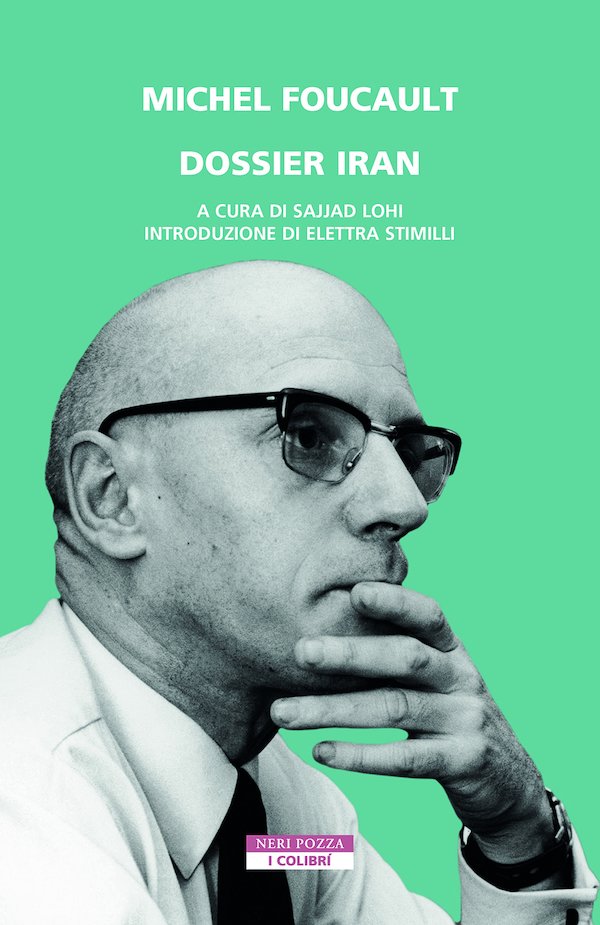
Michel Foucault, Dossier Iran, Traduzione di Sajjad Lohi, Neri Pozza, 2023

A quasi quarantantacinque anni dalla nascita della Repubblica Islamica, l’Iran è attraversato da rivolte e scioperi che sfidano il potere delle autorità religiose. La rivoluzione iraniana sembra irrimediabilmente giunta alla sua fine. Di quell’evento, sorto tra il 1978 e il 1979, conserviamo una testimonianza pressoché unica: quella di Michel Foucault. In collaborazione con il Corriere della Sera, nel settembre del 1978 Foucault partiva alla volta di Teheran per poi tornarvi a novembre, pubblicando dieci reportage sulla sollevazione popolare di cui era stato testimone. Le polemiche attorno a quel viaggio furono immediate: con l’istituzione della Repubblica Islamica e dei primi tribunali rivoluzionari, i media occidentali sottolinearono subito l’«abbaglio», se non l’irresponsabilità, del filosofo nel porre l’accento su una presunta «spiritualità politica» della rivoluzione degli ayatollah. A mezzo secolo da quei reportage e a venticinque dalla loro parziale pubblicazione, Dossier Iran raccoglie per la prima volta tutti i materiali prodotti da Foucault sulla rivoluzione iraniana. Ne emerge una originale riflessione che, al di là del catastrofico esito di quell’evento, mostra l’irriducibile singolarità dell’iniziale sollevazione popolare e le speranze che la accompagnarono.

«Mi sento in imbarazzo a parlare del governo islamico come “idea” o anche come “ideale”. Ma come “volontà politica”, mi ha colpito. Mi ha colpito per il suo sforzo di politicizzare, in risposta a problemi attuali, strutture indissolubilmente sociali e religiose; mi ha colpito anche per il suo tentativo di aprire nella politica una dimensione spirituale».

«Tutti i grandi rivolgimenti politici, sociali e culturali hanno potuto effettivamente prendere posto nella storia solo a partire da un movimento che è stato un movimento di spiritualità».


Foucault Studies, Number 34, August 2023
Open access

Editorial
Sverre Raffnsøe et al.

Articles
Sustaining Significance of Confessional Form: Taking Foucault to Attitudinal Research
Krystof Dolezal

Ungovernable Counter-Conduct: Ivan Illich’s Critique of Governmentality
Tim Christiaens

Book Reviews
Mark Coeckelbergh, Self-Improvement: Technologies of the Soul in the Age of Artificial Intelligence. New York: Columbia University Press, 2022. Pp. 144.
ISBN: 978-0-231-20655-6 (paperback).
William Tilleczek

Special Issue: Foucault, Our Contemporary

Special Issue Introduction
Foucault, Our Contemporary
Bradley Kaye, Corey McCall

Genealogies of Nothing: Enforced Disappearances, Fable Lives, and Archives in Erasure
Ege Selin Islekel

Inhuman Hermeneutics of the Self: Biopolitics in the Age of Big Data
Patrick Gamez

Ansgar Allen, Barthes, anti-intellectualism, and the academy, Ephemera. Theory & Politics in Organization, 2023
Open access

Abstract
In this paper the UK university system is conceptualised as an institutional space that has been transformed to become a resolute, functional haven of anti-intellectualism. This argument is qualified by adopting an understanding of intellectual work that is taken from Roland Barthes, where the intellectual is somebody who works against, outside, or at the margins of established frameworks of thinking, and where an intellectually driven organisation would be a place which openly permits if not encourages such behaviour. The broader political consequences of such a transition in which anti-intellectualism has become rampant in the academy are considered in light of how Barthes understood the rise of populism in 1950s France.

Keywords
academia, anti-intellectualism, Barthes, fascism, higher education, populism, Poujade

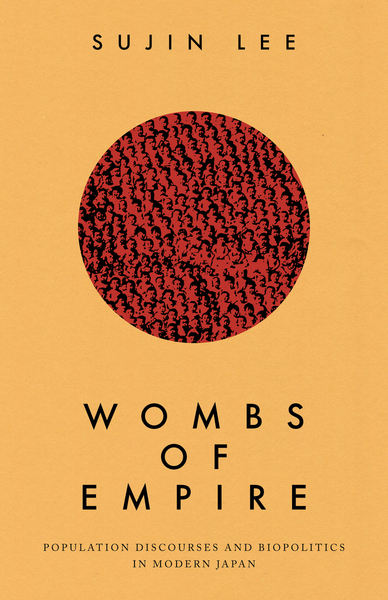
Sujin Lee, Wombs of Empire. Population Discourses and Biopolitics in Modern Japan, Stanford University Press, Forthcoming, October 2023

Japan’s contemporary struggle with low fertility rates is a well-known issue, as are the country’s efforts to bolster their population in order to address attendant socioeconomic challenges. However, though this anxiety about and discourse around population is thought of as relatively recent phenomenon, government and medical intervention in reproduction and fertility are hardly new in Japan. The “population problem (jinko mondai)” became a buzzword in the country over a century ago, in the 1910s, with a growing call among Japanese social scientists and social reformers to solve what were seen as existential demographic issues.

In this book, Sujin Lee traces the trajectory of population discourses in interwar and wartime Japan, and positions them as critical sites where competing visions of modernity came into tension. Lee destabilizes the essentialized notions of motherhood and population by dissecting gender norms, modern knowledge, and government practices, each of which played a crucial role in valorizing, regulating, and mobilizing women’s maternal bodies and responsibilities in the name of population governance. Bringing a feminist perspective and Foucauldian theory to bear on the history of Japan’s wartime scientific fascism, Lee shows how anxieties over demographics have undergirded justifications for ethnonationalism and racism, colonialism and imperialism, and gender segregation for much of Japan’s modern history.

About the author
Sujin Lee is Assistant Professor of Pacific and Asian Studies at the University of Victoria

Foucault News will be taking a short break for a few weeks. In the meantime, please avail yourselves of the extensive archives and resources.

Clare O’Farrell (Editor)

Walsh, J., Ferazzoli, M.T.
The Colonised Self: The Politics of UK Asylum Practices, and the Embodiment of Colonial Power in Lived Experience
(2023) Social Sciences, 12 (7)

DOI: 10.3390/socsci12070382

Abstract
This paper draws on empirical data generated in the ‘Everyday Bordering in the UK’ project, with a focus on the experiences of people seeking asylum and hoping to establish a safe life in the UK. Specifically, we show that during the process of claiming asylum, people’s experiences of waiting and displacement—practices inherent in UK immigration policies—work as time- and space-based dimensions of power that are imbued with colonial logic. Existing studies apply the lens of Foucault’s governmentality approach to politics regulating people seeking asylum. In particular, the international literature describes the policy of dispersal, and associated periods of waiting, as a dynamic of power used by governments to control and regulate behaviours. However, these time- and space-related experiences are often considered separately, focusing on the rationalities underpinning these politics. This paper, by contrast, develops Foucault’s theories by examining how these two characteristics interconnect in the lived realities of people waiting for an asylum decision in the UK to create racialised politics of power and privilege that reproduce the colonial origins of European migration governance. In doing so, we contribute by illustrating how practices within the UK asylum system can be embodied by people seeking asylum to create a subject that modifies behaviours in response to being positioned as ‘less deserving’ than UK citizens—the ‘colonised self’. © 2023 by the authors.

Author Keywords
claiming asylum; colonial logic; migration governance; technology of the self