Foucault News

News and resources on French thinker Michel Foucault (1926-1984)

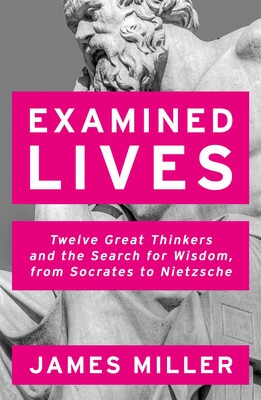
James Miller, Examined Lives: From Socrates to Nietzsche, New York: Farrar, Straus and Giroux, January, 2011

James Miller is the author of one of the biographies of Foucault: The Passion of Michel Foucault

From Booklist
Miller combines short biographies and compact synopses of 12 philosophers’ ideas of wisdom. In a format suiting those intrigued by the history of philosophy but not yet prepared to take on the texts, Miller introduces Socrates, Plato, Aristotle, Diogenes, Seneca, Augustine, Montaigne, Descartes, Rousseau, Kant, Emerson, and Nietzsche. Enlivened by Miller’s attention to how the subjects lives and actions measured up to their declamations, the presentations start with the thinkers’ adoption, in some cases from revelation, in others from reflection, of moral inquiry as a mode of the enlightened life. As well as the questions they strived to answer about truth and ideal conduct, Miller pointedly presents how their mental realms of abstraction, ever buffeted by demands of material or political realities, could agitate contemporaries or provoke posterity to bridle at inconsistencies between words and deeds, such as Rousseau’s notorious abandonment of his children. Conducting his audience safely through abstruse aspects of these philosophers’ precepts, Miller proves concise about their imitational symbolism to those of introspective bent. –Gilbert Taylor

A.C. Grayling notes in his review on Salon, January 25 2011

Miller presents his twelve mini-biographies as responses to Foucault’s remarks about “the problem of the philosophical life,” namely, the question of the relevance of philosophy to the questions of what one can know, and do, and hope for, given the conquests of science and the fragmented and competing voices of religions. But one need not take the essays as endeavours to see if philosophy still has a role in helping us identify the meanings of life. Each of them is a little gem in its own right as the portrait of an independently interesting individual and his thought. Miller is careful as well as eloquent, so we get penetrating vignettes of intensely interesting people who were moved in their several ways to contemplate the big questions, exploring themselves and others to achieve the kind of enlightenment that liberates, whatever form the truth appeared to them to take.

Judith Revel, Foucault, une pensée du discontinu, Paris, Fayard, 2010.

Description
La pensée de Michel Foucault désoriente : considérée parfois comme celle d’un philosophe, parfois encore comme celle d’un historien ou d’un critique de la culture, elle ne cesse de déplacer ses choix méthodologiques, ses champs d’enquête et son outillage conceptuel ; elle surprend par la beauté de son écriture ; elle irrite aussi, car ce voisinage avec la pratique littéraire et le dehors de la philosophie dérange.
Que se passe-t-il alors quand, au lieu d’exiger une identification, un positionnement ou une déclaration d’allégeance à tel ou tel courant, on prend pour guide cette apparente discontinuité des thèmes, des approches et des instruments ? Quand on fait le pari qu’il s’agit de lire derrière l’éparpillement de la recherche une véritable pensée du discontinu, un travail philosophique exigeant, sans cesse relancé, sur l’exigence de la pensée et la problématisation de l’actualité.
Il s’agit alors de reconstituer la trame complexe d’une cohérence difficile et forte, qui traverse trente ans de pratique philosophique, et nous enjoint à notre tour de tenter cette « ontologie critique de nous-mêmes » dont Foucault demeure l’exemple à la fois le plus remarquable et le plus émouvant.

Judith Revel est maître de conférences à l’Université Paris I Panthéon-Sorbonne et membre du Centre Michel Foucault. Philosophe, italianiste et traductrice, elle est spécialiste de philosophie contemporaine et s’intéresse aux représentations de l’histoire dans les théorisations politiques. Elle travaille en particulier sur la manière dont la réflexion philosophique se pose la question de l’actualité.

Lynne Huffer and Elizabeth Wilson ‘Mad for Foucault: A Conversation’, Theory, Culture & Society January 4, 2011 vol. 27 no. 7-8 324-338.

Abstract
This two-part article summarizes the major arguments of Lynne Huffer’s 2010 book, Mad for Foucault: Rethinking the Foundations of Queer Theory. The second part of the piece is a dialogue between Huffer and feminist theorist Elizabeth Wilson about the implications of the book’s arguments about rethinking queer theory, interiority, psychic life, lived experience and received understandings of Michel Foucault’s work.

Michel Foucault, Leçons sur la volonté de savoir. Cours au College de France, 1970-1. Suivi de Le savoir d’Oedipe, Paris: Gallimard/Seuil, 2011.

Description
Voici la transcription de la première année des cours de Michel Foucault au Collège de France. Sa publication marquera une date dans la « réception » de Foucault. On ne pourra plus le lire comme avant.

On y découvrira la profonde unité du projet qui va de Surveiller et Punir ( 1975), dominé par les thèmes du pouvoir et de la norme, à L’Usage des plaisirs et Le Souci de soi (1984), consacrés à l’éthique de la subjectivité.

Ces Leçons sur la volonté de savoir rappellent que le travail de Michel Foucault n’a jamais eu qu’un objet : la vérité. Surveiller et Punir achève une enquête sur le rôle des formes juridiques dans la constitution du dire vrai, dont on découvre ici les premiers jalons. La vérité naît dans des conflits, la concurrence des prétentions qui trouvent dans les rituels du jugement judiciaire la possibilité de départager qui a raison et qui a tort.

Au sein même de la Grèce antique se succèdent et s’affrontent différentes formes juridiques, différentes manières de partager le vrai et le faux, où viendront bientôt s’inscrire les querelles des sophistes et des philosophes. Sophocle, dans Œdipe roi, met en scène la puissance propre des formes du dire vrai : elles instituent le pouvoir comme elles le destituent. Contre Freud, qui fera d’ Œdipe le drame d’un inavouable désir sexuel, Michel Foucault montre que la tragédie articule les rapports de la vérité, du pouvoir et du droit. L’histoire de la vérité est celle de la tragédie.

Au-delà de l’irénisme d’Aristote qui plaçait la volonté de savoir dans le désir de connaissance, Michel Foucault approfondit la vision tragique de la vérité inaugurée par Nietzsche, qu’il arrache dans un dialogue souterrain avec Deleuze à la lecture heideggerienne.

Qui osera parler, après ce cours, d’un Foucault sceptique ?

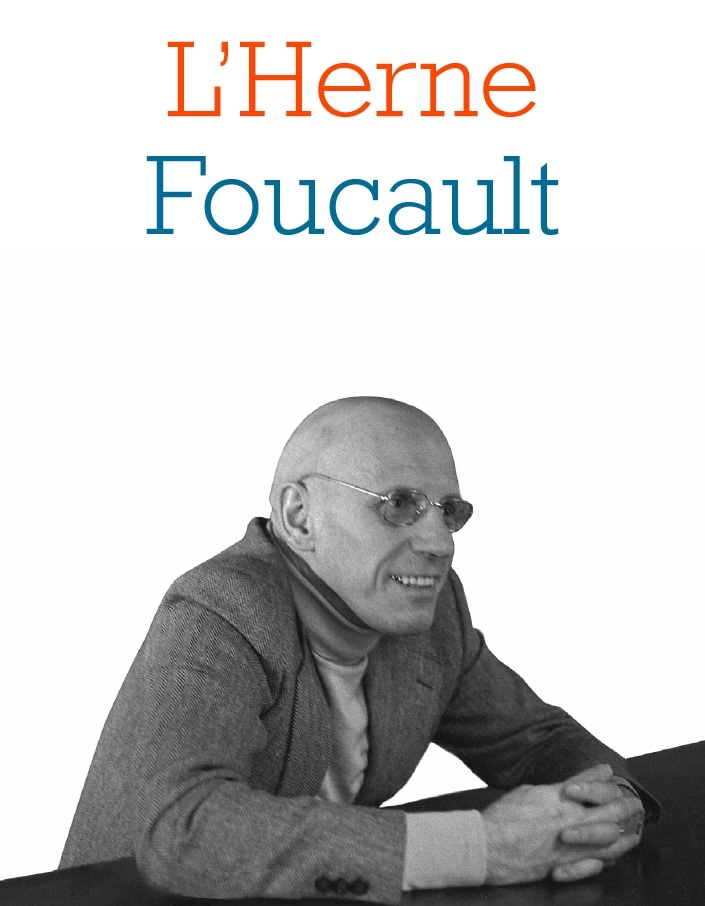
Philippe Artières, Jean-François Bert, Frédéric Gros et Judith Revel, Cahier Foucault, Cahiers de L’Herne, 2011

« Escrimeur plus que sabreur, Foucault est resté un dissident politique, toujours à la riposte plus qu’à la parade, sans jamais laisser s’automatiser ses esquives ou ses bottes ni prêter à imitation facile. »

Toute la variété de l’oeuvre de Michel Foucault est prise en considération dans l’éventail des contributions.

Les ouvrages de Foucault ont tous été ressentis comme des provocations : Histoire de la folie a heurté la bonne conscience des psychiatres, Les mots et les choses ont soulevé la grande polémique du structuralisme au milieu des années 1960, Surveiller et punir a scandalisé les milieux professionnels de la justice, et son Histoire de la sexualité enfin (tomes II et III) a surpris au contraire par son recentrement éthique. Les livres de Foucault ont été en tout relativement rares, mais chacun a représenté un événement théorique et politique. Très tôt la pensée de Foucault a compté en-dehors des cercles académiques, en France et ailleurs : elle a nourri de nombreuses luttes, et est rapidement devenue une référence dans toute l’Europe, mais aussi en Amérique et en Asie. Enfin les interventions esthétiques, politiques, éthiques, philosophiques de Foucault l’ont rendu indispensable dans tous les domaines de la pensée et de la création, sans spécialisation.

Ce Cahier de l’Herne dynamique, transdisciplinaire et créatif recueille des entretiens : ceux d’amis, de proches, qui dressent un portrait plus intime, offrant un visage différent de l’auteur ; des textes inédits de Foucault, sur l’art, la folie, Nietzsche, etc. ; des témoignages qui révèlent l’atmosphère intellectuelle de l’époque et la place controversée mais néanmoins centrale qu’y occupa Foucault.

Une iconographie inédite et abondante vient enrichir ce Cahier.

From Stuart Elden’s blog Progressive Geographies

Prevent and Tame. Protest under (Self)Control

This is available as an ebook
PDF here

The common dualistic approach to social movements tends to see power and resistance as separate and independent antagonists. RLF Manuskripte, Volume 88

The contributors to this book aim to transcend that approach, arguing that to adequately analyze ongoing struggles, it is also critically important to trace the constitutive interconnectedness between social movements and power. This is the aim of the title “Prevent and Tame”: emergent strategies to prevent and tame protest—whether they are undertaken by the state or by factions within the movements themselves—have given rise to new kinds of social relations and regulations that call for a new approach to research on social movements and protest.

Inspired by Foucault and others, this book offers theoretical and empirical investigation into the implications that governmentality studies and subjectivation perspectives may have for a deeper understanding of the dynamics in the relationship between power and movements. The articles reflect on the effects of current neo-liberal or neo-social transformations on social movement practice, including the impact of surveillance, the criminalization and stigmatization of protest, and how these can lead movements to engage in self-taming behavior amongst themselves.

Taken as a whole, this book suggests that to take the struggles of social movements seriously, requires to acknowledge the complexity of the power dynamics in which they are involved. In so doing, the authors’ aim is not to tame protest by over-amplifying its apparent obstacles, but to prevent its energy from being pointlessly wasted or misdirected (i.e. by being spent in the wrong places, in false conflicts, or even in fighting the clouds they cast themselves).

Includes contributions by Stephen Gill, Peter Ullrich, Florian Heßdörfer, Andrej Holm, Anne Roth, Marco Tullney, Michael Shane Boyle, Darcy K. Leach, Sebastian Haunss and Nick Montgomery.

MATERIALI FOUCAULTIANI – CALL FOR PAPERS

italiano
Abbiamo il piacere di annunciare il secondo call for papers per la rivista online « mf / materiali foucaultiani » :
Razze e razzismi: approcci foucaultiani
La rivista online mf/materiali foucaultiani intende dedicare il suo secondo numero all’articolazione di razza e razzismo che emerge dalle opere di Michel Foucault… [Leggi il CFP completo]
Scadenza (abstract di 500 parole circa, in italiano, inglese o francese): 1° marzo 2011
Si prega di diffondere questo annuncio.

English
We are pleased to announce the second call for papers for the online journal « mf / materiali foucaultiani » :
Races and Racisms: Foucaultian Approaches
The online journal mf/materiali foucaultiani dedicates its second special issue to the articulation between race and racism which comes out from Michel Foucault’s thought… [Read the complete CFP]
Deadline (abstract of about 500 words in Italian, English or French): March 1, 2011
Please pass this information on.

français
Nous avons le plaisir d’annoncer le deuxième appel à contribution pour la revue en ligne « mf / materiali foucaultiani » :
Races et racismes : approches foucaldiennes La revue en ligne mf/materiali foucaultiani a décidé de dédier son deuxième numéro à l’articulation de ‘race’ et racisme dans l’œuvre de Michel Foucault… [Lire l’AAC complet]
Date limite (abstract 500 mots environ, en italien, anglais ou français) : 1er mars 2011
Merci de faire circuler cette annonce.

Matthew Bannister, ‘“I’m Set Free…”: The Velvet Underground, 1960s Counterculture, and Michel Foucault’, Popular Music and Society, Volume 33, Issue 2 May 2010 , pages 163 – 178
https://doi.org/10.1080/03007760903142889

Abstract
This article explores concepts of freedom, repression, and sexuality in Western society and popular music, in relation to selected aspects of Michel Foucault’s writing and the work of the Velvet Underground. Both were critically responding to the “repressive hypothesis” implicit in 1960s countercultural discourses of liberation from oppression, by highlighting the role of the gaze in power relations, its role in both disciplining and constructing sexual and other identities, and how possibilities for action or resistance can be enacted only through material and pragmatic interventions within existing power relations, rather than by reference to an imagined Utopia “beyond power.”

Corey McCall, The Art of Life: Foucault’s Reading of Baudelaire’s “The Painter of Modern Life”, The Journal of Speculative Philosophy, Volume 24, Number 2, 2010, pp. 138-157
https://doi.org/10.5325/jspecphil.24.2.0138

In lieu of an abstract, here is a preview of the article.

In his essay “What Is Enlightenment?” Foucault compares the role of modernity in the work of the decadent Parisian poet Charles Baudelaire with that of the austere Prussian philosopher Immanuel Kant. He claims that the relationship between these two strange bedfellows can be found in the value each writer accords to the present in contrast to the past and future. Each writer claims, in his own style, that each individual must render his or her existence meaningful by cultivating what Foucault calls in this essay a philosophical ethos. This conception of the philosophical form of life forms the conceptual basis of Foucault’s later work. I briefly interpret Foucault’s discussion of Kant and Baudelaire in “What Is Enlightenment?” in order to begin to reconsider this idea of a philosophical ethos through a reading of Baudelaire’s seminal essay in art criticism, “The Painter of Modern Life.” From this initial ethical sense of life as self-fashioning, I turn next to the living body as the object of discipline (in Foucault) and custom (in Baudelaire) in the first section, before concluding with a consideration of life in its biological sense in the final section of the essay. I track these three senses of life in both Foucault’s work and Baudelaire’s “The Painter of Modern Life” and compare the philosophical significance of these three conceptions of life in the work of Baudelaire and Foucault. In terms of the title of Baudelaire’s essay, the first section focuses on the figure of the painter, while the second examines the concept of life.

Patrice Maniglier et Dork Zabunyan, Foucault va au cinéma., Montrouge: Editions Bayard, Collection La logique des images, 2011

A workshop on 11 February 2011 and a subsequent cinema program in association with the book took place in Nice. See here for a video of the program.

See also this press release

You can can also listen to a program (podcast) with the authors on France Culture.

Review in Le Monde

Des textes réunis pour la première fois.

Voici réunis pour la première fois les textes de Michel Foucault sur le cinéma grâce à Dork Zabunyan et Patrice Maniglier qui les présentent et les analysent. On peut s’étonner que cette facette de l’œuvre de Michel Foucault n’est jamais fait l’objet d’un livre jusque là tant ses ouvrages sont commentés et débattus aujourd’hui. Une réflexion inédite sur sa relation au cinéma .

Penser autrement le cinéma

Ses travaux sur la prison, l’hôpital, la sexualité répondaient à son désir de « penser autrement » et notamment de faire de l’histoire autrement, en s’attachant à tous ces micro-procédures dont nous ne sommes pas conscients mais qui décident certains des changements les plus profonds. Justement, et c’est ce que démontrent ici les philosophes Dork Zabunyan et Patrice Maniglier, le cinéma est un lieu où ces micro-changements inconscients peuvent être vus. La relation de la pensée de Foucault au cinéma est donc loin d’être marginale, comme l’apport de cet ouvrage à la réception de son œuvre.

Dork Zabunyan est philosophe, maître de conférence à l’université de Lille 3. Il est l’auteur de Gilles Deleuze. Voir, parler, penser au risque du cinéma (Presses de la Sorbonne nouvelle) et collabore à de nombreuses revues (Critique, Art Press, Trafic, Vacarme…)

Patrice Maniglier enseigne la philosophie française du vingtième siècle, à l’université d’Essex en angleterre. Il est notamment l’auteur de La perspective du diable (Actes Sud), Antimanuel d’éducation sexuelle (avec Marcella Iacub, Bréal), La vie énigmatique des signes (Leo Scheer).

Added August 2018
This book was translated into English by Clare O’Farrell and published by Columbia University Press in August 2018. The English edition includes the full versions of all ten of Foucault’s articles and interviews relating to film and appendices compiled by the translator as well as additional referencig. The book in French contains extracts from 9 of Foucault’s articles, not the full versions.