Foucault News

News and resources on French thinker Michel Foucault (1926-1984)

Olga Campbell-Thomson, Theory as method: the importance of Foucault in my doctoral research, Social Theory Applied blog, November 4 2013

Now that I have completed my doctoral dissertation, I have the feeling it could be accomplished in a shorter time and it could progress in a more straightforward manner… In short, I wish I knew where my search for method and theoretical underpinnings would lead my work to. Well, back then I didn’t know. So, the entire process of doctoral research was lengthy and rather circuitous, but it was also rewarding as it evolved.

What started as a search for the method, ended up as a propitious finding of the theoretical framework for the analysis and interpretation of the data. My encounter with Foucault’s theorizing on the constitution of the subject not only shaped my thinking, it also allowed me to gather a voluminous corpus of the data into a manageable structure, and helped decide on the methods of data analysis. In this respect, theoretical perspective and method evolved in tandem and were supporting each other. However, meaningful encounter with Foucault did not happen right away, and the name itself was nowhere in my initial research proposal.

read more

Association Tunisienne des Etudes Philosophiques
Michel Foucault trente ans après

Les 17, 18 et 19 mars 2014
à l’Hôtel Marina Palace Hammamet Tunisie

Avec le soutien de :
Ministère de la Culture et de la sauvegarde du patrimoine,
L’Association pour le Centre Michel Foucault,
La Faculté des Sciences Humaines et Sociales de Tunis,
L’Ecole Normale de Tunis, L’Institut Français de Tunis.

PDF flyer

Lundi 17 mars

15h30 Ouverture Ali Chennoufi
Président de l’Association

Première séance
Président : Salah Mosbah

16h Frederic Gros (France)
Foucault et le libéralisme

16h20 Manoubi ghabech (Tunisie)
Foucault et le contrat social

16h40 Daniele Lorenzini(France)
Ontologie(s) et critique chez le dernier Foucault

17h Pause
17h30 Discussion

19h Dîner

Mardi 18 mars

Deuxième séance Président : Mustapha Kamel Farhat

9h30 Khemais Bou Ali(Tunisie)
ﻓﻭﻜﻭ ﻤﻥ ﻤﻨﻅﻭﺭ ﺩﻝﻭﺯ
9h50 Khaled Bahri (Tunisie)
ﺇﺒﺘﻜﺎﺭ ﺍﻝﺫﺍﺕ
10h10 Hassen Hamed (Egypte)
ﺍﻝﺫﺍﺕ ﻋﻨﺩ ﻓﻭﻜﻭ

10h30 Discussion
10h50 Pause

Troisième séance Président : Frédéric Gros

11h20 Naima Riahi (Tunisie)
Les espaces clos

11h40 Luca Paltrinieri (France)
Du savoir-pouvoir au gouvernement par la vérité

12h Kaïser Jlidi (Tunisie)
ﻓﻨﻴﺎ ﻨﺎﻗﺩﺍ ﻓﻭﻜﻭ

12h20 Discussion
13h Déjeuner

Quatrième séance Président : Taoufik Chérif

15h30 Mounira Ben Mustapha (Tunisie)
La vie comme oeuvre d’art

15h50 Arianna Sforzini (France)
Les représentations du pouvoir

16h10 Omezine Ben Chikha (Tunisie)
ﻓﻭﻜﻭ ﻭﺍﻝﺭﺴﻡ

16h30 Discussion
17h Pause

17h30 -18h30 Table ronde:
Foucault du moment Tunisien à la réception arabe
A. Attia- A. Safar – F. Triki
M.A. Touati- A. Bachta – F.Meskini

Mercredi 19 mars

Cinquième séance Président : Fethi Meskini

9h Hélène L’Heuillet (France)
Foucault et le souci des autres

9h20 Jamel Mfarej (Algérie)
ﺘﻜﻨﻭﻝﻭﺠﻴﺎ ﺍﻹﻋﺘﺭﺍﻑ ﻭﺍﻝﻤﺭﺍﻗﺒﺔ ﺍﻝﺸﺎﻤﻠﺔ

9h40 Slah Daoudi (Tunisiie)
Foucault en Italie

10h Discussion
10h20 Pause

Sixième séance Président : Khémais Bou Ali

11h Abdessalem Hidouri (Tunisie)
ﻓﻭﻜﻭ ﻭﺍﻝﻤﻘﺎﻭﻤﺔ

11h20 Hichem Massoudi (Tunisie)
Art et Folie

1h Discussion
12h30 Clôture
13h Déjeuner

Life and Debt: Living through the Financialisation of the Biosphere
Philip Mirowski keynote for ‘Life and Debt’ conference

Comments on Foucault at around the 14 minute mark
Published on Aug 18, 2013

Update September 2025: This lecture is no longer on YouTube. The link above is to the archived page on the Wayback machine

How can it be that the climate crisis, the biodiversity crisis and the deepest financial crisis since 1930s have done so little to undermine the supremacy of orthodox economics?

The lecture will preview material from Mirowski’s new book: Never Let a Serious Crisis Go to Waste: How Neoliberalism Survived the Financial Meltdown (Verso, 2013).

In this lecture, Professor Mirowski responds to the question of how it is that science came to be subordinate to economics and the very future of nature to be contingent upon the market. Charting the contradictions of the contemporary political landscape, he notes that science denialism, markets for pollution permits and proposals for geo-engineering can all be understood as political strategies designed to neutralize the impact of environmentalism, as they all originated in the network of corporate-sponsored think-tanks that have made neoliberal accounts of society, politics and the economy so prevalent that even the most profound crises are unable to shake their grip on the political imagination.

For those of us who are still paying attention, the task of constructing an alternative politics of science and markets is a vital one.

Philip Mirowski is Carl E. Koch Professor at the University of Notre Dame, Indiana. His most famous book, More Heat Than Light: Economics as Social Physics (1989) established his reputation as a formidable critic of the scientific status of neoclassical economics. His Machine Dreams: Economics becomes a Cyborg Science (2002) presents a history of the Cold War consolidation of American economic orthodoxy in the same intellectual milieu that produced systems theory, the digital computer, the atomic bomb, the strategy of Mutually Assured Destruction, and the ‘think tank’. The Road from Mont Pelerin: the Making of the Neoliberal Thought Collective (with Dieter Plewhe, 2009), drawn from the archives of the Mont Pelerin Society and the Chicago School, presents a scholarly history of neoliberalism: the political movement initiated by Friedrich Hayek and Milton Friedman in the 1940s, which has since become the world’s dominant philosophy of government. As a leading exponent of the Institutional school, he has published formal treatments of financial markets that update Mynsky’s ‘financial instability hypothesis’ for the world of computerised derivative trading.

This lecture is presented by the UTS Cosmopolitan Civil Societies Research Centre and the Australian Working Group on Financialisation at the University of Sydney.

With thanks to Chuck Willer for this link

Biopolitical Studies Research Network

Prof. Thomas Lemke

Tuesday 11 March – Tuesday 18 March

Never Stand Still

Faculty of Arts Social Sciences

School of Humanities Languages

Thomas Lemke is Professor of Sociology with focus on Biotechnologies, Nature and Society at the Faculty of Social Sciences of the Goethe- University Frankfurt/Main in Germany. Among his recent publications: Governmentality. Current Issues and Future Challenges (co-edited with Ulrich Bröckling and Susanne Krasmann), New York/London: Routledge 2011; Biopolitics. An Advanced Introduction, New York: New York University Press 2011; Perspectives on Genetic Discrimination, New York/London: Routledge, Lemke, T. (2013).

Schedule of Events

Date Time Event Venue
11/03 3-5pm Public Lecture Morven Brown 310, UNSW
Rethinking Biological Citizenship: DNA Kinship Testing in German

Immigration Policy “In my talk, I will present findings of a recent research project. I aim to broaden and complement the existing theoretical discussion on biological citizenship, which so far has been limited to the medical sphere by investigating a new empirical field. By analyzing the use of DNA analysis for family reunification, I will show that biological criteria still play an important role in decision making on citizenship rights in nation-states.”

17/03 2-4pm Workshop 1 Morven Brown 310, UNSW
What is Governmentality?
18/03 10-12pm Workshop 2 Morven Brown 310, UNSW
Biopolitics and the Question of the Subject with Professor Catherine Waldby, Department of Sociology and Social Policy, University of Sydney


stuartelden's avatarProgressive Geographies

Many thanks to everyone who came to the two talks this week on The Birth of Territory at Monash and RMIT. There were good audiences for both and some interesting questions. I recorded the RMIT talk and will try to upload the audio to this site soon. Details for next week’s talks on Foucault are:

3 March 2014, 11am, “Foucault’s La société punitive”, Monash University, Caulfield campus (Clayfield Room A1.34 – map here)

4 March 2014, 2pm, “Foucault’s La société punitive”, University of Melbourne (Level 4 Linkway, John Medley Building, Grattan Street entrance, opposite University Square) – flyerwebsite (registration required)

View original post

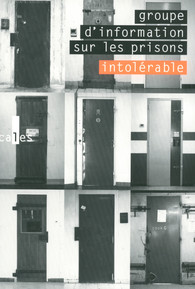
intolerables Intolérable
Textes réunis par le Groupe d’Information sur les prisons, présentés par Philippe Artières

Chronologie et postface de Philippe Artières
Collection Verticales, Gallimard
Parution : 19-04-2013

Further info

Ce volume contient
En février 1971, des intellectuels dont Michel Foucault, Daniel Defert, Jean-Marie Domenach, Pierre Vidal-Naquet et Gilles Deleuze fondent le Groupe d’Information sur les Prisons pour s’attaquer aux «barreaux du silence». Deux années durant, le GIP a su rassembler magistrats, journalistes, médecins, travailleurs sociaux, détenus, ex-détenus et leurs proches autour d’une volonté commune : «faire savoir la prison» et pratiquer à cette fin une intolérance active envers l’intolérable.
Cinq brochures ont paru, fruit d’enquêtes militantes, relayant la parole des détenus, sans filtre, dans sa brutalité et son intensité. S’y succèdent réponses à des questionnaires, correspondances, cahiers de revendications de mutins, entretiens avec un Black Panther incarcéré… Autant de documents qui permettent à ces invisibles de sortir de l’ombre, de s’inventer comme force politique.
Pour replacer cette expérience collective d’exception dans son contexte socio-politique, l’ouvrage comporte une chronologie détaillée des années GIP conçue par Philippe Artières.

Re-Making Normal: Governing the Social in Neoliberal Times

Call for Contributions

Deborah Brock, editor dbrock@yorku.ca

PDF

Re-Making Normal: Governing the Social in Neoliberal Times is a ‘sequel’ to my sole edited (Nelson 2003) publication, Making Normal: Social Regulation in Canada.  However, it differs from the 2003 edition in a number of respects, most notably, it will be published by a scholarly press rather than a commercial press, it can serve as a reader for upper year undergraduate courses and some graduate courses (although it is not intended to be a textbook), and it will be comprised entirely of chapters on contemporary concerns, forgoing the historical content of the earlier book.

Re-Making Normal explores how we are constituted as neoliberal subjects; for example, as sexually, fiscally and organizationally responsible subjects, and as biopolitical subjects of citizenship, militarism, development aid, etc.  In keeping with a governmentality approach, how focused investigations will be foregrounded.  In this text, neoliberalism is understood as more than an ideological perspective favoring the notion of the minimal state, competitive individualism, and ‘free’ trade and markets.  Neoliberalism has fundamentally reshaped how the self can be known and what interests the self holds through a reconfiguration of subjectification.

Re-Making Normal will potentially include a range of topics from self-fashioning (such as how we come to know and represent ourselves as sexual subjects, as psy subjects constituted through therapeutic authority, as having a particular kind of character, and of what ‘truths’ we speak) to broader biopolitical processes (such as schooling, surveillance, the organization of public and domestic spaces, the “management of the mind”[1], consumption, and how we labour).  All relevant topics will be considered.

All contributions must engage directly with activities of neoliberal governance as materially grounded and empirically verifiable sets of practices.  As such, Michel Foucault’s work provides a foundation for the book, and all contributions must engage directly with his governmentality approach.  I welcome contributions that use, challenge, and extend governmentality studies.  In this text, the governmentality approach is broadly conceived and open to a range of potentialities, in keeping with the fact that governmentality is not a specific theory and not a school of thought.  However contributions should, where possible, directly address the following:

-Take an approach to power that is much more nuanced than a social control model, and considers the ways in which contemporary western societies are characterized by conditions of ‘regulated freedom’.[2]

-Engage with the ‘programmes, strategies and techniques’[3] of government.

-De-centre the state and instead demonstrate how the state is produced as an affect of multiple force relations.

-Connect everyday life to the big issues of our day, centering the political character of personal, social, cultural and economic activity.

-Capture tensions between normalization and individualization, and homogenization and diversification, noting how they are integral to contemporary forms of governance.

-Demonstrate the dynamic and mutually constitutive relation between power and knowledge.

-Take up a critique of concepts such as ‘choice’, ‘freedom’, ‘empowerment’, ‘human rights’, etc.

-Pose the possibilities of resistance, beginning with an interrogation of truth, power and subjectivity.[4]

All contributions will pose critical analytic questions, directions for further research, and suggestions for resistance tactics and strategies.

Chapters may contain an historical component, but not be primarily historical.  While the text will be primarily Canadian in focus, international foci are most welcome (my preference is for non- US focused contributions), particularly where they contribute to a ‘global governmentality’.[5]

Chapter length:  In order to accommodate as broad a range of issues as possible, this book will feature relatively short chapters.  Chapters can range from a minimum of 3,780 words including references (approximately 9 published pages) to 7,560 words including references (approximately 18 published pages).

Without compromising scholarly rigor, I invite contributors to write in the first person (the ‘I’ form), to use plentiful examples, accessible language, and to be personable and somewhat colloquial in style.

Chapters will be selected based on their ability to meet the objectives of the collection, their coherence with other chapters in the collection, and overall quality.  All contributions must be new original articles for this edition.

 Format:  Chicago Manual of Style

Schedule:

31 March 2014            Last day for receipt of indication of interest in participation

30 April                       Last day for receipt of detailed proposals

29 August                    Chapters (Draft 1) due

8 Sept – 31 Oct           Editor Tasks (editing and suggestions for revision)

19 December              Chapters (Draft 2) due

29 Dec– 27 Feb 2015  Editor Tasks (preparation of complete manuscript)

2 March                       Submit manuscript to publisher for consideration/review

1 June                          Receipt of reviewer responses and decision of publisher

2 June – 31 July          Further revisions

4 August                      Production begins for spring 2016 publication

Please contact Deborah Brock dbrock@yorku.ca

Deborah Brock is an Associate Professor in the Department of Sociology, York University, Toronto, Canada.  Her research and teaching address social, moral, and sexual regulation.  Her publications include Criminalization, Representation, Regulation (co-edited with Amanda Glasbeek and Carmela Murdocca) University of Toronto Press, forthcoming 2014; Power and Everyday Practices (co-edited with Rebecca Raby and Mark Thomas) Nelson, 2011; Making Work, Making Trouble:  The Social Regulation of Sexual Labour University of Toronto Press, 2009, 1998; and Making Normal: Social Regulation in Canada Nelson, 2003.


[1] Nikolas Rose Neuro: The New Brain Sciences and the Management of the Mind Princeton:  Princeton University Press, 2013).

[2] Nikolas Rose and Peter Miller “Introduction: Governing Economic and Social Life” in Governing the Present: Administering Economic, Social and Personal Life (Cambridge: Polity, 2008).

[3] Rose and Miller, 2008.

[4] Johanna Oksala “Neoliberalism and Biopolitical Governmentality” in Jakob Nilsson and Sven-Olov Wallenstein, eds Foucault, Biopolitics and Governmentality (Södertörn Philisophical Studies, 2013) www.sh.se/publications; Rose and Miller, 2008.

[5] Thomas Lemke “Foucault, Politics and Failure” in Jakob Nilsson and Sven-Olov Wallenstein, eds. Foucault, Biopolitics and Governmentality (Södertörn Philisophical Studies, 2013) www.sh.se/publications. See also Wendy Larner and William Walters Global Governmentality: Governing International Spaces London: Routledge, 2004.

Exclusion, discipline, terreur : à partir de Michel Foucault

Colloque international
11 et 12 avril 2014, Strasbourg

vendredi 11 avril :
amphithéâtre du Collège doctoral européen, 42 bd de la Victoire

PDF

9h : accueil des participants, introduction

9h30-10h30 : Alain Brossat, Université Paris-8, “Le ” geste obscur– partage et/ou persécution”

10h30-11h30 : Jacob Rogozinski, Université de Strasbourg, “Des dispositifs de persécution : pourquoi introduire ce concept?”

11h30-12h30 : Guilherme Castelo Branco, Université fédérale de Rio de Janeiro, “Gestion, violence, terreur

12h30-14h : pause déjeuner

14h-15h : Geoffroy de Lagasnerie, ENSAPC, Paris-Cergy, “Les lieux du pouvoir” 15h-16h :  Andreas  Hetzel,  Université  d’Istanbul,  “Borders  as  Dispositif:  the

Governementality of Exclusion

16h-17h : Luca Paltrinieri, Collège International de Philosophie, Paris, “Bodin à Lampedusa : souveraineté, migrations, capital humain”

samedi 12 avril
Institut Le Bel, 4 rue Blaise Pascal salle Ourisson (1° étage à droite)

9h30-10h30 : Roberto Nigro, Université de Zurich, “De la lutte des classes aux antagonismes diffus”

10h30-11h30 : Julie Mazaleigue-Labaste, Université de Picardie, Amiens, “Le diabolique de l’Age Classique au XXIème siècle : concept, figures et affects de l’exclusion

11h30-12h30 : Jean-Claude Monod, ENS et CNRS, Paris, “Exclusion, inclusion forcée ou interprétation forcée? Le Grand Renfermement et le sujet moderne”

12h30-14h : pause déjeuner

14h-15h : Diogo Sardinha, Collège International de Philosophie, Paris, “Sorcières, possédées, mystiques et hystériques : exclusion, discipline et terreur sur les femmes”

15h-16h : Maria Muhle, Merz Akademie, Stuttgart, “Monstres et anormaux : l’exclusion entre loi et norme

16h-17h : Claire Cosquer, ENS, Paris, L’absence impériale : sexualité, libéralisme, et colonialité”

With thanks to Geoffroy de Lagasnerie for this link

With thanks to Dirk Felleman for this link

Dorrestijn, S., Verbeek, P.-P.
Technology, wellbeing, and freedom: The legacy of utopian design (2013) International Journal of Design, 7 (3), pp. 45-56.

Further info

Abstract
This paper is about the application of user-influencing design for improving wellbeing, focusing on the ethical issue of finding the right balance between determination and freedom. Two contemporary approaches for user-influencing design, “Persuasive Technology” and “Nudge,” are discussed against the background of social engagement in the history of design. What can be learned from the past? The most explicit but also contested examples of improving people’s lives by means of design can be found in movements of “utopian design.” We discuss the utopian aspirations in Arts and Crafts, New Objectivity, Gute Form, and Postmodernism. The major lesson to be learned is that it is necessary to find a way out of the repeated ethical dilemma between coercing human behavior on the one hand and fostering human freedom on the other. Following Michel Foucault, we will conceptualize freedom not as the absence of influences on people, but as a practice of shaping one’s life in interaction with these influences. User-influencing design methods can help to prolong the tradition of socially engaged design, with tempered, non-utopian goals, but at the same time with improved understanding and more effective tools concerning how technology mediates our existence.

Author Keywords
Design for wellbeing; Ethics; Freedom; Nudge; Persuasive technology; User-influencing technology; Utopian design