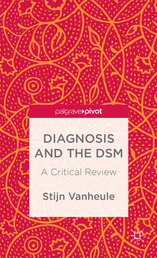
Foucault News

News and resources on French thinker Michel Foucault (1926-1984)

Viernes, N.
The Magistrate is the Muse: Law and Visual Economy in Bangkok
(2014) International Journal for the Semiotics of Law, 27 (1), pp. 27-46.

Abstract
Governmentality is a spatial formation negotiated within historically-constituted political landscapes. In Bangkok, this spatialization of power is manifested in the militarization of urban life and the protocols of security procedure, but also in anti-government protests and an increasingly politicized visual culture. The memory and meaning of the city’s streets exist as an overlooked legibility that challenges the visual strategies of government control. Monuments, travel routes, and other public sites of national recognition now compete in an extended urban arena of images, such as literature and cinema, which re-stage governmentality and the material contours of Thailand’s contemporary political disagreements outside of its institutional norms. I read this intersection between governing and image circulation through the development of a visual economy in Bangkok and depict how different communities-including a bureaucratized military and a populist political party, but also writers and filmmakers-intervene in its circulation. Each group zooms in on key spaces of the city in the attempt to speak to changing forms of governmentality.

Author Keywords
Apichatpong Weerasethakul; Bangkok; Foucault; Governmentality; Street politics

DOI: 10.1007/s11196-013-9318-9

Webb, P.T.
Policy problematization
(2014) International Journal of Qualitative Studies in Education, 27 (3), pp. 364-376.

Abstract
This article places Michel Foucault’s concept of problematization in relation to educational policy research. My goal is to examine a key assumption of policy related to “solving problems” through such technologies. I discuss the potential problematization has to alter conceptions of policy research; and, through this discussion, I provide a set of alternative pragmatics with which to conduct research for, and on, education policy.

Author Keywords
Foucault; policy; problematization

DOI: 10.1080/09518398.2012.762480

Philosophers DVD
Author(s): Moderator and commentator Fons Elders
Noam Chomsky and Michel Foucault
Sir Alfred Ayer and Arne Naess
Leszek Kolakowski and Henri Lefèbvre
Sir Karl Popper and Sir John Eccles

A series by Fons Elders

This DVD is available at a more reasonable price from Fons Elders’ site than from Icarus films.

Review by Brian Boling

In 1971, a Dutch initiative called the International Philosophers Project brought together the leading thinkers of the day for a series of one-on-one debates. The participants included intellectual superstars Alfred Ayer and Arne Naess, Karl Popper and John Eccles, Leszek Kolakowski and Henri Lefèbvre, and – most notably, in a now justifiably famous exchange – Noam Chomsky and Michel Foucault.

This two-disc set collects all four remarkable conversations, along with introductions and commentary by Dutch philosopher and writer Fons Elders. Elders moderated the original debates – hand-picking each of the participants after spending some time getting to know them. Now, looking back four decades later, he offers perspective and context, summarizing the arguments and highlighting the key moments of each debate.


DISC ONE (80 and 74 minutes)

Noam Chomsky and Michel Foucault  

The Chomsky-Foucault debate has become a much-studied classic. This DVD captures all the energy and passion of the two philosophers, as they discuss whether or not some form of universal human nature – an inherent ability to understand language and scientific concepts, for instance – exists, or whether our responses are purely socially and culturally conditioned.

Alfred Ayer and Arne Naess  

A lively debate between British empiricist Alfred Ayer, who champions a limited skepticism, and Norwegian philosopher Arne Naess, the founder of the deep ecology movement, whose philosophy embraces interconnectedness.


DISC TWO (80 and 77 minutes)

Karl Popper and John Eccles  

Historian of science Karl Popper and his close friend, Nobel-prize-winning neuroscientist John Eccles, discuss Popper’s famous criterion of falsifiability: the idea that a statement is only scientific if it could possibility be proved false, which he had articulated against the traditional positivist view of the scientific method.

Leszek Kolakowski and Henri Lefèbvre  

Polish philosopher Leszek Kolakowski and French thinker Henri Lefèbvre (both former Communist Party members) debate the ongoing significance of Marxism and the concept of alienation – while at the same time struggling to define what a future, post-capitalist society might hold.


Each of these conversations captures the intellectual and social ferment of the late 1960s and early 1970s, when dramatic social and economic transformation seemed imminent – and philosophical questions underpinned discussions about what form the new society would take. Though many of the questions under discussion are timeless, this social and political context gives them a particular sense of urgency.

f71

Vendredi 23 mai à 22h, dans le cadre de La Nuit des idées, Notre corps utopique, Théâtre National de Bordeaux Aquitaine (33)
Pour en savoir plus, visitez cette page ou cette page

Atelier Ă  la Maison d’ArrĂŞt de Fresnes
Du 8 au 25 avril, Corps tatouĂ©, corps utopique?, Atelier Ă  la Maison d’ArrĂŞt de Fresnes avec le SPIP 94 et le MAC/VAL

Le petit corps utopique
Après Notre corps utopique, et librement inspiré du même texte de Foucault,
le collectif F71 prépare un spectacle pour tous à partir de 6 ans, Le petit corps utopique
Création prévue en mars 2015

Du 5 mai au 3 juin 2014, rĂ©sidence de crĂ©ation Ă  l’Ă©cole Ferdinand Buisson de Mantes-la-Jolie (78) avec le Collectif 12
Pour en savoir plus, visitez cette page

Contact
Mélanie Autier, 06 22 13 06 82, production.collectiff71@gmail.com
Christelle Kongolo, 06 15 87 39 64, diffusion.collectiff71@gmail.com
Rejoignez-nous sur notre page facebook, ici
www.collectiff71.com

SĂ©minaire “Foucault: l’oeuvre continue”

Pontifical Catholic University (PUCRS)
Dept of Philosophy – C. Postal 1429
Porto Alegre, RS 90619-900 Brazil

ROFESSEURS: Dr. Norman Madarasz et Dr. Nythamar de Oliveira

CRÉDITS: 3.0 45 h ANNÉE/SEMESTRE: 2014/1
Mercredi 14:00 h – Salle 205 Bâtiment 40 (Fac d’Informatique) PUCRS

DESCRIPTION DU SÉMINAIRE

Dans les trente années depuis la mort de Michel Foucault, l’oeuvre de l’auteur des Mots et les Choses est sousmise à de divers découpage, montage, déconstruction, réfutation, relativisation et minoration, quand il ne s’agit pas de simples tentatives d’effacement. Pourtant, l’oeuvre continue de servir de modèles pour maintes orientations de pensée et de savoir. Son nominalisme externaliste met à défi la refonte des projets de fondation ontologique du penser ; son historicisme vient non pas tant à exposer la conscience et les énoncés du vrai comme autant d’effets d’un régime conceptual soumis à la finitude radicale, que attester de la difficulté à cerner l’énonciation inconsciente des catégories de la subjetivation ; et son recoupement de l’histoire de la philosophie écarte la pratique théorique entre une science du discours et une éthique positiviste de la division du vrai. Ces orientations font de l’oeuvre de Foucault un défi pour un dépassement de la philosophie par un discours post-humaniste encore en recherche de son nom, discours qui ne peut faire l’économie d’un rejet des propositions institutionnelles dont l’objectif est de neutraliser par absorption la puissance critique que la philosophie tient sur l’avenir de la science et de son application à la vie biotechnicisée. L’oeuvre appelle ainsi à une saisie continue.

OBJECTIFS:
Ce semestre, le Programa de Pós-Graduação em Filosofia de l’Université Catholique de Porto Alegre (PUCRS) a l’honneur de présenter le séminaire de 2e et 3e cycle en langue française dédiqué à l’oeuvre de Foucault, sous la direction des professeurs Nythamar de Oliveira et Norman Madarasz. L’objectif en est de reprendre rigoureusement et en détail la progression de l’oeuvre de Foucault en tant que projet expansif de recherche, depuis la critique des institutions de l’asile, de l’hôpital psychiatrique et de la clinique, du tout début de l’oeuvre, jusqu’aux prisons et la biopolitique, depuis l’analyse structurale des sciences humaines et une linguistique de l’inconscient jusqu’aux thèses sur la gouvernamentalité et la prévision d’une nouvelle subjectivité des plaisirs au-delà de la morale et de la culpabilité.

METHODOLOGIE:

Le format du cours aura le style de séminaire. Chaque professeur dirigera les séances en quinze à quinze jours. Les élèves seront encouragé(e)s à participer aux discussions et à faire des exposés de travail. Les exposés de travail devront suivre le format général du séminaire, pouvant être un compte rendu de lectures ou bien un article original. L’assistance régulière est une exigence pour suivre la progression de la discussion, aussi bien que pour participer à l’esprit collectif de recherché.

Reportage de GrandLille TV sur l’exposition Michel Foucault Ă  Lille 3. Mars 2014

clarisMichel Foucault – Freedom and Knowledge
Author(s): Edited by Fons Elders and Lionel Claris
Elders Special Productions BV, Amsterdam, The Netherlands. ISBN 978-90-805600-6-2 NUR 730

You can purchase this book as a paperback or an ebook. An extract can also be found on Lionel Claris’ academia.edu site and you can find a version of Lynne Huffer’s introduction via a link in this earlier post on Foucault news

Contents

1, Preface by Fons Elders

2. Introduction by Lynne Huffer,
What Could Be Otherwise

Notes Introduction

3. Fons Elders’ response letter to Lynne Huffer

4. Michel Foucault,
Freedom and Knowledge
A first-time published interview by Fons Elders, translated by Lionel Claris

5. Michel Foucault: Retrospective Commentaries
by Fons Elders

Part I –The Interview,
The Question of Paradise

Part II –The Debate:
Human Nature: Justice versus Power
Noam Chomsky and Michel Foucault

Part III –Michel Foucault – My Personal View

Notes
Index of Names
Index of Subjects
Biography

Here is a link again to the newly rediscovered 1971 Foucault interview on Dutch television referred to in this book.

pb Didier Deleule and François Guéry (2014) The Productive Body. Translated and introduced by Philip Barnard and Stephen Shapiro. London: Zero Books.

The Productive Body asks how the human body and its labor have been expropriated and re-engineered through successive stages of capitalism; and how capitalism’s transformation of the body is related to the rise of scientific psychology and social science disciplines complicit with modern regimes of control. In Discipline and Punish, Foucault cited Guéry and Deleule in order to link Marx’s diagnosis of capitalism with his own critique of power/knowledge. The Productive Body brings together Marxism and theories of the body-machine for the goal of political revolution.

Foucault’s remark in Discipline and Punish (chapter on Panopticism)

At a less general level, the technological mutations of the apparatus of production, the division of labour and the elaboration of the disciplinary techniques sustained an ensemble of very close relations (cf. Marx, Capital, vol. 1, chapter XIII and the very interesting analysis in Guéry and Deleule).

This is such a wonderful interview. Good to see it resurface.

stuartelden's avatarProgressive Geographies

I’d not seen this before – fifteen minutes of video in preparation for the Chomsky debate between Foucault and Fons Elders. Thanks to Sjoerd van Tuinen and Elena Loizidou for sharing this.

Update: Jeremy Crampton has more news on this here, including the link to the book of the interview transcript, which only seems to be available on Fons Elders’s own site.

Update 2: Aphelis has a lot more information on the debate itself here.

View original post

M. Alejandra Energici, José Antonio Román B., Claudio Ramos Z. y Sebastián Ibarra G., Solidaridad en la gubernamentalidad liberal avanzada: un análisis en piezas publicitarias, Polis, Revista Latinoamerica, 32, 2012

Further info

ResĂşmenes
El artículo presenta una reflexión sobre la manera en que en los últimos veinte años la promoción de un determinado tipo de solidaridad en Chile ha contribuido a la conformación de una gubernamentalidad liberal avanzada, necesaria para la instalación de un programa neoliberal. La reflexión se enmarca en los aportes teóricos de Michel Foucault y tiene por objeto empírico piezas de publicidad de promoción de la solidaridad emitidas en Chile entre los años 2009 y 2010, que han sido analizadas en el contexto del proyecto Fondecyt 1090534. Se presentan tres tipos de resultados: (a) se describen los sectores sociales que se construyen como agentes de la solidaridad, (b) se reflexiona sobre las prácticas solidarias más promovidas y (c) se indaga en la forma en que se interpela a los sujetos a ser solidarios.

Abstract
The article presents an analysis on the way in which during the last twenty years the promotion of a certain kind of solidarity in Chile has contributed to the formation of an advanced liberal governmentality, necessary for the installation of a neoliberal agenda. The reflection follows the theoretical contributions of Michel Foucault and focuses on the empirical analysis of ads that promote solidarity, issued in Chile between 2009 and 2010, in the context of the project FONDECYT 1090534. We present three types of results: (a) description of the social sectors that are constructed as agents of solidarity, (b) analysis on the most promoted solidarity practices and (c) investigation on the way it adresses the people in order to raise their solidarity.

Palabras claves :
solidarité, gouvernementalité libérale, publicité
Keywords :
solidarity, liberal governmentality, advertising
Palabras claves :
solidaridad, gubernamentalidad liberal, publicidad
Palavras chaves :
a solidariedade, governamentalidade liberal, a publicidade