Foucault News

News and resources on French thinker Michel Foucault (1926-1984)

Harcourt, Bernard E., Digital Security in the Expository Society: Spectacle, Surveillance, and Exhibition in the Neoliberal Age of Big Data (2014). Columbia Public Law Research Paper No. 14-404; APSA 2014 Annual Meeting Paper. Available at SSRN: http://ssrn.com/abstract=2455223 and http://papers.ssrn.com/sol3/papers.cfm?abstract_id=2455223##

Abstract:

In 1827, Nicolaus Heinrich Julius, a professor at the University of Berlin, identified an important architectural mutation in nineteenth-century society that reflected a deep disruption in our technologies of knowledge and a profound transformation in relations of power across society: Antiquity, Julius observed, had discovered the architectural form of the spectacle; but modern times had operated a fundamental shift from spectacle to surveillance. Michel Foucault would elaborate this insight in his 1973 Collège de France lectures on The Punitive Society, where he would declare: “[T]his is precisely what happens in the modern era: the reversal of the spectacle into surveillance…. We have here a completely different structure where men who are placed next to each other on a flat surface will be surveilled from above by someone who will become a kind of universal eye.”What should we make of those archetypes today? Do they help us better understand our neoliberal digital condition of data collection, mining, and profiling by corporate giants such as Google and Facebook, and the NSA? With neoliberalism and digitization — in the age of digital security — I suggest, we have gone beyond both spectacle and surveillance to a new form: one that is captured best by the idea of exposition or exhibition. Guy Debord spoke of “the society of the spectacle,” Foucault drew our attention instead to “the punitive society,” but it seems as if, today, we live in the expository society. This essay offers an architectural schema to better understand our contemporary distributions of power, one that focuses on the themed space of consumption. It then actualizes the metaphor by exploring one particular manifestation of a fully-digitized themed space, and asks how we have come to embrace and love these new forms of exhibition today.

Number of Pages in PDF File: 46

Keywords: Big Data, Digital Security, Spectacle, Surveillance, Exhibition, Expository Society, Foucault, Debord, Google, Facebook, NSA

working papers series

Neoliberalism and Biopolitics Working Group | Revisiting Foucault: The Biopolitics Lectures and Beyond
Hans Sluga, William and Trudy Ausfahl Professor of Philosophy, UC Berkeley & William Callison, Political Science,

Designated Emphasis in Critical Theory, UC Berkeley

17 September, 2014, 5:00 pm – 7:00 pm
3335 Dwinelle Hall, UC Berkeley

Further info

The opening session of the Neoliberalism and Biopolitics Working Group, “Revisiting Foucault: The Biopolitics Lectures and Beyond” will provide a space for discussion of the lasting insights, limitations, and potential applications of Foucault’s The Birth of Biopolitics Lectures at the Collège de France, 1978-79. Linking neoliberalism and biopolitics at both the historical and conceptual level, Foucault’s prescient lecture series lays the groundwork for the workshop’s concern with the contemporary management of populations through diverse practices of economization, privatization, and financialization. Potential topics of discussion include the differences between liberal and neoliberal political rationality; human capital and modes of neoliberal conduct; the specificity of neoliberal governmental techniques; and the difference between biopower and biopolitics. In preparation for the workshop, we will read the last section of The History of Sexuality and three lectures from The Birth of Biopolitics, digital copies of which will be available for workshop participants.

The Neoliberalism and Biopolitics Working Group and Conference is supported by the University of California Humanities Research Institute, organized by UC Berkeley graduate students William Callison (Political Science) and Zachary Manfredi (Rhetoric), and supervised by The Program in Critical Theory faculty Martin Jay (History) and Wendy Brown (Political Science).

To register for these sessions and receive readings contact critical_theory@berkeley.edu. All events are free and open to the public.

dmf's avatarsynthetic zerØ

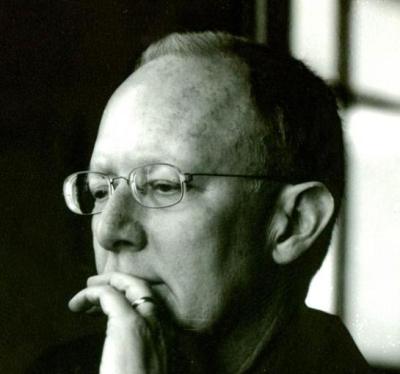
Paul Rabinow on Foucault & the Contemporary

rabinow

– the host is a bit lacking but Rabinow is probably the most important intellectual of our time…

Paul Rabinow is Professor of Anthropology at the University of California (Berkeley), Director of the Anthropology of the Contemporary Research Collaboratory (ARC), and former Director of Human Practices for the Synthetic Biology Engineering Research Center (SynBERC). He is perhaps most famous for his widely influential commentary and expertise on the French philosopher Michel Foucault. He was a close interlocutor of Michel Foucault, and has edited and interpreted Foucault’s work as well as ramifying it in new directions.

Rabinow is known for his development of an “anthropology of reason”. If anthropology is understood as being composed of anthropos + logos, then anthropology can be taken up as a practice of studying how the mutually productive relations of knowledge, thought, and care are given form within…

View original post 110 more words

PhD Scholarship Opportunity (Monash University, Australia and The University of Warwick, UK) Reinventing Philosophy as a Way of Life
further info
Faculty of Arts Faculty of Social Sciences Monash University Warwick University
Departments Philosophy Program (School of Philosophical, Historical and International Studies, Monash) Department of Philosophy, Warwick
Location Caulfield or Clayton campus Warwickshire campus
Supervisors Dr. Michael Ure (Monash) Professor Keith Ansell-Pearson (Warwick)
Remuneration Approximately $25,392 per annum full time rate (tax free stipend) for 3 years

The Opportunity

We are seeking an enthusiastic, highly motivated student to participate in the Australian Research Council funded Discovery Project ‘Reinventing Philosophy as a Way of Life’ DP140101981.

This project investigates the impact of classical and Hellenistic models of philosophy on early modern and modern European philosophy. The successful candidate will be expected to carry out independent research that complements this larger project in some way. Ideally, research proposals will focus on early modern or modern French philosophy’s reception and transformation of the classical and Hellenistic model of philosophy as a way of life (e.g. Montaigne to Foucault), but other topics that complement the project will also be considered. The candidate will also assist the principal researchers with English translations of Jean-Marie Guyau’s books. S/he will be located at two of the world’s leading philosophy departments. Monash University’s Philosophy department recently ranked in the top 30 philosophy departments worldwide (QS world university rankings by subject). The University of Warwick’s Philosophy Department is renowned for its research in modern European philosophy.

Candidate Requirements

The successful applicant must have (a) the equivalent of an Australian first class honours degree in philosophy (or cognate discipline); and (b) French language skills. The scholarship is open to Australian, UK and non-Australian students. Details of eligibility requirements to undertake a Monash PhD are available at: http://www.monash.edu/migr/apply/eligibility/phd/

To undertake a joint Monash-Warwick PhD applicants must also meet additional eligibility requirements. Details of these requirements are available at: http://www.monash.edu.au/about/world/warwick/study/jdp/

Prospective international applicants should note that the scholarship does not cover foreign-student tuition fees. Candidates will be required to meet Monash entry requirements which include English-language skills.

Remuneration

We offer a scholarship to the value of $25,392 per annum full-time rate (tax-free stipend)

Enquiries

For more details about the project please contact:

Dr Michael Ure School of Social Sciences Monash University VIC 3800 Australia

Michael.ure@monash.edu

Submit an Expression of Interest (EOI)

Please email the following to Dr Michael Ure and Professor Keith Ansell-Pearson by email: Michael.ure@monash.edu and K.J.Ansell-Pearson@warwick.ac.uk

  • full academic record and curriculum vitae
  • a brief statement on (i) why this project is suited to your background and interests, and (ii) your proposed research topic
  • contact details of two academic referees
  • indication of when you would be available to take up scholarship.

Closing date

Monday 15 September, 2014

Resisting Force and Discourse

Host: California State University, San Marcos

Date: Friday, September 26, 2014

Location: University Student Union, Ballroom

Keynote Speaker: TBA

Conference Website

The conference theme brings into critical light the way that bodies are marked and regulated by discursive practices and spaces, and institutional procedures. This operational force can take the form of juridical and normative practices.

Examples of juridical practices include but are not limited to current police protocols, immigration requirements, and sexuality-managing legislation. In their operation, these forces betray their impingement upon raced, gendered, and classed bodies. As such, the conference solicits papers that challenge neutral and objective neoliberal practices that ultimately regulate, disqualify, torque, and punish bodies at the margins of classification.

The conference theme further recognizes that the regulation of marginal bodies is not limited to institutional codes. Social norms are an essential disciplinary mechanism in the reproduction of the dominant order. Indeed, conformity to, or deviation from, norms designates which subjects are the proper recipients of accusation, disavowal, and injury. Denial of normative power can occur on multiple grounds including: sex work, living with HIV, body size, sexual orientation, and being gender-nonconforming. As such, the conference also invites papers that engage with the regulatory effects of normative power.

We highly encourage submissions from graduate students and advanced undergraduates for fifteen minute presentations. Academic disciplines and methodologies across the humanities and social sciences may be used. Research questions may include, but are not limited to:

  • How is the policing and norming of marginalized bodies represented in literature and film? Or, newer cultural mediums, such as MMORGs and internet spaces?
  • How do state regimes of punishment similarly besiege parolees and racial minorities?
  • Does the U.S immigration system constitute a branch of biopolitical administration?
  • What are the modern norms of surveillance that may be going unnoticed?
  • How is the human body a political site (i.e., hunger strikes, self-branding, gender bending, trans politics)?
  • What is the function of the citizen “Other”?
  • Do social norms challenge the viability of HIV+ persons as subjects proper, leaving only a dangerous corporality?
  • Which social norms are challenged through the undocuqueer identity marker and movement?
  • Do all white subjects possess normative power?
  • How do queer subjects challenge dominant procedures and norms through queer world-making practices? How is this portrayed in popular media, activism, etc.?
  • Where do we find alternative networks, spaces, and autonomous zones? How are they constituted (i.e., spaces of reprieve and crisis heterotopias)?
  • How do juridical and normative systems produce catastrophic violence that no one seems responsible for?
  • Finally, critical theory and psychoanalytic approaches to the conference theme are welcome.

 Submissions: Please submit a 250 word abstract to foucault.madness@gmail.com by August 15, 2014. In the email body include your name, institutional affiliation, and email address.

For any questions about the conference, or our bi-monthly reading group, please contact us at foucault.madness@gmail.com.

rsjeffrey's avatarRobin Jeffrey

“In every generation a slayer is born. One girl in all the world, the Chosen One. She alone will stand against the vampires, the demons and the forces of darkness. She is the Slayer” (Buffy).  For more than seven seasons, fans of the television show Buffy the Vampire Slayer tuned in weekly and heard this prophecy of the Slayer. The knowledge of being the Slayer and the power that comes with that title changed the entire course of Buffy’s life, shaping her and those around her, including her younger sister, Dawn.

Buffy (top right) and Dawn (bottom left) Buffy (top right) and Dawn (bottom left)

In the final season of the show, the audience learns that there are hundreds of girls, scattered across the globe that are all potential slayers. Anyone of these girls could be the next Slayer, not yet imbued with the same level of power as Buffy, but still possessing instincts…

View original post 989 more words

stuartelden's avatarProgressive Geographies

Foucault’s major works – his sole-authored books, plus some articles – will appear in a two-volume collection in 2015 as a prestigious Pléiade edition. Thanks to Colin Gordon for alerting me to the news. Frédéric Gros is interviewed about this here (in French). Among other things the interview says that the final Collège de France course, Théories et institutions pénales (1971-1972), is due out in 2015, and that, in common with other volumes, the Pléiade volumes will be a critical edition.

View original post

Hear Michel Foucault’s Lecture “The Culture of the Self,” Presented in English at UC Berkeley (1983), Open Culture, August 6th, 2014

Michel Foucault’s time in the United States in the last years of his life, particularly his time as a lecturer at UC Berkeley, proved to be extraordinarily productive in the development of his theoretical understanding of what he saw as the central question facing the contemporary West: the question of the self. In his 1983 Berkeley lectures in English on “The Culture of the Self,” Foucault stated and restated the question in a variety of ways—“What are we in our actuality?,” “What are we today?”—and his investigations amount to “an alternative to the traditional philosophical questions: What is the world? What is man? What is truth? What is knowledge? How can we know something? And so on.” So write the editors of the posthumously published 1988 essay collection Technologies of the Self, titled after a lecture Foucault delivered at the University of Vermont in 1982.

Read more

Jacobs, F., Claringbould, I., Knoppers, A.
Becoming a ‘good coach’
(2014) Sport, Education and Society, . Article in Press.

Abstract
The purpose of this paper was to gain insight into how coaches problematized their coaching practices and the process in which they engaged to become what they perceived to be better coaches using a course based on critical reflective practice. We assumed that constant critical self-reflection would enable coaches to move closer to their individual idea of a ‘good coach.’ Scholars and coaches collaborated to develop course content. The course was built on principles of rational-emotive education. We drew on Foucault’s conceptualization of self-constitution or modes of subjectivation and confessional practice and Knaus’ approach to teaching for our analytical framework. Thirty-five coaches participated in this study. The data consisted of semistructured interviews, field notes, open-ended questionnaires and focus group. The results are presented per mode of change or transformation. We explored how coaches wanted to transform their coaching practice (ethical substance), how they defined a good coach (mode of subjection), how they worked on change (ethical work) and how they transformed themselves (telos). To gain further insight into this process, we also examined narratives of three coaches as they described why and how they changed. The practice of critical reflection seemed to meet the needs of the coaches involved in the study. They used it to continually examine their behavior and their normalized taken-for-granted beliefs and to transform themselves in the direction of their idea of a ‘good coach.’ Ontological reflection was seen as a tool and a process that requires continual practice.

Author Keywords
Coach education; Evaluation; Good coach; Reflection; Transformation

DOI: 10.1080/13573322.2014.927756

Chloë Taylor, Birth of the Suicidal Subject: Nelly Arcan, Michel Foucault, and Voluntary Death, Culture, Theory and Critique, Published online: 23 Jul 2014
https://doi.org/10.1080/14735784.2014.937820

Abstract
Michel Foucault argues that it is not sex but death that is the true taboo in the modern, biopolitical era. The result is that regular death has been privatised and institutionalised, wars are waged in the name of life, capital punishment has become a scandal, and suicide has become a problem for sociological and psychiatric analysis rather than law. In contrast to the dominant view, Foucault portrays suicide not as a mark of pathology but as a form of resistance (tragic or pleasurable) to disciplinary power, and argues for an aestheticisation of voluntary death as part of a beautiful life. Through a reading of the writings of Québecoise author Nelly Arcan, this essay presents but also critiques and expands upon Foucault’s accounts of suicide, exploring the thesis that the pathological model of suicide produces the subjects that it intends to treat.