Foucault News

News and resources on French thinker Michel Foucault (1926-1984)

Disney, T.
Complex spaces of orphan care – a Russian therapeutic children’s community
(2015) Children’s Geographies, 13 (1), pp. 30-43.

DOI: 10.1080/14733285.2013.827874

Abstract

Institutions of orphan care are immensely complex spaces imbued with social and cultural norms, and can exhibit intricate power relations and particularly severe examples of surveillance. While there have been numerous excellent quantitative studies of these institutions, they reveal little of the complexity and heterogeneity of the spaces, and there remains a need for more qualitative and particularly ethnographic studies of spaces of orphan care to reveal their nuances. Drawing upon the author’s reflections on a highly unusual space of orphan care, this article makes two major contributions to Children’s Geographies: (1) it employs a sorely neglected aspect of Foucault’s work in Children’s Geographies, Mettray, in analysing surveillance and discipline in an institution providing care to orphaned children and (2) It highlights the heterogeneity of these spaces and provides an example of best practice in spaces of orphan care.

Author Keywords
care; Children’s Geographies; Foucault; Mettray; orphan; Russia

Carey, J.L.W.
Taking Responsibility for Cloning: Discourses of Care and Knowledge in Biotechnological Approaches to Nonhuman Life
(2015) Journal of Agricultural and Environmental Ethics, 11 p. Article in Press.

DOI: 10.1007/s10806-015-9544-0

Abstract
This article examines the practice of animal cloning in relation to discourses of care and responsibility, in particular a common cultural interpretation of care theorized by Michel Foucault. This interpretation figures care as a “pastoral” relation premised in essential differences between carers and objects of care, and its interspecies implications are increasingly drawing the attention of theorists in animal studies. This article argues that, perhaps despite appearances, animal welfare in the form of pastoral care and abstract conceptualizations of animals that are dominant in discourses of animal biotechnology are not mutually exclusive, but rather in practice may be operating in conjunction with each other, discursively working together to naturalize ethics of biotechnology and animal welfare that reinforce rather than question human dominance and superiority. Specifically, mapping the normative framework of pastoral care onto the existing scientific orientation to acquiring knowledge of animal bodies produces a definition of care that is presumed to be both finite and perfectible. Ultimately, critical analysis of biotechnological manifestations of care and responsibility enables both a theorization of the industry’s performance of responsibility independently of its care-related claims about its own practices, and the elucidation of an alternative framework for assessing interspecies ethics that maintains a critical distance from the supposed “naturalness” or “unnaturalness” of interspecies relationships such as cloning. © 2015 Springer Science+Business Media Dordrecht

Author Keywords
Animal ethics; Biopolitics; Biotechnology; Cloning; Ethics of care; Foucault

Bullen, J.
Governing Homelessness: The Discursive and Institutional Construction of Homelessness in Australia
(2015) Housing, Theory and Society, 22 p. Article in Press.

DOI: 10.1080/14036096.2015.1024886

Abstract
This paper analyses changes in the conceptualization of “homelessness” in Australian policies, programmes and services from the 1970s to 2006. Research and commentary confirm a shift away from an understanding of homelessness in terms of “structural”, social and economic factors to an understanding in terms of “individual” issues. Research reflects this dichotomy, but attempts to reconcile the two explanations have failed in practice. Using Foucault’s work on governmentality, historical official statements and in-depth interviews, I show how changing policies and programmes, involving an extension and reconfiguration of political power beyond the state, had a constructive role in shaping “homelessness”. This “welfare reform” characterized homelessness as dependency, and programmes increasingly focussed on producing a managed form of self-reliance, shifting the conceptualization of homelessness towards individual explanations.

Wrench, A., Garrett, R.
Gender encounters: becoming teachers of physical education
(2015) Sport, Education and Society, 17 p. Article in Press.

DOI: 10.1080/13573322.2015.1032922

Abstract
Pre-service teachers of physical education (PE) bring understandings about gender and bodies to their university studies. These understandings are partially informed by biographies and experiences and bear potential to mediate learning and processes of becoming teachers. In this paper we explore technologies of power/knowledge and technologies of self that inform understandings of gender and the constitution of PE teacher subjectivities. Data were drawn from semi-structured interviews conducted with pre-service teachers studying at an Australian university. Foucault’s theoretical perspectives around the constitution of subjects were drawn on to analyse data. Findings reveal that discursive practices frame particular ‘truths’ around gender and, hence, possibilities for being teachers of PE. Discourses of sport were significant in establishing a male norm for bodies and subjectivities. This was problematic for female participants who also turned to discourses of nurturing in constituting their subjectivities. Implications are raised for PE teacher educators with regard to disrupting hegemonic discourses as means for developing pedagogies for greater justice.

Author Keywords
Foucault; Gender; Pre-service teachers of physical education; Subjectivities; Technologies of self

Ailon, G.
From superstars to devils: The ethical discourse on managerial figures involved in a corporate scandal
(2015) Organization, 22 (1), pp. 78-99.

DOI: 10.1177/1350508413501937

Abstract
This article draws upon a growing body of Foucauldian-inspired literature on business ethics. Looking at the media as a prime site of dynamic discursive production in contemporary times, it offers an analysis of the underlying moral sensitivities and ethical frameworks characteristic of reports about the two top managerial figures involved in the Enron scandal: Jeffrey Skilling and Kenneth L. Lay. Analysing Forbes and BusinessWeek articles, the article examines the sudden appearance of these managers as a heightened moral threat, asking what constellations of knowledge and meaning were expressed through the demonization of these once idealized managerial superstars. It shows that while speaking in the name of ethics, the examined discourse also undermines ethics in that it promulgates a largely paradoxical and ethically incapacitating concept of self and logic of action.

Author Keywords
business ethics; discourse; Enron; Foucault; Lay; self; Skilling

Rencontre doctorale du Centre Michel Foucault

14/15/16 octobre 2015. IMEC. Caen

L’Association pour le Centre Michel Foucault propose pour la sixième année une école doctorale visant à réunir les doctorants travaillant sur, avec et autour de la pensée de Michel Foucault. L’objectif est comme les années précédentes de mettre en relation, le plus agréablement possible et de manière assez informelle, les jeunes chercheurs afin de constituer un réseau de travail national et international, et de leur donner l’occasion de présenter leurs travaux.

Cette rencontre aura lieu le 14, 15 et 16 octobre 2015 à l’Abbaye d’Ardenne à Caen (avec un départ de Paris le mercredi 14 octobre en milieu de journée et un retour le vendredi 16 octobre en fin de journée). Les frais de séjour sur place et les billets de train à partir de Paris (Paris-Caen-Paris) seront offerts aux intervenants par l’Association pour le Centre Michel Foucault.

Pour que les échanges puissent être les plus féconds possibles – et compte tenu des capacités d’accueil de l’Abbaye – nous limitons le nombre de participants, ce qui impliquera nécessairement un choix de notre part. Les doctorants ayant participé les années passées aux rencontres pourront décider d’y assister, mais la priorité sera donnée aux nouveaux intervenants et aux doctorants en 2ème et 3ème année de thèse.

Les propositions d’intervention (une page maximum), portant soit sur une question particulière du travail de thèse, soit sur un problème méthodologique précis, devront nous être envoyées, avec un CV (indiquant obligatoirement l’année et le titre de la thèse, le nom du directeur, de l’université et de l’ED de rattachement) avant le 30 juin 2015. En fonction des demandes, nous établirons et diffuserons un programme après le 15 juillet.

Ces rencontres doctorales sont ouvertes à tous les étudiant(e)s sans distinction de nationalité, mais la langue de travail sera le français.

N’hésitez pas à nous contacter pour toute question. Très cordialement,
L’Association pour le Centre Michel Foucault

Contacts : Judith Revel : jrevel@u-paris10.fr ; Arianna Sforzini : arianna.sforzini@univ-paris-est.fr

The “International Congress of Critical Applied Linguistics” will take place in Brasília, Brazil, at the University of Brasília, from Monday, October 19th, 2015, to Wednesday, October 21st, 2015. The event is organized by research groups from the University of Brasília and the State University of Londrina.

Contributions on the following themes are welcome: (i) Language and Politics; (ii) Language and Ethics; (iii) Language and Identity; (iv) Language and Agency; (v) Language and Practice(s); (vi) Language, Epistemology, and Ontology; (vii) Language and Discourse; and (viii) Language and Structure.

Presentation proposals are due June 30th, 2015, and should be 300 to 350 words long, written in Times New Roman 11, in single line spacing; title in upper case letters, and subtitle in lower case. The author’s last name should also be in capitals.

Participation is encouraged for both undergraduate and graduate students, university professors and researchers, as well as school teachers. Conference fees are as follows for the 2nd tier, which ends on June 30th: 80R$ – Undergraduate students; 150R$ – Graduate students; 200R$ – University professors and researchers. The event is free for state school teachers. Payment procedures, as well as prices for the upcoming tiers, can be found here.

The conference will include thematic presentations, poster sessions, round tables, and plenary lectures by Alistair Pennycook (University of Technology, Sydney, Australia), Bill Cope and Mary Kalantzis (University of Illinois, USA), Bonny Norton (University of British Columbia, Canada) and Kanavilil Rajagopalan (University of Campinas, Brazil).

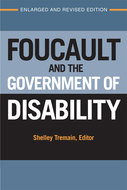
tremainShelley Tremain, Editor, Foucault and the Government of Disability, University of Michigan, 2015

Enlarged and Revised Edition
An up-to-date edition of a foundational collection

Foucault and the Government of Disability considers the continued relevance of Foucault to disability studies, as well as the growing significance of disability studies to understandings of Foucault. A decade ago, this international collection provocatively responded to Foucault’s call to question what is regarded as natural, inevitable, ethical, and liberating. The book’s contributors draw on Foucault to scrutinize a range of widely endorsed practices and ideas surrounding disability, including rehabilitation, community care, impairment, normality and abnormality, inclusion, prevention, accommodation, and special education. In this revised and expanded edition, four new essays extend and elaborate the lines of inquiry by problematizing (to use Foucault’s term) the epistemological, political, and ethical character of the supercrip, the racialized war on autism, the performativity of intellectual disability, and the potent mixture of neoliberalism and biopolitics in the context of physician-assisted suicide.

“A beautiful exploration of how Foucault’s analytics of power and genealogies of discursive knowledges can open up new avenues for thinking critically about phenomena that many of us take to be inevitable and thus new ways of resisting and possibly at times redirecting the forces that shape our lives. Every scholar, every person with an interest in Foucault or in political theory generally, needs to read this book.”

—Ladelle McWhorter, University of Richmond

“[A]n important, prescient, and necessary contribution…a kind of litmus test for the efficacy of Foucault’s concepts in the study of disability, concepts that lead to a refusal of the biological essentialism implied in the disability/impairment binary.”
—Foucault Studies

“Tremain has done an exceptional job at organizing and procuring important, rigorously argued, and entertaining essays…. This book should be a mandatory read for anyone interested in contemporary philosophical debates surrounding the experience of disability.”
—Essays in Philosophy

Shelley Tremain holds a Ph.D. in philosophy from York University (Canada), lectures on Foucault at the Ontario Institute of Studies in Education of the University of Toronto, and has published widely on philosophy of disability, Foucault, feminist philosophy, and bioethics.

L’Essai et la revue du jour
par Jacques Munier

France Culture, 9 June 2015
Audio

Michel Foucault : Théories et institutions pénales. Cours au Collège de France 1971-1972 (EHESS/Gallimard/Seuil)

« C’est un document exceptionnel » préviennent les éditeurs François Ewald et Bernard E. Harcourt dans le texte qu’ils consacrent à la Situation du cours, à la fois dans l’époque – l’immédiat après mai 68 et l’émergence de « nouveaux mouvements sociaux – mais aussi dans le parcours intellectuel de Foucault, dont c’est le deuxième cours prononcé au Collège de France. On voit dans ces treize leçons prendre forme la méthode généalogique qui sera sa « marque de fabrique », ainsi que sa théorie du pouvoir, saisi à travers la diversité de ses applications concrètes (police, justice, prison, folie, médecine, sexualité etc.) Il s’agit en l’occurrence de montrer la naissance au XVIIe siècle absolutiste de l’appareil répressif moderne et de l’État judiciaire à partir de l’analyse minutieuse d’une opération de « justice armée » destinée à mettre fin à la révolte antifiscale des Nu-pieds en Normandie. Mais l’actualité s’insinue dans l’histoire, comme toujours chez Foucault, et d’abord de la manière la plus directe. En cette fin d’année 1971 la répression est à l’ordre du jour, en particulier contre les militants de la « Gauche prolétarienne » emprisonnés. La présence policière reste très forte au Quartier Latin et lorsque Foucault commence ses cours il faut encore franchir plusieurs cordons de CRS pour entrer au Collège de France. Dès l’ouverture il pose la question de « la raison d’être de ce cours ». Réponse : « il suffit d’ouvrir les yeux »…

On le savait très engagé dans ces années 1971-72, notamment au sein du GIP, le « Groupe d’informations sur les prisons » et certains en ont déduit que cette activité militante avait fait passer au second plan le travail de la pensée. On voit avec ces cours qu’il n’en était rien, même si Surveiller et punir ne paraîtra que quatre ans plus tard. C’est même, insistent les éditeurs, « une des périodes les plus riches, les plus innovantes, sans doute les plus intenses » de sa vie. On assiste en effet dans ces leçons à la mise en œuvre de l’entreprise généalogique, d’inspiration nietzschéenne, comme méthode d’investigation philosophique. Dans le cours de 1975, Il faut défendre la société, il la définit ainsi : « Appelons, si vous voulez, généalogie, le couplage des connaissances érudites et des mémoires locales, couplage qui permet la constitution d’un savoir historique des luttes et l’utilisation de ce savoir dans les tactiques actuelles. » Immédiatement après Théories et institutions pénales, dans le cours de l’année suivante sur La société punitive, il élargit la focale à l’ensemble des sociétés à économie capitaliste, brassant un matériel historique jusque-là inédit concernant l’économie politique classique, les Quakers et « Dissenters » anglais, leur philanthropie, leur conception du pénitentiaire dans le pénal et de la moralisation du temps ouvrier.

Dans son cours précédent, le premier au Collège de France, sous l’intitulé La volonté de savoir, il était revenu aux institutions grecques de la justice (le serment, la juste mesure, la loi, les rituels de purification). La mesure, en particulier, y était décrite comme une forme de « pouvoir-savoir ». Ici, c’est l’enquête qui devient la forme judiciaire de référence, et le passage de la pratique accusatoire à la pratique inquisitoire, avec ce qu’elle emprunte à l’administration carolingienne, mais surtout au modèle de gestion et de contrôle ecclésiastique. On voit se déployer la remarquable cohérence de la démarche. Foucault embrasse d’un même regard à partir de positions dispersées dans le temps, la constitution progressive de l’État moderne, la fin du monde féodal qui conduira les seigneurs à abandonner leur privilège de justice à une instance royale centralisée, le moment où punir devient « enfermer », où l’on passe dans l’économie de la justice d’un prélèvement sur les biens, d’un supplice public et spectaculaire, à une ségrégation des hommes, par l’élimination – enrôlement, enfermement, travaux forcés – des chômeurs, vagabonds, brigands « qui servaient de cadre – je cite – de fer de lance, d’agents de communication des révoltes ». Et il ne lui suffit pas de voir dans la répression – orchestrée par Richelieu – d’une émeute antifiscale la naissance de l’État moderne, mais d’y lire le mouvement social dont il est contemporain comme devant s’inscrire dans cette réalité du « pouvoir ».

« Toutes les grandes phases d’évolution du système pénal sont des façons de répondre à des formes de luttes populaires » conclut Foucault, qui s’emploie à montrer dans ce cours que le droit pénal n’est pas une réaction à la délinquance ou à la criminalité, lesquelles sont plutôt produites par lui comme effet d’une lutte sociale.

Johansen, M.B.
Fall of the public teacher – discourse of intimacy and the teaching profession in Denmark
(2014) Research Papers in Education, 23 p. Article in Press.

DOI: 10.1080/02671522.2014.989176

Abstract
This article reports on a case study conducted in a Danish municipality with 22 teachers as participants, in the context of a project focused on well-being and key educational competencies. The final aim was that of discovering how their ideal of the good teacher was verbalised. What is it that they thematise? How are thematisations created and maintained? The study is theoretically based on Richard Sennett’s notions on the private–public divide and Michel Foucault’s definitions of power and discourse. It focuses on the manners in which Danish teachers articulate a discourse in which words and phrases otherwise seen in connection with intimate relationships (close friends, sweethearts, parents and children) are prevalent. This shall be defined as a discourse of intimacy, the assumption being that this discourse has become the predominant way in which to talk about the good teacher. Furthermore, the article provides (a) a discussion about the ontology of intimacy; (b) a threefold typology of intimacy, namely confessional, emotional and relational, a categorisation that stems from the teachers’ statements and exchanges when discussing good performance; and (c) a reflection on the concept of mode of intimacy, used in this research to refer to the manner in which teachers put to practice their idea of the good teacher, which is mainly through praise and recognition.

Author Keywords
case study; discourse analysis; forms of intimacy; schoolteachers