Given the ongoing popularity of this concept, I have added a new category on neoliberalism to Foucault News.

Given the ongoing popularity of this concept, I have added a new category on neoliberalism to Foucault News.
Niesche, R.
Governmentality and My School: School Principals in Societies of Control
(2015) Educational Philosophy and Theory, 47 (2), pp. 133-145.
DOI: 10.1080/00131857.2013.793925
Abstract
The introduction of new accountabilities and techniques of government for the purposes of educational reform have created new complexities and tensions for school leadership. Policies such as the publishing of league tables in the UK, high stakes testing in the US and the introduction of the My School website in Australia are particularly significant for school principals. In this article I appeal to the work of Foucault and Deleuze to provide an alternate approach to understanding how principals are constituted as subjects through a range of practices and discourses associated with the introduction of the My School website. I specifically draw upon Foucault’s notion of governmentality and Deleuze’s notion of societies of control to provoke new lines of thought into these government practices. I argue that it is through the performative in the education system that school principals are becoming perpetually assessable subjects.
Author Keywords
Deleuze; Foucault; governmentality; school principals
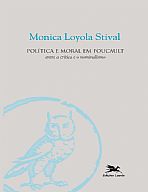 Monica Loyola STIVAL, Política e moral em Foucault: entre a crítica e o nominalismo, Edições Loyola, 2015
Sinopse
A polêmica recente em torno da posição de Foucault sobre o liberalismo testemunha a dificuldade em analisar a dimensão política de seu trabalho. Este livro estabelece uma leitura crítica da questão política, marcando posição nesse debate.
No entanto, ele não se ocupa apenas disso. A autora se debruça, mais amplamente, sobre os pressupostos metodológicos e epistemológicos de Foucault. Ao enfatizar determinado impasse entre método e pressuposto, o livro lança luz sobre os limites do sujeito moral moderno e da política – ou da não política – que emergem da monumental obra de Michel Foucault.
The manuscript of Foucault’s Last Decade, as I’ve said, was almost complete. It is now with the press for review. In the last couple of weeks, while in New York, I’ve chased down a few final references; read the very valuable Régards critiques volumes on the History of Sexuality volumes (volume I and volume II and III); re-read Philippe Chevallier’s Michel Foucault et le christianisme (also see Colin Gordon on the book here); followed up lots of things; and tidied up the text.
I also had three days in the Bancroft Library at University of California, Berkeley. I’ve already shared some detailed day-to-day reports (here, here and here) and won’t repeat things here except to note again Alain Beaulieu’s useful guide to “The Foucault Archives at Berkeley”, in Foucault Studies in 2010. I found it invaluable to doing this work and would recommend…
View original post 1,345 more words
Petition in French and English
See petition website for other languages and to add your signature
Yes to the institution of the “Michel Foucault and the Philosophy of the Present Chair” at PUC São Paulo
Both São Paulo’s Cardinal, Odilo Scherer, and the Bishops of his archdiocese, recently announced that they do not authorize the creation of what had already been announced 4 years ago: the institution of the “Michel Foucault and the Philosophy of the Present Chair” at the Pontifical Catholic University of São Paulo (PUC-SP). This decision not only profoundly surprised all those who, coming from many countries, had from the very beginning embraced this initiative, but also all those who, within PUC-SP itself, had worked vigorously to guarantee the institution of this Chair bearing Michel Foucault’s name.
During the 7th International Michel Foucault Conference, held in October 2011, and which brought together dozens of specialists and interested researchers in Foucault’s oeuvre, a letter was signed supporting the initiative. The list of signees included members of the Collège International de Philosophie (Paris), of the University of Paris VIII, the University of Bordeaux Montaigne, the New University of Lisbon, Madrid’s University Complutense, Paris’ École Normal Supérieure, the Universidad San Martin in Argentina, the Universidad de los Andes in Venezuela and the University of Valparaiso in Chile. The initiative also received support from the General Consulate of France in São Paulo. In 2011, PUC-SP received a copy of the audio archives of Foucault’s classes donated by the Collège de France, in what made PUC-SP the only institution outside France allowed to grant them public access. Having in view the institution of the Michel Foucault and the Philosophy of the Present Chair at PUC-SP, what followed were study sessions, seminars and debates on specific literature as preparatory work for this eagerly anticipated event, all of which generated high expectations and a growing enthusiasm.
The decision to reject the institution of the Michel Foucault and the Philosophy of the Present Chair de-authorizes the scientific, philosophical and pedagogical committees which approved the initiative. ‘Academic freedom’, which stands as a basic fundament of university life, was breached. However, if it is well established that the interest in Foucault’s work goes way beyond religious beliefs, it is no less evident that many Catholic thinkers wrote about and inspired themselves in Foucault’s work. This latter fact – to which we could also add the many studies presently considering Foucault’s contribution to an understanding of Christianity – is ever so more highlighted when Dominicans from the Library du Saulchoir welcomed the archives during the period in which these archives faced the risk of being sent abroad, in what allowed them a safe haven in the very place Foucault worked for hours on end.
This Library, which is irrefutably heir to the Catholic tradition and not for that reason less open to Parisian intellectuals or intellectuals passing through Paris, regularly welcomes presentations and discussions covering diverse fields. It is in light of this plurality that many contemporary studies considering Foucault’s contribution to the study of the origins of Christianity and its rooting in ancient culture, in particular, in Stoic philosophy, have been conducted in the Library. What we find here is an example of historical lucidity of the sort evidenced by the work undertaken by the historian Peter Brown, and upon which students and professors focusing on the first centuries of our era have taken full advantage of and will continue to do so. It is also worth highlighting that, after The Order of Things, Foucault’s own work was strongly inspired by a principle of compassion and dedicated to the question of ‘governmentality’, a question which would transform our way of understanding human relations and their intimate connection with the law.
All these facts already define an excess of reasons justifying our perplexity when faced with the Council of Bishops’ decision. This Chair, which honors Michel Foucault, is not simply dedicated to the readership of his texts (which, today, are already impossible to ignore as part of classical culture): it is also turned towards to the analysis – which is not exclusive to his oeuvre – of the questions posed today by both thought itself and the demands of civil life. The refusal of such a Chair, a Chair which, carrying Michel Foucault’s name, is by nature open to actuality, radically contradicts the deontology of University life as well as its most basic fundament: the exercise of free thought. As such, it can only be the University itself which stands as the first victim of this decision: beyond professors, students and researchers, it is Brazilian public opinion which understands itself to be attacked by such a decision. And we have been witnesses of these protests.
All, however, hope that the Council of Bishops will renounce what evidently stands as a form of censorship, revoking its rejection. The Academic Board at the PUC-SP has appealed the decision. From now onwards, it is up to the international community to show that it supports the institution of the Michel Foucault and the Philosophy of the Present Chair at the Pontifical Catholic University of São Paulo. Such is what the signees of the letter supporting this initiative did in October 2011, a letter which, for the very reason of defending the institution of a Chair bearing Michel Foucault’s name, is itself already an invitation to all those committed to exercise of free thought to join them.
Pétition
Oui à la Chaire « Michel Foucault et la philosophie du présent » à l’Université catholique de São Paulo
Le Cardinal de São Paulo, Odilo Scherer, et les évêques de l’Archidiocèse de la ville viennent d’annoncer qu’ils n’autorisent pas la création, prévue depuis quatre ans, de la Chaire « Michel Foucault et la philosophie du présent » à l’Université catholique de São Paulo (PUC/SP). Cette décision surprend profondément toutes celles et tous ceux, venant de nombreux pays, qui ont soutenu depuis le départ cette création, mais aussi toutes celles et tous ceux qui, dans l’Université catholique de São Paulo, ont travaillé vigoureusement en ce sens.
Lors du 7e Colloque international Michel Foucault d’octobre 2011, qui avait réuni à la PUC/SP plusieurs dizaines de spécialistes de l’œuvre de ce penseur et des centaines d’auditeurs, une lettre avait été signée en soutien à cette initiative. La liste des signataires comprenait des membres du Collège international de philosophie (Paris), de l’Université Paris 8, de l’Université Bordeaux Montaigne, de l’Université nouvelle de Lisbonne, de l’Université Complutense de Madrid, de l’École normale supérieure de Paris, de l’Université San Martin en Argentine, de l’Université de los Andes au Venezuela et de l’Université de Valparaiso. L’initiative avait reçu également le soutien actif du Consulat général de France à São Paulo. La même année, la PUC/SP avait obtenu une copie des archives sonores des cours de Foucault fournie par le Collège de France, devenant ainsi la seule institution hors de France à pouvoir y donner un accès au public. Des séances d’études, des séminaires, des débats sur des livres ont ensuite été organisés comme travail préparatoire pour la création de la Chaire, suscitant des attentes et un enthousiasme grandissants.
Le refus émis désormais désavoue les instances scientifiques, philosophiques et pédagogiques de la PUC/SP qui ont approuvé l’initiative. La « liberté académique », au fondement de la vie universitaire, est ainsi bafouée. Pourtant, on sait que l’intérêt porté dans le monde entier à l’œuvre de Foucault va bien au-delà des croyances religieuses et que maints penseurs catholiques ont écrit sur elle et s’en ont inspirés. Ainsi, à Paris, quand il a été question que les archives Foucault partent à l’étranger, les dominicains de la Bibliothèque du Saulchoir ont hébergé ces archives, permettant qu’elles restent en France à l’endroit où Foucault avait l’habitude travailler des heures entières. Cette bibliothèque, relevant de la tradition catholique la plus incontestable et non moins largement ouverte à tous les intellectuels parisiens ou de passage à Paris, accueille régulièrement des présentations et discussions de livres. Par ailleurs, de nombreuses études actuelles portent sur l’apport de Foucault aux études sur le premier christianisme et son enracinement dans la culture antique, particulièrement stoïcienne. C’est là une lucidité historique, complémentaire des études de l’historien anglo-saxon Peter Brown, de quoi tous les étudiants et enseignants des premiers siècles de notre ère ont profité et profiteront encore. On note également que l’œuvre de Foucault après Les Mots et les choses est fortement inspirée par un principe de compassion et dédiée à la gouvernementalité, une question qui transformerait la modalité des relations humaines et leur intime connexion avec le droit. Ce sont des raisons de plus pour exprimer notre surprise face à cette décision.
Cette chaire, portant le nom de Michel Foucault et lui rendant un légitime hommage n’est pas dédiée à la lecture de ses écrits – qui sont maintenant partie de la culture classique. Elle se dit dans son intitulé explicitement tournée (sur l’impulsion non exclusive de ses travaux) à une libre analyse, information et débat des questions de philosophie et de vie civile contemporaines. Le refus d’une telle chaire, ouverte sur l’actualité, contredit à la déontologie universitaire autant qu’à son fondement. L’Université en serait la première victime. Au-delà des enseignants, étudiants et chercheurs, l’opinion publique brésilienne s’en est ému. Nous témoignons de sa protestation. Cependant, tous gardent l’espoir que le Conseil des évêques renoncera à exercer cette forme de censure et reviendra finalement sur son refus. La direction académique de la PUC/SP a fait appel de la décision. Désormais, c’est à la communauté internationale de montrer, qu’elle aussi, soutient la création de la Chaire « Michel Foucault et la philosophie du présent ». C’est ce que faisaient déjà les signataires de la lettre de soutien d’octobre 2011, qui invitaient toutes celles et ceux qui restent attachés au libre exercice de la pensée à se joindre à eux.
Golob, M.I., Giles, A.R.
Multiculturalism, neoliberalism and immigrant minorities’ involvement in the formation and operation of leisure-oriented ventures
(2015) Leisure Studies, 34 (1), pp. 98-113.
DOI: 10.1080/02614367.2014.962589
Abstract
This study draws on Foucault’s concept of the ‘entrepreneur self’ to broaden understandings of the links and intersections between the normative prescriptions of multicultural citizenship in Canada and immigrant minorities’ involvement in the formation and operation of leisure-oriented ventures in the Windsor-Essex region of southwestern Ontario. Using participant observation and semi-structured interviews, our findings indicate that participation in the formation and operation of leisure-oriented organisations is an important medium for immigrant minorities’ effective use of power. A space and a channel to assert and resist ethno-cultural identities and a strategy to break down barriers and create opportunities for themselves and others to participate in a wide range of leisure traditions and practices – in short, a technique employed by study participants to assert their membership in Canadian society and to lay claims to full and equal citizenship rights.
Author Keywords
ethnicity; Foucault; immigrant minorities; multiculturalism; neoliberalism
Index Keywords
citizenship, cultural identity, ethnicity, immigrant, minority group, multiculturalism, neoliberalism, recreational activity; Canada, Ontario [Canada]
Hardy, C., Thomas, R.
Discourse in a Material World
(2015) Journal of Management Studies. Article in Press.
DOI: 10.1111/joms.12113
Abstract
We challenge recent assertions that discourse studies cannot de facto address materiality. We demonstrate how a Foucauldian theorization of discourse provides a way to analyse the co-constitutive nature of discursive and material processes, as well as explore the power relations implicated in these relationships. To illustrate our argument, we identify exemplary studies that have effectively combined a study of discourse and different aspects of materiality – bodies, objects, spaces, and practices. In doing so, we show how discourse scholars are able to study both materiality and power relations.
Author Keywords
Discourse; Foucault; Materiality; Power
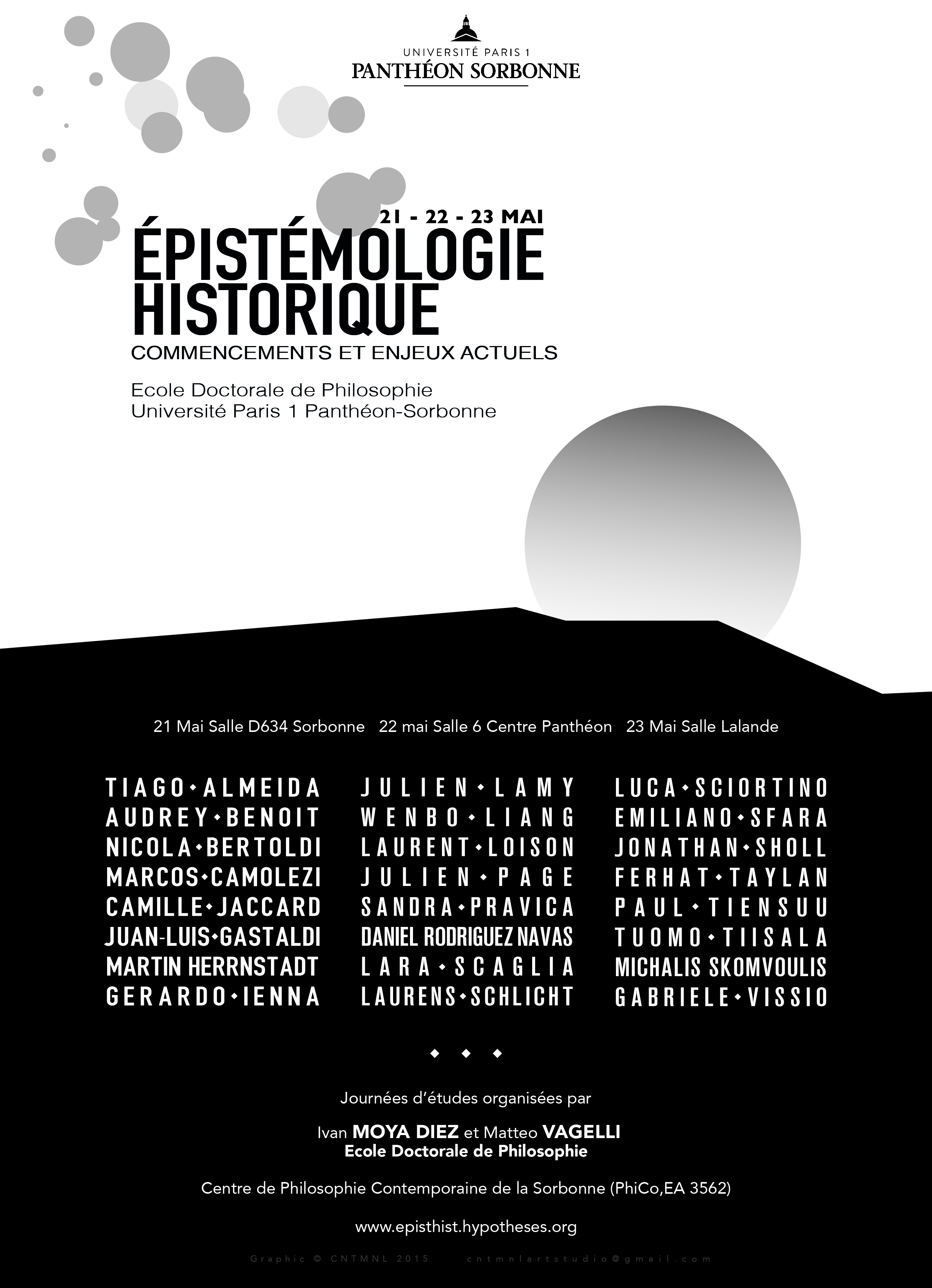
Programme
Journées d’études / Workshop
Université Paris 1 Panthéon-Sorbonne
Ecole Doctorale de Philosophie
Télécharger le programme et les résumés des interventions
Jeudi 21 mai
Salle D634 (Galerie Dumas, escalier L), Sorbonne (1, Rue Victor Cousin, 75005)
9h30 – 10h10
Organisateurs, Bienvenue
Pr. Jean-François BRAUNSTEIN, Introduction
10h10 – 11h00 Modérateurs : Matteo Vagelli – Ivan Moya Diez
Martin HERRNSTADT – Laurens SCHLICHT, Goethe University Frankfurt : « Epistemologies of the Sciences of Man. An Inquiry into the Epistemological Shift of the French Sciences of Man around 1800 »
11h30 – 13h10 Modérateurs : Matteo Vagelli – Ivan Moya Diez
Tiago ALMEIDA, Universidade de São Paulo – Université Paris 1 Panthéon-Sorbonne : « Georges Canguilhem et l’École germano-américaine d’histoire de la médecine »
Audrey BENOIT, Université Paris 1 Panthéon-Sorbonne : « Héritages comparés de l’épistémologie historique chez Althusser et Foucault : théorie de la connaissance et philosophie de l’histoire »
14h40 – 16h20 Modérateur : Giuseppe Bianco
Marcos CAMOLEZI, Universidade de São Paulo – Université Paris 1 Panthéon-Sorbonne : « Remarques sur Claude Bernard entre Bergson et Canguilhem »
Emiliano SFARA, Université de Montpellier 3 : « La conception du « Statut social de la science moderne » chez Georges Canguilhem »
16h40 – 18h20 Modérateur: Giuseppe Bianco
Paul TIENSUU, University of Helsinki : « Comment s’interroger sur les valeurs du droit d’une façon constructive ? L’épistémologie historique et la problème de l’indétermination du droit »
Ferhat TAYLAN, Collège international de philosophie – Université Paris Ouest Nanterre La Défense : « De l’histoire des concepts à l’histoire des rationalités. L’extension foucaldienne de l’épistémologie historique »
Vendredi 22 mai
Salle Panthéon 6 (Escalier M, 4e étage), Centre Panthéon (12, place du Panthéon, 75005)
9h30 – 11h10 Modérateur: Ivan Moya Diez
Nicola BERTOLDI, Université Paris 1 Panthéon-Sorbonne : « Pour une épistémologie historique de la génétique des populations »
Camille JACCARD, Université Paris 1 Panthéon-Sorbonne – Université de Lausanne : « La clinique des troubles du langage comme objet de l’épistémologie historique »
11h30 – 13h10 Modérateur: Ivan Moya Diez
Jonathan SHOLL, University of Leuven: « Towards an Historical Epistemology of Medicalization »
Tuomo TIISALA, University of Chicago: « That the Abnormal is Existentially Prior to the Normal: An Interpretation and A Defense of Canguilhem’s Meta-normative Thesis »
14h40 – 16h20 Modérateur: Daniel Rodriguez Navas
Julien LAMY, Université Lyon III Jean Moulin : « L’enquête épistémologique au risque de la science effective et de son histoire : la philosophie des sciences de Gaston Bachelard»
Sandra PRAVICA, Center for Literary and Cultural Research Berlin: « Science in Other Words: Re-evaluating Gaston Bachelard’s Works for the Philosophy of Science Today »
16h40 – 18h20 Modérateur: Jonathan Sholl
Wenbo LIANG, Université Paris 1 Panthéon-Sorbonne : « Rethinking Ian Hacking’s “styles of scientific thinking” from the studies of integrative medicine »
Luca SCIORTINO, The Open University: « Ian Hacking’s Styles of Thinking and Relativism: The Case of the Existence of Theoretical Entities»
Samedi 23 mai
Salle Lalande (Escalier C, 1e étage), Sorbonne (17, rue de la Sorbonne, 75005)
9h30 – 11h10 Modérateur: Matteo Vagelli
Lara SCAGLIA, Universitat Autònoma de Barcelona : « The transcendental doctrine of Schematism and its psychological interpretations. The status of Epistemology between philosophy and natural sciences »
Michalis SKOMVOULIS, Université Aristote de Thessalonique: « L’épistémologie historique de Hegel. Le cas des sciences sociales »
11h30 – 13h10 Modérateur: Matteo Vagelli
Gabriele VISSIO, Università degli Studi di Torino – Université Paris 1 Panthéon-Sorbonne : « La logique de Husserl et l’épistémologie historique »
Daniel RODRIGUEZ NAVAS, University of Chicago: « The Influence of Foucault’s early reading of Nietzsche in his Critique of Psychology and the Human Sciences »
14h40 – 16h20 Modérateur : Tiago Almeida
Julien PAGE, Laboratoire SPHERE : « Histoire conceptuelle de théories de Galois»
Juan Luis GASTALDI, IREPh Paris Ouest – ESBAMA : « L’archéologie à l’épreuve des savoirs formels »
16h40 – 18h20 Modérateur : Camille Jaccard
Gerardo IENNA, La Sapienza – Università di Roma: « La notion de frontière disciplinaire dans le régionalisme épistémologique de Pierre Bourdieu »
Laurent LOISON, Université de Strasbourg: « Quel est le statut du présent pour l’épistémologie historique ? »
Comité scientifique
Jean-François BRAUNSTEIN, Université Paris 1 Panthéon-Sorbonne
Bernadette BENSAUDE-VINCENT, Université Paris 1 Panthéon-Sorbonne
Arnold I. DAVIDSON, University of Chicago
Frédéric FRUTEAU DE LACLOS, Université Paris 1 Panthéon-Sorbonne
Les organisateurs,
Ivan MOYA DIEZ, Matteo VAGELLI
Centre de Philosophie Contemporaine de la Sorbonne (PhiCo, EA3562),
Université Paris 1 Panthéon-Sorbonne
Maddalena, K., Packer, J.
The Digital Body: Telegraphy as Discourse Network
(2015) Theory, Culture and Society, 32 (1), pp. 93-117.
Abstract
This article considers the use of flag telegraphy by the US Signal Corps during the Civil War as it functioned as a proto-technical medium that preceded wire telegraphy as a military communications technology. Not only was flag telegraphy a historical step towards contemporary technical media, it was also an early iteration of the digitization of communication. Our treatment ties together three main theoretical threads as a way of seeing ‘the digital’ in material communication practices: (1) Friedrich Kittler’s concept of technical media as a remediation between the 19th and 20th centuries, (2) Foucault’s docile bodies as means of reproducing culture, and (3) James Carey’s argument that the telegraph reconfigured communication. The Signal Corps is a rich historical moment in terms of media history and history of technology because it illustrates the convergence of historical exigencies at work in the war machine: mobility, secrecy, precision, and speed. Each contributes, we argue, to a digital telos that privileges digital ways of knowing and being.
Author Keywords
communications theory; digitalization; discipline; Foucault; Kittler; media; war
Luchies, T.
Towards an Insurrectionary Power/Knowledge: Movement-Relevance, Anti-Oppression, Prefiguration
(2015) Social Movement Studies, 16 p. Article in Press.
DOI: 10.1080/14742837.2014.998643
Abstract
Despite ongoing efforts to articulate radical methods and theoretical frameworks for social movement research, the field remains embedded in exploitative, oppressive, and hierarchical modes of knowledge production. Following Foucault, I argue that this is because societies like ours, founded through racial and patriarchal violence, are invested in a regime of truth supportive of that violence. In light of this, I argue that social movements scholars need to adopt a radically different form of knowledge practice. Building on anarchist, anti-racist feminist, and anti-colonial scholarship, this paper begins by analysing how liberalism constrains social justice organizing and how academic norms foreclose accountable social movements scholarship. I then introduce three unique ethics emerging in resistance to this situation: movement-relevant, anti-oppressive, and prefigurative. The first confronts the extractive imperatives of enlightenment truth-making; the second resists its neutral and disinterested tendencies; and the third models a rejection of its hierarchical and exclusive mode of authority. I argue that together they provide scholars with a strategy for re-/orienting their research towards what Foucault theorizes as an insurrection of knowledges. These three ethical frameworks combine to facilitate an insurrectionary power/knowledge that fosters collective struggle as it progressively dismantles the regime of truth underlying social movements research.
Author Keywords
activism; anti-oppression; movement-relevance; power/knowledge; prefiguration; Research ethics; social movements

 Foucault News