Foucault News

News and resources on French thinker Michel Foucault (1926-1984)

Sobe, N.W.
All that is global is not world culture: accountability systems and educational apparatuses
(2015) Globalisation, Societies and Education, 13 (1), pp. 135-148.

DOI: 10.1080/14767724.2014.967501

Abstract

This article explores why we see educational accountability systems circulating transnationally. It argues that researchers in the field of comparative and international education need to use the concepts of diffusion and translation to think about the formation, coordination and extension of networks and discursive formations through which heterogeneous, disparate objects are brought into relation. Approaching accountability in education as an ‘apparatus’ helps us engage with the research challenges presented by globalisation. This article proposes a way of seeing accountability as constitutive of the global and not as an after-effect. This approach helps us avoid the distracting and ultimately irrelevant fixation on a so-called ‘global/local nexus’ that is characteristic of much work in the field of comparative and international education. It also aims to improve on world culture theory explanations for why we are presently witnessing a global trend towards the increased ‘monitoring of monitoring’, i.e., increased self-organising reflexivity in the self-description and self-observation that school systems are called to engage in.

Author Keywords
accountability; Actor-Network Theory; Foucault; governmentality

Mika, C., Stewart, G.
Māori in the Kingdom of the Gaze: Subjects or critics?
(2015) Educational Philosophy and Theory, 13 p. Article in Press.

DOI: 10.1080/00131857.2015.1013017

Abstract
For Māori, a real opportunity exists to flesh out some terms and concepts that Western thinkers have adopted and that precede disciplines but necessarily inform them. In this article, we are intent on describing one of these precursory phenomena—Foucault’s Gaze—within a framework that accords with a Māori philosophical framework. Our discussion is focused on the potential and limits of colonised thinking, which has huge implications for such disciplines as education, among others. We have placed Foucault’s Gaze alongside a Māori metaphysics and have speculated on the Gaze’s surveillant/expectant strategies with some key Māori primordial phenomena in mind, such as ‘te kore’ (nothingness) and ‘āhua’ (form). We posit the Gaze as an entity and thus aim to render it more relevant to Māori, so that it can be addressed appropriately. We also (but relatedly) preface that discussion by theorising on some of the challenges that confront us as Māori authors in even referring counter-colonially to the Gaze. Whilst we do not seek to destabilise the Gaze by positing it as a metaphysically based entity, we do hint at the possibility that critical indigenous philosophy may even for a short time bring the Gaze into focus for Māori. By introducing an awareness of an alternative (Māori) metaphysics, we may have unsettled the self-certainty of the Gaze.

Author Keywords
Foucault; Gaze; metaphysics; Māori

Maria Hynes and Scott Sharpe,
Habits, style and how to wear them lightly
(2015) Cultural Geographies, 22 (1), pp. 67-83.

https://doi.org/10.1177/1474474014560682

Abstract
Contributing to cultural geography’s emerging interest in the work of Felix Ravaisson, this article explores the relationship between the impersonal force of habit and the personalised production of subjectivity. More precisely, our concern is with the relationship between habit and the stylisation of self that can be witnessed in the production of the intellectual subject. Paying particular attention to the relationship he traces between habit, consciousness and the effort that defines subjectivity, we explore the implications of Ravaisson’s understanding of habit for the work of style, understood as an integration of habits and dispositions into a manner of being. By exploring the question of intellectual style in the work of Alain Badiou, Michel Foucault and Friedrich Nietzsche, we consider what the implications might be of performing that task of integration lightly, without the lofty weightiness that often attends intellectual life.


Author Keywords

Badiou; Foucault; habit; intellectual style; lightness; Nietzsche

Index Keywords
art, cultural geography, social theory

Nordtveit, B.H.
Knowledge production in a constructed field: reflections on comparative and international education
(2015) Asia Pacific Education Review, 11 p. Article in Press.

DOI: 10.1007/s12564-015-9354-0

Abstract
Adopting Maria Manzon’s theoretical framework, which draws on Foucault and proposes that comparative education as an academic field is socially constructed, I suggest that the field is neither stable nor well defined. To demonstrate this, I conduct a content analysis of the Comparative Education Review, using Klaus Krippendorff’s methodological framework to study comparative and international education (CIE) researchers’ understanding of the national—and of their related knowledge production in the field. Many comparativists express interests in multiple countries, and their knowledge production takes the form of individual country studies. The countries are habitually studied using a “problem approach” focusing on one specific aspect of the country under investigation and using an associated social science methodology deemed appropriate. Few comparativists are making explicit use of or reference to any methodology that is unique to comparative education. Efforts to catalog and systematize CIE research have demonstrated that the field is becoming so inclusive that it hardly is distinguishable from educational studies as a whole. Hence, I suggest that instead of speaking about unifyingfeatures of the field, it may be more relevant to speak about frequent elements, such as a focus on the national, and a knowledge production characterized by the academic practitioner who desires to improve the education systems studied. A third frequent element may be the focus on educational development, thus justifying the label of “comparative, international, and development education.” One challenge of the field is its dependence on Western social science discourses, which may be marginalizing other voices.


Author Keywords

Comparative education; Comparative Education Review; Content analysis; Development; International education; Knowledge production

Call for Papers
Theatre, Performance, Foucault!

TaPRA Theatre, Performance, and Philosophy working group interim event
– a one-day symposium

Date: 4th July 2015
Location: King’s College London

Further info

Michel Foucault was not only one of the most controversial and provocative thinkers of the 20th Century, he was also one of its most inventive and penetrating researchers: his work restlessly innovating new methodological openings around which other thinkers would forge entirely new disciplinary fields. Notoriously hard to pin down, his work evades easy categorisation – indeed, who was Foucault? – poststructuralist philosopher, historian of ‘systems of thought’, ‘radical journalist’ – Foucault seems to have been all of these things, and so much more. It is perhaps for this reason that his work retains its currency for us. Fundamentally, what makes Foucault’s work compelling comes down to the question that he repeatedly asked – a question that remains just as vital and urgent today: ‘what are we at the present time?’

It is with this question in mind that the Theatre, Performance and Philosophy Working Group of the Theatre and Performance Research Association (TaPRA) is delighted to host a one-day symposium entitled: “Theatre, Performance, Foucault!” as its interim event. If Foucault was fond of employing theatre as a metaphor in his work, in this symposium we wish to take that metaphor literally: how does Foucault’s work help us to understand contemporary and/or historical problems in theatre and performance today?

The symposium will consist of curated round-tables, twenty-minute papers and ten-minute provocations. If you would like to contribute a paper or provocation to the symposium, please submit a max. 200-word abstract and brief biography by 23rd May to Tony Fisher (tony.fisher@cssd.ac.uk), Kélina Gotman (kelina.gotman@kcl.ac.uk), and Eve Katsouraki (e.katsouraki@uel.ac.uk). We will get back to you with a response by 31st May.

Papers and provocations may address any aspects of Foucault’s thinking and/or Foucauldian approaches to theatre and performance, including the following:

– Theatre, performance and biopolitics

– Theatre, performance and state power

– Theatre, performance and ethics

– Theatre, performance and genealogy

– Performance and discipline(s)

– Theatre, Foucault & the non-human life / animal rights

– Performance, Foucault & ecology

– Theatre and the social sciences

– Theatre, performance and archaeology

– Theatre, performance and the history of ‘madness’

– Theatre, performance and the history of sexuality

– Theatre, performance and discourse

– Performance, Foucault & his heirs

Please note: You need to be an existing member of TaPRA to present or attend. If you are not, you can become a member at the cost of £10. Registrations will open by the end of May and you can register via Eventbrite (details to follow).

Given the ongoing popularity of this concept, I have added a new category on neoliberalism to Foucault News.

Niesche, R.
Governmentality and My School: School Principals in Societies of Control
(2015) Educational Philosophy and Theory, 47 (2), pp. 133-145.

DOI: 10.1080/00131857.2013.793925

Abstract
The introduction of new accountabilities and techniques of government for the purposes of educational reform have created new complexities and tensions for school leadership. Policies such as the publishing of league tables in the UK, high stakes testing in the US and the introduction of the My School website in Australia are particularly significant for school principals. In this article I appeal to the work of Foucault and Deleuze to provide an alternate approach to understanding how principals are constituted as subjects through a range of practices and discourses associated with the introduction of the My School website. I specifically draw upon Foucault’s notion of governmentality and Deleuze’s notion of societies of control to provoke new lines of thought into these government practices. I argue that it is through the performative in the education system that school principals are becoming perpetually assessable subjects.

Author Keywords
Deleuze; Foucault; governmentality; school principals

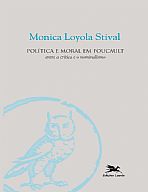
ed-loyolaMonica Loyola STIVAL, Política e moral em Foucault: entre a crítica e o nominalismo, Edições Loyola, 2015

Further info

Sinopse
A polêmica recente em torno da posição de Foucault sobre o liberalismo testemunha a dificuldade em analisar a dimensão política de seu trabalho. Este livro estabelece uma leitura crítica da questão política, marcando posição nesse debate.
No entanto, ele não se ocupa apenas disso. A autora se debruça, mais amplamente, sobre os pressupostos metodológicos e epistemológicos de Foucault. Ao enfatizar determinado impasse entre método e pressuposto, o livro lança luz sobre os limites do sujeito moral moderno e da política – ou da não política – que emergem da monumental obra de Michel Foucault.

stuartelden's avatarProgressive Geographies

The manuscript of Foucault’s Last Decade, as I’ve said, was almost complete. It is now with the press for review. In the last couple of weeks, while in New York, I’ve chased down a few final references; read the very valuable Régards critiques volumes on the History of Sexuality volumes (volume I and volume II and III); re-read Philippe Chevallier’s Michel Foucault et le christianisme (also see Colin Gordon on the book here); followed up lots of things; and tidied up the text.

I also had three days in the Bancroft Library at University of California, Berkeley. I’ve already shared some detailed day-to-day reports (here, here and here) and won’t repeat things here except to note again Alain Beaulieu’s useful guide to “The Foucault Archives at Berkeley”, in Foucault Studies in 2010. I found it invaluable to doing this work and would recommend…

View original post 1,345 more words

Petition in French and English

See petition website for other languages and to add your signature

Yes to the institution of the “Michel Foucault and the Philosophy of the Present Chair” at PUC São Paulo

Both São Paulo’s Cardinal, Odilo Scherer, and the Bishops of his archdiocese, recently announced that they do not authorize the creation of what had already been announced 4 years ago: the institution of the “Michel Foucault and the Philosophy of the Present Chair” at the Pontifical Catholic University of São Paulo (PUC-SP). This decision not only profoundly surprised all those who, coming from many countries, had from the very beginning embraced this initiative, but also all those who, within PUC-SP itself, had worked vigorously to guarantee the institution of this Chair bearing Michel Foucault’s name.

During the 7th International Michel Foucault Conference, held in October 2011, and which brought together dozens of specialists and interested researchers in Foucault’s oeuvre, a letter was signed supporting the initiative. The list of signees included members of the Collège International de Philosophie (Paris), of the University of Paris VIII, the University of Bordeaux Montaigne, the New University of Lisbon, Madrid’s University Complutense, Paris’ École Normal Supérieure, the Universidad San Martin in Argentina, the Universidad de los Andes in Venezuela and the University of Valparaiso in Chile. The initiative also received support from the General Consulate of France in São Paulo. In 2011, PUC-SP received a copy of the audio archives of Foucault’s classes donated by the Collège de France, in what made PUC-SP the only institution outside France allowed to grant them public access. Having in view the institution of the Michel Foucault and the Philosophy of the Present Chair at PUC-SP, what followed were study sessions, seminars and debates on specific literature as preparatory work for this eagerly anticipated event, all of which generated high expectations and a growing enthusiasm.

The decision to reject the institution of the Michel Foucault and the Philosophy of the Present Chair de-authorizes the scientific, philosophical and pedagogical committees which approved the initiative. ‘Academic freedom’, which stands as a basic fundament of university life, was breached. However, if it is well established that the interest in Foucault’s work goes way beyond religious beliefs, it is no less evident that many Catholic thinkers wrote about and inspired themselves in Foucault’s work. This latter fact – to which we could also add the many studies presently considering Foucault’s contribution to an understanding of Christianity – is ever so more highlighted when Dominicans from the Library du Saulchoir welcomed the archives during the period in which these archives faced the risk of being sent abroad, in what allowed them a safe haven in the very place Foucault worked for hours on end.

This Library, which is irrefutably heir to the Catholic tradition and not for that reason less open to Parisian intellectuals or intellectuals passing through Paris, regularly welcomes presentations and discussions covering diverse fields. It is in light of this plurality that many contemporary studies considering Foucault’s contribution to the study of the origins of Christianity and its rooting in ancient culture, in particular, in Stoic philosophy, have been conducted in the Library. What we find here is an example of historical lucidity of the sort evidenced by the work undertaken by the historian Peter Brown, and upon which students and professors focusing on the first centuries of our era have taken full advantage of and will continue to do so. It is also worth highlighting that, after The Order of Things, Foucault’s own work was strongly inspired by a principle of compassion and dedicated to the question of ‘governmentality’, a question which would transform our way of understanding human relations and their intimate connection with the law.

All these facts already define an excess of reasons justifying our perplexity when faced with the Council of Bishops’ decision. This Chair, which honors Michel Foucault, is not simply dedicated to the readership of his texts (which, today, are already impossible to ignore as part of classical culture): it is also turned towards to the analysis – which is not exclusive to his oeuvre – of the questions posed today by both thought itself and the demands of civil life. The refusal of such a Chair, a Chair which, carrying Michel Foucault’s name, is by nature open to actuality, radically contradicts the deontology of University life as well as its most basic fundament: the exercise of free thought. As such, it can only be the University itself which stands as the first victim of this decision: beyond professors, students and researchers, it is Brazilian public opinion which understands itself to be attacked by such a decision. And we have been witnesses of these protests.

All, however, hope that the Council of Bishops will renounce what evidently stands as a form of censorship, revoking its rejection. The Academic Board at the PUC-SP has appealed the decision. From now onwards, it is up to the international community to show that it supports the institution of the Michel Foucault and the Philosophy of the Present Chair at the Pontifical Catholic University of São Paulo. Such is what the signees of the letter supporting this initiative did in October 2011, a letter which, for the very reason of defending the institution of a Chair bearing Michel Foucault’s name, is itself already an invitation to all those committed to exercise of free thought to join them.

Pétition

Oui à la Chaire « Michel Foucault et la philosophie du présent » à l’Université catholique de São Paulo

Le Cardinal de São Paulo, Odilo Scherer, et les évêques de l’Archidiocèse de la ville viennent d’annoncer qu’ils n’autorisent pas la création, prévue depuis quatre ans, de la Chaire « Michel Foucault et la philosophie du présent » à l’Université catholique de São Paulo (PUC/SP). Cette décision surprend profondément toutes celles et tous ceux, venant de nombreux pays, qui ont soutenu depuis le départ cette création, mais aussi toutes celles et tous ceux qui, dans l’Université catholique de São Paulo, ont travaillé vigoureusement en ce sens.

Lors du 7e Colloque international Michel Foucault d’octobre 2011, qui avait réuni à la PUC/SP plusieurs dizaines de spécialistes de l’œuvre de ce penseur et des centaines d’auditeurs, une lettre avait été signée en soutien à cette initiative. La liste des signataires comprenait des membres du Collège international de philosophie (Paris), de l’Université Paris 8, de l’Université Bordeaux Montaigne, de l’Université nouvelle de Lisbonne, de l’Université Complutense de Madrid, de l’École normale supérieure de Paris, de l’Université San Martin en Argentine, de l’Université de los Andes au Venezuela et de l’Université de Valparaiso. L’initiative avait reçu également le soutien actif du Consulat général de France à São Paulo. La même année, la PUC/SP avait obtenu une copie des archives sonores des cours de Foucault fournie par le Collège de France, devenant ainsi la seule institution hors de France à pouvoir y donner un accès au public. Des séances d’études, des séminaires, des débats sur des livres ont ensuite été organisés comme travail préparatoire pour la création de la Chaire, suscitant des attentes et un enthousiasme grandissants.

Le refus émis désormais désavoue les instances scientifiques, philosophiques et pédagogiques de la PUC/SP qui ont approuvé l’initiative. La « liberté académique », au fondement de la vie universitaire, est ainsi bafouée. Pourtant, on sait que l’intérêt porté dans le monde entier à l’œuvre de Foucault va bien au-delà des croyances religieuses et que maints penseurs catholiques ont écrit sur elle et s’en ont inspirés. Ainsi, à Paris, quand il a été question que les archives Foucault partent à l’étranger, les dominicains de la Bibliothèque du Saulchoir ont hébergé ces archives, permettant qu’elles restent en France à l’endroit où Foucault avait l’habitude travailler des heures entières. Cette bibliothèque, relevant de la tradition catholique la plus incontestable et non moins largement ouverte à tous les intellectuels parisiens ou de passage à Paris, accueille régulièrement des présentations et discussions de livres. Par ailleurs, de nombreuses études actuelles portent sur l’apport de Foucault aux études sur le premier christianisme et son enracinement dans la culture antique, particulièrement stoïcienne. C’est là une lucidité historique, complémentaire des études de l’historien anglo-saxon Peter Brown, de quoi tous les étudiants et enseignants des premiers siècles de notre ère ont profité et profiteront encore. On note également que l’œuvre de Foucault après Les Mots et les choses est fortement inspirée par un principe de compassion et dédiée à la gouvernementalité, une question qui transformerait la modalité des relations humaines et leur intime connexion avec le droit. Ce sont des raisons de plus pour exprimer notre surprise face à cette décision.

Cette chaire, portant le nom de Michel Foucault et lui rendant un légitime hommage n’est pas dédiée à la lecture de ses écrits – qui sont maintenant partie de la culture classique. Elle se dit dans son intitulé explicitement tournée (sur l’impulsion non exclusive de ses travaux) à une libre analyse, information et débat des questions de philosophie et de vie civile contemporaines. Le refus d’une telle chaire, ouverte sur l’actualité, contredit à la déontologie universitaire autant qu’à son fondement. L’Université en serait la première victime. Au-delà des enseignants, étudiants et chercheurs, l’opinion publique brésilienne s’en est ému. Nous témoignons de sa protestation. Cependant, tous gardent l’espoir que le Conseil des évêques renoncera à exercer cette forme de censure et reviendra finalement sur son refus. La direction académique de la PUC/SP a fait appel de la décision. Désormais, c’est à la communauté internationale de montrer, qu’elle aussi, soutient la création de la Chaire « Michel Foucault et la philosophie du présent ». C’est ce que faisaient déjà les signataires de la lettre de soutien d’octobre 2011, qui invitaient toutes celles et ceux qui restent attachés au libre exercice de la pensée à se joindre à eux.