
Foucault News

News and resources on French thinker Michel Foucault (1926-1984)

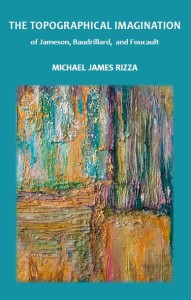
RizzaMichael James Rizza The Topographical Imagination of Jameson, Baudrillard, and Foucault, Noesis/The Davies Group, 2015

Notice on author’s blog
An interview with the author, Michael James Rizza, in Hyperrhiz 12

This in-depth discussion of several canonical theorists — Fredric Jameson, Jean Baudrillard, and Michel Foucault — traces the trajectory of their ideas from one text to the next. It focuses on how these theorists attempt to avoid the problem of representation, as well as humanist subjectivity, even as they imagine the external situations that shape individual identity. Although the author offers in-depth overviews, he does not simply rehearse the theories, such as many introductions to theory do. Instead, he excavates the topographical imagination that results from seeking to constitute the subject from without, from its external situation. He draws forth the organizing figure of each theorist’s spatial thinking—Jameson’s Marxist dialectical levels, Baudrillard’s double spiral of the symbolic and the semiotic, and Foucault’s dual bar of exclusion—which provides readers an innovative way to approach complex ideas.


From the Back Cover

The Topographical Imagination of Jameson, Baudrillard, and Foucault is indeed, as Michael James Rizza argues, a collection of several tapestries: a study of three of the most important theorists of the postmodern period, whose individual trajectories are traced over the course of their careers; an exploration of the subject as it evolves from an original Enlightenment model; a consideration of the various organizing figures–system of levels, double-spiral, dual caesura–by which today’s projected worlds are imagined. In the end, readers are provided with an intellectual history that is as wide-ranging–from Spinoza and Kant to Debord and Lefebvre–as it is incisive. And because the theoretical is always informed by a command of literature that is breathtaking in its scope–from Cervantes to Milosz to Borges to Pynchon–the discussions are certain to appeal to an audience of quite varied tastes. Integrating all of this into a seamless whole is not the easiest of tasks, and it is to the book’s great credit that it does so and in such a way as to join clarity with acuity beautifully.

Stacey Olster, Professor of English, Stony Brook University


About the Author

Michael James Rizza (PhD, American Literature) is the author of the award-winning novel Cartilage and Skin, short fiction, and various academic articles. He teaches at Kean University in New Jersey.

Programme
École Doctorale de l’Association pour le Centre Michel Foucault IMEC

PDF flyer

14, 15 et 16 octobre 2015

Contacts :
Arianna Sforzini : arianna.sforzini@univ-paris-est.fr ; 0781684341 Judith Revel : jrevel@u-paris10.fr ; 0667320713


Mercredi 14 octobre :

Train Paris Saint Lazare-Caen, départ 8h45 Arrivée Caen : 10h53, transfert à l’IMEC

Déjeuner

Après-midi, première séance

Clara Zgola : « Les formes de vie ‟autres” et la question urbaine » (CRAL/Pologne) Valentina Moro : « Parrêsia et lamentation : analyser la tragédie grecque avec Michel Foucault » (Université de Padoue, Italie)
Guilel Treiber : « Des contre-conduites à la résistance collective » (Université catholique de Louvain, Belgique)

Dîner

Jeudi 15 octobre Matin, seconde séance

Frédéric Porcher : « Foucault et le renouveau de la théorie critique » (Université de Strasbourg, France)
Ivan Ponton : « Autour de Théories et institutions pénales : Foucault et le marxisme » (Université Lille 3, France)

Pause

Alex Feldman : « La seconde évaluation foucaldienne de Canguilhem : historicisation et matière étrangère » (Penn State University, USA)
Ivan Moya Diez : « La valeur de la vérité, la plus récente erreur de la vie. De Foucault à Canguilhem » (Université Paris 1 Panthéon-Sorbonne, France)

Déjeuner

Après-midi, troisième séance :

Ismahène Chamki : « Les normes de l’intelligence, instrument du pouvoir disciplinaire en milieu scolaire » (Université de Nantes, France)
Alice Ancelle : « Modèle critique de relations de soins en EPHAD » (Université Lille 3, France)

Pause

Anderson Lima da Silva : « Michel Foucault, la philosophie, l’histoire » (Université de Sao Paulo, Brésil)
Daphné Le Roux : « Pratiques et subjectivation chez Michel Foucault : une réflexion critique » (Université Paris Ouest Nanterre La Défense, France)

Dîner

Vendredi 16 octobre Matin, quatrième séance :

Ilaria Fornacciari : « Entre archive et critique: Foucault autour de Manet » (Université de Bâle/Université Paris 8)
Clara Mogno : « Foucault et l’image» (Université de Padoue, Italie/Université Paris Ouest Nanterre La Défense, France)
Ester Jordana Lluch : « La question de la transformation chez Michel Foucault » (Université de Barcelone, Espagne)

Déjeuner

Départ pour la gare
Train : départ Caen 14h56, arrivée Paris 16h47

En présence de (selon les sessions) : Frédéric Gros, Orazio Irrera, Judith Revel, Philippe Sabot, Arianna Sforzini

Sandrine Alexandre, Compte rendu : Arianna Sforzini : Michel Foucault, une pensée du corps, Actu Philosophia, 6 mars 2015

Plutôt qu’une véritable réflexion sur une « pensée du corps », une analyse de la thématique du corps chez Foucault

1. Le corps, les corps – un thème tout à la fois central chez Foucault mais peu étudié

L’ouvrage d’Arianna Sforzini [1] adopte le même principe que celui retenu chez Philippe Chevalier, Le pouvoir et la bataille dont on peut consulter ici la recension : aborder l’œuvre de Michel Foucault sous un angle particulier, relire l’ensemble de l’œuvre à travers une perspective particulière : en l’occurrence, la thématique du corps, qui conduit l’auteure à parler d’une « pensée du corps » comme en témoigne le titre de son ouvrage. De la même manière que pour l’ouvrage précédent, on est amenés à parcourir l’œuvre du philosophe et ses moments significatifs, tout en développant sur un thème en particulier que l’on entend interroger, questionner pour dire à son propos quelque chose de nouveau, quelque chose de neuf, quelque chose que Foucault lui-même n’aurait pas théorisé en tant que tel mais qui mérite de l’être et attend, pour ce faire, le critique attentif. Plus encore dans cet ouvrage que dans celui que l’on évoquait précédemment, l’auteure s’intéresse avec le corps à un objet qui n’est pas thématisé comme tel par Foucault, qui ne lui consacre aucun ouvrage en propre, tout en étant pourtant au cœur de sa réflexion et de l’ensemble de ses ouvrages et articles – ou presque. Pas sûr pourtant que cette thématique, centrale en effet, ait été aussi délaissée par les commentateurs qui se contenteraient de renvoyer bien platement et d’un trait de plume à la « bio-politique » ou à la « subjectivation » sans en dire grand chose.

suite:

September 2023: See updated details on Progressive Geographies

From: History of the Present – the Berkeley newsletter on Foucault’s work online | Progressive Geographies

History of the Present, the newsletter devoted to Foucault’s work published by Paul Rabinow and edited by him and other people at Berkeley is available online. I’d been looking for copies in libraries, and the online version took a little while to find, so I hope others will find it helpful.

– February 1985 Issue (pdf)

– Spring 1986 Issue (pdf)

– Fall 1987 Issue (pdf)

– Spring 1988 Issue (pdf)

They include translations of interviews with Foucault, at least one of which is not available elsewhere, an interview with Deleuze, reviews, pieces by researchers using Foucault’s ideas, and so on. I’m intrigued by the stage performance of History of Sexuality

These, and many other publications, are listed on the webpage of Paul Rabinow’s Anthropos Lab.

These can be found on the list of uncollected notes, lectures and interviews on Stuart Elden’s Progressive Geographies blog

Update on the Foucault 13/13 series

Foucault 2/13: The Live Stream –28/09/15 at 6:15 EST (2015). Broadcasting from New York

The live stream has now been posted as recorded content.

Etienne Balibar and François Ewald discuss Foucault’s second annual lectures at the Collège de France, Penal Theories and Institutions (1971-1972) TODAY at 6:15 EST.  Please tune in here for the live-stream.  Please also read the introductory posts presenting the lectures along with the posts by Etienne Balibar and François Ewald, and the framing essays by Velasco and Harcourt. Readings for the seminar here.  Logistics for the seminar and LST room here. Check back later this week for additional essays on these 1972 lectures. Welcome to Foucault 2/13!

You can also find this on youtube

Jessica Whyte on Michel Foucault and ‘the right to intervene’

Audio of talk on the Foucault-Blog

Last year Jessica Whyte from the University of Western Sydney was a visiting scholar at the Zentrum Geschichte des Wissens in Zurich. On October 22, she held a lecture on “A Right of Private Individuals or a Responsibility of States? Michel Foucault and the Right to Intervene”, in which she talked about Foucault’s thoughts on the Iranian Revolution, neoliberal economic policies, the politics of human rights and much more.

Otto Friedrich and Sandra Burton, France’s philosopher of power (1981), Time, November 16 1981, pp. 92-4

Includes some remarks by Foucault. With thanks to Stuart Elden for tracking a copy of this down on the net.

Stephen J. Ball
Subjectivity as a site of struggle: refusing neoliberalism?
(2015) British Journal of Sociology of Education, 18 p. Article in Press.

https://doi.org/10.1080/01425692.2015.1044072

Abstract
This paper extends the author’s previous enquiries and discussions of governmentality and neoliberal policy technologies in a number of ways. The paper explores the specificity and generality of performativity as a particular contemporary mode of power relations. It addresses our own imbrication in the politics of performative truths, through our ordinary everyday life and work. The paper is about the here and now, us, you and me, and who we are in neoliberal education. It draws upon and considers a set of ongoing email exchanges with a small group of teachers who are struggling with performativity. It enters the ‘theoretical silence’ of governmentality studies around the issues of resistance and contestation. Above all, the paper attempts to articulate the risks of refusal through Foucault’s notion of fearless speech or truth-telling (parrhesia). © 2015 Taylor & Francis

Author Keywords

neoliberalism; parrhesia; refusal

dean3Mitchell Dean and Kaspar Villadsen, State Phobia and Civil Society: The Political Legacy of Michel Foucault, Stanford University Press, forthcoming January 2016

Publisher’s page

State Phobia
draws extensively upon the work of Michel Foucault to argue for the necessity of the concept of the state in political and social analysis. In so doing, it takes on not only the dominant view in the human sciences that the concept of the state is outmoded, but also the large interpretative literature on Foucault, which claims that he displaces the state for a de-centered analytics of power. Understanding Foucault means understanding all his interlocutors—whether Marxists, Maoists, neoliberals, or social democrats. It requires turning to Foucault’s colleagues, including Deleuze and Guattari, François Ewald, and Blandine Kreigel, in relation to whom he carved out a position. And it entails an examination of his legacy in Hardt and Negri, the theorists of Empire, or in Nikolas Rose, the influential English sociologist. Foucault’s own view is highly ambiguous: he claims to be concerned with the exercise of political sovereignty, yet his work cannot make visible the concept of the state. Moving beyond Foucault, the authors outline new ways of conceiving the state’s role in establishing social order and in mediating between an inequality-producing capitalist economy and the juridical equality and political rights of individuals. Arguing that states and their cooperation remain of vital importance to resolving contemporary crises, they demonstrate the interdependence of state and civil society and the necessity of social forms of governance.

About the authors

Mitchell Dean is Professor of Public Governance at the Copenhagen Business School and Professor of Sociology at the University of Newcastle, Australia.

Kaspar Villadsen is Associate Professor of Management, Politics, and Philosophy at the Copenhagen Business School.

Johansen, P.H., Chandler, T.L.
Mechanisms of power in participatory rural planning
(2015) Journal of Rural Studies, 40, pp. 12-20.

Abstract
This paper explores the specific mechanisms of power in participatory rural planning projects. It follows up on suggestions in planning literature about directing focus at the relational level in the assessment of power, rather than on who has power and who doesn’t. The paper argues that in such an assessment of power it is needed also to drawn in the social context because different social contexts will be more or less vulnerable to different mechanisms of power. The paper takes the stand the rural settings are especially vulnerable to dis-engagement of local citizens, sub-ordination of the rural by the urban privilege to define the rural qualities and creation of local conflicts and that mechanisms of power that cause such unintended outcomes of rural planning projects should be uncovered. Inspired by Foucault’s interpretation of power the paper carries out a grounded theory inspired analysis of a Danish rural participatory planning project. The paper concludes that rural planning literature and analysis will benefits from paying attention to the three – in rural participatory planning projects – specific mechanisms of power ‘Institutionalising knowledge and competencies’; ‘Structuring of criticism’ and ‘Undermining the objectives of the others’. © 2015.

Author Keywords
Illustrative case study; Participation; Power mechanisms; Power relations; Rural planning

Index Keywords
conflict management, local participation, participatory approach, power relations, rural planning; Denmark