Foucault News

News and resources on French thinker Michel Foucault (1926-1984)

Barker-Ruchti, N., Barker, D., Sattler, S., Gerber, M., Pühse, U.
Second Generation Immigrant Girls’ Negotiations of Cultural Proximity in Switzerland: A Foucauldian Reading
(2015) Journal of International Migration and Integration, 16 (4), pp. 1213-1229.

DOI: 10.1007/s12134-014-0386-9

Abstract
Although overtly racist political discourse in Switzerland has receded, culturalist discourses continue to construct ideal immigrants. Policies define immigrants in terms of “cultural proximity” and contain an implicit distinction between “distant” and “proximal” foreigners. Culturally, distant immigrants have been stereotyped as aggressive and/or lacking interest in education and professional success and while scholars have examined immigrants from Switzerland’s “culturally-near” regions, the experiences of second generation immigrant populations from perceived culturally distant countries have largely escaped attention. Knowledge about girls and women is particularly scarce. Against this backdrop, this paper provides an examination of how six teenage girls living in a German-speaking Swiss city negotiate their perceived cultural distance. By combining interview material with elements of Foucauldian theory, the paper provides insight into (1) the diasporic experiences of girls with second generation immigration backgrounds and (2) the operation and influence of culturalist discourses.

Foucault’s notion of dispositive—the discourses, institutions, laws, and scientific findings that, through various means of distribution (e.g., media texts, policies, education curricula), act as an apparatus that constructs and supports normative ideals—provides a generative analytic tool for this task. The analysis suggests that the ways girls learn to understand their social worlds is a collective process of discipline that places mechanisms of social control within each individual. This process involves the homogenisation and marginalisation of the immigrant population and is circular in nature in that the girls strengthen and maintain the power of existing culturalist knowledge that works negatively on them. The paper concludes with a consideration of how this situation might be challenged. © 2014, Springer Science+Business Media Dordrecht.

Author Keywords
Culturalist discourses; Dispositive; Foucault; Gender; Perceived cultural distance; Second generation immigrant girls
Llewellyn, A.
Problematising the pursuit of progress in mathematics education
(2015) Educational Studies in Mathematics, 16 p. Article in Press.

DOI: 10.1007/s10649-015-9645-8

Abstract
In this article, I use a Foucauldian poststructural analysis to examine productions of progress within key discursive spaces of mathematics education. These sites of production are educational policy, mathematics education research and case studies of primary school student-teachers in England. From my analysis, I show how progress governs what is possible in the classroom, as they become constructed around a measurable, linear temporality assumed in educational policy. This encourages comparison to and pursuit of the “normal” mathematical child, which in educational policy is produced as a functional automaton, whilst for much of mathematics education research is produced as the cognitive “natural” child. These over sanitised constructions result in confusion for student-teachers who struggle to take these impossible discourses on board. © 2015 Springer Science+Business Media Dordrecht

Author Keywords
Educational policy; Foucault; Governmentally; Mathematical child; Neoliberal; New labour; Progress

McCarthy, J.
Closing the casket: professionalism and care amongst funeral directors in the Republic of Ireland
(2015) Mortality, 17 p. Article in Press.

DOI: 10.1080/13576275.2015.1100160

Abstract
In this article, the professional identity of funeral directors is explored through in-depth interview data. The article explores the experiences of funeral directors and ways in which they position themselves in relation to the ritual of the funeral, social and religious values and family structures. The intention is to scrutinise how funeral directors give validity and meaning to their role through various ideas of professionalism, as well as the tensions and contradictions that can arise at certain moments. Accordingly, it seeks to illustrate how funeral directors can contribute to the maintenance of certain normative practices, but also that they can be subjected to particular expectations and tensions in their everyday lives as a result. On this basis, it draws on the work of Michel Foucault to suggest that spaces of uncertainty can give rise to new possibilities in terms of how the role of funeral director is enacted, highlighting the fluid and incomplete nature of the professionalism that many of the participants of this study adhere to.

Author Keywords
death; funeral director; Ireland; professionalism

Michel Foucault: a mente mais brilhante do século XX [+32 livros para download gratuito]

foucault-with-hairMichel Foucault é um dos maiores filósofos da contemporaneidade, foi responsável por novos caminhos na análise do poder e da história e tem relevância acadêmica fora de série.

Abaixo você verá uma introdução sobre sua vida, 17 artigos sobre Foucault no Colunas Tortas e 32 livros para download gratuito. Use o índice!

Índice

  1. Biografia de Michel Foucault
  2. Artigos sobre Michel Foucault no Colunas Tortas
    1. Cátedra Michel Foucault e a Filosofia do Presente, na PUCSP
    2. Assuntos gerais em Michel Foucault
    3. Arqueologia do Saber: uma resenha detalhada
  3. 32 livros de Michel Foucault para download gratuito

read more

Michel Foucault, Against Himself: Arlette Farge Remembers Foucault on the Streets of Paris, Literary Hub, 16 Nov 2015

The following conversation with French historian Arlette Farge is excerpted from Michel Foucault, Against Himselfa collection of interviews and essays exploring the contradictions and conflicts at the heart of Michel Foucault’s life and work.

You met Foucault after the events of May 1968.

Arlette Farge: I first became acquainted with him through his work in 1975, when Discipline and Punish came out. Back then I was a teacher for young educators who wanted to work in the penitentiary system, so I knew a lot about what Michel Foucault was discussing, and the way, for example, he would go into prisons to read Discipline and Punish out loud to the prisoners. I admired him. Back then, street demonstrations, anything concerning freedom, utopia, the prison system, happiness, life that’s intolerable—those things were objects of personal and intellectual interest for me.

read more

Kollosche, D.
Criticising with Foucault: towards a guiding framework for socio-political studies in mathematics education
(2015) Educational Studies in Mathematics, 14 p. Article in Press.

DOI: 10.1007/s10649-015-9648-5

Abstract
Socio-political studies in mathematics education often touch complex fields of interaction between education, mathematics and the political. In this paper I present a Foucault-based framework for socio-political studies in mathematics education which may guide research in that area. In order to show the potential of such a framework, I discuss the potential and limits of Marxian ideology critique, present existing Foucault-based research on socio-political aspects of mathematics education, develop my framework and show its use in an outline of a study on socio-political aspects of calculation in the mathematics classroom.

Author Keywords
Calculation; Critical mathematics education; Critique; Foucault; Marx

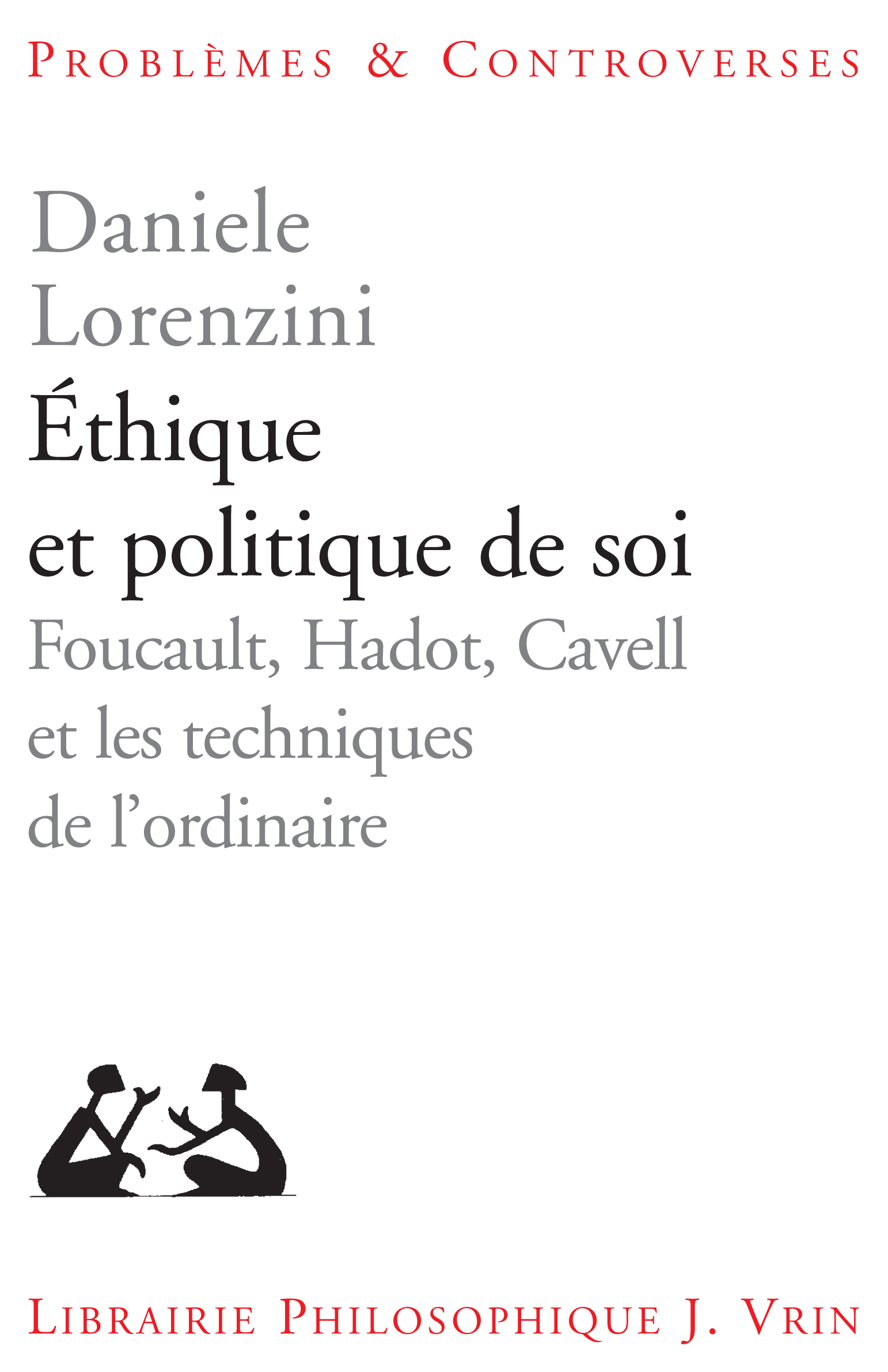
lorenzini-livreDaniele Lorenzini, Éthique et politique de soi. Foucault, Hadot, Cavell et les techniques de l’ordinaire. Paris: Librairie Philosophique J. Vrin, 2015

Introduction et Table des matières

Quel(s) rapport(s) est-il possible de tracer entre l’éthique et la politique? Michel Foucault, Pierre Hadot et Stanley Cavell, à partir de trois positions philosophiques très différentes, ont élaboré des stratégies de réponse à cette question que le présent ouvrage se propose de rendre explicites et d’explorer. Ainsi, l’esthétique de l’existence, les exercices spirituels et le perfectionnisme moral y sont combinés afin de construire un arrière-plan conceptuel et pratique permettant de saisir à la fois les enjeux politiques d’une « éthique de soi » et l’incontournable dimension éthique d’une « politique de nous-mêmes ». Cet ouvrage entend contribuer à l’élaboration d’une « philosophie analytique de la politique » dont le but est de rendre visibles l’existence et le fonctionnement concret du pouvoir dans ses ramifications quotidiennes; une telle entreprise se noue de façon étroite avec une analyse des « techniques de l’ordinaire », c’est-à-dire de ces pratiques que les individus utilisent pour donner une forme à leur vie et pour transformer leur rapport à eux-mêmes, aux autres et au monde.

Daniele Lorenzini, docteur de l’université Paris-Est et de l’université La Sapienza de Rome, enseigne l’éthique et la philosophie des sciences humaines à l’université Paris-Est Créteil.

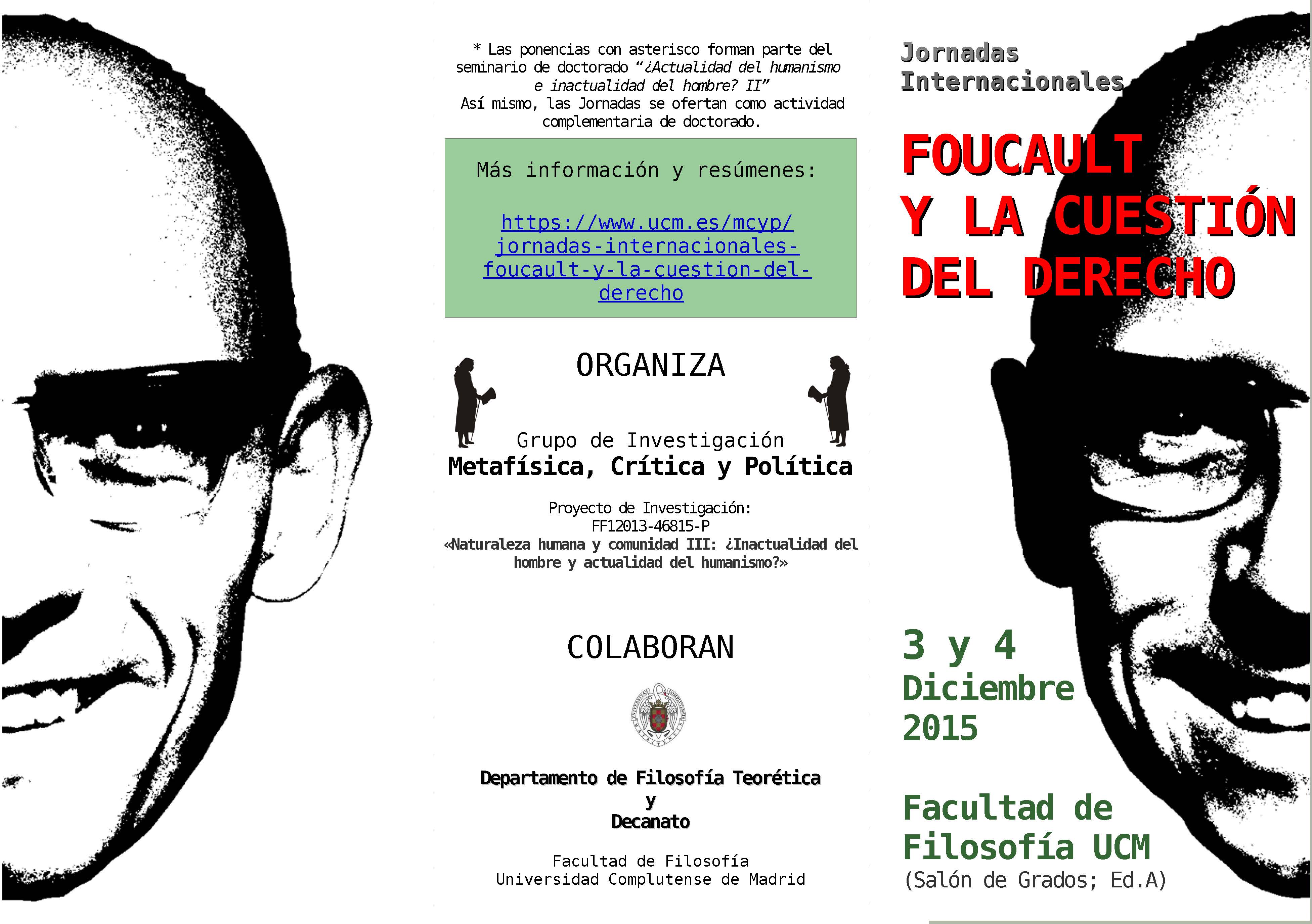
Tríptico_Page_1

PDF flyer and program

Jornadas Internacionales “Foucault y la cuestión del derecho”

Faculty of Philosophy
Complutense University of Madrid
3 and 4 December 2015

JUEVES 3 de Diciembre
(Salón de Grados; Ed.A)

SESIÓN DE MAÑANA

9:30 Inauguración: Rafael Orden (Excmo. Decano de la Facultad de Filosofía), Rogelio Rovira (Dir. Dpto. de Filosofía Teorética) y José Luis Pardo (Dir. Grupo de Investigación “Metafísica, Crítica y Política”)
(Modera Jorge Dávila)

10:00 “Foucault hecho y derecho. La quaestio iuris y la quaestio facti”, José Luis Pardo

10:50 Debate
11:10 Pausa

11:25 “Michel Foucault, la modernidad y las formas jurídicas”, Fernando Álvarez-Uría (UCM)

12:15 Debate

12:35 “La suspensión del derecho y el fantasma de la soberanía en la detención indefinida. Judith Butler sobre Foucault”, Emma Ingala (UCM)

13:10-13:30 Debate
SESIÓN DE TARDE
(Modera Emma Ingala)

16:30 “Breve arqueología del derecho a la última palabra”, Silvia Castro (UCM)

17:05 Debate

17:25 “« Ubu au tribunal » La loi et la norme dans le prisme de l’expertise psychiatrique”, Alain Gigandet (Université Paris XII)

18:15 Debate
18:35 Pausa

18:50 “El eclipse del «homo criticus» en la sociedad neoliberal: el diálogo de Wendy Brown con Michel Foucault”, Nuria Sánchez Madrid (UCM)

19:25-19:45 Debate

VIERNES 4 de Diciembre
(Salón de Grados; Ed.A)

SESIÓN DE MAÑANA
(Modera Nuria Sánchez Madrid)

10:00 “Direito e análise da política em Foucault”, Márcio Alves (Pontifícia Universidade Católica de São Paulo) *

10:50 Debate
11:10 Pausa

11:25 “Foucault y la problematización de la relación Ética – Derecho”, Jorge Dávila (Universidad de los Andes, Mérida, Venezuela) *

12:15 Debate

12:35 “Sobre «Derecho y Ontología» en Foucault (1978-1984)”, Marco Díaz Marsá (UCM)

13:10-13:30 Debate

SESIÓN DE TARDE
(Modera Marco Díaz Marsá)

16:30 “El pueblo como sujeto de lo universal. De la gubernamentalidad a la Aufklärung”, Jesús González Fisac (Universidad de Cádiz) *

17:05 Debate

17:25 “Une minorité qui ne fait pas loi. Le Kant des Lumières relu par Foucault”, Diogo Sardinha (Collège International de Philosophie -Paris) *

18:15 Debate
18:35 Pausa

18:50-19:45 Clausura y presentación del libro Foucault actual: ética y política (bid & co. Editor/Fundecem). Pausides Reyes (editor y presidente de Fundecem, Mérida, Venezuela)

Engels, K.S.
Biopower, Normalization, and HPV: A Foucauldian Analysis of the HPV Vaccine Controversy
(2015) Journal of Medical Humanities, 14 p. Article in Press.

DOI: 10.1007/s10912-015-9361-5

Abstract
This article utilizes the Foucauldian concepts of biopower and normalization to give an analysis of the debate surrounding the controversial administration of the HPV vaccine to adolescents. My intention is not to solve the problem, rather to utilize a Foucauldian framework to bring various facets of the issue to light, specifically the way the vaccine contributes to strategies of power in reference to how young adults develop within relationships of power. To begin, the article provides an overview of the Foucauldian concepts of biopower and normalization, including how these two strategies of power were present in the administration of the smallpox vaccine in the 19th century. Next, information about HPV and the history of the current controversy in the United States is presented. Lastly, the article presents an analysis of the strategies of biopower and normalization present in the debate on HPV, including an emphasis on how the vaccination is similar to, and different from, 19th century smallpox vaccination. It also explores the way that mechanisms of disease control affect and are affected by individual subjects, in this case, adolescents. © 2015 Springer Science+Business Media New York

Author Keywords
Biopower; Foucault; Human papillomavirus; Normalization

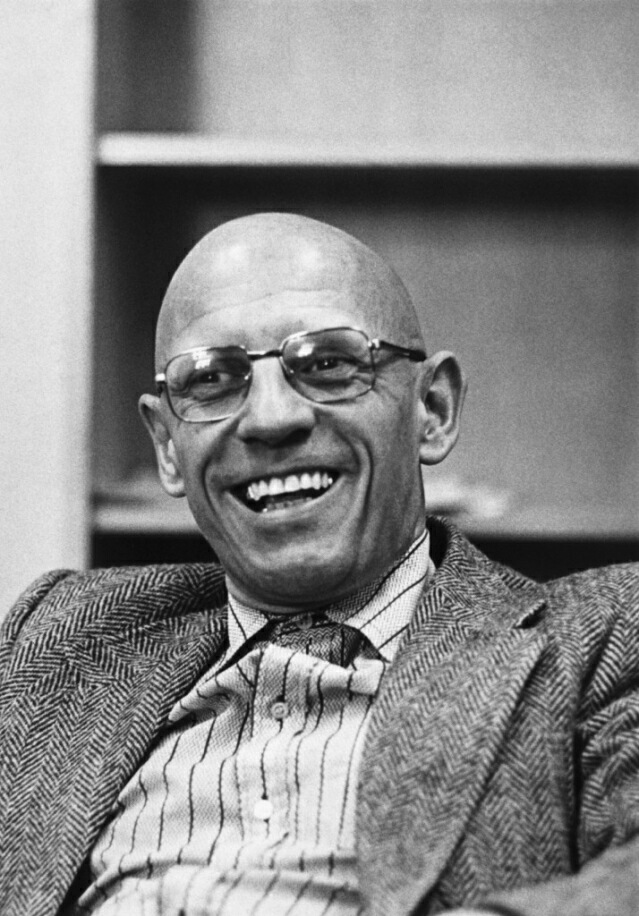
Michel Foucault le 5 novembre 1979© corbis - 2015 / Bettmann/CORBIS

Michel Foucault le 5 novembre 1979© corbis – 2015 / Bettmann/CORBIS

La marche de l’histoire. Michel Foucault, France Inter Radio

Invité Philippe Artières
Historien, chercheur au CNRS

Il avait mesuré que l’intervention des intellectuels passait de plus en plus par l’essai bref et le plateau télé et encore n’a-t-il pas connu l’économie du web 2.0. Puisque la discontinuité est de mise, il disait par provocation qu’advenait le temps du journaliste. En tout cas, la figure de l’intellectuel qui s’autorise d’une vérité transcendante et d’une compétence universelle pour distribuer la bonne parole, ce n’était pas son style !

Et son succès inouï dans les années 70 aussi bien au Collège de France qu’auprès de ses auditoires du monde entier ne changea pas son point de vue. « Je ne suis pas là où vous me guettez », disait-il. Il n’aimait pas les rôles de répertoire. « Je ne suis pas là où vous me guettez mais, ajoutait-il, je suis ici d’où je vous regarde en riant. » Rien ne l’enchantait plus que de passer d’un terrain d’enquête à un autre. Dans les années 1960, l’écart entre les mots et les choses. Plus tard, les pratiques de résistance face aux discours et aux techniques des pouvoirs. Dans les dernières années, avant sa mort prématurée en 1984, la technique, le contrôle de soi…

Nouveaux terrains, nouveaux concepts, nouveaux intervenants…. L’intellectuel non pas généraliste mais « spécifique » qu’il défendait, c’était un technicien qui ouvrait les portes à ceux qui ne se tiennent généralement ni dans les écrans de télé ni dans les rectangles de papier.