Foucault News

News and resources on French thinker Michel Foucault (1926-1984)

Vigo de Lima, I., Guizzo, D.
An Archaeology of Adam Smith’s Epistemic Context
(2015) Review of Political Economy, 21 p. Article in Press.

DOI: 10.1080/09538259.2015.1082819

Abstract
Adam Smith played a key role in Foucault’s archaeology of political economy. This archaeology, which Foucault accomplished in The Order of Things, is the focus of this article. Foucault may have disagreed with the writings of the classical political economists but he widens our perspective through new possibilities of understanding. It is very illuminating to understand Smith’s thinking as following a discursive practice that economic thought shared with the knowledge of living beings (natural history) and language (grammar). Foucault’s archaeology highlights some ontological and epistemological conditions that shed light on some of the pillars of Smith’s thinking: the centrality of exchange, the division of labour and the labour theory of value. The proximity between Newton and Smith is also examined in ontological and epistemological terms which can be understood through an investigation of that interdiscursivity practice. Beyond testing Foucault’s considerations, our aim is to demonstrate their potential for the current scholarship of Smith’s works. Foucault’s archaeology of knowledge offers a range of elements that warrants greater analysis by historians of economic thought. © 2015 Taylor & Francis

Author Keywords
Adam Smith; archaeology; Foucault; interdiscursive practice; Newtonian method; ontological and epistemological conditions

Selin, J.
From self-regulation to regulation – An analysis of gambling policy reform in Finland
(2015) Addiction Research and Theory, 10 p. Article in Press.

DOI: 10.3109/16066359.2015.1102894

Abstract
Responsible gambling is a form of gambling industry self-regulation, covering the multiple ways of gambling operator’s promises to prevent and reduce gambling addiction. In Finland, where the gambling operators consider themselves to be among the most responsible operators in the world, the amendment of the Lotteries Act aimed to shift the balance from industry self-regulation to more stringent state regulation. Our study data consisted of operators’ annual reports, government documents related to the approval and addiction-potential assessment of new gambling products, and government documents related to the supervision of the marketing of gambling products.

Theoretically, the paper draws most notably on Michel Foucault’s analytics of liberal forms of government and political rationality. Discourse analysis and quantitative content analysis were used to analyse the data. The analysis focused on the interaction between the regulators and gambling operators, with special importance given to self-regulation’s role in the interaction. The aim was to find out whether or not the more stringent regulations have been successfully implemented, and what role self-regulation has played in the implementation. The results show that a partial shift has taken place due to the more stringent market regulations, but the operators’ self-regulation has hindered the shift in the context of the addiction-potential assessment of new gambling products. More critical discussion and research are called for if effective and credible self-regulatory measures against gambling addiction and other gambling-related problems are to be developed. © 2015 Taylor & Francis

Author Keywords
Finland; gambling problems; government; policy implementation; regulation; responsible gambling; self-regulation

Bondy, J.M.
Negotiating domination and resistance: English language learners and Foucault’s Care of the Self in the context of English-only education
(2015) Race Ethnicity and Education, 21 p. Article in Press.

DOI: 10.1080/13613324.2015.1095171


Abstract

This article explores the basis for resistance to the normalizing technologies associated with English-only legislation and resulting educational practices. The dominance of English-only education in US public schools has normalized English first language speakers and English language learning by appropriating the technology of language in order to become ‘Americanized.’ Because of the growing number of English language learners (ELL) in US public schools, it is important to understand how the normalizing educational practices and disciplinary power associated with English-only education also cultivate possibilities for resistance. I draw upon Foucault’s analytic care of the self to explore the space of English-only education by asking: ‘What alternatives to the normalization of ELL students might be mobilized for resistance?’ This analysis suggests that to shift from a normalized ‘American’ identity requires questioning the racist and nativist discourse on English-only education, and focusing attention on contradictory and multilayered notions of ‘American’. The article concludes with recommendations for teacher education on how to cultivate prospective teachers’ resistance to English-only education. © 2015 Taylor & Francis

Author Keywords
care of the self; English language learners (ELL) students; English-only; language; race; resistance

Best wishes for the festive season from Foucault News!

 
keep-calm-and-read-foucault-with-your-friends-1

You can purchase this poster and related merchandise from the Keep calm-o-matic website.

Huijer, M.
A Critical Use of Foucault’s Art of Living
(2015) Foundations of Science, 5 p. Article in Press.

DOI: 10.1007/s10699-015-9441-z

Abstract
Foucault’s vocabulary of arts of existence might be helpful to problematize the entwinement of humans and technology and to search for new types of hybrid selves. However, to be a serious new ethical vocabulary for technology, this art of existence should be supplemented with an ongoing critical discourse of technologies, including a critical analysis of the subjectivities imposed by technologies, and should be supplemented with new medical and philosophical regimens for an appropriate use of technologies. © 2015 The Author(s)

Author Keywords
Care of the self; Ethical vocabulary; Foucault; Problematization; Technology

Index Keywords
Social sciences, Technology; Care of the self, Critical analysis, Critical discourse, Ethical vocabulary, Foucault, Problematization; Philosophical aspects

Journée d’études à l’EHESS

« Relire le Foucault de la Pléiade »

6 janvier 2016
École des Hautes études en sciences sociales
amphithéâtre François-Furet
105 bd Raspail
75006 Paris

PDF of programme

En novembre 2015, Michel Foucault fait son entrée à la Pléiade. La question que nous allons nous poser, dans cette journée d’étude, est la suivante : Est-il possible de discerner aujourd’hui une nouvelle lecture de Foucault grâce a cette édition Pléiade, les nouvelles notices, ou l’événement même de son entrée ? Est-ce que la publication des cours au Collège de France, l’accès aux nouvelles archives du Fonds Foucault à la BnF, ou d’autres développements récents, nous permettent de repenser les livres, la collection des œuvres publiées dans cette nouvelle édition Pléiade, ou, plus largement, « l’intervention Foucault » ? Pourrait-on discerner un nouveau Foucault ?

Avec Frédéric Gros, Arianna Sforzini, Daniele Lorenzini, François Delaporte, Daniel Defert, Jean-Francois Bert, Philippe Chevallier, Martin Rueff, Bernard E. Harcourt, et Philippe Sabot.

Sous la direction de Bernard E. Harcourt, directeur d’études

Programme

9:00 Bienvenue et problématique
Bernard Harcourt, Columbia University/EHESS

9:10 Frédéric Gros, SciencesPo, Paris
« Foucault est-il devenu classique ? »

10:00 Arianna Sforzini, Université Paris-Est Créteil
« Quand Foucault est devenu une archive. Travailler sur la bibliothèque foucaldienne : le Nietzsche de Foucault avant l’Histoire de la folie »

10:45 Daniele Lorenzini, Université Paris-Est Créteil
« Souci de soi et culture de soi : évolutions et effets de retour (1984-2015) »

11:30 François Delaporte, Université de Picardie Jules-Verne
« Naissance de la clinique »

12:15 Daniel Defert
« L’Ordre du Discours »

14:30 Jean-Francois Bert, Université de Lausanne
« Histoire de la folie à l’âge classique »

15:15 Philippe Chevallier, BnF
« Recontextualiser les articles et conférences : quelques exemples de problèmes d’édition »

16:00 Martin Rueff, Université de Genève
« L’Archéologie du savoir »

16:45 Philippe Sabot, Université de Lille
« Les Mots et les choses : Foucault et ses archives »

17:15 Bernard E. Harcourt, Columbia University/EHESS
« Surveiller et punir : nouvelles ressources »

Nildo Avelino, Confession and Political Normativity: Control of Subjectivity and Production of the Subject, May 4th 2015.

This article is the result of research activities held at the Department of Social Sciences (Federal University of Paraiba/UFPB).

Full text available on Academia.edu.

Abstract
The theme of confession, present in the reflection of Michel Foucault since the early 1960s, pursued the same direction of his researches from the late 1970s concerning the problem of government and the studies of governmentality. Under this perspective, confession is taken as recognition through which the subject authenticates in himself or herself his or her own actions and thoughts. Therefore, it is not only a verbal act by means of which the subject states the truth of his or her being; confession also binds the subject to truth, throwing him or her in a relation of dependency regards the other, and, at the same time, modifying the relationship that he or she establishes with himself or herself. According to Foucault, this is what explains the massive growth of practices of confession in Western societies up until their actual inscription at the heart of procedures of individualization typical of modern political power. This paper explores Foucault’s analysis of confessional practices and its recent developments in the work of Giorgio Agamben (Opus Dei. Archeologia dell’Ufficio, 2012) and Roberto Esposito (Due. La macchina della teologia politica e il posto del pensiero, 2013).

Keywords
Confession, oath, subjectivity.

Nildo Avelino
Full Professor of Political Theory at the Depart-ment of Social Sciences (Federal University of Paraiba/UFPB) and Professor of Political History at the Postgraduate Program in History (UFPB). Associate Researcher at the Centre Max Weber (CNRS-Centre National de la Recherche Scientifique, France) and coordinator of the Group of Anarchists Studies and Research at UFPB. His scientific interests focus on Governmentality Studies; Anarchist Studies; Government practices and power techniques.Contact: nildoavelino@cchla.ufpb.br

Miller, H.E., Thomas, S.L., Smith, K.M., Robinson, P.
Surveillance, responsibility and control: An analysis of government and industry discourses about “problem” and “responsible” gambling
(2015) Addiction Research and Theory, 14 p. Article in Press.

DOI: 10.3109/16066359.2015.1094060

Abstract
Background: Discussions of gambling have traditionally focused on ideas of “problem” and “responsible” gambling. However, few studies have examined how Institutions attempt to exert social control over gamblers in order to promote so-called “responsible” behaviour. In this study, we examine the way “problem” and “responsible” gambling are discussed by Australian governments and the gambling industry, using a theoretical framework based on the work of Foucault.

Method: We conducted a thematic analysis of discourses surrounding problem and responsible gambling in government and gambling industry websites, television campaigns and responsible gambling materials. Results: Documents distinguished between gambling, which was positive for the community, and problem gambling, which was portrayed as harmful and requiring medical intervention. The need for responsible gambling was emphasised in many of the documents, and reinforced by mechanisms including self-monitoring, self-control and surveillance of gamblers. Conclusions: Government and industry expect gamblers to behave “responsibly”, and are heavily influenced by neoliberal ideas of rational, controlled subjects in their conceptualisation of what constitutes “responsible behaviour”. As a consequence, problem gamblers become constructed as a deviant group. This may have significant consequences for problem gamblers, such as the creation of stigma. © 2015 Taylor & Francis

Author Keywords
Deviance; Foucault; gambling; responsibility; stigma

Kelly Quinn and Renee M. Powers
Revisiting the concept of ‘sharing’ for digital spaces: an analysis of reader comments to online news
(2015) Information Communication and Society, 19(4), 442–460.

https://doi.org/10.1080/1369118X.2015.1092565

Abstract
‘Sharing’ as it relates to the online environment is underconceptualized, and yet has been proposed as a means for understanding how individuals negotiate everyday privacy. To explore this possibility, we gather reader comments to online news accounts, as these offer an opportunity for observing everyday discourse. Using semantic network analysis, we map related concepts, and use these as a basis for revisiting the concept of ‘sharing’ as it pertains to the digital sphere. We argue that while ‘sharing’ continues to encompass traditional notions of communality and distribution, as practiced in digital spaces, it also takes on an added dimension of subjectivity. Consonant with Foucault’s (1988) ‘technologies of the self’, sharing online becomes a reflexive mechanism to know and care for oneself. By considering ‘sharing’ in this light, we aim to further the conversation of counter-posing sharing to privacy, especially when envisioned as a boundary management process. © 2015 Taylor & Francis

Author Keywords
self-surveillance; semantic network analysis; Sharing; technologies of the self

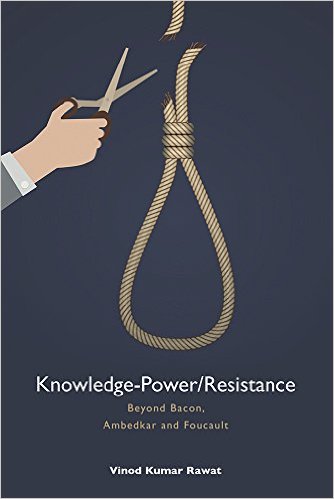
rawatVinod Kumar Rawat, Knowledge-Power/Resistance: Beyond Bacon, Ambedkar and Foucault, Partridge India Publication, 2014

Schools, Colleges, Universities, and Educational institutes, that is, “knowledge factories,” apart from producing self-governing citizens, and skilled docile workers, function as minute social observatories that indirectly monitor their families. Michel Foucault delineates power in terms of Pastoral (church and salvation), Sovereign (visible and verifiable), Disciplinary (invisible and unverifiable), Bio-power (reproduction and individualization), Psychiatric (normal and abnormal), and Governmentality (sovereignty, discipline, and government). By applying Foucault’s theory, the research investigated the relevance of the Francis Bacon’s popular dictum, “Knowledge is Power,” and Dr. B. R. Ambedkar’s final words, “Educate, Agitate, Organize.” The insights of the research may benefit the seekers and disseminators of knowledge in understanding the subtle operative modes of the government-capitalist nexus and in advocating appropriate resistance against the pathologies of power.

Summary by author
Academic institutes appear to be apolitical, independent, and gender-neutral in their innocuous transaction of knowledge between the teachers and the taught. The inherited belief is that teachers and academic administrators facilitate transmission of liberal education to the student community. However, Michel Foucault (1926-84) points out that even the libertarian institutes like universities and hospitals are structured on oppressive and disciplinary institutions like factories, prisons, and barracks that reinforce the government in exercising power over the citizens. These “knowledge factories,” apart from producing self-governing citizens, skilled and docile workers, function as minute social observatories that indirectly govern the families of the students.

Foucault applied tools like genealogy and archaeology to study a range of institutions like family, church, parliament, factory, barrack, dormitory, hospital, prison, and mental asylum with an objective to expose the “modes of objectifications” through which human beings are transformed into “subjects.” The first mode is “inquiry” through disciplines like linguistics, economics, and biology. The second mode, “dividing practices,” either divides the individual from within (insane) or from others (criminals and good students). And in the final mode, self-objectification, one learns to recognise oneself as the subject of some knowledge like sexuality. In this way, Foucault delineates power in terms of Pastoral (church and salvation), Sovereign (visible and verifiable), Disciplinary (invisible and unverifiable), Bio-power (reproduction and individualization), Psychiatric (normal and abnormal), and Governmentality (sovereignty, discipline, and government). The research attempts to investigate the relevance of Francis Bacon’s popular dictum, “Knowledge is Power,” and B. R. Ambedkar’s final words, “Educate, Agitate, and Organize,” seeks to explore the invisible link between knowledge, education, and power. Simultaneously, the thesis examines the education-knowledge-power nexus wherever teacher-taught relationship is in practice.

A campus comprises the microcosmic image of the nation, formed by the people from different parts of the country in the form of faculty, administrators, students, and office staff. In this regard, India is considered a macrocosmic social metaphor for the Indian campuses, and its apparatus and officiates are seen vis-à-vis with those of the campuses such as the Constitution of India/institute, the official language of India/the first language of the institute, the parliament/the senate, the prime minister/the vice-chancellor or the director, the ministers/the administrators, the citizens/the residents, the bureaucrats/the faculty, the lawyers/the student-representatives, the courts/the disciplinary committees, and the prisoners/the students.

The thesis contains five chapters. The first chapter titled, “Education, Knowledge, and Power,” uses the views of various thinkers to illustrate that the covert function of the educational institutes is to maintain class inequality instead of imparting knowledge. Foucault proclaims that power can be converted into knowledge and vice-versa, and that it produces resistance.Foucault subverts the popular theories of “power” by Karl Marx and Sigmund Freud who propagated that power is negative and repressive. After establishing and exposing the relationship between the politics-knowledge nexus, the thesis investigates the semantic boundaries of campus fiction. It also contains a brief review of the Western works and shows how this genre originated and developed.

The second chapter titled, “Sovereign Power: Caste System and University Administration,” discusses Foucault’s view of the Sovereign power and examines why understanding the history of a country is a prerequisite for understanding the contemporary culture and society. In this regard, it evaluates the Indus valley civilisation, Hindu caste-system, Muslim invasion, the British rule and the partition of India. It maps the knowledge-power nexus in the Western context and explains that in India, apart from the race and class, the ancient caste system has given rise to new complexities. This analysis leads to the discovery of various misconceptions, mis/representations of people and false propaganda within the Indian society as a part of power-politics nexus. The chapter ends with the discussion on the assassination of Mahatma Gandhi who played a pivotal role in laying the foundation of modern and independent India.

The third chapter titled, “Disciplinary Power: Class and Panoptic Professors,” seeks to understand how Foucault by leading the life of an exemplary disciplined student substantially developed his concept of disciplinary power. It introduces the important concept of “Panopticism,” with a focus on “invisible gaze,” and elaborates that the teachers merely act as “agents of power.” It evaluates the socio-political conditions that took place between the partition of India in 1947 and the enforcement of the Indian Constitution in 1950. Finally, the chapter reveals how the “class system,” through the establishment of the democracy, permeated the post-independent Indian society and premier educational institutes like the IITs, the IIMs, the IIITs, and the NITs.

The fourth chapter titled, “Bio-Power: Gender, Caste, and Resistance,” deals with Foucault’s theory of bio-power and traces the subordination of women in the global perspective. In the Indian context, it exposes the subjugation of the females through scriptures. This chapter also deals with Foucault’s views on resistance and employs his archeology methodology to expose the statements made by Rajendra Pandey regarding the continuation of the traditional castes in maintaining their status quo as the intellectual castes even after the Indian independence. Finally, it attempts to consolidate Foucault’s views to sketch the exact relationship between power, knowledge and resistance. Accordingly, these triads are inseparably linked together as Knowledge-Power/Resistance, they are to be seen as action words, and their functioning is to be grasped in their invisibility.

The fifth chapter titled, “Indian Campus Fiction: Textual Elucidations,” opens with defining India and Indian culture. It further highlights the genesis of fiction as imported genre in India. It traces the origin of the Indian Campus Fiction through a survey of literature on the major works done in this field. In order to illustrate the results derived through Foucauldian study, representative Indian Campus Fiction have been studied. The insights of the research may benefit the seekers and disseminators of knowledge in understanding the subtle operative modes of the government-capitalist nexus and in advocating appropriate resistance against the pathologies of power. The faculty might adopt humanitarian and egalitarian methods of teaching, while the students might gain productive and positive knowledge.