Foucault News

News and resources on French thinker Michel Foucault (1926-1984)

Paatela-Nieminen, M., Itkonen, T., Talib, M.-T.
Reconstructing Imagined Finnishness: The Case of Art Education through the Concept of Place
(2016) International Journal of Art and Design Education, 35 (2), pp. 229-242.

DOI: 10.1111/jade.12057

Abstract
This multidisciplinary article presents a methodology, a research project and selected outcomes from an environmental art education course for teacher students. The course is part of an art education minor at the University of Helsinki, Department of Teacher Education. The students were asked to construct their place through an intertextual art method that provided them the means to study their place open-endedly as a space of plural cultural meanings. Applying the results from their intertextual process, they reconstructed their place artistically. The end product was a personal work of art that included traces of their chosen places, and created a new meaning for it. The outcome is a visual space of compacted meanings from different places. Places contain history and memories important to identity construction. The results show that the intertextual reading extends the students’ concept of place as a space for relational and plural cultural meanings. Foucault’s concept of heterotopia, as it applies to otherness of places and spaces, was used alongside the intertextual art method. © 2016 The Authors. iJADE © 2016 NSEAD/John Wiley & Sons Ltd

Author Keywords
art education; Finnishness; heteretopia; identity; intertextual art method; local/global culture; place
Sonu, D., Benson, J.
The quasi-human child: How normative conceptions of childhood enabled neoliberal school reform in the United States
(2016) Curriculum Inquiry, 46 (3), pp. 230-247.

DOI: 10.1080/03626784.2016.1168259

Abstract
This paper argues that normative conceptions of the child, as a natural quasi-human being in need of guidance, enable current school reforms in the United States to directly link the child to neoliberal aims and objectives. In using Foucault’s concept of governmentality and disciplinary power, we first present how the child is constructed as a subject of the adult world, then trace how such understandings invite school policies and practices that worked on the child, rather than with the child. In order to understand how the child comes to be known and recognized as a learner, both at the intersections of normative conceptions of childhood and material expectations of the student, we use Biesta’s three domains of education: socialization, qualification, and subjectification as an organizing framework and draw primarily from Common Core Learning Standards and related policy reports with the aim of reorienting educational work away from economic and political universals and toward a subjective response to the child as a human being with concerns, rights, and as a subject worthy of recognition. © 2016 the Ontario Institute for Studies in Education.

Author Keywords
common core; Foucault; neoliberalism; subjectification; The child

Podcast

Bryan Cooke and Mark Kelly discuss Foucault, biopolitics, modernity, the role of the intellectual in politics, and Foucault, March 18, 2016

Damien Page, The surveillance of teachers and the simulation of teaching, Journal Of Education Policy Vol. 32 , Iss. 1, 2017
https://doi.org/10.1080/02680939.2016.1209566

Full text

Abstract
Just as surveillance in general has become more sophisticated, penetrative and ubiquitous, so has the surveillance of teachers. Enacted through an assemblage of strategies such as learning walks, parental networks, student voice and management information systems, the surveillance of teachers has proliferated as a means of managing the risks of school life, driven forward by neoliberal notions of quality and competition. However, where once the surveillance of teachers was panoptic, a means of detecting the truth of teaching behind fabrications, this article argues that surveillance within schools has become a simulation in Baudrillard’s terms, using models and codes such as the Teachers’ Standards and the Schools Inspection Handbook as predictors of future outcomes, simulating practice as a means of managing risk. And if surveillance in schools has become a simulation, then so perhaps has teaching itself, moving beyond a preoccupation with an essentialist truth of teaching to the hyperreality of normalised visibility and the simulation of teaching. This article argues that surveillance – including external agencies such as Ofsted – no longer exists to find the truth of teaching, the surveillance of teachers exists only to test the accuracy of the models and codes upon which the simulation is based.

Keywords: Surveillance of teachers, education policy, teacher standards, simulation and simulacra, teacher authenticity, critical analysis

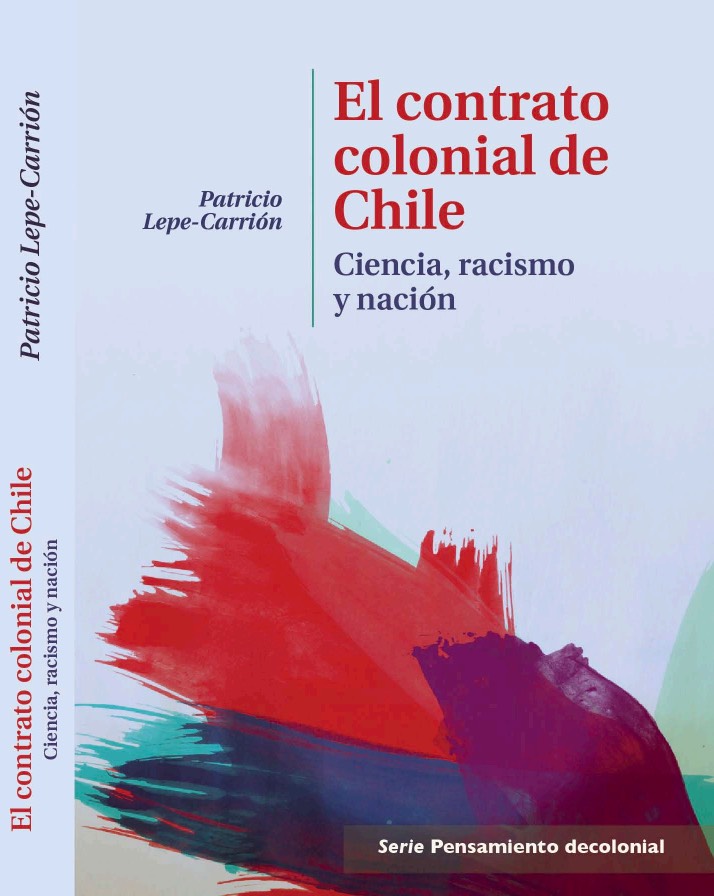
Patricio Lepe-Carrión, El contrato colonial de Chile, Sciencia, racismo, nación Abya Yala, 2016

PDF cover and table of contents

En los orígenes de la nación chilena se ocultan una serie de elementos raciales que pueden remontarse a muchos años antes de su establecimiento formal como institución política. Las ideas de “raza” y “racismo” son el eje central sobre el cual el autor intenta analizar dichas retóricas de inferiorización, provenientes tanto de la ciencia, de la política, como de las prácticas culturales de los siglos XVII, XVIII y principalmente del XIX.

Se trata de un trabajo transdisciplinario,. que se fundamenta en una revisión crítica de fuentes primarias de la época y de una extensa literatura secundaria proveniente de la historia de la cultura, de la ciencia, la antropología social y cultural, así como de la filosofía.

No se trata de una obra de historia, ni menos de antropología, solo es un intento por pensar o cartografiar nuestro pasado colonial (y poscolonial) como un ejercicio de conceptualización que nos permita cuestionar aquello que se denomina “identidad chilena”.

Serie pensamiento de colonial

Parte I

Colonialidad del poder en el reino de Chile

Capítulo I

Civilización y barbarie: la diferencia colonial

Capítulo II

La construcción del sujeto colonial en el Chile del siblo XVII

Parte II

Taxonomías Proto-Raciales de la Ilustración

Capítulo III

Epoca clásica, y el no lugar en la instrumentalización política de los saberes científicos

Capítulo IV

La historia natural en el orden y clasificación etnoracial de la humanidad

Capítulo IV

Clasificación racial en la filosofía ilustrada. El caso de Immanuel Kant

Parte III

Nobleza y plebe: residuos simbólicos durante la pos-colonia

Capítulo VI

Biopolítica borbónica en Chile: el discurso antropolótico sobre la ociosidad, el vagabundaje, y su objetivación en el mestizaje

Capítulo VII

El color de las clases sociales chilenas

Capítulo VIII

Imaginando la nación

Capítulo IX

Dimensión simbólica de las clases sociales: escenificación y apariencia

Conclusión

Bazzul, J.
The ‘subject of ethics’ and educational research OR Ethics or politics? Yes please!
(2017) Educational Philosophy and Theory, pp. 1-11. Article in Press.

DOI: 10.1080/00131857.2016.1270184

Abstract
This paper outlines a theoretical context for research into ‘the subject of ethics’ in terms of how students come to see themselves as self-reflective actors. I maintain that the ‘subject of ethics’, or ethical subjectivity, has been overlooked as a necessary aspect of creating politically transformative spaces in education. At the heart of egalitarian politics lies a fundamental tension between the equality of voices (or ways of being) and the notion that one way of being or one voice may be deemed more legitimate than another; which in turn puts the equality of beings into question. Building from Michel Foucault’s work regarding ethics and subjectivity, I suggest that a ‘subject of ethics’ can be viewed, in part, as a series of relations of self that form the horizon upon which a subject comes to work on themselves relative to moral codes and power relations. Ethical relations of self can be a useful concept for those interested in educational research that furthers social and ecological justice. In the conclusion of this paper I also discuss the limitations of locating ethics entirely within a constituted human subject. © 2017 Philosophy of Education Society of Australasia

Author Keywords
anthropology; ethics; Foucault; justice; politics; qualitative research; subjectivity

Chang-Kredl, S., Wilkie, G.
What is it like to be a child? Childhood subjectivity and teacher memories as heterotopia
(2016) Curriculum Inquiry, 46 (3), pp. 308-320.

DOI: 10.1080/03626784.2016.1168262

Abstract
Foucault’s notion of heterotopia offers a novel way to understand teachers’ conceptualizations of childhood, in juxtaposing adult memories of childhood with their present context of teaching children. Memory writing prompts were given to 41 early childhood teachers, and the resulting written narratives were analyzed as heterotopic spaces. The study follows two trajectories. First, in terms of teacher development, we examine how the construct of heterotopia can help teachers and teacher educators understand the impact of memories on their current assumptions about childhood. Second, we argue that examining the teacher’s internal experiences through heterotopia can contribute to theoretical thinking about childhood. The study’s findings suggest that it is a considerable but meaningful challenge to examine our subjective experience of childhood in relation to our understanding of children today. This process may be useful in assisting the teacher to disentangle the imagined, remembered, conceptualized and actual child, and to interrupt our tendencies to project our own experiences onto others. Perhaps, there is a childhood that exists in heterotopic spaces, not quite the subjective or psychical child, but not quite the external child either. This may be the liminal childhood that the early childhood teacher, preoccupied as (s)he is with childhood, experiences. Theorizing teachers’ subjectivities as they are linked to their memories of childhood is a complex endeavour, and Foucault’s heterotopia provides rich images of strange juxtaposition that may be useful in thinking about childhood and teaching. © 2016 the Ontario Institute for Studies in Education.

Author Keywords
Curriculum studies; heterotopia; memory; narrative methods; student and teacher experiences; teacher development

Hull, G.
Equitable relief as a relay between juridical and biopower: the case of school desegregation
(2016) Continental Philosophy Review, pp. 1-24. Article in Press.

DOI: 10.1007/s11007-016-9372-6

Abstract
The present paper looks at the intersection of juridical and biopower in the U.S. Supreme Court’s school desegregation cases. These cases generally deploy “equitable relief” as a relay between the juridicially-specified injury of segregation and the biopolitical mandates of integration, allowing broad-based biopolitical remedies for juridically identified problems. This strategy enabled the Courts to negotiate between these forms of power. The analysis here thus suggests the continued relevance of juridical power, and also the limits of Foucault’s own analysis, which suggested that biopower tended to fully colonize juridical power by way of norms. © 2016 Springer Science+Business Media Dordrecht

Author Keywords
Biopower; Desegregation; Education; Foucault; Juridical power; Racism

Ragab, A.
Monsters and patients: An archaeology of medicine, islam, and modernity
(2016) History and Theory, 55 (4), pp. 112-130.

DOI: 10.1111/hith.10832

Abstract
Foucault’s analysis of the history of evolutionary thought in Les Mots et les choses introduces monsters as incomplete beings that form important steps on the evolutionary ladder toward the terminal species. Monsters represent attempts by nature to achieve the perfection of the terminal species and are, therefore, significant for naturalists in constructing the details of the natural continuum. Despite their incompleteness, monsters underwrite the natural continuum and evidence the grounding of this continuum in reality. To a great extent, the continuum of nature, proposed by Foucault, resembles a continuum of civilization through which the history of the world and the history of colonization were often seen. The non-European emerged as the monster that showcased the deeper history of the more-perfect European. In the same way that monsters were written into natural history as intermediary and incomplete beings, losing in the process their uniqueness as independent species, the colonized were written into the (new) World History as objects of colonization, modernization, and development and as the living fossils of a bygone European past. This new history was not only created for European consumption but was also an important part of European-style education in the colony shaping colonial and post colonial identities and perceptions of self and other.

This article uses Foucauldian monsters to understand the making of historical narratives about the precolonial past in nineteenth-century Egypt, where one of the earliest European-style medical schools in Africa and Asia was built in the early nineteenth century. In this school and surrounding emerging educational system, narratives about science, modernity, and religion produced new histories that came to form colonial subjects.Finally, the article asks about a post colonial/post monstrous epistemology, what it might look like and whether and how it can emerge from the postcolonial condition. © Wesleyan University 2016.

Author Keywords
Egypt; Islam; Medicine; Monsters; Postcolonial; Religion and science

Fejes, A.
The confessing academic and living the present otherwise: Appraisal interviews and logbooks in academia
(2016) European Educational Research Journal, 15 (4), pp. 395-409.

DOI: 10.1177/1474904116636637

Abstract
In this paper, drawing on the work of Michel Foucault, I argue that academics are enmeshed in power relations in which confession operates, both on and through academics. Drawing on Foucault’s genealogy of confession, I illustrate how academics are not only invited to reflect on performance, faults, temptations and desires in their work and private life, but as teachers they mobilise the same kind of technology in relation to students. These power relations are connected to wider changes in society, where discourses on New Public Management have become all pervasive in organising and governing public institutions. The examples of the use of appraisal interviews and logbooks as governing techniques illustrate how government currently operates through the freedom of the individual. The paper ends with a discussion on how books of life could introduce a different relation of the self to the self in academia, and thus provide opportunities to live the present otherwise. © The Author(s) 2016.

Author Keywords
academia; appraisal interviews; Confession; Foucault; higher education; logbooks