Foucault News

News and resources on French thinker Michel Foucault (1926-1984)

Dowd, J.
Moments that matter: Educational entanglements and ecologies of action
(2017) Review of Communication, 17 (1), pp. 3-17.

DOI: 10.1080/15358593.2016.1260761

Abstract
In this article, I argue that “the freedom to make and remake our cities and ourselves” is intimately entangled with processes of education. To understand this relationship, we need to articulate more fully the role and state of teaching and learning both within and outside of academe. I argue that education allows for a negotiation of one’s relationship within broader ecologies of action, which comprise constellations of power (and their correlate ideologies), discourses, bodies, material sites, and practices. More specifically, I elucidate three primary ways that education might serve as a powerful mode of tactical resistance to the deleterious effects of neoliberalist regimes and their exclusionary agendas: (1) research and rejuvenated public intellectualism; (2) understanding teaching as the nurturing of capacities rather than as a conduit for information transfer; and (3) centering education on the cultivation of a learning mode.2 © 2016 National Communication Association.

Author Keywords
Democracy; Education; Foucault; Lefebvre; Resistance; Urban society

Elisabetta Basso, Complicités et ambivalences de la psychiatrie, Münsterlingen et le carnaval des fous de 1954, Médecine/Sciences (Paris), Volume 33, Number 1, Janvier 2017
DOI: 10.1051/medsci/20173301019

Complicities and ambivalences of psychiatry: Münsterlingen and the 1954 feast of fools

Résumé
En mars 1954, Michel Foucault visite l’asile de Münsterlingen, dans le canton de Thurgovie, sur la rive suisse du lac de Constance. Lieu d’activité de psychiatres bien connus, notamment Hermann Rorschach, Münsterlingen est devenu célèbre dans l’histoire de la psychiatrie surtout grâce au travail de Roland Kuhn, qui fut actif à l’asile de 1939 à 1979. Grand spécialiste du test psychodiagnostique de Rorschach et découvreur au début des années 1950 du premier médicament antidépresseur, Kuhn fut également très proche de Ludwig Binswanger, dont il accueille favorablement l’approche anthropologique de la maladie mentale. C’est précisément pour rencontrer Kuhn et Binswanger que le jeune Foucault se rend en Suisse, à une époque où il s’intéresse à la psychopathologie « existentielle ». Sa visite a lieu pendant la fête du Carnaval de l’asile.

Abstract
In March 1954, Foucault visited the psychiatric asylum of Münsterlingen (Canton Thurgau), on the Swiss side of Lake Constance. Münsterlingen was the chosen place of activity for well-known psychiatrists, including Hermann Rorschach (1910-1913), and it became famous in the history of psychiatry especially through the work of Roland Kuhn, who was active in the asylum from 1939 to 1979. Kuhn was an expert in the Rorschach psycho-diagnostic test, as well as the discoverer of the first antidepressant in the early 1950s. He was also very close to Ludwig Binswanger, whose anthropological approach to mental illness had a strong influence on his own psychiatric practice. It is precisely in order to meet Kuhn and Binswanger that the young Foucault went to Switzerland, at a time when he was interested in philosophical anthropology and “existential psychopathology”. Foucault’s visit took place during the Carnival at the asylum, when the patients leave the hospital wearing the masks that they have made up and created.

Amsler, M., Shore, C.
Responsibilisation and leadership in the neoliberal university: a New Zealand perspective
(2017) Discourse, 38 (1), pp. 123-137.

DOI: 10.1080/01596306.2015.1104857

Abstract
We examine how discourses of leadership and responsibilisation are used in contemporary universities to deepen neoliberal administration and further the corporate university’s business plan by restructuring and redescribing academic work. Strategically, responsibilisation discourse, promoted as ‘distributed leadership’, is a technology of indirect management. Responsibilisation language stipulates ‘expectations’ for workers and integrates academic work (teaching, learning, research, service) into an administered regime recognising and rewarding successful conduct (‘leadership’) in the university. We intervene in this responsibilisation discourse by critically analysing texts about distributed leadership in one New Zealand university context. Linking Foucault’s analysis of earlier forms of liberal governmentality with critical discourse analysis, we explore how administrative structures, power relations, and regulating management discourse seek to reshape employee behaviour in the neoliberalised, post-democratic university. We present a case study of one university’s ‘Leadership Framework’, which exemplifies a new form of ‘post-neoliberal governmentality’ in higher education, embedding self-governance within increasingly instrumentalising centralisation. © 2015 Informa UK Limited, trading as Taylor & Francis Group.

Author Keywords
academic leadership; Critical discourse analysis; entrepreneurship in higher education; governmentality; higher education; New Zealand universities; responsibilisation

ogdenSteven G. Ogden, The Church, Authority, and Foucault. Imagining the Church as an Open Space of Freedom, Routledge, 2017

The Church, Authority, and Foucault addresses the problem of the Church’s enmeshment with sovereign power, which can lead to marginalization. Breaking new ground, Ogden uses Foucault’s approach to power and knowledge to interpret the church leader’s significance as the guardian of knowledge. This can become privileged knowledge, under the spell of sovereign power, and with the complicity of clergy and laity in search of sovereigns. Inevitably, such a culture leads to a sense of entitlement for leaders and conformity for followers. All in the name of obedience.

The Church needs to change in order to fulfil its vocation. Instead of a monarchy, what about Church as an open space of freedom? This book, then, is a theological enterprise which cultivates practices of freedom for the sake of the other. This involves thinking differently by exploring catalysts for change, which include critique, space, imagination, and wisdom. In the process, Ogden uses a range of sources, analysing discourse, gossip, ritual, territory, masculinity, and pastoral power. In all, the work of Michel Foucault sets the tone for a fresh ecclesiological critique that will appeal to theologians and clergy alike.

Table of Contents

1 The Church and the problem of sovereign power

2 Under Foucault’s gaze: the subject, freedom, and the power-knowledge concept

3 The concept of authority: guardians, gossip, and the sovereign exception

4 The spell of monarchy and the sacralization of obedience

5 The Church as an open space of freedom

6 New spaces and the imagination

7 Bearing the lightning of possible storms: critique, space, imagination, wisdom

Biography
Steven Ogden is an adjunct lecturer in theology, and a member of the Center for Public and Contextual Theology (PACT), with Charles Sturt University Australia. He is also the Rector of Holy Trinity Church, Fortitude Valley. Previously, Steven has been the Principal of St Francis Theological College Brisbane, and the Dean of St Peter’s Cathedral Adelaide.

Barker, D.
Ninjas, zombies and nervous wrecks? Academics in the neoliberal world of physical education and sport pedagogy
(2017) Sport, Education and Society, 22 (1), pp. 87-104.

DOI: 10.1080/13573322.2016.1195360

Abstract
Scholars have drawn some damning conclusions on the current state of the academy. They argue that neoliberal developments such as corporatization and privatization are undermining research and teaching quality, disrupting social relations and impacting negatively on the health and well-being of academic staff. Academia is, according to these scholars, coming to be peopled by hypercompetitive and combative ‘ninjas’, cynical and unmotivated ‘zombies’ and jaded and anxious ‘nervous wrecks’. Against this negative depiction of academics, the aim of this paper is to provide an illustration of an alternative identity that is formed and performed within the field of physical education and sport pedagogy (PESP). This illustration is achieved through the presentation and analysis of an account that shows some of the individuals inhabiting the world of PESP. The account is based on autoethnographic research and relies largely on reported speech and reflective notes to build a description of the author, in the early stages of mid-career, working with his colleagues to write a section of this paper. A Foucauldian framework that includes the concepts of governmentality and care of the self is employed to consider how the author becomes a neoliberal subject with some possibilities for resisting technologies of power. The paper is concluded with reflections on the process of resisting and the significance of local socio-political contexts as issues for further discussion. © 2016 Informa UK Limited, trading as Taylor & Francis Group.

Author Keywords
Academia; Autoethnography; Foucault; Neoliberal; Physical education; Sport pedagogy

Index Keywords
career, human, human experiment, identity, male, pedagogics, speech, sport

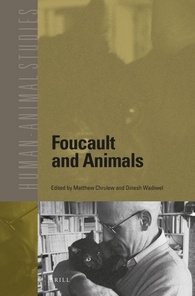
foucault-animalsFoucault and Animals
Edited by Matthew Chrulew and Dinesh Joseph Wadiwel, Brill, 2016

Foucault and Animals is the first collection of its kind to explore the relevance of Michel Foucault’s thought for the question of the animal. Chrulew and Wadiwel bring together essays from emerging and established scholars that illuminate the place of animals and animality within Foucault’s texts, and open up his highly influential range of concepts and methods to different domains of human-animal relations including experimentation, training, zoological gardens, pet-keeping, agriculture, and consumption. Touching on themes such as madness and discourse, power and biopolitics, government and ethics, and sexuality and friendship, the volume takes the fields of Foucault studies and human-animal studies into promising new directions.

Biographical note
Matthew Chrulew, Ph.D. (2011) is a research fellow in the School of Media, Culture and Creative Arts and the Centre for Culture and Technology at Curtin University. His essays have appeared in Angelaki, SubStance, New Formations, Foucault Studies and elsewhere.

Dinesh Joseph Wadiwel, Ph.D. (2006) is a Lecturer in Human rights and Socio-Legal Studies at The University of Sydney. He is author of the monograph The War against Animals (Brill, 2015).

Table of contents
Foreword
List of Contributors
Editor’s Introduction: Foucault and Animals, Matthew Chrulew and Dinesh Joseph Wadiwel

Part One: Discourse and Madness
1. Terminal Truths: Foucault’s Animals and the Mask of the Beast, Joseph Pugliese
2. Chinese Dogs and French Scapegoats: An Essay in Zoonomastics, Claire Huot
3. Violence and Animality: An Investigation of Absolute Freedom in Foucault’s History of Madness, Leonard Lawlor
4. The Order of Things: The Human Sciences are the Event of Animality, Saïd Chebili.
(Translated by Matthew Chrulew and Jeffrey Bussolini)

Part Two: Power and Discipline
5. “Taming the wild profusion of existing things”: A Study of Foucault, Power, and Human/Animal Relationships, Clare Palmer
6. Dressage: Training the Equine Body , Natalie Corinne Hansen
7. Foucault’s Menagerie: Cock Fighting, Bear Baiting, and the Genealogy of Human-Animal Power, Alex Mackintosh

Part Three: Science and Biopolitics
8. The Birth of the Laboratory Animal: Biopolitics, Animal Experimentation, and Animal Wellbeing, Robert G. W. Kirk
9. Animals as Biopolitical Subjects, Matthew Chrulew
10. Biopower, Heterogeneous Biosocial Collectivities and Domestic Livestock Breeding, Lewis Holloway and Carol Morris

Part Four: Government and Ethics
11. Apum Ordines: Of Bees and Government, Craig McFarlane
12. Animal Friendship as a Way of Life: Sexuality, Petting and Interspecies Companionship, Dinesh Joseph Wadiwel
13. Foucault and the Ethics of Eating, Chloë Taylor
Afterword, Paul Patton

Khodadadi, M., O’Donnell, H.
UK press and tourist discourses of Iran: a study in multiple realities
(2017) Leisure Studies, 36 (1), pp. 53-64.

DOI: 10.1080/02614367.2015.1085591


Abstract

The aim of this article is to investigate the competing discourses of Iran currently circulating in British society, and their influence on the tourist destination image of that country. A mixed-methods approach was adopted within a social constructionist perspective: this consisted of a Foucauldian discourse analysis of news reports in a range of British broadsheet newspapers, interviews with tourists who had visited Iran, and analysis of travel blogs written by a second group of tourists who had also previously visited the country. The findings show that the leading British broadsheets examined exclusively circulate an extremely negative discourse of Iran-as-Polity, originating in US and mediated by the British political field, whose main components are nuclear issues, danger, hostility and terrorism. Though UK tourists to the country are often drawn there initially by a largely Orientalist discourse of Iran-as-Persia, i.e. as a site of historical monuments, during and post visit, they develop a counter-discourse of Iran-as-Society which concentrates on the modernity of certain aspects of the country and above all the hospitality of its citizens, a discourse which is then further disseminated in the form of travel blogs. The article also mobilises Bourdieu’s concept of academic capital to examine the role of education in providing resources to resist the discourse of Iran-as-Polity. In its range of sources analysed, the article offers a relatively novel approach to investigating the role of media discourse and the internet–the latter framed using Foucault’s ‘genealogical’ approach–in the formation of competing tourist destination images of Iran. © 2015 Taylor & Francis.

Author Keywords
cultural tourism; destination image; discourse; Iran; news media; social media

sexographyNicholas de Villiers, Sexography.Sex Work in Documentary, University of Minnesota Press, Forthcoming 2017

A bold challenge to rethink the ways we view sex work and documentary film

The turn of the twenty-first century has witnessed an eruption of nonfiction films on sex work. The first book to examine a cross-section of this diverse and transnational body of work, Sexography confronts the ethical questions raised by ethnographic documentary and interviews with sexually marginalized subjects. Nicholas de Villiers argues that carnal and cultural knowledge are inextricably entangled in ethnographic sex work documentaries.

De Villiers offers a reading of cinema as a technology of truth and advances a theory of confessional and counterconfessional performance by the interviewed subject who must negotiate both loaded questions and stigma. He pays special attention to the tactical negotiation of power in these films and how cultural and geopolitical shifts have affected sex work and sex workers. Throughout, Sexography analyzes the films of a range of non–sex-worker filmmakers, including Jennie Livingston, Pier Paolo Pasolini, Shohini Ghosh, and Cui Zi’en, as well as films produced by sex workers. In addition, it identifies important parallels and intersections between queer and sex worker rights activist movements and their documentary historiography.

De Villiers ultimately demonstrates how commercial sex is intertwined with culture and power. He advocates shifting our approach from scrutinizing the motives of those who sell sex to examining the motives and roles of the filmmakers and transnational audiences creating and consuming films about sex work.

Bojesen, E.
I/MLEs and the uneven return of pastoral power
(2016) Educational Philosophy and Theory, pp. 1-8. Article in Press.

DOI: 10.1080/00131857.2016.1267604

Editor: I/MLE stands for Innovative/Modern Learning Environments

Abstract
Informed by the work of the work of Michel Foucault, Ian Hunter, and Ansgar Allen, this paper argues that I/MLEs are not the creation of a ‘modern’ or ‘innovative’ learning environment but rather the reclamation of an educational technique that was pioneered en masse almost two centuries ago (and based on practices many centuries older than that), where established pastoral methods were key to shaping particularly formed educated subjects. Drawing on work produced by the OECD, as well as UK and NZ education policies and school building design guidance, this argument couches two claims, the first of which is that whether or not education systems and school buildings are conforming to I/MLE models, the ubiquity of ideologically narrow conceptions of the learning subject are enforced regardless, through subtle or unsubtle means. However, the second claim is that, despite their overarching and unsurprising ideological homogeneity with other more outcome oriented forms of schooling, I/MLEs have the potential to offer a much more substantial formative experience than other schooling systems due to their implicit recovery of the traditional pastoral aspect of education. © 2016 Philosophy of Education Society of Australasia

Author Keywords
disciplinary power; I/MLEs; Michel Foucault; New Zealand education policy; Pastoral power; UK education policy

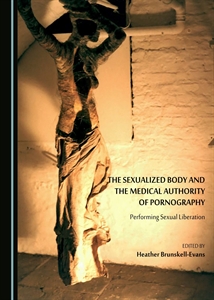
sexualized-bodyHeather Brunskell-Evans (Ed) The Sexualized Body and the Medical Authority of Pornography, Cambridge Scholars Publishing, 2016

Book Description
This edited collection examines pornography as a material practice that eroticises gender inequality and sexual violence towards women. It addresses the complex relationship between pornography and medicine (in particular, sexology and psycho-therapy) whereby medicine has historically, and currently, afforded pornography considerable legitimacy and even authority. Pornography naturalises women’s submission and men’s dominance as if gendered power is rooted in biology not politics. In contrast to the populist view that medicine is objective and rational, the contributors here demonstrate that medicine has been complicit with the construction of gender difference, and in that construction the relationship with pornography is not incidental but fundamental.

A range of theoretical approaches critically engages with this topic in the light, firstly, of radical feminist ideas about patriarchy and the politics of gender, and, secondly, of the rapidly changing conditions of global capitalism and digital-technologies. In its broad approach, the book also engages with the ideas of Michel Foucault, particularly his refutation of the liberal hypothesis that sexuality is a deep biological and psychological human property which is repressed by traditional, patriarchal discourses and which can be freed from authoritarianism, for example by producing and consuming pornography.

In taking pornography as a cultural and social phenomenon, the concepts brought to bear by the contributors critically scrutinise not only pornography and medicine, but also current media scholarship. The 21st century has witnessed a growth in (neo-)liberal academic literature which is pro-pornography. This book provides a critical counterpoint to this current academic trend, and demonstrates its lack of engagement with the politics of the multi-billion dollar pornography industry which creates the desire for the product it sells, the individualism of its arguments which analyse pornography as personal fantasy, and the paucity of theoretical analysis. In contrast, this book re-opens the feminist debate about pornography for a new generation of critical thinkers in the 21st century. Pornography matters politically and ethically. It matters in the real world as well as in fantasy; it matters to performers as well as to consumers; it matters to adults as well as to children; and it matters to men as well as to women.