
Foucault News

News and resources on French thinker Michel Foucault (1926-1984)

Mark Feeney, Wishing Magnum Photos a happy 70th birthday, Boston Globe, 21 July 2017

NEW YORK — The Psalmist allows threescore and 10 as the years for a human life. So when a person turns 70, that’s an occasion. Institutions seem to prefer three-quarter intervals. Seventy just starts the countdown to 75. Yet it makes sense that Magnum Photos, a very distinguished institution indeed, would find its 70th birthday observed. The greatness of Magnum, the most celebrated name in the history of photojournalism, has always been inseparable from that of Magnum’s photographers. The human element, both behind the camera and in front of it, has been the essence of Magnum.

The photographers who’ve made up the collective include a pair of the most famous of the last century, Henri Cartier-Bresson and Robert Capa (two of Magnum’s five founders), and several of the finest of that century and this one: W. Eugene Smith, Elliott Erwitt, Eve Arnold, Burt Glinn, the list goes on. All have work in “Magnum Manifesto,” which runs at the International Center of Photography through Sept. 3.

The ICP has always had a special relationship with Magnum. Its founder, Cornell Capa, was Robert’s brother and himself a Magnum photographer. So there’s a family-reunion feel to “Magnum Manifesto,” and the reunion is big. Seventy-six photographers have work here, with more than 250 images hanging on the walls and more than 300 projected as slides.

[…]

There was also a sense of social responsibility. Magnum photographers would be as interested in theme and issue as event and personality. That’s not to say the latter were shortchanged. The show includes, for example, Mark Power’s photographs of the fall of the Berlin Wall or a 1978 Martine Franck portrait of the French thinker Michel Foucault that’s a knockout.

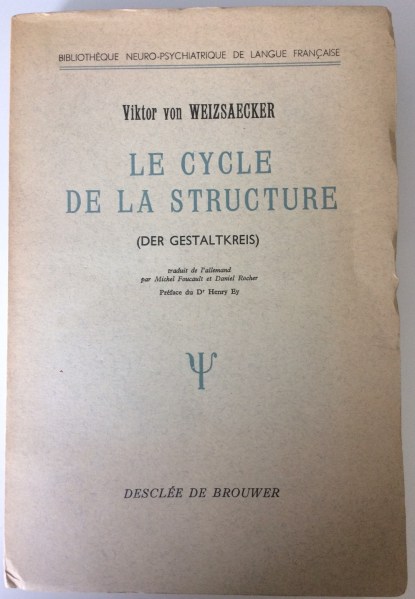
Link to photos of Foucault for sale on the Magnum site

(PRINCETON, NJ) — Princeton University’s Lewis Center for the Arts, Department of French and Italian, and L’Avant-Scène will present the sixth annual Seuls en Scène French Theater Festival, which will take place from September 15 to 30 2017 at venues across the University’s campus. Some performances will be in English, while others will be in French with English subtitles; all are free and open to the public.

Seuls en Scène ushers in the 17th season of L’Avant-Scène, a French theater troupe of Princeton students. It also celebrates professional theatrical achievements from the past year: many of the invited artists to Seuls en Scène are prominent contributors to contemporary theater in France. The festival is organized by Florent Masse, Senior Lecturer in the Department of French and Italian and director of L’Avant-Scène.

Portrait(s) Foucault—Letzlove by Pierre Maillet will play at the Matthews Acting Studio on September 28 and 29 at 8 p.m. 2017 Maillet uses a book of conversations between philosopher Michel Foucault and young hitchhiker Thierry Voetzel, who was at first unaware of his driver’s identity. Together, they discuss the main topics of summer 1975, namely new attitudes toward family, drugs, and music. What starts as a text about Thierry becomes a portrait of Foucault, and an innocuous narrative becomes a study of revolution. Maillet is currently supported by the Comédie de Caen and the Comédie de Saint-Étienne, and Portrait(s) Foucault—Letzlove debuted in the 2016-2017 theater season to critical acclaim.

Kelly Bulkeley, Dark Times and the Powers of Dreaming, Huffpost, 24 August 2017

I’ve been thinking a lot recently about a new book, Dreaming in Dark Times: Six Exercises in Political Thought, by Sharon Sliwinski, a professor at the University of Western Ontario in Canada. Sliwinski approaches dreaming as a powerful resource for political theory and action, especially in times when basic human freedoms are most at risk. That we today are living in such times has become impossible to ignore.

But throughout history, in times of collective crisis, people’s dreams have often responded with a surge of imagery, emotion, and insight that help people respond more effectively and creatively to the pressing challenges facing their group in waking life. This is also true in the modern era, as Sliwinski’s fascinating and beautifully written book makes clear.

As she explores the political sociology of the dreaming imagination, Sliwinski’s main guides are Sigmund Freud (as interpreted by Michel Foucault) and Hannah Arendt. It is the deep dive into Arendt’s philosophy that gives Dreaming in Dark Times its inspiring vision and potent timeliness. Arendt was a twentieth-century political theorist born in Germany who fled the Holocaust in World War II and lived in the United States until her death in 1975. Her writings focused on such topics as totalitarianism, freedom, authority, and revolution.

read more

stuartelden's avatarProgressive Geographies

IMG_2661I’ve been looking for a copy of Foucault and Daniel Rocher’s translation of Viktor von Weizsäcker’s Der Gestaltkreis as Le Cycle de la Structure for sometime, and now have a copy. While the German text is widely available, the translation was only printed once, in 1958, and relatively few libraries have a copy – even the BnF provided a microfiche instead of the physical book.
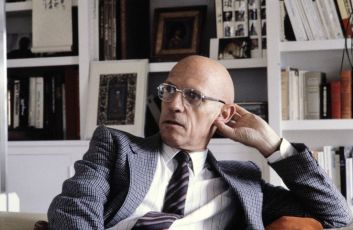
This copy is in good condition for a book of its age – the pages are still uncut. This is going to be valuable for my research for The Early Foucault, where I will make the claim that his role as a translator is an important but neglected part of his early career.

View original post

Any Answers: Christian Caujolle, Interview with Michael GrieveBritish Journal of Photography, 21 August 2017

The chief picture editor of Libération between 1981 and 1986, Christian Caujoulle left to co-found Agence Vu’ and, a decade later, Galerie Vu’. He has curated and edited countless photofestivals, exhibitions, and books, and is associate professor at the ENS Louis Lumière school

[…]

Roland Barthes was one of my professors. After my studies, when I was writing for Libération, he would often ask my advice on the photographers I was writing about at the time. He helped me understand that teaching is not about transmitting facts, it’s about method.

The philosopher Michel Foucault was another. We became close friends and I collaborated with him on different projects, including the movie, Moi, Pierre Rivière. During this radically political and creative time we had hours and days of discussion.

At each moment, Foucault was pushing you to be curious. The last dinner with him will always stay with me. A few days before he finally went to hospital, and weeks later passed away, I was at his home with friends and it was so much fun; a beautiful memory to be with this brilliant man.

Without money, with total freedom: this was the most exciting and creative moment of my professional life. That was my experience as chief picture editor of Libération!

stuartelden's avatarProgressive Geographies

738_foucaultokLeçon inaugurale de Michel Foucault – L’ordre du discours

Quelle est cette volonté de vérité dans nos discours, qui a traversé tant de siècles de notre histoire ? demande Michel Foucault dans sa leçon inaugurale. Qu’est ce qui est en jeu, sinon le désir et le pouvoir? Quelles sont les procédures de contrôles et de délimitation du discours?

https://www.franceculture.fr/player/export-reecouter?content=23619276-1b2b-43d1-93ba-5e3ca08ac882
This isn’t nearly as interesting as I’d imagined when I found the link. Foucault’s inaugural lecture at the Collège de France from 2 December 1970 has been re-recorded by Léon Bonnaffé. As far as I am aware, there are no recordings of the original lecture, which is a shame for two reasons – first, obviously it would be nice to be able to hear Foucault give the talk; but also because the version published as L’ordre du discoursis not the text as actually delivered, as it includes some additional passages.

View original post 61 more words

Frieder Vogelmann (2017). Critique as a practice of prefigurative emancipation. Distinktion: Journal of Social Theory, 18(2), 196–214..
https://doi.org/10.1080/1600910X.2017.1359645

ABSTRACT
Although the various interpretations of Foucault’s model of critique often seem to differ only in minor details, they seriously diverge by situating critique on different levels of abstraction in Foucault’s work. Mapping interpretations of Foucault’s critique according to this criterion shows that none of them pays full attention to all three of Foucault’s methodological imperatives which he calls nihilism, nominalism and historicism. The article offers such a reading of Foucault’s critique, interpreting it as a diagnostic practice of prefigurative emancipation. The task of diagnosing the present explains how Foucault’s critique functions as a philosophical practice, and by making explicit in which ways it emancipates us, it gives us reasons why we might be interested in doing critique like that.

KEYWORDS: Critique, prefigurative politics, emancipation, power, knowledge, subjectivation, archaeology, genealogy, Michel Foucault

Ariel Handel and Hilla Dayan, Multilayered surveillance in Israel/Palestine: Dialectics of inclusive exclusion, Surveillance and Society, Vol 15 No 3/4 (2017): Surveillance and the Global Turn to Authoritarianism

Abstract
The paper examines the surveillance apparatuses in Israel/Palestine as mechanisms aiming to secure support for the Israeli regime, and to preserve its domination over the entire territory in dispute. We analyze three layers of surveillance: “exclusionary surveillance” towards Palestinians; “normalizing surveillance” towards Jewish-Israeli citizens; and finally, “globalizing surveillance” using Zionist constituencies as agents for building a “domain of defense” for Israel in their own countries. Taking into consideration these power and surveillance dispositives we draw insights on the global authoritarian turn and suggest a post-Foucauldian transnational approach to the study of the relations between surveillance, socialization, and subjectification processes.

Lydia Davis, Foucault and Pencil (short story)
The author reading her story (audio file)

‘The Collected Stories of Lydia Davis’
Review by Michelle de Kretser, The Monthly, Australian politics and culture, October 2010

In the United States, Lydia Davis has long been acclaimed for her experiments in short fiction. Elsewhere, she is best known as a translator of French literature and philosophy; in particular, for the 2002 translation of Marcel Proust’s In Search of Lost Time, where Davis provided the first volume. Her Collected Stories showcases a remarkable formal range, while preserving the impress of Davis’ second profession in recurrent strategies and motifs.

Several stories dissect a statement, an idea, a situation. Consider ‘Foucault and Pencil’: “Sat down to read Foucault with pencil in hand. Knocked over glass of water onto waiting-room floor. Put down Foucault and pencil, mopped up water, refilled glass. Sat down to read Foucault with pencil in hand.” Here the nouveau roman, with its minute scrutiny of objects and actions, is echoed and – along with Foucault – gently mocked.

read more

Julia Toynbee Lagoutte, Getting personal: how biosecurity gets under our skin., Green European Journal Volume 15, April 2017
Review of Frédéric Gros’s book Le Principe Sécurité (The Security Principle, 2012).

The term security has acquired such breadth and been remoulded so often that it can start to seem meaningless. It is the mantra that will be invoked to justify human rights infringements or to start a war, but also the term that includes ‘climate’ and ‘energy’ issues. How does it encompass so much and why does it mobilise such power? A book review of Frédéric Gros’s book which outlines the mind-changing concept of biosecurity.

Looking at the word afresh is a guaranteed result of Frédéric Gros’s book Le Principe Sécurité (The Principle Security, 2012). Gros is a French philosopher, Michel Foucault expert, and author of the bestseller A Philosophy of Walking (2014). No less intellectually stimulating and philosophical for being a readable ride through history, Gros sets out a Foucauldian-style genealogy of the concept of security. He sets out what he calls its four main usages, contextualising them within their historic Western origins, and ending with biosecurity (a nascent, under-theorised Foucauldian concept that Gros defines anew).

read more