Foucault News

News and resources on French thinker Michel Foucault (1926-1984)

Le foucaldien. Open access journal along Foucauldian lines

Update November 2025. Le foucaldien is now GENEALOGY+CRITIQUE (G+C)

The peer-reviewed open access journal Le foucaldien publishes interdisciplinary research along the lines of the philosopher and historian Michel Foucault (1926–1984) in English, German, and French. The Internet Encyclopedia of Philosophy credits Foucault with being “the author most frequently cited in the humanities” at the beginning of the 21st century, but his concepts are challenged in emerging fields such as media studies, digital humanities, post-colonialism, new materialism, and science and technology studies. Hence the main focus of Le foucaldien lies on updating and operationalizing Foucauldian approaches in preferably plain language.

materiali foucaultiani
volume V, number 9-10 (January-December 2016)

Open access

Essays by Domingo Fernández Agis, Gianvito Brindisi, Mathieu Corteel, Giulia Guadagni, Manlio Iofrida, Valentina Moro, Maria Muhle

TABLE OF CONTENTS

Soggettivazione e assoggettamento: tra le maglie del soggetto (pp. 3-7)
Laura Cremonesi, Orazio Irrera, Daniele Lorenzini, Martina Tazzioli

Biopolitical Life and Its Milieu. Between Self-Preservation and Self-Transgression (pp. 9-26)
Maria Muhle

La normalisation médicale dans Surveiller et punir (pp. 27-40)
Domingo Fernández Agis

Le nominalisme de la médecine contemporaine. Éléments d’archéologie du big data en médecine (pp. 41-68)
Mathieu Corteel

Foucault e il governo del giudiziario (pp. 69-84)
Gianvito Brindisi

Verità e discorso: il “politico” nel linguaggio tragico (pp. 85-105)
Valentina Moro

Regimi di verità in Michel Foucault (pp. 107-126)
Giulia Guadagni

“Annali franco-tedeschi”: i testi di Foucault sull’Illuminismo alla luce del confronto fra Francia e Germania (pp. 127-142)
Manlio Iofrida

stuartelden's avatarProgressive Geographies

After a too-short holiday, I’ve been back working on the Foucault book. Although I’d drafted some of this material before, my focus has been on the translations of Binswanger and von Weizsäcker. With Binswanger’s ‘Dream and Existence’, Foucault was not listed as a translator, which was credited to Jacqueline Verdeaux alone, but all the accounts point to his significant role.

I’m working with the German text, Verdeaux and Foucault’s translation, the English translation by Forrest Williams and, to a lesser extent, the 2012 French translation by Françoise Dastur. Foucault was brought into the project because of his knowledge of German philosophy, especially Heidegger. Binswanger makes extensive use of Heideggerian terminology. In the early 1950s almost none of Heidegger’s work was translated into French, and so there are some choices about core terminology which are interesting. In as much as anyone has looked at this before, the one thing remarked…

View original post 899 more words

An interesting and comprehensive collection of Foucault related teeshirts at Redbubble

One example below.

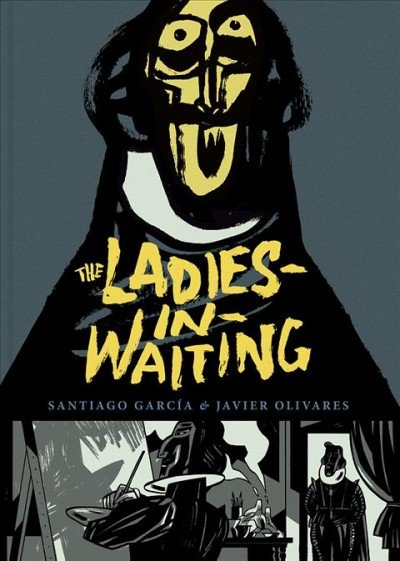
Etelka Lehoczky, Mirrors And Neck Ruffs: A Graphic Novel Takes On Velázquez. NPR Books, 30 August 2017
Review of graphic novel: The Ladies-In-Waiting by Santiago Garcia, Javier Olivares and Erica Mena

[…]

Even in this crowded field, Diego Velázquez’ 1656 Las Meninas (The Ladies-in-Waiting) maintains a special hold on viewers’ imaginations. The elaborately gowned girl at the center is weirdly poised for her age. The presence of the artist himself, standing to one side with brush in hand, gives the scene a jolt of unexpected modernity. Then there’s that mirror in the background. Framing two hazy faces, it makes it unclear who’s looking at whom.

For Santiago García and Javier Olivares, Velázquez’ painting is itself a kind of mirror, offering kaleidoscopic angles on history and culture. By telling the story of Las Meninas’creation and its subsequent influence over generations of artists, they hope to find insights into timeless aesthetic questions — even, with the graphic novel format, prompting the reader to muse on the relationship between comics and high art. It’s a heady — and heavy — mix.

Maybe too heavy; García even includes a bibliography of titles like Michel Foucault’s The Order of Things. As if determined to show off the effects of his reading, he jumps between historical periods in the best postmodern fashion, dropping in on artists who’ve been impacted by Las Meninas over the centuries: Goya, Picasso, Dalí. Maintaining a knowing, high-low tone, he casts some anecdotes in the vein of sensationalistic comics — “True Crime Stories: Murder In Main Street” — only to turn around and spout lines like “Maybe it’s time to give a name to the image that appears at the heart of a text and that the writer contemplates before his notebook.” Anyone who still doubts comics’ intellectual potential will find plenty of ideas here. But while García gestures in impressive directions, he never really digs into his themes.

read more

Speaking the language of change?
Nissim Mannathukkaren, The Hindu (newspaper), July 17,2017

The World Bank’s reports show that social movements may be shaping the bank’s language

Democratic Centralism entails popular participation in formulating the plan at the enterprise level. — World Bank Romania country report, 1979

The World Bank’s ‘World Development Report 2017’ is a remarkable document. Remarkable, because it does not seem that the World Bank authored this document titled “Governance and the Law.” When the report cites Michel Foucault, that incandescent French thinker, who showed us how supposedly free and rational institutions of modernity are indissolubly linked with power and social control, it is time to sit up and notice.

Politics and power

This is not an accident for the central focus of the report is politics and power in development policy, and the endeavor is to move politics and power “from the margins to the core of development thinking and action” and to “development practice… health and education… transportation and food…” (p.271).

How does then a rethinking of governance for development look like? The report stresses on three key principles which differ from traditional approaches: 1) Focus not only on the right form of institutions, but also about the functions of institutions. 2) Focus not only on building the capacity of institutions, but also about power asymmetries, and 3) Focus not only the rule of law, but also about the role of law (p.29).

Nissim Mannathukkaren is Chair, International Development Studies, Dalhousie University, Canada

read more

William Davies, What Is “Neo” About Neoliberalism?, New Republic, July 13, 2017

How to tell the difference between liberalism and something else.

In the buildup to the 2015 General Election, Nigel Farage, leader of the UK Independence Party (UKIP), reiterated his support for an “Australian-style points system” as a means of controlling immigration, the policy issue that his party had prioritized above all others. What was curious about Farage’s statement was not the policy commitment itself, which had been known for some time, but the liberal rhetoric that he used to justify it. Writing in The Daily Telegraph, Farage argued “what UKIP wants is not to do down migrants. It’s not to stigmatize, or discourage, or blame people for coming to this country and trying to make a better life for themselves” and that the “points system” is the only fair basis for managing immigration.

[…]

Firstly, neoliberalism has never pursued a weaker state; indeed it is a political philosophy and policy agenda that has always looked to the state to reshape society around its ideals. As Michel Foucault went to great lengths to stress, it is not another form of laissez-faire and, instead, grants the state a key role in shaping how economic freedom is to be defined and instantiated. So, in the case of immigration, the liberal notion that economic welfare will be maximized by simply throwing open the national labor market to all-comers would be resisted from a neoliberal perspective. It is entirely plausible, from a neoliberal perspective, that the state might seek to regulate something like labor flows, to serve certain strategic economic goals.

read more

Foucault in Warsaw, Durieux.eu blog, 31 August 2017.

 Le Soir spends ample space on an article by Maya Szymanowska about a new Polish publication by sociologist Remigiusz Ryzinski, ‘Foucault W Warszawie’ (Foucault in Warsaw – no translations yet).

In 1955 Michel Foucault arrives in Uppsala, Sweden, where he will work on his doctoral dissertation. But then in October 1958, he moves to Warsaw, Poland, where he is going to direct the Centre de civilisation française at the local university. There he continues working on the manuscript he will  eventually defend in 1961 in Paris as his so-called ‘principal thesis’. It is published originally as ‘Folie et déraison. Histoire de la folie à l’âge classique’.

read more


Andrew Dilts and Perry Zurn (eds), Challenging the Punitive Society, Carceral Notebooks, Volume 12, 2016, General Editor: Bernard E. Harcourt.

See also this announcement on Andrew T. Dilt’s blog.
 

TABLE OF CONTENTS

Preface Bernard E. Harcourt
Introduction: Challenging the Punitive Society Andrew Dilts and Perry Zurn

Part I. Foucault and the Legacy of the Prisons Information Group (GIP)
Introduction Kevin Thompson
The Dialectic of Theory and Practice Bernard E. Harcourt
Prisoners Inside / Intellectuals Outside: the GIP and the French Prison Revolts, 1971-1972 Nicolas Drolc
The GIP and the Question of Failure Perry Zurn
The Creaturely Politics of Prisoner Resistance Movements Lisa Guenther
GIP Workshop 05-08-2015

Part II.Foucault’s Punitive Society and the Prisons Information Group (GIP)
Introduction Jesús R. Velasco
The GIP as a Cynical Practice Bernard E. Harcourt
Foucault’s Punitive Society and Our Own: Sequestration, Elimination, and the Carceral System Natalie Cisneros
Towards an Account of Intolerance: Between Prison Resistance and Engaged Scholarship Perry Zurn

Part III. Carceral Logic Today
Giving the Floor to Whom? Janos Toevs
Are Prisons Tolerable? Michael Hames-García
Problematization and the Production of New Statements: Foucault and Deleuze on Le Groupe d’information sur les prisons Kevin Thompson
The Womb of Western Theory: Trauma, Time Theft, and the Captive Maternal Joy James

Nina Hoss: ‘The left is in a state of absolute chaos – we have lost our way’
Philip Oltermann in Berlin, The Guardian
Tuesday 4 July 2017 01.16 AEST

• Returning to Reims is at Home, Manchester, 5-14 July, part of the international festival. Michael Lucey’s translation of Didier Eribon’s book is published by Semiotext(e).

When she was a little girl, the German actor used to sit in on her father’s union meetings. Now she’s directing her political fervour into Returning to Reims, a new play by Thomas Ostermeier seeking to explain Trump, Brexit and Le Pen

When Nina Hoss agreed to perform a Manic Street Preachers song with the Welsh alt-rockers at Glastonbury in 2014, she had no idea that the track – Europa Geht Durch Mich (Europe Passes Through Me) – would soon come to sound like a requiem. “It felt like such an optimistic song at the time,” she recalls, “and the crowds were going absolutely wild.”

[…]

For this month’s Manchester international festival, the 41-year-old German actor and her collaborators – Berlin Schaubühne director Thomas Ostermeier and Bush Moukarzel, an Irish actor, writer and director – have devised an English-language dramatisation of the memoirs of a French sociologist. The show is a sort of group therapy for liberal Europeans discombobulated by the events of the last 12 months.

Ostermeier told her he was reading Returning to Reims by Didier Eribon, a French sociologist and the celebrated biographer of Michel Foucault. Get hold of a copy as soon as possible, he said. “Reading it opened floodgates inside me,” she recalls, sitting in a shady corner outside the converted 1920s cinema that is now home to the Schaubühne. “It tried to address all the questions we are grappling with. What is going on with this generation of ours? Do we still believe in democracy? If we do, is that belief reawakening or dying? Do we still know how to organise ourselves to have influence on a political scale? And are we really interested and patient enough to get involved – or did we unlearn that in the 90s because we believed our parents had paved us a path to prosperity?”

Originally published in France in 2009, Retour à Reims became a bestseller in Germany last year, partly because it hinted at an explanation for the Brexit vote and Trump earthquakes, as well as the then looming nightmare of a far-right French presidency. It tells the story of the author returning to his hometown for the first time in decades, following the death of his father, only to find that his once staunchly communist family is now more or less openly supportive of the Front National.