Foucault News

News and resources on French thinker Michel Foucault (1926-1984)

ThinkOlio Foucault & Modern Prisons, External and Internal

Strand Bookstore
Published on Feb 14, 2018
Professor Jamie Warren devotes this Olio solely to unpacking and understanding one of Foucault’s most celebrated and provocative works, Discipline and Punish. With the help of Foucault, we will ask ourselves the painful but much needed questions: What role should the non-caged play during this era of mass incarceration? What is our duty in the face of such massive unfreedom?

Jamie says: As a historian of American slavery, I often find myself confronted by the same question from my students. Invariably, during our discussion of human bondage, someone will ask: “How could people do that? How could human beings justify enslaving other human beings?” Each time I encounter this inquiry, I begin by pointing not to the past, but to the present. At some point in the future, I suggest to my class, people will be asking a similar question about us—only they will be referring to mass incarceration.

How have we come to believe that the state is justified in its power to lock people in cages? How can we bear witness to the mass imprisonment of millions of human bodies, particularly brown and black bodies, without widespread revolt and outrage? And why do we now measure punishment, not through explicit bodily pain or monetary penalty, but by time? Months, years, decades. What, exactly, does the prison set out to punish? The criminal or the crime? The body or the soul? The public spectacle of the tortured body may have all but disappeared, but as philosopher and historian Michel Foucault reminds us in his masterful work, Discipline and Punish: The Birth of the Prison, we must not be so gullible as to believe that the disappearance of the whipping post signals a move toward a more humanitarian society. The torturer and the public executioner may have gone into hiding, but according to Foucault, their absence marks a shift not toward liberty, but toward one of the most policed and regulated societies the world has ever known. Even bodies that live outside the cage, he tells us, are systematically disciplined to obey and submit—even when we know the watchtower is empty. Thus, we have foolishly come to embrace our internalized personal prison as our most precious place of freedom. The soul, Foucault argues, has become “the prison of the body.”

Recorded February 9, 2018

stuartelden's avatarProgressive Geographies

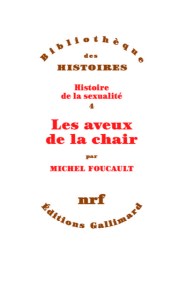
hs-iv.jpgI’ll be talking about Foucault’s Les aveux de la chair at Goldsmiths University on May 9th at 3pm at the Centre for Philosophy and Critical Thought. Full details here.

Richard Hoggart Building room 137, 3-5pm

Goldsmiths, University of London, New Cross, SE14 6NW

In February 2018 the fourth volume of Michel Foucault’s History of Sexuality was finally published. Les Aveux de la chair [Confessions of the Flesh] was edited by Frédéric Gros, and appeared in the same Gallimard series as volumes 1, 2 and 3. The book treats the early Christian Church Fathers of the 2nd-5th century. This talk will discuss the book in relation to Foucault’s other work, showing how it sits in sequence with volumes 2 and 3, but also partly bridges the chronological and conceptual gap to volume 1. It will discuss the state of the book and whether it should have been…

View original post 70 more words

Bilge Friedlander’s work at the installation.

Turkish, German museums present joint show – Daily Sabah, April 18 2018

The Arter Gallery in Istanbul and Neues Museum Nürnberg have collaborated for a joint exhibition featuring three artists’ work centering on the theme of silence

Arter Gallery Istanbul and Neues Museum Nürnberg have collaborated for the exhibition titled “Zamanın Kıyısında” (On the Edge of Time), which is organized with a selection from the Contemporary Art Collection of the Vehbi Koç Foundation. Curated by professor Thomas Heyden, the exhibition features the works of Bilge Friedlaender, Ahmet Doğu İpek and Füsun Onur. While Heyden prepares the exhibition in the theme of silence that he sees as the common point in the works of this trio, the exhibition is being presented with the concept of being on the edge of time, inspired from philosopher Michel Foucault and determines the exhibition’s poetic scope, separating the past and present. The exhibition, which was opened on March 2 at Neues Museum Nürnberg, will continue until June 10 2018

Gilles Deleuze, Michel Foucault: as formações históricas, Editora Politeia, 2018
tradução e notas: Cláudio V. F. Medeiros e Mario Antunes Marino
páginas: 304 (aprox.)
isbn: 978-85-94444-01-1

Open access

CURSO ONLINE
Em 1985 e 1986, Gilles Deleuze ministrou dois cursos dedicados ao pensamento de Michel Foucault na Universidade de Paris. Sua voz gravada e a transcrição das aulas estão disponíveis no portal da Universidade Paris 8. O primeiro curso chama-se Michel Foucault: as formações históricas. O segundo chama-se Michel Foucault: o poder. Juntos eles apresentam um formidável panorama do pensamento de Foucault, estruturado por Deleuze segundo três eixos: saber, poder e subjetivação.

A partir de março as editoras Politeia e N-1 iniciam a publicação online e gratuita da tradução do primeiro curso, composto por 8 aulas. Clique nos links abaixo para baixar as aulas.

Portuguese translation of: “Michel Foucault: the historical formations” by Gilles Deleuze

Shortly after Michel Foucault’s death in 1984, Gilles Deleuze devoted himself to teaching and writing about the thought of his friend. In 1986, he published Foucault, the first book about the prematurely disappeared philosopher.

In 1985 and 1986, Deleuze taught two courses dedicated to Michel Foucault’s thought at the University of Paris. His recorded voice and the transcript of classes are available on the Paris-8 University portal. The first course is called Michel Foucault: the historical formations. The second one is called Michel Foucault: the power. Together they present a formidable panorama of Foucault’s thought, structured by Deleuze according to then three well-knows axes: knowledge, power and subjectivation. The courses exceed the academic and academic scope, establishing with precision the fundamental elements of elucidation of the philosophy of Foucault.

The importance of this material is much more than it’s volume (900-over printed pages, compared to only 140 of the book Foucault). The classes functioned as a kind of laboratory in which Deleuze experimented with the ideas and concepts from which he traced the cartography foucauldian Some of these elements – for example, biopolitic – are not paralleled in the book. For this reason, the courses represent important research material on the thinking of the two philosophers.

The Brazilian translation and the online availability of the courses is been made by Editora Politeia and N-1 Edições. It keeps the testamentary dispositions of Deleuze, who did not want posthumous publications. It only brings to the Brazilian reader what is already on the Internet in French, democratizing access to this little treasure.

In March 2018, we began the online availability of the first course, consisting of 8 classes that will be released monthly.

Technical information:

translation and notes: Cláudio V. F. Medeiros and Mario Antunes Marino

Paolo Godani, La verità del desiderio La carne e l’amicizia (II)

Editor.January 2026. Link above archived on the Wayback Machine

Finalmente gli eredi del lascito di Michel Foucault hanno ritenuto fosse venuto il momento di pubblicare Les aveux de la chair. Un’opera attesa da decenni, su cui molto si è fantasticato, che ora le edizioni Gallimard, con la cura di Frédéric Gros, presentano come quarto e ultimo tomo di quella Histoire de la sexualité annunciata già nel 1976 con la pubblicazione del suo primo volume, La volonté de savoir.

[…]

Glen Fuller, Renee Barnes, A history of anticipating the future: an analysis of the AN Smith lectures, Andrew Olle Lectures and media commentary, Media International Australia
Article first published online: April 19, 2018

DOI: 10.1177/1329878X18768012

Abstract
There are multiple narratives of technological and organisational change for making sense of the news media industry since the turn of the century. In Australia, the Andrew Olle and AN Smith lectures have served as key sites whereby leading members of the journalistic field have articulated narratives of change. Drawing on Bourdieu’s concept of ‘field’ and using Foucault’s notion of ‘commentary’ as a method, we begin by analysing all Andrew Olle and AN Smith lectures from 1997 to 2015 and selected those that substantially discuss journalism and the media industry more broadly. Our analysis develops an account of the narratives of change to better understand the different negotiations and translations of the journalistic field. We found three key narratives: (1) commercial performance and concerns over the decline of ‘quality journalism’, (2) the role of technology in surviving industrial change and (3) fundamental change to journalistic practice.

Keywords Bourdieu, commentary, Foucault, journalistic field, media technology, news industry

Paolo Vernaglione Berardi, Critica: La carne e l’amicizia Deleuze per Foucault, Laboratorio “archeologia filosofica”, 2018
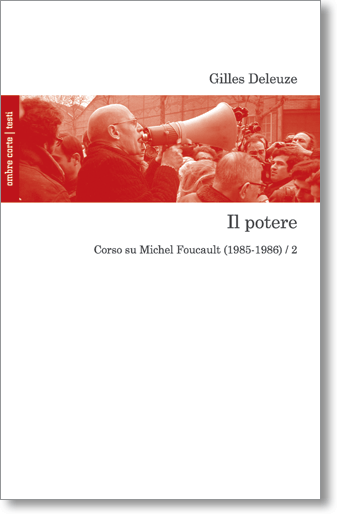
Gilles Deleuze, Il potere. Corso su Michel Foucault (1985-1986)/2, Ombre Corte, 2018

Editor. Update January 2026. Link above to the page archived on the Wayback Machine

On the occasion of the publication in France of  Les aveux de la chair, the “so called” fourth Foucault volume of the History of sexuality, and the contemporary publication in Italy of the second part of the Deleuze course dedicated to Foucault, Il potere (1985- ’86), we publish here  La carne e l’amicizia, first of three reflections about relationships and practices of subjectivation on both philosophers.

Non per semplice associazione diremo che il corso tenuto nel semestre 1985-’86 da Gilles Deleuze su Michel Foucault ha il suo luogo filosofico in Nietzsche. Il motivo è forse più profondo e meno colto, certo meno intuitivo di quanto il parlato trasposto in questo secondo testo dedicato all’amico possa farci ascoltare. A confronto con il precedente Il sapere, in cui sono trascritte le lezioni del primo trimestre, Il potere retrocede verso l’origine del discorso là ove Nietzsche è il vero nome di amicizia.

Gilles Deleuze, Il potere. Corso su Michel Foucault (1985-1986) / 2, Ombre Corte, 2018
Prefazione di Ubaldo Fadini

il libro
Le lezioni sul potere costituiscono la seconda parte del Corso che Gilles Deleuze dedicò all’opera dell’amico a poco più di un anno dalla scomparsa. Iniziato nell’ottobre 1985, le prime otto vennero dedicate al “sapere”, ovvero al primo dei tre grandi assi che Deleuze individua nel pensiero di Foucault. Nelle lezioni contenute in questo secondo volume viene messo a tema il secondo asse: quello appunto rappresentato dal “potere”.
Per Deleuze, il pensiero non è mai qualcosa di effettivamente sistematico, di ordinato una volta per tutte, ma piuttosto un percorso vitale e pratico, ricco di acquisizioni, shock, deviazioni, trappole, salti improvvisi e abbandoni, che non sono semplicemente oggetto di una ricostruzione ma richiedono, a loro volta, nuovo pensiero e differenti vie di ricerca, in una sorta di combinazione felice, virtuosa, di commento e capacità inventive, di ulteriore concettualizzazione. Le lezioni sul potere forniscono allora una periodizzazione dell’opera foucaultiana, dei suoi rapporti con il periodo post-68 in Europa, con il marxismo e l’esistenzialismo, con Nietzsche: commentano i postulati di un’analisi serrata e produttiva del potere e nozioni decisive quali microfisica, disciplina e biopolitica. Ma accanto all’impegno del commento, la lettura di Deleuze diventa capace di aperture fulminanti, di operazioni che consentono di analizzare, ad esempio, Le parole e cose, un lavoro di fatto anteriore, in relazione con le analisi del potere dei primi anni Settanta. Il fatto è che il concetto di potere richiede il dispiegamento di una vera e propria filosofia delle forze e l’invenzione della nozione di diagramma. Il problema della relazione con il sapere è affrontabile attraverso l’utilizzo di strumenti che rinviano anche alla matematica (gli integrali) e alla biologia (la differenziazione). Infine, l’enigma dei contropoteri e del cambiamento storico chiede di definire quella nozione del “fuori”, così rilevante, che annuncia il passaggio al terzo asse dell’opera di Foucault: quello della “soggettivazione”.

l’autore
Gilles Deleuze (1925-1995) è stato uno dei maggiori filosofi del Novecento. Tra i suoi numerosi lavori: Nietzsche e la filosofia (1962), Spinoza e il problema dell’espressione (1968), Differenza e ripetizione (1968), Logica del senso (1969), Francis Bacon. Logica della sensazione (1981), Spinoza. Filosofia pratica (1985); con Félix Guattari: L’anti-Edipo (1972), Mille piani (1980) e Che cos’e? la filosofia? (1991). E per i nostri tipi: Cosa può un corpo? Lezioni su Spinoza, Conversazioni (con Claire Parnet) e il primo volume del Corso su Foucault: Il sapere (2014).

Workshop: Foucault and the politics of resistance in Brazil

Associação Comercial do Rio de Janeiro (Rua Candelária, 9 – Auditório, 12 andar – Centro, Rio de Janeiro)
RSVP on this page

This workshop will bring together scholars throughout Brazil to discuss a little-known topic outside of Brazil: the intellectual and political import of Michel Foucault’s visits to Brazil in 1965, 1973, 1974, 1975, and 1976. During these visits, Foucault synthesized and advanced his research in lectures and talks on an astoundingly wide range of topics, from juridical practices, to social medicine, to sexuality. He sought to clarify his unconventional perspectives in interviews with the press. Faced with the growing repression of students, professors, and journalists, Foucault also engaged in open opposition to the military dictatorship.

In this workshop, scholars will situate Foucault’s enormous contributions in Brazil within a series of theoretical, historical, and political contexts. They will also reflect on these contributions to illuminate aspects of the politics of resistance in Brazil in the past and present. The contributions to the workshop will serve as the basis for articles in the forthcoming issue of the interdisciplinary journal Carceral Notebooks (http://www.thecarceral.org/journal-vol13.html).

WORKSHOP SCHEDULE:

9:00-11:15AM | Panel 1 (in English): Subjects of Resistance

Moderator: Shai Gortler

Marcelo Hoffman, “From Public Silence to Public Protest: Michel Foucault at the University of São Paulo in 1975”

Margareth Rago, “Foucault, Subjectivity, and Self-Writing in Brazilian Feminism”

Mauricio Pelegrini, “Foucault in Iran, Foucault in Brazil: Political Spirituality and Religious Counter-Conducts”

11:30AM-1:15PM | Panel 2 (in Portuguese): Resistances Today

Moderator: Alessandro de Lima Francisco

Edson Passetti, “Foucault and Resistances: Penal Abolitionism”

Priscila Piazentini Vieira, “Foucault and the Courage to Radically Transform Existence”

1:15PM-2:30PM | Lunch Break

2:30-5:00PM | Panel 3 (in Portuguese): Encounters and Theoretical Contexts

Moderator: Marcelo Hoffman

Heliana de Barros Conde Rodrigues and Rosimeri de Oliveira Dias, “The Tiny Brazilian Press as Resistance: Foucault, the Enemy of the King”

Ernani Chaves, “‘The SNI Was Asking for the Roster’: Michel Foucault in Belém in November 1976”

Márcio Alves da Fonseca, “Power and Resistance: Foucault’s Laboratory in Brazil”

Sponsors: Center for Contemporary Critical Thought (CCCCT) – Columbia Law School and Columbia Global Center | Rio de Janeiro

Epistémologie historique et les désunités des sciences
Historical Epistemology and the Disunities of the Sciences

Paris, 24-25-26 mai 2018

École Doctorale de Philosophie ED 280, Université Paris 1 Panthéon-Sorbonne
Institut des Sciences Juridique & Philosophique de la Sorbonne, UMR 8103 CNRS
Centre de Philosophie Contemporaine de la Sorbonne
https://episthist.hypotheses.org/

Link to event page on Facebook

[Formulaire d’inscription]
IMPORTANT: Pour des raisons de sécurité l’inscription est obligatoire pour avoir accès à la Sorbonne et au Centre Panthéon

Jeudi 24 mai 
Salle Lalande, Sorbonne, 17 rue de la sorbonne, 75005. Escalier C, 1er étage

09:00 Accueil
09:10 Présentation des journées

09:30-10:30 Are scientific results inevitable or contingent? The crucial role played by the monist regime of our science in the philosophical debate, Léna SOLER, Université de Lorraine; répondant: Lorent LOISON

Pause café

10:50-11:30 Régionalisme épistémologique et constructivisme: Proximités et distances entre Bachelard, Canguilhem et Foucault, Andrea ANGELINI, Università degli Studi di Pisa / Firenze

11:30-12:10 Les styles de méthode. Le problème de la variation des canons et des critères dans les dynamiques de recherche, Sylvain LAVELLE, ICAM Paris

Pause déjeuner

14:10-14:50 Reconfiguring underdetermination, and the benefits and risks of epistemic pluralism in historical sciences, Thomas BONNIN, University of Exeter

14:50-15:30 Mapping the Disunity of Science. Scientometrics and Historical Epistemology in Dialogue, Eugenio PETROVICH, Università degli Studi di Milano

15:30-16:10 Three Historical Epistemologies, David HYDER, Université d’Ottawa

Pause café

16:30-17:30  Pluralisme feuilleté : pour un pluralisme non régionaliste et constructiviste, Stéphanie RUPHY, Université Jean Moulin Lyon 3; répondant: à confirmer

Vendredi 25 mai 
Salle Lalande, Sorbonne

9:30-10:10  Comment, pourquoi reconstruire un concept de science ? L’épistémologie selon Desanti, Alain-Marc RIEU, Université Jean Moulin Lyon 3

10:10-10:50  Jean-Claude Passeron : Pluraliser l’épistémologie, Lucie FABRY, Ecole Normale Supérieure

Pause café

11:10-11:50 Comment peut-on être écologue des écosystèmes ? L’écologie des écosystèmes, une discipline en tension entre physique et biologie, Victor LEFÈVRE, IHPST – Paris 1

11:50-12:30  The Disunity of Constructivism: From Synthetic Chemistry to Synthetic Biology, Massimiliano SIMONS, KULeuven

Pause déjeuner

14:30-15:10 Pluralisme épistémologique, stratification ontologique et histoire de la raison chez Castoriadis
Geneviève GENDREAU-BEAUCHAMP, Université d’Ottawa

15:10-15:50 Nazism and the Unity of Psychology. German Psychology in Nazi Period viewed from the Perspective of Franziska Baumgarten-Tramer and Maria Zillig, Laurens SCHLICHT, Humboldt Universität

15:50-16:30 Ernst Cassirer’s Transcendental Account of Mathematical Reasoning, Francesca BIAGIOLI, University of Vienna

Pause café

16:50-17:50 The disunity of mathematics, Andrew ARANA, IHPST – Paris 1; répondant: Jean-Luis GASTALDI

Samedi 26 mai
Salle 06, Centre Panthéon, 12, place du Panthéon, 75005. Escalier M, 4e étage

9:30-10:10 Can Economics be Liberated From Physics? Rethinking the Demarcation Problem in the Light of Historical Epistemology, Sina BADIEI, Université Toulouse – Jean Jaurès

10:10-10:50 Does Philosophy of Science Meet History of Science? Epistemic Constraints, Luca GUZZARDI, Università degli Studi di Milano

Pause café

11:10-12:40 Using History of Science for Pluralist Philosophy and Science, Hasok CHANG, Cambridge University

Pause déjeuner

14:40-15:20 Therapeutic Relationship and Scientific Experimentation: Technical Activity in Surgery, Olivier DEL FABBRO & Xavier MULLER, ETH Zurich / University Hospital Zurich

15:20-16:00 Georges Canguilhem : aux sources biologiques de l’unification de la science par voie technique, Ugo BALZARETTI, Université de Bâle

Pause café

16:20-17:00 Pratiquer l’inter-régionalité du savoir en éducation. Repères canguilhemiens, Xavier ROTH, Université Grenoble-Alpes

Clôture des journées

Comité scientifique
Christian BONNET, CHSPM, Université Paris 1 Panthéon-Sorbonne
Jean-François BRAUNSTEIN, PhiCO, ISJPS, Université Paris 1 Panthéon-Sorbonne
Cristina CHIMISSO, Open University (UK)
Arnold I. DAVIDSON, Université de Chicago
Moritz EPPLE, Goethe Universität Frankfurt am Main
Pierre WAGNER, IHPST, Université Paris 1 Panthéon-Sorbonne

Comité organisateur
Laurent LOISON, Ivan MOYA DIEZ, Matteo VAGELLI (coordinateurs)
Marcos CAMOLEZI,  Wenbo LIANG, Gabriele VISSIO