Foucault News

News and resources on French thinker Michel Foucault (1926-1984)

6/13 | REVOLT: FOUCAULT IN IRAN

Daniel Defert (éditeur de Michel Foucault)
Behrooz Ghamari-Tabrizi (University of Illinois at Urbana)
Judith Revel (Université Paris Nanterre)
Moderated by John Rajchman, Daniele Lorenzini, and Bernard E. Harcourt

December 14, 2017 from 6:15 p.m. to 8:45 p.m.
Jerome Greene Annex, Columbia University
(410 West 117th Street, New York)

See also these links
BERNARD E. HARCOURT | INTRODUCTION TO FOUCAULT ON IRAN: REVOLT AS POLITICAL SPIRITUALITY

DANIELE LORENZINI | PERMANENT VIRTUALITIES

Michel Foucault identified in the Iranian uprising of 1978 a modality of religious political revolt and a form of political spirituality that privileged, in the secular realm, expressly religious aspirations. What Foucault discovered in Iran was, in his words, a political spirituality: a mass mobilization on this earth modeled on the coming of a new Islamic vision of social forms of coexistence and equality.

Foucault described the mass mobilization in Iran as an Islamic uprising. He did not minimize in any way its Islamic religious foundations or modes of expression. On the contrary, Foucault framed the uprising through the lens of Ernst Bloch’s thesis, in The Principle of Hope (3 vols., 1954-1959), on the rise, in Europe, from the twelve to the sixteenth century, of the religious idea that there could come about on this earth a form of religious revolution. Foucault related the events in Iran to this religious model, originally formulated by dissident religious groups in the West at the end of the Middle Ages—and which Foucault referred to as “the point of departure of the very idea of Revolution.”

Foucault explicitly characterized the will of those Iranians in revolt with whom he had contact as taking the form of a “religious eschatology”—not the form of a quest for another political regime, nor in his words for “a regime of clerics,” but instead for a new Islamic horizon. When those in revolt spoke of an Islamic government, Foucault maintained, what they had in mind were new social forms based on a religious spirituality, sharply different than Western models. Foucault pointed to Ali Shariati as the thinker who had most clearly posed the problematic and formulated this vision.

It is to this model of uprising as political spirituality, this modality of religious political revolt that we turn to in Uprising 6/13. By contrast to the modality of revolt that we discussed during our seminar Uprising 3/13 on the Arab Spring, the modality of revolt that Foucault identified in Iran in 1978-79 was expressly and primarily religious. Much (but of course not all, as evidenced once again by subsequent events) of the ideological wellspring in Tahrir Square was more secular, leaderless, and occupational: a form of disobedience against a secular authoritarian regime—at least as portrayed in much of the reportage and documentaries like Tahrir: Liberation Square, directed by Stefano Savona (2012). The situation was very different in 1978 Iran, at least on Foucault’s assessment. And it gives rise to a different modality of revolt: a religious eschatological modality of uprising.

Foucault did not condemn this mode of political spirituality—to the contrary, he wrote about it with respect and admiration for those who rose up and risked their lives against their oppressors. Foucault did warn that “Islam—which is not simply a religion, but a mode of life, a belonging to a history and to a civilization—risks constituting a gigantic powder keg, at the scale of hundreds of millions of people. Since yesterday, any Muslim state can be revolutionized from within, from the basis of its secular traditions.” But he traveled to Iran without hostility, rather with sympathy for the uprising.

And it is here, in his writings on Iran, that Foucault most clearly articulated what he called his own “theoretical ethic”: “It is ‘antistrategic’: to be respectful when a singularity revolts, intransigent as soon as power violates the universal.” (Useless to Revolt?)

Respectful of the individual who rises up, in order to keep one’s indignation and intransigence for the power that represses. What a remarkable statement—and an excellent place to start our seminar on Foucault on Iran: Revolt as Political Spirituality.

stuartelden's avatarProgressive Geographies

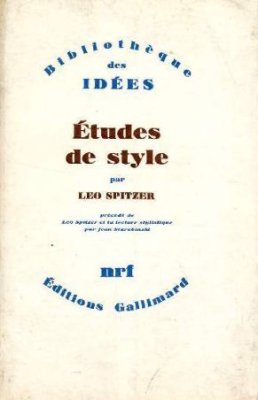
Spitzer.jpgOne of the few translations made by Michel Foucault, and perhaps the most unusual, was an essay by literary theorist Leo Spitzer.
It was published as “Arts du langage et linguistique”, in Leo Spitzer,Etudes de style, Paris: Gallimard, 1970, pp. 45-78. (There are several other pieces in there, translated by others. The text has since been reissued in the Tel series.) Daniel Defert’s ‘Chronology’ dates the publication to 21 January 1970.

The original text was “Linguistics and Literary History”, in Leo Spitzer, Linguistics and Literary History: Essays in Stylistics, Princeton: Princeton University Press, 1948, pp. 1-39.

The original was written in English, even though Spitzer had written most of his earlier work in German. All of the other translations by Foucault were from German to French, so this is unusual in being from English to French.

The other issue which I think is interesting is the date of the translation. The 1970…

View original post 567 more words

Crítica da representação e crise da ontologia: Foucault e Magritte – Philippe Sabot
Facebook page

No final de novembro de 2016, os Programas de Pós-Graduação em História e Filosofia da UFG organizaram uma jornada dedicada aos 50 anos de “As Palavras e as Coisas”.
“Crítica da representação e crise da ontologia: Foucault e Magritte” foi o título da conferência apresentada Philippe Sabot. O professor da Universidade de Lille, além de renomado estudioso da obra do filósofo francês, foi o responsável pela edição crítica de “Les mots et les choses” nas obras completas de Michel Foucault, publicadas recentemente na prestigiosa coleção Bibliothèque de la Pléiade.

Philippe Sabot permaneceu uma semana na UFG, onde ministrou mais duas conferências sobre os manuscritos de Michel Foucault e participou de uma série de atividades acadêmicas.

Editor: An unfortunate flip remark from former Australian Labor Prime Minister.

Kevin Rudd: Foucault’s more painful than the knife in my back
The Sunday Times, November 19 2017.

PDF of article

Kevin Rudd, the Australian prime minister ousted by his deputy, tells Leaf Arbuthnot his Oxford PhD course can be brutal too,

Kevin Rudd, the apple-cheeked former prime minister of Australia, is not going gently into that good night. Aged 60 and four years out of office, he has just embarked on a PhD at Oxford and seems exhilarated to be learning again.

[…]

Rudd was prime minister not once but twice. His first stint, as leader of the Labor Party, was in 2007-10; his second was in 2013.

Although we talk under the silent stare of one of his minders, Rudd is evidently throwing himself into student life. He enthuses about the “great minds” he is encountering and taking part in Oxford’s “weird” rituals — including the matriculation ceremony at the start of the academic year, where new university members parade through town in gowns.

[…]

Yet he is clearly still adjusting to the demands of academic work. “The other day I endured my first lecture on Derrida and Foucault,” he recalls with a laugh. “I’m still in the recovery ward.”

Olga Campbell-Thomson, The Soviet Reception of Selma Lagerlöf, NORA – Nordic Journal of Feminist and Gender Research Vol. 25 , Iss. 4, 2017

DOI: 10.1080/08038740.2017.1362590

Abstract
The focus of this paper is Selma Lagerlöf’s literary presence in Soviet Russia. Despite being one of the most translated and published foreign authors in pre-revolutionary times, Lagerlöf made very infrequent appearances on the Soviet literary scene for 40-odd years between 1917 and the end of the 1950s. The process of literary production is examined in this paper in search of an explanation for the changing pattern in the publication of Lagerlöf’s texts. To problematize the process of literary production in the newly established Soviet state, Foucault’s conceptualization of the process of knowledge construction is utilized to describe, understand, and explain the interplay between critical resources, such as linguistic and literary expertise, individual initiative, and the government-controlled publishing enterprise in the Soviet state. I argue that the agency of literary workers remained relevant to the literary process, despite increasing ideological pressure on literary production, and that they paved the way towards the official reintroduction of Lagerlöf to the Russian Soviet readership during the 1950s.

Keywords: Selma Lagerlöf, women writers, literary production, travelling texts, Soviet publishing

Craig Owen, Nicola De Martini Ugolotti, (2017), ‘Pra homem, menino e mulher’? Problematizing the gender inclusivity discourse in capoeira, International Review for the Sociology of Sport , 54(6), 691-710.
https://doi.org/10.1177/1012690217737044

Blog post on article by Craig Owen This paper uses Foucault’s understanding of power and discourse as the main theoretical focus.

Abstract
Capoeira is an Afro-Brazilian bodily discipline that has now become a global phenomenon. In 2014 the cultural significance of capoeira was recognized on the world stage when it was awarded the special protected status of an ‘Intangible Cultural Heritage of Humanity’ by the United Nations Educational, Scientific and Cultural Organisation. In the application to this organisation, and in wider advertising material and practitioner literature, capoeira is celebrated as a practice that promotes social cohesion, inclusivity, integration, racial equality and resistance to all forms of oppression. This paper seeks to problematize this inclusive discourse, exploring the extent to which it is both supported and contradicted in the gendered discourses and practices of specific capoeira groups in Europe. Drawing upon ethnographic data, produced through two sets of ethnographic research and the researchers’ 24 years of combined experience as capoeira players, this paper documents the complex and contradictory contexts in which discourses and practices of gender inclusivity are at once promoted and undermined.

Keywords
capoeira, ethnography, gender, inclusivity, masculinity

La pensée politique de Foucault
sous la direction d’Orazio IRRERA et Salvo VACCARO, Paris, Editions Kimé (coll. “Philosophie en cours”), 2017, p. 248.

Loin d’être considérée comme une simple notion appartenant au vocabulaire de la théorie politique, l’idée foucaldienne de la politique renvoie plutôt à une attitude généalogique fournissant un diagnostic du présent et restituant des relations complexes et contingentes qui nouent des domaines de savoir, des types de normativité et des formes de subjectivité. Par ce biais cette idée touche tout un ensemble de questions qui ont été cruciales pour l’itinéraire intellectuel de Foucault. En premier lieu celles de la gouvernementalité et de la biopolitique, des savoirs et des pouvoirs qui les constituent, des pressions normalisantes avec leurs effets spécifiques d’assujettissement, mais aussi des résistances et des contre-conduites que la gouvernementalité et la biopolitique rencontrent et produisent dans leur exercice. Au cœur de l’idée foucaldienne de la politique on retrouve même la notion de conduite considérée dans sa duplicité constitutive : à la fois manière de conduire les hommes en structurant leur champ d’action éventuel, mais aussi manière de se conduire de la part des hommes conçus comme des sujets libres. Ce qui par ailleurs ne peut pas être disjoint de la question d’une histoire politique de la vérité, ce qui vise à problématiser les manières dont, de l’Antiquité gréco-romaine jusqu’au néolibéralisme de nos jours, les rapports de forces qui traversent les sociétés occidentales se sont historiquement imbriqués avec des régimes de vérité afin de gouverner la vie et l’existence des hommes. Ainsi le domaine de la politique croise également le projet d’une généalogie de l’obligation de dire-vrai sur soi-même, un foyer de réflexion où, dans les années 1980, Foucault a tenté de recadrer nombre de ses analyses, des expertises médico-légales à l’aveu, du souci de soi à la parrêsia. Quoi qu’il en soit, d’après Foucault la politique reste toujours marquée par une conflictualité qui donne lieu à des champs d’agonismes incessants, dans l’immanence desquels cette série souvent dispersée des points de non-acceptation du pouvoir peut aussi se composer politiquement par le biais de formes inédites d’existence qui excédent tout ordre discursif ou normatif et sont en mesure de remettre en question l’évidence et la nécessité du tout pouvoir.

Table des matières

Introduction

Orazio IRRERA et Salvo VACCARO – La pensée politique de Foucault

Partie I
Du gouvernement à l’éthique

Frédéric RAMBEAU – La grève de la politique. Foucault et la révolution subjective

Judith REVEL – Résistance et subjectivation: du « je » au « nous »

Daniele LORENZINI – La contre-conduite et l’attitude critique

Salvo VACCARO – De l’éthopoiesis à l’éthopolitique

Partie II
l’historie politique de la vérité

Sandro LUCE – La doublure di Foucault: la pensée du « dehors » et les pratiques du vrai

Laura CREMONESI – Spectator novus: transfiguration et « estrangement » chez Foucault, Hadot et Ginzburg

Arianna SFORZINI – « Dramatiser » l’écriture. Theatrum politicum

Gianvito BRINDISI – L’Œdipe roi entre gouvernement, juridiction et véridiction

Partie III
La société des normes et l’ordre néolibérale

Orazio IRRERA – L’idéologie et la préhistoire du dispositif

Philippe SABOT – Discipliner et guérir. La « réalité » comme enjeu du pouvoir psychiatrique selon Foucault

Guillaume LE BLANC – Le dire vrai comme élément du « bien mourir » ? À propos de la création d’Aides en France »

Marco ASSENNATO – Ambiguïté de Foucault

Ottavio MARZOCCA – Foucault et la post-démocratie néolibérale. Au-delà de la « critique inflationniste » de l’État

Annexe

Foucault : Matérialité d’un travail. Entretien avec Daniel DEFERT par Alain BROSSAT, avec le concours de Philippe CHEVALLIER

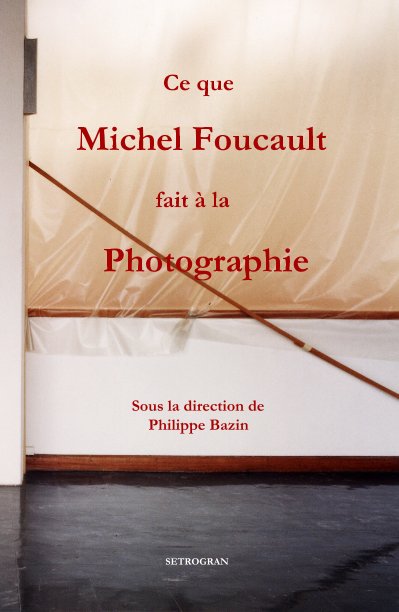
Ce que Michel Foucault fait à la Photographie
Sous la direction de Philippe Bazin, Setrogran

ebook

À propos du livre
Table des matières
La photographie et l’attitude critique du regard, Orazio IRRERA.
La photographie comme expérience politique du paysage. À propos de Lewis Baltz et de Michel Foucault, Arianna LODESERTO.
Figures de la folie – Dialogues, Philippe BAZIN.
La Visibilité, pivot de la pensée foucaldienne, Christiane VOLLAIRE.
L’écho de la photographie et la figure du militant, Bruno SERRALONGUE.
Lumières de Michel Foucault sur le photoconceptualisme, Morad MONTAZAMI.

Pezdek, K., Rasiński, L.
Between exclusion and emancipation: Foucault’s ethics and disability
(2017) Nursing Philosophy, 18 (2), art. no. e12131, .

DOI: 10.1111/nup.12131

Abstract
The aim of the study was to demonstrate how Foucault’s ethics, which we understand as a tension between exclusion and emancipation, helps both critically reassess two disability models that prevail in the contemporary literature concerning disability, that is the medical model and the social one, and support and inspire an ethical project of including people with disabilities in spheres of life from which they have been excluded by various power/knowledge regimes. We claim, following Foucault, that such a project should be informed by critical reflection on exclusion-generating forms of knowledge about people with disabilities and focused on individual ethical actions fostering self-realization and emancipation of people with disability. © 2016 John Wiley & Sons Ltd

Author Keywords
emancipation; ethics; exclusion; Foucault; people with disability; power

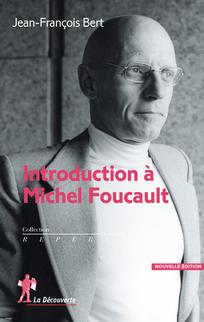
Bert, J. (2016). Introduction à Michel Foucault. Paris: La Découverte. (Original edition 2011)

Présentation

Michel Foucault (1926-1984) aura été en France le plus novateur des maîtres à penser – maître sans programme qui a su offrir à ses lecteurs une « boîte à outils » qu’il expose par fragments dans ses entretiens, cours, articles et livres…
Philosophe « par défaut », Foucault était loin d’ignorer les méthodes, les auteurs et surtout les controverses qui agitaient les sciences humaines, qu’il ne se priva d’ailleurs pas de critiquer ouvertement. En retour, plusieurs notions qu’il élabora tout au long de son parcours (« savoirs », « gouvernementalité », « subjectivation ») continuent de faire débat autant chez les historiens, les sociologues ou les anthropologues, que chez certains praticiens comme les criminologues, les psychanalystes ou les spécialistes du droit, sans oublier le vaste domaine des cultural studies.
Foucault n’est pas de ceux qui se laissent facilement saisir et l’objectif de cet ouvrage est d’éclairer les enjeux de sa pensée pour en faire ressortir l’intérêt actuel et, pourquoi pas, montrer comment penser différemment l’enfermement, les institutions, le rapport à soi ou à la vérité.