
Foucault News

News and resources on French thinker Michel Foucault (1926-1984)

Wahyudi Akmaliah, Review: Making the subject of Sunda, Inside Indonesia, 14 April 2025

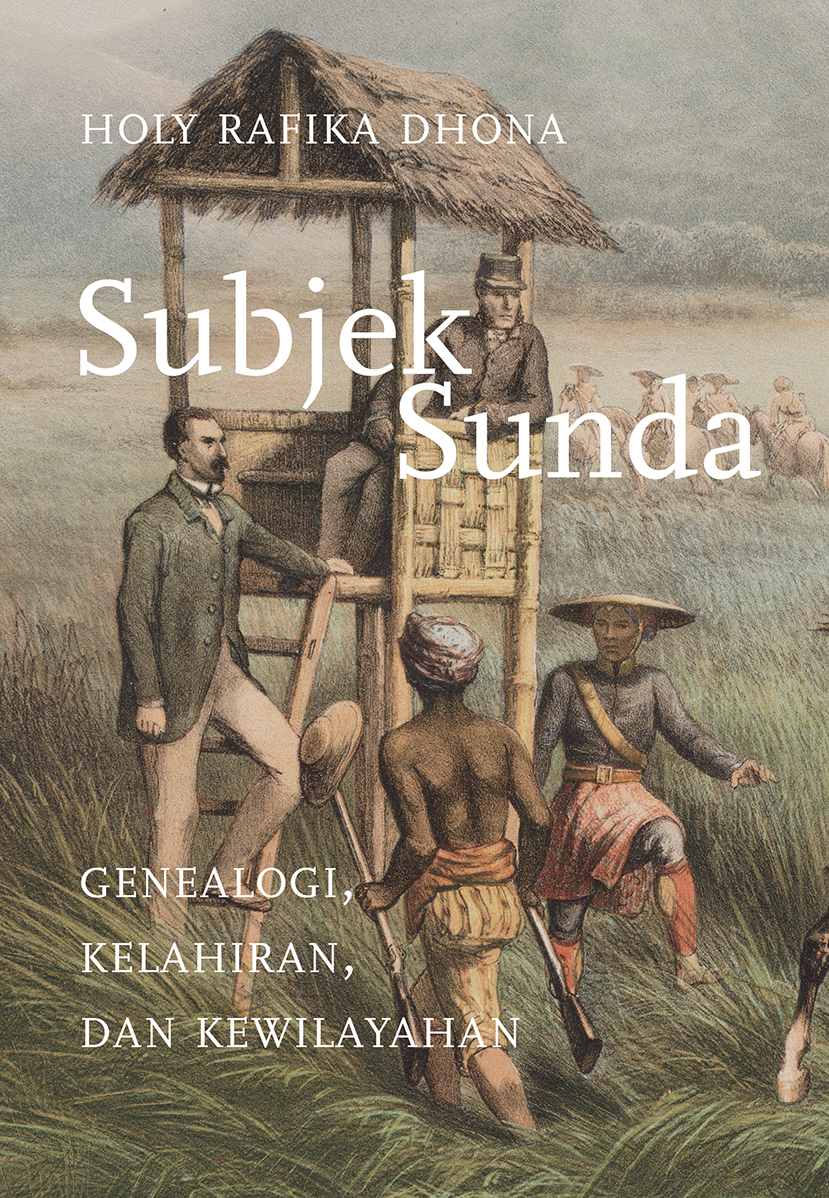
What is ethnicity? Is it social construction or a part of an ancestral heritage? In what way is ethnicity significant in the Indonesian context? These are the questions Holy Rafika Dhona tries to answer in Subjek Sunda: Genealogi. Kelahiran, dan Kewilayahan.  Specifically, he offers a perspective on the emergence of Sundanese identity by employing Michel Foucault’s concept (1973) of the genealogy of knowledge and Thongchai Winichakul’s notion (1994) of the geo-body of the nation. Rather than viewing Sunda as a pre-existing ethnic category predating colonial rule, Holy argues that it is a social construction shaped by the impact of colonisation, which sought to both dominate and govern the colonised society within the Dutch East Indies administration.

A contemporary impetus Dhona opens the book with a fundamental question: Was Sunda identity established as an ancestral heritage, or was it a colonial construction?
Read more

I have now set up Foucault News on Bluesky. New posts on my main WordPress blog will now be automatically posted to Bluesky. Please go here to subscribe @foucault-news.bsky.social I have added a follow button to the sidebar on my WordPress site as well.

You can also follow the blog via Facebook, X (Twitter), Feedly (rss) or email subscription (subscribe via the sidebar on the WordPress blog).

With an additional thank you to all current and past subscribers.

Dhona, H. R. (2024). Islamic communication as an invention of modern-western knowledge: critical analysis toward Islamic communication in Indonesia. Asian Journal of Communication, 34(3), 381–398.

https://doi.org/10.1080/01292986.2024.2320902

ABSTRACT
This article questions the idea that Islamic communication is rooted purely in the religion itself. By studying the field of Islamic communication studies in Indonesia, it analyzes discourses which produce knowledge of Islamic communication. Foucauldian archaeological method is employed to examine literatures, textbooks, and other sources which form regulated statements about Islamic communication tradition in Indonesia, developed by both public university scholars and Islamic scholars in the nation. The author argues that Islamic communication traditions in Indonesia are the product of modern developmentalism discourse which dominated in the New Order era (1966–1998). As a consequence, Islamic communication tradition in Indonesia is currently unable to provide an alternative perspective in much broader communication studies. This article proposes revisiting the history of Islamic communication within certain local contexts and use of the Islamic discourse as a criticism toward every kind of domination, including the domination of knowledge termed Islamic.

KEYWORDS:
Archaeology, communication history, dawah, developmentalism, Islamic communication, Indonesia, prophetic communication

Diefenhardt, F. (2025). Automating the managerial gaze: critical and genealogical notes on machine learning in personnel assessment. The International Journal of Human Resource Management, 1–34.

https://doi.org/10.1080/09585192.2025.2470302

Abstract
This paper takes a Foucauldian approach to current discussions on the use of machine learning in personnel selection, with a focus on pre-selection assessment. It problematizes two central themes in this debate: the objectivity and the accuracy of machine learning–supported personnel assessment. A Foucauldian perspective is employed to offer an alternative and critical approach to these themes and to allow for a reformulation of their underlying questions. From this perspective, the paper analyzes how ML-based personnel assessment tools reflect broader developments in governmental practices and technologies, conceptualized as elements of algorithmic governmentality. Drawing on the empirical example of HireVue, it critically examines HireVue’s operations. It also traces the historical development of 20th-century personnel testing and statistical procedures to show how contemporary ML-based personnel selection systems are embedded in longstanding practices of data-driven governance in the workplace. By situating the discourse on ML in personnel selection within the broader context of algorithmic governmentality and its prehistory, the paper highlights key implications for the study and practice of personnel assessment.

Keywords: Personnel assessment, personnel selection, artificial intelligenc, emachine learning, algorithmic governmentality, Foucault

Reddy Naveen K. Redefining disease in the age of blood-based biomarkers, Frontiers in Sociology, vol 10 2025

https://www.frontiersin.org/journals/sociology/articles/10.3389/fsoc.2025.1533429

Abstract
This article explores the sociological and ethical implications of redefining disease in the era of advanced diagnostic technologies, with a focus on blood-based biomarkers. Drawing from Foucault’s concept of medicalization and Illich’s critique of disease mongering, it highlights how diagnostic expansions, driven by corporate and institutional influences, are reshaping the boundaries of health and disease. Advances such as blood assays for Alzheimer’s and Parkinson’s diseases, liquid biopsies in oncology, and biomarkers for depression and diabetes, while promising, raise concerns about premature diagnoses and overtreatment. The influence of pharmaceutical and insurance industries on diagnostic criteria, as seen in the ICD updates, underscores the need to address conflicts of interest and regulatory gaps. Case studies on Alzheimer’s and Parkinson’s reveal how these changes could benefit stakeholders at the expense of patient welfare. The article calls for ethical oversight, stricter regulation, and research into the population-level efficacy of diagnostic and treatment protocols.

Yarar, B. (2025), Exiled Scholars and New Organizational Strategies in Academic Humanitarianism in Europe in the Aftermath of the Syrian War. Global Networks, 25: e70004.

https://doi.org/10.1111/glob.70004

ABSTRACT
Over the past decade and more, many countries in the Middle East and Africa have experienced significant disruptions in their social and institutional life due to the rise of new wars and authoritarian regimes in the region. Although these crises have resulted in large masses of people, including many academics, migrating into neighbouring countries and Europe, the responses of European states to these crises have been varied, and the transnational networks of academic humanitarian actors have continued to expand, especially in Europe. Drawing on Foucault’s theory of governmentality, the article proposes to consider these organizations as part of the larger ensemble of governing practices or the regime of what it suggestively calls academic humanitarianism. In this context, the article focuses on the new organizational strategies adopted by the four influential actors (Scholars at Risk Europe- SAR Europe; Philipp Schwartz Initiative -PSI- in Germany; the French Hosting Programme for Scientists in Exile -PAUSE- in France; the Council for At-Risk Academics -Cara in UK) of this network after the Syrian war and argues that this was a turning point that allowed the emergence of new organizational forms and strategies that accelerated the process of hybridization, professionalization and transnationalization of academic humanitarianism in resonance with the national context of each actor.

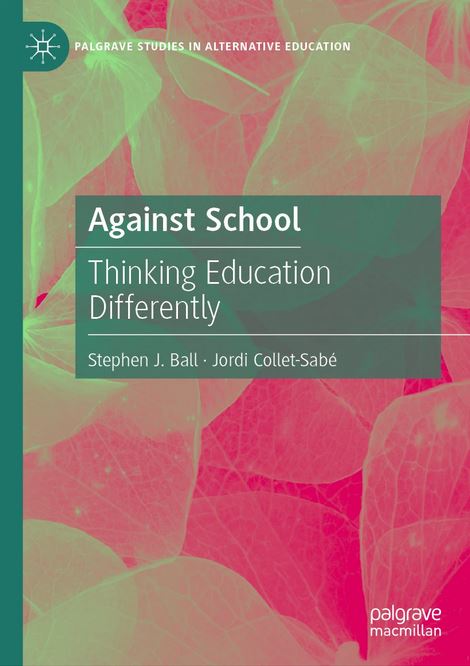
Stephen J. Ball , Jordi Collet-Sabé, Against School. Thinking Education Differently, Springer, 2025

About this book
This book invites the reader to think education against, beyond and without the school and its paraphernalia. To think about ‘education’, rather than schooling, and what kind of education is relevant to and needed now in the complex, difficult and dangerous world we live in. That invitation means testing our limits, questioning and changing ourselves and thinking the practice of education differently. The book is not about tinkering, improving, reforming – it about clearing away the detritus of the school and using the space created to explore education as self-formation and commoning. It will be of interest to scholars and graduate students of alternative education, schooling, educational policy and philosophy, and the sociology of education.

Keywords
self-formation, commoning, transgression, critique, curiosity

PDF of flyer

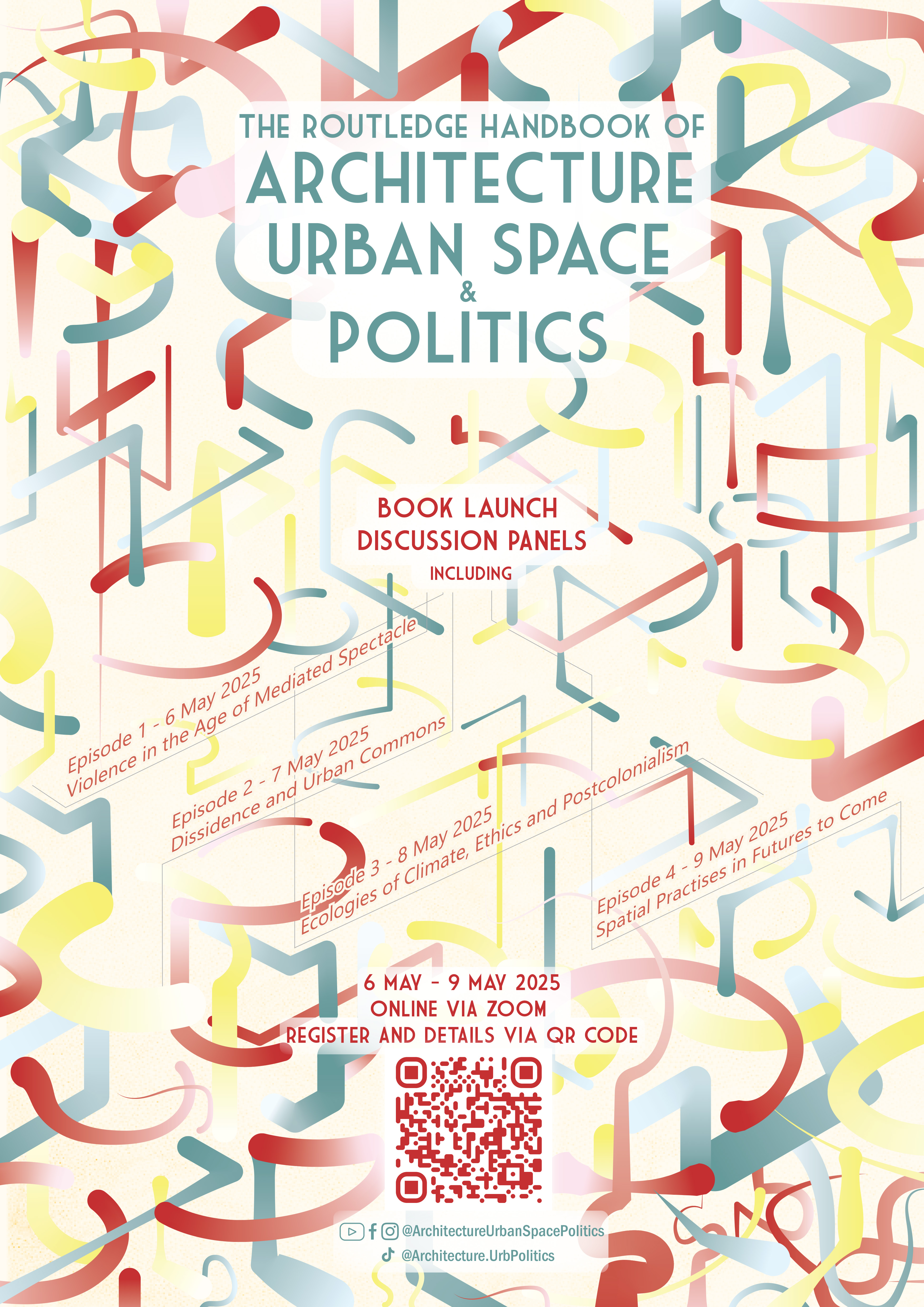
Online Book Launch, 6–9 May 2025

 Join us for a four-day online panel series —each day featuring a single one-hour session—hosted by the team behind The Routledge Handbook of Architecture, Urban Space & Politics, Vol I & II.

 Hosted by the co-editors of these two volumes— Dr Nikolina Bobic (University of Plymouth, UK) & Dr Farzaneh Haghighi (University of Auckland, New Zealand)—and chaired by Associate Professor Dagmar Reinhardt (University of Sydney, Australia) & Professor Stephen Walker (Manchester School of Architecture, UK), this panel series brings together contributing authors to explore how architecture and urban space intersect with politics. This event offers an opportunity to hear directly from the authors.

Whether or not you’ve read the books, we invite you to take part in an open, inclusive discussion that welcomes a range of perspectives.


📌 REGISTER: HERE  

Beyond Academia – Accessible Video Series

We’re taking this conversation beyond academia. The authors have created short, accessible videos that bring their research to life—perfect for anyone interested in space and politics.

Explore it all here: https://linktr.ee/architectureurbanspacepolitics

Follow for updates as new videos are posted:

Read more about these two books:

  • The Routledge Handbook of Architecture, Urban Space and Politics, Volume I: Violence, Spectacle and Data.  >> Available at: HERE
  • The Routledge Handbook of Architecture, Urban Space and Politics, Volume II: Ecology, Social Participation and Marginalities.  >> Available at: HERE

Baciu, Elena-Loreni , Lazăr, Theofild-Andrei , Totan, Raluca Iunia, Social goals under a neoliberal agenda: measures to promote equality in European higher education read through a Foucauldian lens, Frontiers in Sociology, vol 10, 2025

https://www.frontiersin.org/journals/sociology/articles/10.3389/fsoc.2025.1492863


Abstract

In this study we draw on Foucault’s work on governmentality and examine the power dynamics involved in establishing and implementing policies that promote equality in European higher education. Using a qualitative case study design, we selected 17 public universities situated in 13 European countries, from which we collected information about (1) the way these institutions problematize inequality in reference to participation in higher education, by labeling and categorizing vulnerable students and (2) the modes of governing and power tools (designed as support measures) they employ to address inequality. The results of the study show that the most typical profiles of vulnerability with which the universities in the sample engage include: students with disabilities, students from low-income backgrounds and students with children. Additionally, most universities use targeted support measures (as opposed to mainstreaming strategies) which consist in a mix of financial aid and support and adaptation services. The critical analysis of these measures reveals their power to shape students’ identifies and actions, through processes of subjectification, categorization, normalization and responsabilization. In the last section, we discuss the tension that appears between the European universities’ social dimension and the neoliberal policies that shape their functioning.

Ridgway, V. (2025). Conspiracy theories and Geography: Who gets to say where is power? Dialogues in Human Geography

https://doi.org/10.1177/20438206251316008

Abstract
Conspiracism has become a powerful explanatory category for major political events (Brexit vote, January 6th Capitol attack) and the subject of a diverse body of research. Yet geography has largely ignored such debates and has, on some occasions, adopted this term with little critical examination. I call on geographers to think through the implications of this silence. I especially highlight how conspiracism presents an opportunity to think through the questions of epistemic authority, the hegemonic control of knowledge production, and the limits of the regulation of dissent. I argue that further work is needed to understand the historical and spatial conditions that make it possible for practices, attitudes, and speeches to become available to be invested and discerned as a distinctive mode of thought called ‘conspiracy theories’. To that end, and drawing on Foucault’s method of problematisation, I make two propositions. First, conspiracism is the performance of a critical attitude that is activated in a field conditioned by the felt pressures and limits of a collective commitment to the liberatory promise of critique. Second, conspiracism, as a collective geo-historical experience, is born from the pressures of knowing, locating, and naming power. These propositions seek to destabilise the certainties that allow conspiracism to function as a category of individualised ‘bad thinking’ by inscribing it as a collective experience held together by an ensemble of affective conditions. Having established conspiracism within this affective field, I provoke geography to think through its position, as an institutional science within this field.