Foucault News

News and resources on French thinker Michel Foucault (1926-1984)

Markoff, B. (2024). Beyond the discipline gap: the role of spectacular state violence in the discipline and punishment of Black and Indigenous children in US public schools. Discourse: Studies in the Cultural Politics of Education, 46(2), 132–143.

https://doi.org/10.1080/01596306.2024.2378304

ABSTRACT
Education research frequently measures and calls for an end to racial disparities in rates of US school discipline practices such as office referrals, suspension, and expulsion. This paper asks what a more expansive understanding of discipline can demonstrate about how schools discipline different students differently. Tracing the history of corporal punishment from Native boarding schools, through Ingraham v. Wright, to violent school policing and arrests today, the author finds that, because Black and Indigenous children can never be ‘normalized’ within white supremacist US schooling, the shift in disciplinary tactics that Foucault described never took place for these students and in fact, the functioning of normalizing school discipline for all depends on extraordinary, spectacular violence against the most marginalized. Rather than focusing on the discipline gap, education research must attend to the violence inherent in US schooling and seek to abolish it.

KEYWORDS:
School discipline, school-to-prison pipeline, abolition, Foucault
Fung, C. K. M. (2025). Homophobic media or lesbian memories? Hong Kong queer women’ online debate over The First Girl I Loved. Continuum, 39(2), 363–375.

https://doi.org/10.1080/10304312.2025.2462102

ABSTRACT
Hong Kong cinema is known for producing bittersweet teenage lesbian stories, in which young lovers inevitably grow up to be married women leading heteronormative lives. The latest film to follow this tradition divided queer women upon its release. Some denounced The First Girl I Loved (2021) for perpetuating a dangerous and anachronistic stereotype, while others celebrated the film as a positive, faithful portrayal of lesbian memories. This paper challenges the view that LGBTQ+ films must be unilaterally transgressive or hegemonic, rather, I position this binary evaluation as part of queer audience’s own interpretive repertoire. By examining how viewers use terms such as ‘outdated’ and ‘authentic’ to describe the film, this study demonstrates that queer women are in fact debating the directors’ sexual-gender identities (what Foucault calls ‘the author function’) and the temporality of lesbian representations. Images of queer trauma can be read as homophobic to some while resonating with others, and by situating this tension within Hong Kong’s historical and political context, I argue that both readings are crucial strategies that Hong Kong women use to contest mainstream sexology and that the film helps them memorialize their lost gay youth online.

KEYWORDS:

Hong Kong, cinemapositive and negative representation, lesbian representation, queer girlhood, queer audience, author function, temporality, sexology, digital grief, online memorials

Critique 935. Après Canguilhem. Nouveaux dialogues entre médecine et philosophie

« Ôtez Canguilhem et vous ne comprenez plus grand-chose à toute une série de discussions. »

Par ces mots, Michel Foucault faisait de Georges Canguilhem l’invisible clef de voûte de la philosophie française. Pourtant, à son décès en 1995, l’austère historien des sciences ne nous avait légué qu’une œuvre bien circonscrite, consistant pour l’essentiel en cinq livres. Ce premier ensemble, où trônaient Le Normal et le Pathologique et La Connaissance de la vie, n’est plus que la pointe émergée d’un iceberg. Les Œuvres complètes de Canguilhem, dont le sixième volume paraît ce mois-ci, comptent désormais plusieurs milliers de pages. Renouvelé et enrichi, ce corpus modifie profondément l’image que nous nous formions de sa pensée. Trente ans après, l’œuvre de Canguilhem, plus vivante que jamais, ouvre de nouvelles pistes – à l’histoire des sciences biologiques et médicales, mais aussi à la philosophie tout court.

Sommaire :

Thierry HOQUET : (De quoi) Canguilhem fut-il philosophe ?

ENTRETIENS
Pierre-Olivier MÉTHOT : « Canguilhem pense avant Foucault que “tout est normé dans une culture” »

Élodie GIROUX : « Canguilhem peut servir de ressource pour appréhender une médecine extrêmement technicisée »

Marie GAILLE et Agathe CAMUS : En quête de matière étrangère. La philosophie de terrain à l’épreuve des maladies chroniques

Lucie LAPLANE : PhiLabo. La philosophie dans le laboratoire

VARIA
Frédéric KECK : Portrait de René Girard en Maître Renard

Francis WOLFF : Engel lecteur de Foucault. Pour une généalogie positive

Pierre VINCLAIR : L’infra-révolutionnaire

With thanks to Stuart Elden at Progressive Geographies for this news

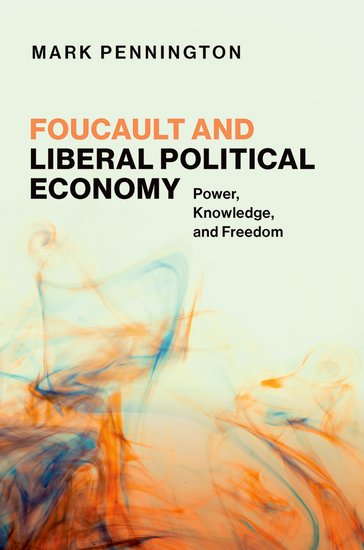
Mark Pennington, Foucault and Liberal Political Economy. Power, Knowledge, and Freedom, Oxford University Press, 2025

Link to digital edition

Mark Pennington Hosted by Morteza Hajizadeh on the New Books network

Description
This highly original and innovative book is the first to comprehensively engage the ideas of the French social theorist and philosopher Michel Foucault from within the tradition of liberal political economy. Divided into two parts the book commences by demonstrating important commonalities between Foucault’s ideas and those of a neglected ‘post-modern’ stream in liberal political and economic thought. These ideas draw on a social theory emphasising a culturally situated individualism; a philosophy of science highly critical of socio-economic ‘scientism’ and ‘expert rule’; and an understanding of freedom as an open-ended process of ‘self-creation’ in the face of cultural power relations—a freedom threatened by alignments between state power and more decentred manifestations of power.

Part two combines the tools of Foucault’s critical social theory with those of a post-modern liberalism to problematise four separate though overlapping ‘bio-political’ or ‘pastoral’ dispositifs in contemporary liberal societies focused on social justice, public health, ecological sustainability, and law and order. Where the Foucauldian and the post-modern liberal approaches suggest that freedom requires a cultural and economic ‘creative destruction’ that destabilises existing modes of thought and ways of being, the pastoral dispositifs that seek to ‘monitor and correct’ multiple pattern anomalies are shown to stifle the space for that creative freedom.

Though the book does not engage the question of whether Foucault himself moved towards endorsing liberal political economy, it throws considerable light on how key Foucauldian concerns may be addressed within the liberal tradition, and why Foucauldians may have reason to embrace a reconstituted or post-modern liberalism.

Rovira Martorell, J., Gálvez, A., & Tirado, F. (2024). Artificial Intelligence and the Production of Judicial Truth. Theory, Culture & Society, 42(1), 3-18.

https://doi.org/10.1177/02632764241268174 (Original work published 2025)

Abstract
The aim of this paper is to present artificial intelligence (AI) as an organ with a role in the production of judicial truth, expanding its objects, changing its procedures and reshaping the distribution of agencies within the judicial organism. To this end, it builds on Michel Foucault’s work on the procedures of truth production and the three subject forms involved: operator, spectator and object. This is then complemented by the general organological perspective proposed by Bernard Stiegler. On the basis of both, we will demonstrate two realities: first, that AI is shifting truth production from the individual to the profile, and second, that the types of associations that AI is forming have the potential to curtail human agency in the production of judicial truth.

Jones, Luke, Zoe Avner, Neil Boardman, and Jim Denison. 2025. “Confessions of a Retired Footballer: A Foucauldian Reading of British Working Footballers’ Longer-Term Retirement Experiences.” Sport in Society, March, 1–21.

doi:https://doi.org/10.1080/17430437.2025.2470144

Abstract
Historically, the phenomenon of retirement from high-performance sport has predominantly been researched through a psychological or psychosocial lens, highlighting the key challenges experienced by athletes in their lives after sport. Despite this substantial investment and the tailored interventions that have ensued, as well as the assertion that sport prepares individuals well for their futures, problematic issues associated with this common athlete experience prevail. Denison and Winslade (2006) have suggested that the focus of psycho-social research upon the individual athlete as the ‘problem’, and the location where ‘change needs to occur’ has limited scholarly understanding of a range of athletic issues, including retirement. Over the last few decades, the socio-cultural exploration of sports retirement has grown considerably and scholars have begun to consider sport retirement using a range of theoretical tools. However, sport retirement studies have overwhelmingly considered the initial and recent aftermath of career cessation – what sport psychologists have labelled the ‘retirement phase’ (Stambulova et al., Citation2020). In the current study, in an attempt to change this status quo, we continue our Foucauldian informed analysis of Association Football (football) retirement to analyse the experiences of 25 retired football players between the ages of 21 and 34, a minimum of 18 months since their careers had ended. To do so we use a theoretical framework derived from Michel Foucault’s (1978) underutilised conceptualisation of ‘confessional techniques’. Our data analysis has suggested that the legacy of having worked as a ‘docile football body’ continues to impact and shape our participants’ everyday experiences – in particular, through the importation of a learned ‘confessional mindset’ from their careers as a means of navigating their new roles.

Keywords:
Football, sport retirement, longer term sport retirement, Foucault, confession

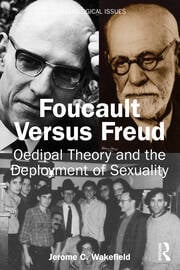
Jerome C. Wakefield, Foucault Versus Freud, Oedipal Theory and the Deployment of Sexuality, Routledge, 2025

In Foucault Versus Freud, Jerome C. Wakefield offers a novel analysis of one of the great intellectual clashes of our times, the attack on Sigmund Freud’s influential sexual theories by the eminent French philosopher and historian of ideas Michel Foucault.

Starting from Foucault’s question, “What makes the psychoanalytic theory of incest acceptable to the bourgeois family?”, and drawing on Foucault’s relatively unexplored published lectures as well as his celebrated History of Sexuality, Vol. 1, Wakefield evaluates Foucault’s argument that there is a continuity between the two-century medical anti-masturbation crusade and Freud’s theory, providing the reader with an accessible introduction to Foucault’s conceptual innovations including power/knowledge, the deployment of sexuality, and the use of surveillance and confession as tactics in medicalizing sexuality and reshaping family life.

Rather than allowing the argument to stay at the evidentially uncertain level one often finds in Foucault’s writings, Wakefield undertakes close readings of both Freud’s “seduction-theory” texts and later Oedipal-period texts to test whether Foucault’s provocative arguments find support or disconfirmation. Despite identifying weaknesses in Foucault’s position, Wakefield argues that a careful look at Freud’s sexual theories through Foucault’s theoretical lens changes forever the way one sees Freud’s theory—and has the potential to help psychoanalysis move forward in a constructive way.

This book is written to be understandable for those who are not steeped in philosophy or familiar with Foucault’s philosophy, offering a lucid introduction to Foucault’s ideas and his clash with Freud that will be of interest to clinicians, students, and scholars alike.

With thanks to Stuart Elden at Progressive Geographies for this reference

Oztig, L. I., & Karluk, A. C. (2025). Beyond Foucault and Post-Panoptic Theories: New Perspectives on China’s Surveillance Mechanisms in East Turkestan. Geopolitics, 1–25.

https://doi.org/10.1080/14650045.2025.2465681

ABSTRACT
Surveillance is as old as human history. In pre-modern times, it mostly took place through spies, informants, and guards. In modern times, it became a systematised practice conducted through bureaucratic structures. Foucault’s panopticism explains how surveillance shapes modern societies by turning individuals into self-disciplined subjects. Today, an array of technologies – including algorithms, sensors, satellites, biometric devices, and DNA analysis – is increasingly used for surveillance purposes. The rapid evolution and expansion of these practices, driven by advanced technology, have given rise to new concepts such as ‘control society’, ‘surveillance-oriented societies’, ‘modulatory control’, ‘liquid surveillance’, ‘dataveillance’, and many others. We argue that the idiosyncratic surveillance practices employed by China bring a paradigm shift in surveillance studies, as they cannot be fully explained by panoptic and post-panoptic theories of surveillance. Our research is grounded in the firsthand experiences of Uyghurs subjected to China’s high-tech surveillance in East Turkestan, collected through approximately 500 surveys, 21 in-depth interviews, and two focus group discussions. Our respondents reveal that China’s use of advanced technology infiltrates every facet of social and private life in East Turkestan, compelling the residents to engage in self-discipline not only in the public sphere, but also in their private sphere, extending into their houses and vehicles, family and neighbourly relations, and the ways they interact with technology. China’s practices, which we call ‘techno-panoptic governance’, have moved to extremes in surveilling, disciplining, and manipulating individuals on a granular level. This type of governance is designed to achieve a complete erasure of privacy and individual agency by strategically leveraging technology. Its objective is to manipulate and disrupt individuals’ everyday reality, driving them into a state of constant anxiety and paranoia. Under this system, individuals are compelled to perceive and treat their everyday lives as mere data that could alert state authorities at any moment and live in a state-imposed reality.

Ahrens, T., & Ferry, L. (2025). Governmentality, counter-conduct, and modes of governing: Accounting and the pursuit of municipal sustainable waste management. Contemporary Accounting Research, 1–28.

https://doi.org/10.1111/1911-3846.13026

Abstract
Recent research into the uses of accounting as a technology of government has used Foucault’s notion of “counter-conduct” to shed light on various ways in which the governed can seek to alter the regimes to which they are subjected. This paper unpacks the notion of counter-conduct further in order to develop a clearer conceptualization of how regimes of government can change over time, with or without clearly identifiable attempts by the governed to influence such changes. We develop our argument based on a longitudinal field study of sustainable waste management practices in a municipality in the English East Midlands. We track the municipality’s attempts to become more sustainable in the context of an evolving central government performance management regime that went through a series of legislative and administrative iterations—namely, Best Value, Comprehensive Performance Assessment, and Comprehensive Area Assessment. We conceptualize these iterations of central performance management and the related changes in local government practices and technologies of governing as a series of overlapping “modes of governing” (Bulkeley et al., 2007, Environment and Planning A, 39(11), 2733–2753). We suggest that accounting research can benefit from the notion of modes of governing because it sheds light on the theoretically expected, but empirically underresearched, copresence of multiple rationales, programs, and technologies of governing, all operating at the same time.