Foucault News

News and resources on French thinker Michel Foucault (1926-1984)

Lawrence Grossberg, On the Way to Theory, Duke University Press, 2024

DOI: https://doi.org/10.1215/9781478059837

In On the Way to Theory, Lawrence Grossberg introduces the major ways of thinking that provide the backstory for contemporary Western theory. Asking readers to think about thinking, Grossberg traces cultural and critical theory’s foundations from the contested enlightenments to modern and postmodern conceptualizations of power, experience, language, and existence. He introduces key figures as historical characters and lays out the unique set of tools for thought that their “deep theories” offer. Through finely tuned and accessible descriptions of their concepts and logics, Grossberg highlights thinkers including Spinoza, Kant, Hegel, Marx, Nietzsche, Wittgenstein, Heidegger, Derrida, Foucault, Deleuze, and Hall, defining the possibilities of their thought. This book is essential for those interested in how theories shape our understanding of the world, influence our choices, and define our realities. It challenges us to recognize the multiplicity and complexities of ways of thinking in our quest for knowledge and understanding. By setting out a story of theoretical foundations, Grossberg invites readers to think toward the future of theory and expand conversations around theoretical scrutiny and criticism.

Gretzky, M., & Dishon, G. (2025). Algorithmic-authors in academia: blurring the boundaries of human and machine knowledge production. Learning, Media and Technology, 1–14.

https://doi.org/10.1080/17439884.2025.2452196

ABSTRACT
The emergence of large language models (LLMs) that generate human-like texts has raised questions about the boundaries between human-authored and machine-generated outputs. This article examines how LLMs are re-shaping academic knowledge production through the emergence of the Algorithmic-Author. Drawing on Foucault’s Author-Function and the Social Construction of Technology approach, we analyze how academic groups negotiate LLMs’ roles in scholarly work. Based on 25 semi-structured interviews with academics across career stages and disciplines, we identify two dominant technological frames: the Library of Babel, portraying LLMs as universal knowledge repositories leading to tecnomorphic views of human thinking, and the Superposition, presenting LLMs as dynamic, interactive agents described in anthropomorphic terms. These frames manifest differently across academia, shaping both formal writing conventions and informal social norms. Our findings suggest the Algorithmic-Author functions not merely as a writing tool but as a mechanism standardizing academic practices while creating new positions within knowledge production.

KEYWORDS:
Large language models (LLMs), Artificial Intelligence

Newman, S. (2024). Fugitive Truth: Renewing the Public Sphere in the Age of Post-Truth. Javnost – The Public, 31(3), 327–342.

https://doi.org/10.1080/13183222.2024.2383904

Abstract
In the sixty years since the publication of Jürgen Habermas’ magnum opus, The Structural Transformation of the Public Sphere, the public sphere now faces a new threat in the era of “post-truth” politics. The preponderance of lies, mis/disinformation, “fake news”, “alternative facts”, conspiracy theories, and the general breakdown of trust in established sources of knowledge and information has led to the fragmentation and deepening polarisation of the public sphere – a situation deliberately promoted by right wing populist forces intent on fighting the “culture wars”. At the same time, the political space is being disrupted, in a different way, through new social movements and radical activism particularly around issues of climate change, inequality, racial injustice, and police violence. My aim is to show how these contemporary forms of dissent are engendering a new “structural” transformation of the public sphere. They create autonomous and critical spaces of collective engagement that call into question the legitimacy of dominant power structures. Understanding this process requires an alternative rendering of the relationship between truth and politics – something I develop through Michel Foucault’s rethinking of the critical impulse of the Kantian Enlightenment and his later work on parrhesia. © 2024 The Author(s).

Author Keywords
democracy; new social movements; parrhesia; populism; post-truth; Public sphere

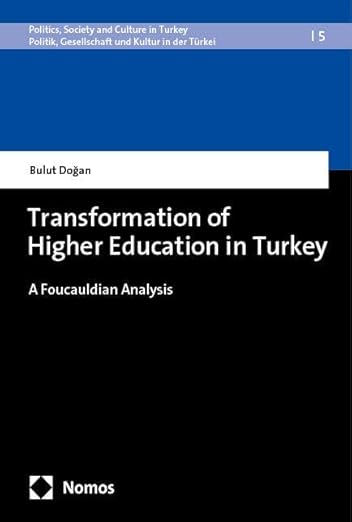
Bulut Doğan, Transformation of Higher Education in Turkey: A Foucauldian Analysis, Nomos Verlagsgesellschaft

Abstract
This book examines the transformation of higher education in Turkey (Türkiye) after 1980 through Foucault’s historical method, discourse analysis and the concept of dispositif in the field of higher education research. Foucault’s method is seen as holistic and historical. Discourse analysis is used to illuminate changes in higher education. The book divides the changes in higher education in Turkey (Türkiye) into three different periods and analyses them in four categories: discourses, institutions, administrative decisions and resistance through the concept of dispositif, which is the main concept of the study.

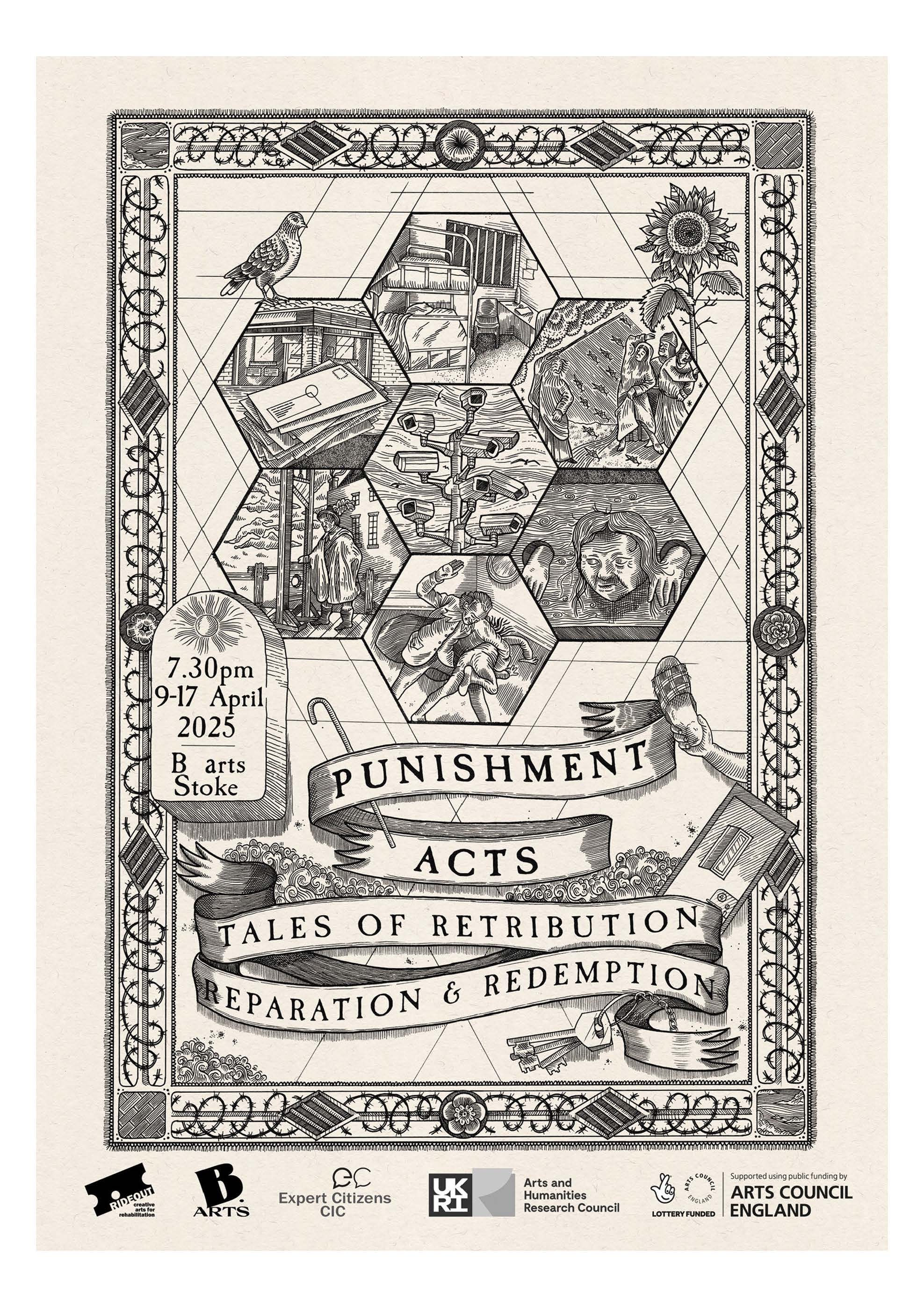
Punishment Acts Flyer

Punishment Acts

7.30 pm
Wednesday 9 -Thursday 17 April 2025
B.ARTS, 64 Hartshill Road Stoke-on-Trent ST4 7RB
United Kingdom

 Tickets £10 and £6.50 available from https://bit.ly/3XdhjRJ

Nights are long in prison. The minutes drag by for both the watched and the watchers like a dirty mop on a dirty floor. Tales are told, secrets shared, rumours whispering under the doors, down the pipes, leaking through the locks.

In that hinterland between sleep and wakefulness, the timeline of history buckles and twists as the past and present begin their endless dance: the smell of a vape, the splash of the slop out, the taste of gruel, the ache of the treadwheel, the creak of the hangman’s rope.

The nights are long in prison for those who are out of time. How long is long enough?

Punishment Acts is a co production between Rideout and B arts. It draws on the ideas of people with lived experience of multiple disadvantage including custody. Made following a series of workshops with Expert Citizens CIC exploring themes in Discipline and Punish by the French philosopher Michel Foucault, it will ask audiences to reflect on beliefs about punishment and consider whether there are other ways to achieve ‘justice’.

Suitable for audiences 15+

Punishment Acts is a co production between Rideout (Creative Arts for Rehabilitation) and B arts, working in association with Expert Citizens.

Punishment Acts is part of the practice based and collaborative work of Staging Justice, a two year Arts and Humanities Research Council (AHRC) funded project that explores interdisciplinary, public engagement, and histories in Rideout’s creative work over the past 25 years.

Rideout is an arts organisation that specialises in work in the criminal justice system, especially prison. Established in 1999, the company has a reputation for facilitating exciting and innovative arts projects that enable people in prison to explore new perspectives on themselves and others, alongside public facing work that challenges audiences to consider the form and fuction of prison.

B arts is one of the country’s longest running community and participatory arts organisations. Established in 1985 the company produces high quality arts experiences with people from many different backgrounds who would not normally engage with the arts. They aim to strengthen the cultural infrastructure in our area; increase the diversity and range of artists and producers working in the region, and offer quality and depth of engagement in the arts to all.

Expert Citizens is a Community Interest Company led by people with lived experience of homelessness, mental ill-health, addiction, domestic abuse, poverty or histories of offending behaviour. They specialise both in supporting others with lived experience alongside partnership work with statutory and voluntary sector organisations across Stoke-on-Trent to help reduce barriers to participation.

Punishment Acts builds on a successful partnership between the three organisations that began originally with the show, In Plain Sight, the explored myths associated with street homelessness in February 2020.

Xu, P., & Ritchie, J. Neoliberalism, citizenship, and young children: Exploring discursive constructions of citizenship in early childhood curricula in China and Aotearoa New Zealand. (2025) Global Studies of Childhood

https://doi.org/10.1177/20436106241311639

Abstract
As an entitlement to rights, well-being and equity, young children’s citizenship lays the foundation for a democratic, just and sustainable world. This article interrogates the discursive constructions of ‘citizenship’ within recent early childhood curriculum documents in China and Aotearoa New Zealand. Since the 1990s, both nations have released national curricula to facilitate children’s growth and learning, unveiling the potential of children to act as competent and active citizens. A previous study explained ways in which citizenship in both nations’ curricula is discursively constructed as a ‘neoliberal construction’. However, other possible constructions of children’s citizenship are worthy of exploration. This article draws from the first author’s doctoral study and further examines alternative discursive constructions of children’s citizenship in both nations’ curricula to address this research gap. Engaging a post-structural positioning that incorporates critiques of power and knowledge drawing from the work of Michel Foucault, we present examples of ways that young children’s citizenship is discursively constructed as (1) development and preparation, (2) rights and participation and (3) relationships and connectedness. The power of cultural and historical discourses in creating these constructions is explored, whereby neoliberal discourse may either be problematised or strengthened.

Friedmann, V., & Marton, P. (2025). Operating by caesura: Medicalisation, geopolitical othering and biopolitical legitimacy in the (non-)approval of Sputnik V in the European Union Cambridge Review of International Affairs, 1–23.
https://doi.org/10.1080/09557571.2024.2442433

Abstract
The Covid-19 pandemic made biopolitical decisions, including on vaccine approval, a subject of public discussion, challenging governmental legitimacy at the level of its biopolitical underpinnings. We draw on Foucault’s notion of the ‘caesura’ to interpret governments’ responses as wielding their biopower by making medicalised distinctions, first between the ‘vulnerable’ and the ‘non-vulnerable’ and then, as vaccines became available, between the ‘vaccinated’ and the ‘unvaccinated’. However, we show that in the public debates over the approval of Sputnik V in the European Union—that is, over who counts as ‘appropriately vaccinated’—such medicalisation was combined with geopolitically informed boundary-drawing (and othering/inclusion) vis-à-vis Russia, both in the vast majority of member states that refused approval and in Hungary, which granted it. We analyse how the ‘customisable’ mixing of geopolitical and medical arguments constituted distinct legitimation strategies to establish the governments in question as the effective and legitimate loci of biopolitical authority.