Foucault News

News and resources on French thinker Michel Foucault (1926-1984)

Call for articles: Continental Philosophy and Hellenistic Thought

Special Section of Symposium: Canadian Journal of Continental Philosophy

The Hellenistic schools of thought―most notably, but not exclusively, Stoicism, Academic and Pyrrhonian scepticism, and Epicureanism―have been very influential for many centuries both in antiquity and in modernity. Nonetheless, for a variety of reasons, this influence has never gone uncontested. First, contrary to Platonism and Aristotelianism, which have been integrated into canonical systems of thought, the Hellenistic philosophies and their subsequent varieties have mostly flourished outside institutional channels. Second, the complex philosophical and historical vicissitudes of those schools have often brought about a multifarious and subterranean impact whose full extent is not easy to identify. Third, the philosophical reputation of many Hellenistic thinkers is heavily tarnished by accusations of hedonism, unoriginal eclecticism, relativism, an apolitical stance, etc.

The aim of the planned special section is to explore the intriguing reception of Hellenistic thought in Continental philosophy, from Nietzsche to twenty-first-century thinkers. This exploration will move in three directions.

First, the special section intends to shed light on the more or less explicit impact of the Hellenistic philosophies on Continental thinkers (e.g., Nietzsche, Arendt, Foucault, Deleuze, Agamben, etc.). In this regard, we shall pay particular attention to the ways in which they have appropriated, interpreted, and misunderstood the rich and multifaceted heritage of Hellenistic thought.

Second, the special section intends to challenge certain generally held assumptions and prejudices that have affected the Continental reception of the Hellenistic philosophies, with the result that their role, originality, and potential has often been neglected or underestimated (e.g., Heidegger). We plan to test the truth of those prejudices by shedding light on their philosophical, cultural, and historical background.

Third, the special section aims to show whether and to what extent a reappraisal of the Continental reception of Hellenistic thought can help us to develop a clearer understanding of how Continental philosophers have appropriated, used, and interpreted ancient sources.

Guest Editors

Antonio Cimino (a.cimino@ftr.ru.nl), Frederik Bakker (f.bakker@ftr.ru.nl) & Elena Nicoli (e.nicoli@ftr.ru.nl), Center for the History of Philosophy and Science, Faculty of Philosophy, Theology and Religious Studies, Radboud University.

Proposals

Proposals must include your name, the title of your planned paper, your academic affiliation, contact information, and an abstract (max. 200 words). Proposals can be submitted in English or French.

Schedule

Deadline for the submission of abstracts: 15 September 2019. Please send your proposal to: e.nicoli@ftr.ru.nl. Our decision about the submitted abstracts will be communicated by the 30th of September 2019. The authors of the selected abstracts are expected to submit the final version of their papers of about 6,000-8,000 words by the 10th of January 2020. These papers must be prepared for anonymous review and can be submitted in English or French. The papers will be subject to peer review in accordance with the journal’s procedure. The publication of the papers will be dependent on the result of the peer-review evaluations.

Pratt, N., Alderton, J.
Producing assessment truths: a Foucauldian analysis of teachers’ reorganisation of levels in English primary schools
(2019) British Journal of Sociology of Education, 40 (5), pp. 581-597.

DOI: 10.1080/01425692.2018.1561245

Abstract
This article considers a recent policy initiative in assessment in English primary schools (ages 5–11 years) in which curriculum ‘levels’ used by teachers to judge pupils’ attainment were suddenly removed. Previous work has largely focused on assessment of pupils, but we examine assessment as an activity through which teachers reproduce their professional standing. Using data from a small-scale study we investigate how teachers responded to these changes and what this tells us about the way in which the economy, and politics, of assessment practices operate at school level. Using Foucault as a theoretical framework, we make visible how this system was reorganised by teachers through the construction of new regimes of truth. Implications include evidence of a potentially damaging changing relationship between teachers and pupils, the key role of technology and the deleterious effect of neoliberalism on teachers’ and pupils’ relationships with both the process and subject matter of learning. © 2019, © 2019 Informa UK Limited, trading as Taylor & Francis Group.

Author Keywords
Assessment; Foucault; governmentality; power; teacher accountability; truth

Joe Hanley, The ‘quality’ of social work students in England: a genealogy of discourse 2002–18. Critical and Radical Social Work, online: August 23, 2019
https://doi.org/10.1332/204986019X15567132118821

Open access

Abstract
Students entering university-based social work qualifying education are increasingly constructed in policy as lacking in quality. This article presents a genealogy of discourse examining major reports and policy documents in England from 2002 to 2018 in order to understand how the dominant discourse around these students has changed since the introduction of the social work degree as the minimum qualification for practice. Key findings from the genealogy are that the quality of students has increasingly been described in negative terms, and this is linked in the discourse to a lack of employer involvement and the poor public perception of the profession. Fast-track social work qualifying programmes are presented as the self-evident answer to these issues within this discursive formation. However, it is ultimately shown that the current discursive direction may actually be leading to a self-fulfilling prophecy that deters students from joining the social work profession through any qualifying route.

Siffrinn, N.E., McGovern, K.R.
Expanding youth participatory action research: a Foucauldian take on youth identities
(2019) International Multilingual Research Journal, 13 (3), pp. 168-180.

DOI: 10.1080/19313152.2019.1623636

Abstract
This paper explores the identity construction of multilingual and multidialectal middle school students in a semester-long youth participatory action research (YPAR) project. In particular, it moves beyond an emancipatory discourse that views youth identity development from a point of marginalization by drawing on Foucauldian notions of discourse, power, and the subject to examine the complex discursive formations that enable and constrain the continual remaking of the self. Emergent understandings show how, regardless of whether youth took up or resisted positioning as social change agents, they deftly and creatively maneuvered across networks of power/discourse to constitute themselves in ways that were useful, even if not in line with the goals of the project. Implications include the need to reframe identity work in youth participatory action research in an effort to understand the nuances and complexities that inform the constant construction and negotiation of the self in ever-shifting networks of power/discourse. © 2019, © 2019 Taylor & Francis Group, LLC.

Author Keywords
Foucault; multilingualism; youth identities; YPAR

Gassner, G.
Thinking against Heritage: speculative development and emancipatory politics in the City of London
(2019) Journal of Urbanism, 12 (3), pp. 279-295.

DOI: 10.1080/17549175.2019.1576757

Abstract
What does a political conceptualisation of the relationship between urban development and heritage involve? Against the widespread idea that there is a conflict between densification and the protection of historic buildings and sites in the City of London, I show that a conservative heritage discourse promotes the construction of speculative towers. Arguing against a City that is privately owned, self-competing and socially homogeneous, I develop a democratic understanding of history that contests an essentialist reading of the city and challenges the idea that speculative developments direct attention to and visually enhance historic landmarks. Aligning historical analysis with political critique, I draw on the work of Walter Benjamin and Michel Foucault and discuss notions of “historical events” and “cultural treasures” in order to think against the prevailing speculative logic in the city. © 2019, © 2019 Informa UK Limited, trading as Taylor & Francis Group.

Author Keywords
critical theory; Heritage values; London; Speculative development; Urban politics

Barnett, N.J., Griggs, S., Howarth, D.
Whatever Happened to Councillors? Problematising the Deficiency Narrative in English Local Politics
(2019) Political Studies, 67 (3), pp. 775-794.

DOI: 10.1177/0032321718807379

Abstract
Calls for councillors to change are nothing new, even from staunch defenders of local democracy. But one critical question has been sidestepped: Why have councillors been persistently constructed as a ‘problem’ for local government? This article draws upon Foucault to detect the emergence and sedimentation of an overriding problematisation of councillors. Our genealogical analysis of a range of public commissions and inquiries, policy documents and academic discourses reveals a ‘deficiency narrative’, forged during the managerialist turn in the 1960s and subsequently reframed in the 1990s and 2000s through the lens of community leadership. We show that the exclusions and methodological limits of this imaginary blinker studies of councillors, leaving an unhelpfully normative stance within local government studies. Such deficits also lead to a ‘smoothing out’ of the complexity of local politics, downplay local dynamics and political work, and miss important insights into the practices of local democracy. © The Author(s) 2019.

Author Keywords
community leadership; councillors; local government; managerialism; problematisation

Brookfield, K.
Studentified areas as contested heterotopias: Findings from Southampton
(2019) Area, 51 (2), pp. 350-359.

DOI: 10.1111/area.12458

Abstract
The ongoing “massification” of higher education in the UK has generated increased demand for student housing. Some of this demand is being met by new, purpose-built student accommodation, but much is being met through an intensification of student properties in established “student areas,” and the expansion of student housing into neighbourhoods previously unaffected by high levels of student in-migration in a process termed “studentification.” Previous research indicates that the arrival of multiple student households in established residential areas creates conflict and adversely affects the non-student population. Wishing to understand better these effects, this paper draws on focus group discussions completed with 11 diverse residents’ groups based across Southampton, an English university city, which explored attitudes towards, and experiences of, studentification. Seeking a more robust theorisation of the sociospatial impacts of, and responses to, this process, the findings are considered in relation to Foucault’s concept of “heterotopia.” Reflecting previous findings, the residents’ groups emerged as firm critics of studentification. Considered against Foucault’s concept, it appeared that the “heterotopian” qualities of studentified areas formed the points of most concern. Implications for the future of studentified areas, and for the concept of heterotopia, are explored.

Author Keywords
heterotopia; higher education; neighbourhood change; resident activism; studentification; students

stuartelden's avatarProgressive Geographies

EF 26.jpg

Since the last update, and a short holiday in Wales, I’ve been systematically going through each of the previously drafted chapters, and doing a bit of reorganization. I’ve also worked through all the issues of Le Magazine Littéraire which have theme sections on Foucault, many of which are revealing sources of information. More substantially, I’ve worked through the notes I took at IMEC in February, especially from the Fonds Althusser. These are helpful for looking at Foucault’s student years at the ENS, as well as the early reception of Folie et déraison.

I’ve also been consulting Daniel Defert’s revised ‘Chronologie’ in the Pléiade Oeuvres. This is somewhat abbreviated from the version in Dits et écrits, but what I hadn’t realized until recently is that some things are updated or amended. In particular, one key date is now a whole year later. I’d realized that this date…

View original post 713 more words

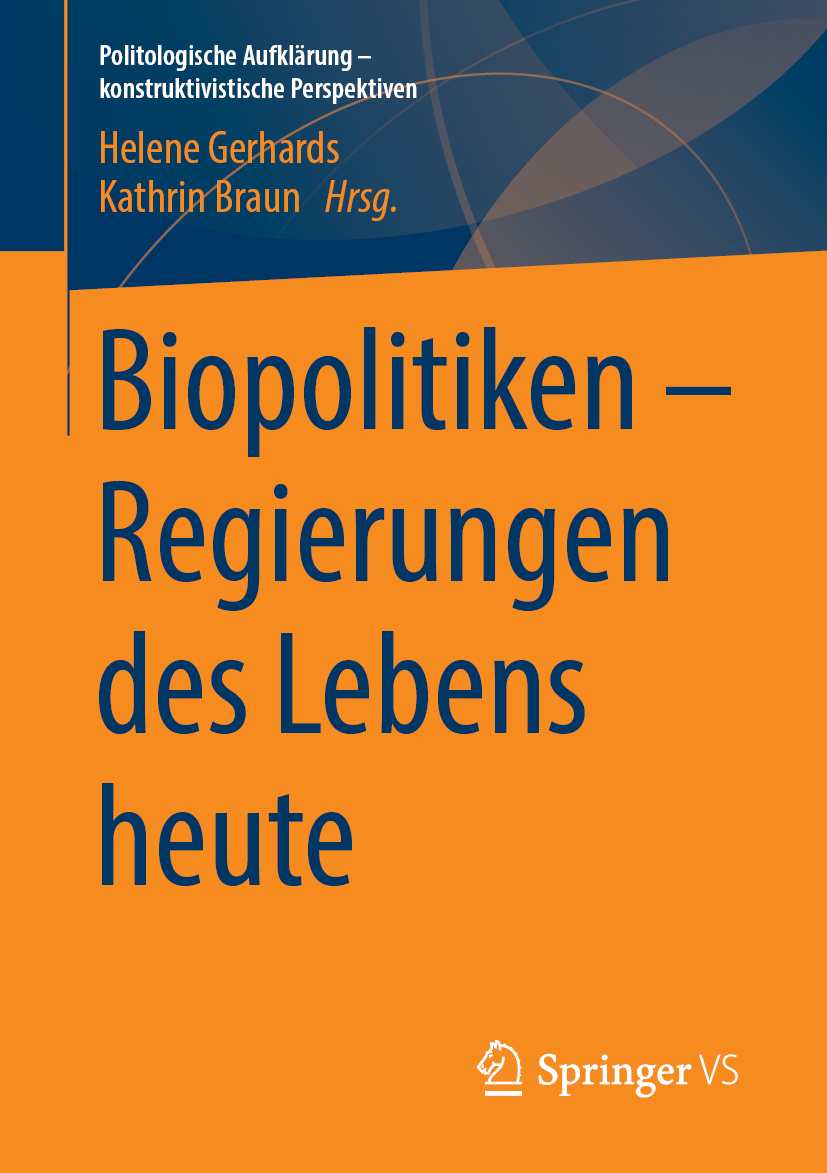
Herausgeber: Gerhards, Helene, Braun, Kathrin (Hrsg.), Biopolitiken – Regierungen des Lebens heute, Springer, 2019

Includes 2 chapters in English

​Das Buch versammelt konstruktivistische Perspektiven auf das Konzept „Biopolitik“. Dadurch werden die Analysepotentiale für aktuelle Phänomene, die den Zusammenhang zwischen dem Leben und dem Lebendigen und der Regierbarmachung betreffen, ausgelotet. Im Fokus stehen die Strategien und die Objekte der Regierungs- und Regulierungsbemühungen: In welcher Weise werden gesellschaftliche Probleme konstruiert und bestimmten „Zielscheiben“ zugeschrieben? Welche Subjektivierungsformen lassen sich im Rahmen biopolitischer Zugriffe ausmachen? Inwiefern spielen spezifische sozialtheoretische Überlegungen und Konzeptionen von Zeit für biopolitische Strategien und Konflikte eine Rolle? An welchen Gegenständen sind die fortdauernden Konflikte, die sich im Spannungsfeld zwischen Medizin, Ethik und Politik ergeben, zu explizieren?

Call for chapters:
Autoethnography and self-study as education research methods: Continuing debates and contemporary applications

Edited by
Deborah L. Mulligan, Emilio A. Anteliz and Patrick Alan Danaher

FOCUS AND RATIONALE
There is recurring and increasing scholarly interest in the ethical and methodological possibilities of autoethnography and self-study as research methods in education (understood broadly and inclusively as encompassing learning and/or teaching in diverse forms and ranging from formal and structured on the one hand to informal and incidental on the other hand). Against the backdrop of that scholarly interest, this proposed edited research book is centred on continuing debates and contemporary applications related to autoethnography and self-study. These continuing debates include the perceived legitimacy and rigour of focusing on the researcher as self, the relationship between that focus and wider conceptualisations of the self and possible opportunities for engaging productively with multiple manifestations of the other and of otherness. These contemporary applications encompass innovative strategies for building on the undoubted affordances of autoethnography and self-study while also addressing their perceived limitations, traversing different disciplines and paradigms, and mobilising inter- and trans-disciplinary and -paradigmatic approaches.

ORGANISING QUESTIONS

Across the range of issues traversed in the book, it is planned that the following organising questions will be addressed:
1. What are the genealogical origins and the defining characteristics of autoethnography and self-study?
2. What are the strengths and limitations of autoethnography and self-study as education research methods?
3. What are innovative and novel strategies for maximising the strengths and minimising the limitations of autoethnography and self-study?
4. How do debates about and applications of autoethnography and self-study generate new insights into the character and significance of education research methods?
5. How do autoethnography and self-study resonate with broader advances in theorising and understanding contemporary life and society?
6. How can autoethnography and self-study contribute to reconceptualising and reimagining the work and identities of current and future researchers?

CALL FOR CHAPTER ABSTRACTS
Abstracts of no more than 250 words are cordially invited as potential chapters for this proposed edited research book. The editors seek submissions that represent a diversity of geographical location, disciplinary focus, and theoretical and methodological approaches, united by a shared focus on the affordances, limitations and possibilities of autoethnography and self-study as productive and potentially transformative education research methods. Please email your abstract and a bionote of no more than 125 words for each chapter author to Deborah.Mulligan@usq.edu.au, emilio.anteliz@gmail.com or Patrick.Danaher@usq.edu.au

Feel free to contact by email with the book editors with any questions regarding the formation of your abstract.

Abstract deadline: 31 October 2019

EDITOR BIONOTES

Deborah L. Mulligan has spoken at a number of academic symposiums in South East Queensland and has presented in state-wide webinars. Her primary research interest resides in the field of gerontology. Her PhD investigated the role of contributive needs when addressing older men and suicide ideation. Deborah has a strong interest in community capacity building as a means of transforming the lives of older adults and combating the negative stereotypes surrounding this demographic. She is also interested in the long-term effects of research on the participants and the ethical implications of investigating marginalised groups. Email: deborah.mulligan@usq.edu.au

Emilio A. Anteliz is a hydrometeorological engineer who for many years coordinated the provision of learning extension programs, projects and courses by the Faculty of Engineering at the Central University of Venezuela in Caracas, Venezuela to professional engineers and related fields. His research interests include environmental movements, engineering education, informal and lifelong learning, and professional ethics. Email: emilio.anteliz@gmail.com

Patrick Alan Danaher is Professor of Educational Research in the School of Education at the Toowoomba campus of the University of Southern Queensland, Australia. He is also currently an Adjunct Professor in the School of Education and the Arts at Central Queensland University, Australia; and Docent in Social Justice and Education at the University of Helsinki, Finland. His research interests include the education of occupationally mobile communities; education research ethics, methods, politics and theories; and academics’, educators’ and researchers’ work and identities. Email: patrick.danaher@usq.edu.au
https://staffprofile.usq.edu.au/profile/patrick-danaher