Foucault News

News and resources on French thinker Michel Foucault (1926-1984)

The Disorder of Discourse Fanny de Chaillé Michel Foucault

Co-presented with The Invisible Dog Art Center and The Cooper Union for the Advancement of Science and Art

US Premiere
Tue, Sep 17 at 7pm
Wed, Sep 18 at 7pm

French philosopher and historian Michel Foucault (1926–1984) is one of the most influential and controversial thinkers of the 20th-century.

Artist Fanny de Chaillé employs theater to restage one of Foucault’s most famous lectures, L’Ordre du discours (The Order of Discourse). She at once re-imagines this historical moment, which was never recorded, and continues Foucault’s investigation into the power inherent in words.

In her return to Crossing the Line Festival, de Chaillé presents this performative experiment within a college auditorium and simultaneously within the context of contemporary American politics.

Based on the work of Michel Foucault, L’Ordre du discours © Editions Gallimard.

60 min
In French with English supertitles

THEATER

US Premiere
Tue, Sep 17 at 7pm
Wed, Sep 18 at 7pm

Post-show Q&A
Tue, Sep 17 with Fanny de Chaillé and Guillaume Bailliart

No late seating allowed

The Cooper Union for the Advancement of Science and Art
Frederick P. Rose Auditorium
41 Cooper Square

stuartelden's avatarProgressive Geographies

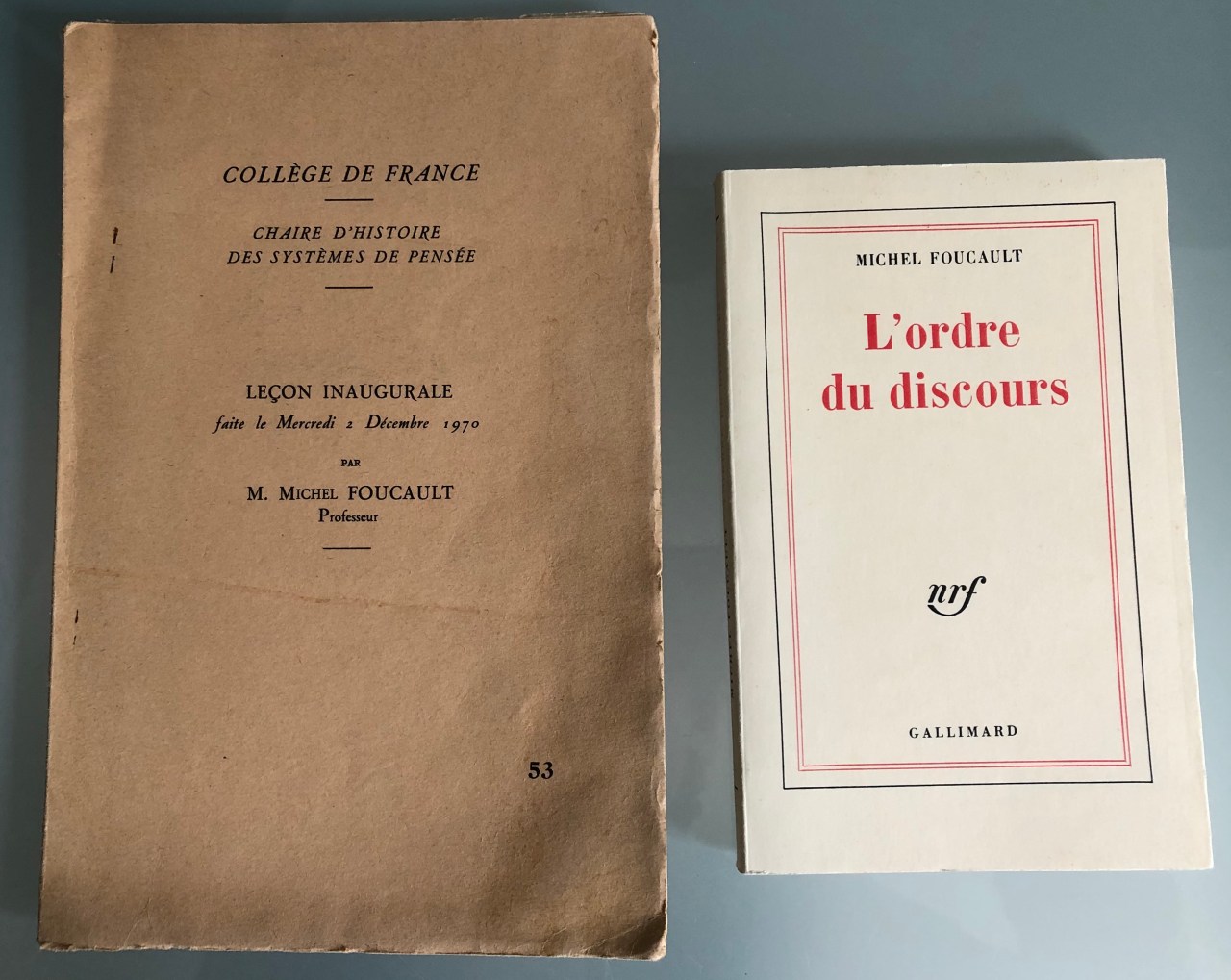
L'ordre du discours.jpgFoucault’s Inaugural lecture at the Collège de France was delivered on 2 December 1970, one week before the beginning of his first course, published as Leçons sur la volonté de savoir and translated as Lectures on the Will to Know.

The inaugural lecture was published in French by Gallimard as a short book in 1971, L’ordre du discourse: Leçon inaugurale au Collège de France prononcée le 2 décembre 1970. It has been translated into English twice, as a journal article which was reprinted as an appendix to some editions of The Archaeology of Knowledge, and in Robert Young (ed.), Untying the Text: A Poststructuralist Reader (open access here). A third translation is forthcoming.

In the Gallimard book, Foucault notes, “due to limitations of time, certain passages were shortened or changed in the lecture. They are restored here” (p. 6).

In Foucault: The Birth of Power I commented on this: “Unfortunately…

View original post 450 more words

Arona Moreau, Erratum. Ce n’est pas le néolibéralisme, c’est le capitalisme politique, L’Harmattan.
ISBN : 978-2-343-17898-1 • 21 juin 2019 • 288 pages

Lire un extrait

ERRATUM. La plus grande erreur intellectuelle, critique et analytique commise par la pensée contemporaine reste sans aucun doute l’usage courant voire abusif du mot « néolibéralisme » pour désigner ce qui n’est rien d’autre que du capitalisme politique. L’ordre général de gouvernance politique et économique du monde dans ces trente dernières années n’est ni libéral, ni libéral. Il n’est donc point néolibéral. C’est du capitalisme politique. Le néolibéralisme est un anti-concept. L’analyse fait fausse route… Pour arriver à stopper l’expansion politique du capitalisme, il faudrait nécessairement un travail de déconstruction critique et constructive consistant à le mettre à l’épreuve, d’une part, de la science économique et, d’autre part, du libéralisme. C’est à cet immense chantier intellectuel que l’auteur cherche à apporter sa part de contribution à travers ce livre.

Arona Moreau est penseur et organisateur politique. Il est chercheur en sciences humaines et sociales. Au-delà de ses écrits, ses activités tournent autour de l’enseignement universitaire et de la recherche en sciences sociales, de son engagement pour des causes en lien avec la démocratie et l’écologie en Afrique et de la politique, à travers le Parti Citoyen (PC) dont il est fondateur au Sénégal.

Elizabeth Mary Grierson, Calling for change: A feminist approach to women in art, politics, philosophy and education (2019) Educational Philosophy and Theory, 51 (7), pp. 731-743.
https://doi.org/10.1080/00131857.2018.1488215

Abstract
Michel Foucault showed by his genealogical method that history is random. It comprises sites of disarray and dispersal. In those sites, Simone de Beauvoir wrote philosophy through lived experience of woman as Other in relation to man as the Absolute. Here lies a fecund site for revisionist analysis of female cultural production and its relevance to a philosophy of education. The paper works with a feminist approach to the politics of knowledge, examining textual and political strategies in the recording of history and the ‘othering’ of women through dominant cultural discourses. Infusing this discussion is a feminist politics of interrogation on cultural change for women. The paper investigates contributions of women to fields of art, politics, education and philosophy, and to the ways their contributions have been considered, received, positioned. Different approaches to feminism become apparent in the different conditions of knowledge under discussion. This leads to a final consideration of feminist challenges in context of the politics of neoliberalism as it seeks to identify a feminist potential for ‘a cleansing fire’. The interventions in this paper trace political strategies and challenges for a philosophy of education to keep the momentum of feminist histories and issues to the forefront of scholarly enquiry and political/social action. © 2018, © 2018 Philosophy of Education Society of Australasia.

Author Keywords
art; education; Feminism; philosophy; politics; women

Jonas Čeika, A Critique of Stephen Hicks’ 2011 book Explaining Postmodernism: Skepticism and Socialism from Rousseau to Foucault (2018)

Hick’s book is published by Ockham’s Razor an outlet for objectivist and Randian perspectives.

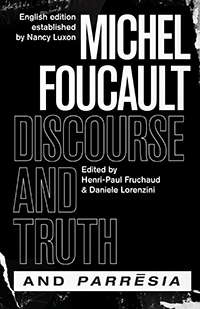
Michel Foucault, “Discourse and Truth” and “Parresia”, Chicago University Press, 2019

Edited by Henri-Paul Fruchaud and Daniele Lorenzini
With an Introduction by Frédéric Gros
English edition established by Nancy Luxon
The Chicago Foucault Project

This volume collects a series of lectures given by the renowned French thinker Michel Foucault late in his career. The book is composed of two parts: a talk, Parrēsia, delivered at the University of Grenoble in 1982, and a series of lectures entitled “Discourse and Truth,” given at the University of California, Berkeley in 1983, which appears here for the first time in its full and correct form. Together, they provide an unprecedented account of Foucault’s reading of the Greek concept of parrēsia, often translated as “truth-telling” or “frank speech.” The lectures trace the transformation of this concept across Greek, Roman, and early Christian thought, from its origins in pre-Socratic Greece to its role as a central element of the relationship between teacher and student. In mapping the concept’s history, Foucault’s concern is not to advocate for free speech; rather, his aim is to explore the moral and political position one must occupy in order to take the risk to speak truthfully.

These lectures—carefully edited and including notes and introductory material to fully illuminate Foucault’s insights—are a major addition to Foucault’s English language corpus.

Reviews

Miguel de Beistegui, University of Warwick
“Foucault’s lectures, interviews, and occasional pieces have long been recognized by Foucault scholars to be especially valuable in their clarity and value as supplements to Foucault’s major works. . . .This is an important book for Foucault studies, and, given Foucault’s influence, more broadly, for the academy.”

Bernard E. Harcourt, editor of Michel Foucault, The Punitive Society
“‘Who is able to tell the truth? About what topic is it important to tell the truth? What are the relations between this activity of telling the truth and exercising power?’ These are the questions that Foucault brilliantly addresses in these formative lectures. Today, when the questions of truth and truth-telling could not be more urgent, this compendium is an indispensable resource, tracing the problems back to the fifth century BCE and recovering the birth of the very notion of the truth-teller. These lectures are unique in offering a concentrated and sharp presentation of Foucault’s history of truth-telling. Expertly edited in English by Nancy Luxon, with a brilliant critical apparatus prepared by Henri-Paul Fruchaud and Daniele Lorenzini, this volume is a necessary companion to Foucault’s final lectures.”

James Porter, University of California, Berkeley
“A meticulously curated and definitive edition of Foucault’s Grenoble lecture and of his legendary Berkeley seminars on the courageous practice of free speech, ‘Discourse and Truth’ provides an intimate, often moving glimpse into Foucault’s thought and person at the end of his extraordinary career. Rounding out his writings on the culture of the self in antiquity, and containing his most sustained reflections on the Cynics, the book in fact offers an unexpected genealogy of critique—of the ‘critical attitude’ and the critical bios, or form of life—in the spheres of ethics, politics, and culture, thereby mapping out a tradition that stretches from Greece and Rome to Kant and Nietzsche. The work will be seminal for generations to come. But its lessons could not be more timely, more inspiring, or more urgently needed than at our present moment.”

David Owen, co-author of Prospects for Citizenship
“Parrēsia was Foucault’s last great topic and marks one of his most vital contributions to contemporary philosophical thought. This definitive critical edition of Foucault’s lectures at Grenoble and Berkeley provides an essential guide to the development of his thinking on parrēsia that will be required reading not only for Foucault scholars but for any philosopher concerned with the relationship of ethics, truth, and power. Fruchaud and Lorenzini, ably supported for this English edition by Nancy Luxon, are owed a debt of gratitude for this superb accomplishment.”

Gonzalez Rey, F.
Subjectivity in debate: Some reconstructed philosophical premises to advance its discussion in psychology
(2019) Journal for the Theory of Social Behaviour, 49 (2), pp. 212-234.

DOI: 10.1111/jtsb.12200

Abstract
The topic of subjectivity has been treated peripherally by philosophy. It has appeared in philosophy not as a specific human phenomenon, but attached to other concepts without specifying its ontological definition, such as intersubjectivity, the place of the Other in the emergence of the self, consciousness and so forth. This paper reconstructs some of the overlooked moments and ideas of several classical philosophers, such as Marx, Dewey, Merleau Ponty, Cassirer and Foucault, in order to identify in their works important antecedents to advance a different concept of subjectivity. The concepts and questions which are raised by those philosophers and which are revived in this paper have remained overlooked both by philosophy and psychology because of the lack of any representation of subjectivity capable of making them more visible. The ontological monopoly of language and discourse in explaining all human phenomena, taken together with the critique of theoretical systems and of epistemology, has found in social constructionism its strongest expression in psychology. The value of theoretical systems in generating intelligibility about complex and configurational phenomena is recovered, along with the need to develop new epistemologies capable of generating intelligibility on such systems. Finally, I argue that a new theoretical and epistemological avenue is opened up for the development of psychological thought. © 2019 John Wiley & Sons Ltd

Author Keywords
cultural-historical approach; philosophy; psychology; subjectivity; symbolical realities

Index Keywords
article, epistemology, human, human experiment, language, psychology, speech intelligibility, theoretical study

Gaus, N.
Philosophy and politics in higher education: What are the roles of intellectual academics in Indonesian higher education?
(2019) Qualitative Research Journal, 19 (3), pp. 294-306.

DOI: 10.1108/QRJ-12-2018-0008

Abstract
Purpose: The purpose of this paper, which is drawn on Indonesian academic women’s experiences, is to examine the extent to which the aesthetics of existence or true life of women academics in relation to the truth telling, played out within the interaction between philosophy and politics, is affected by the application of NPM in research and publication productivities, and the way in which women academics are voicing their opinions toward this issue.

Design/methodology/approach: In total, 30 women academics across two geographical region (east and west) universities took part in this research, sharing their perceptions and the way they criticize this policy to the audiences (Indonesian government), framed within the concept of parrhesia (truth telling), parrhesiastes (truth teller) of Foucault and the pariah of Arendt.

Findings: Using semi-structured interviews, this research finds that women academics in Indonesian universities have shown discursive voices and stances to the extent to which they agree and oppose this policy, showing the patterns similar to those of parhesiastes and pariah. The implication of this study is addressed in this paper.

Originality/value: This research, via the lenses of Parrhesia and Pariah, finds several kinds of philosopher roles of women academics in Indonesian universities, such as apathetic philosophers or depraved orators and Schlemihl figure of Pariah, and Parrhesiastic philosophers of Socrates and a conscious figure of Pariah. © 2019, Emerald Publishing Limited.

Author Keywords
Higher education; NPM; Parhesiastes; Pariah; Parrhesia; Philosophy; Politics; Women academics

Low, R.
Mindfulness for teachers: notes toward a discursive cartography
(2019) History of Education Review, 48 (1), pp. 91-108.

DOI: 10.1108/HER-12-2018-0030

Abstract
Purpose: For the interested teacher, teacher educator and educational researcher seeking an entry point into how mindfulness relates to teachers’ work, the burgeoning and divergent appeals for the relevance of mindfulness to teachers can be bewildering. The purpose of this paper is to offer teachers, teacher educators and educational researchers a conceptual framework for understanding the different orientations and sources of mindfulness as it has been recommended to teachers.

Design/methodology/approach: Using Foucault’s (1972) concept of “discursive formations” as a heuristic device, this paper argues that mindfulness as pitched to teachers can be helpfully understood as arising from three distinct orientations.

Findings: Statements about mindfulness and its relevance to teachers emerge from three distinct discursive formations – traditional, psychological and engaged – that each constitute the “problem” faced by teachers respectively as suffering, stress or alienation. Specific conceptions of mindfulness are then advanced as a solution to these problems by certain authoritative subjects and institutions in ways that are taken as legitimate within each discursive formation.

Originality/value: Apart from offering a historical and discursive mapping of the different discursive formations from which mindfulness is pitched to teachers, this paper also highlights how each of these orientations implies a normative view of what a teacher should be. Suggestions for further historical research are also offered along the lines of genealogy, epistemology and ontology. © 2019, Emerald Publishing Limited.

Author Keywords
Buddhism; Critical pedagogy; Discourse; Mindfulness; Psychology; Teachers’ work

McDonald, B., Burke, M.
Coaching pedagogy and athlete autonomy with Japanese university rowers
(2019) Sport in Society, 22 (8), pp. 1433-1448.

DOI: 10.1080/17430437.2019.1621842

Open access

Abstract
It has been suggested by some authors that, given the relationship between dependence and vulnerability to exploitation, a shift in coaching away from surveillance and control and towards autonomy-supportive behaviours by coaches will be conducive to athlete welfare. This paper utilizes an ethnographic approach, underpinned by the theoretical position of the later writings of Foucault, to understand the autonomous practices of athletes in a Japanese university rowing club. Of particular interest are the ways in which the relative absence of the coach contributes to athlete autonomy. The long-term sport-education of these Japanese university rowers results in an enduring subjectification that no longer requires the intervention of any coach. At the same time, these Japanese rowers still actively and autonomously engage in practices of the self, expressed in non-strategic, interactional ways. © 2019, © 2019 Informa UK Limited, trading as Taylor & Francis Group.

Author Keywords
bukatsudo; civic education; Foucault; Japan; rowing

Index Keywords
article, athlete, education, human, human experiment, Japan, pedagogics, rowing, theoretical study, writing