
Foucault News

News and resources on French thinker Michel Foucault (1926-1984)

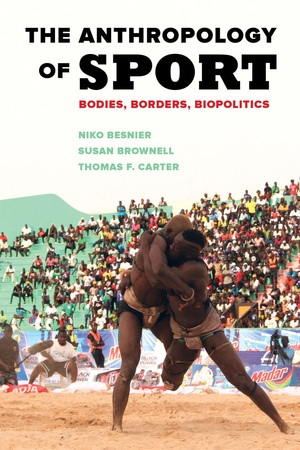
Niko Besnier, Susan Brownell, Thomas F. Carter, The Anthropology of Sport. Bodies, Borders, Biopolitics, University of California Press, 2017

Few activities bring together physicality, emotions, politics, money, and morality as dramatically as sport. In Brazil’s stadiums or China’s parks, on Cuba’s baseball diamonds or Fiji’s rugby fields, human beings test their physical limits, invest emotional energy, bet money, perform witchcraft, and ingest substances. Sport is a microcosm of what life is about. The Anthropology of Sport explores how sport both shapes and is shaped by the social, cultural, political, and historical contexts in which we live. Core themes discussed in this book include the body, modernity, nationalism, the state, citizenship, transnationalism, globalization, and gender and sexuality.

Interview (podcast) with Susan Brownell on the New Books network

[…]
As my first guest, I’d would like to introduce Susan Brownell, Professor of Anthropology at the University of Missouri – St Louis, one of the authors of The Anthropology of Sport: Bodies, Borders, Biopolitics (University of California Press, 2018). During the course of the interview, we covered the subfield of sport anthropology, the marginalization of traditional games, the recent Caster Semenya case, and the contemporary transnationalism of sport.

In The Anthropology of Sport, understandably, the authors enlighten us about what the subfield entails, how anthropology is well suited to dissect the nature of sport, and provide us with ample anecdotes and observations of the world of sport through an ‘anthropological gaze.’ The chapters are structured in a way that cover all the relevant aspects in the study of sport, including history, class, race/ethnicity, sex/gender, nationalism, and globalization. Two important additions to the field of sport studies include a chapter on sport, health, and the environment (3), as well as sport as a cultural performance (6). In the former, which can be taken as a foundational text on the subject, the history of sport medicine and non-Western perspectives on sport and the body are enlightening, with anecdotes about the history of yoga and the Falun Gong movement. In the latter, the performative turn and ritual theory are used to dissect the contemporary global sport mega-event infrastructure. In conclusion, the authors point out that “more than any other form of human activity, sport embodies some of the fundamental questions that anthropology poses” (258), and this book lives up to its lofty title.

Brownell, Besnier, and Carter’s work is a new text in a yet undefined field – it may be the start of something new. If interested in the global nature of sport today, The Anthropology of Sport is a necessary read.
Siew Fung Lee (2019) Governing ‘disadvantage’ through readiness: A Foucauldian policy genealogy of funded nursery places for two-year-olds. Contemporary Issues in Early Childhood.

DOI: 10.1177/1463949119864200

ABSTRACT
This article critically examines how the policy of funded nursery places for ‘disadvantaged’ two-year-olds in England opens up economic and political spaces in readiness for increased governance. The government introduced funded nursery places in September 2013, which aimed to promote disadvantaged children’s educational outcomes, narrow the attainment gap and encourage parental employment. Using a Foucauldian policy genealogy, the article sets out the ways in which funded nursery places constitute and deploy techniques for governing ‘disadvantage’ – specifically, how ‘disadvantage’ is constructed as a ‘problem of the population’, which, in turn, is productive of particular subjectivities and practices. The article traces how funded nursery places construct a particular ‘disadvantage’ through ‘experts of truth’, evidence-based policy, regimes of quality and neurobiology in preparation for the next phase of nursery at the age of three. These processes establish ‘disadvantaged’ two-year-olds as governable objects and therefore subject to the increased formalization of early experiences. The close links between ‘disadvantage’ and ‘readiness’ discursively provide conditions of possibility for technical and instrumental practice that is driven by a global hegemonic rationale in human capital. Although the analysis is focused in the English context, these developments have wider global implications in relation to school readiness and early education reforms across countries that are reaching into ever younger spaces.

Benjamin Meiches, The Politics of Annihilation: A Genealogy of Genocide (University of Minnesota Press, 2019)

Interview with author conducted by Jeff Bachman

Description
For a term coined just seventy-five years ago, genocide has become a remarkably potent idea. But has it transformed from a truly novel vision for international justice into a conservative, even inaccessible term? The Politics of Annihilation traces how the concept of genocide came to acquire such significance on the global political stage. In doing so, it reveals how the concept has been politically contested and refashioned over time. It explores how these shifts implicitly impact what forms of mass violence are considered genocide and what forms are not.

Benjamin Meiches argues that the limited conception of genocide, often rigidly understood as mass killing rooted in ethno-religious identity, has created legal and political institutions that do not adequately respond to the diversity of mass violence. In his insistence on the concept’s complexity, he does not undermine the need for clear condemnations of such violence. But neither does he allow genocide to become a static or timeless notion. Meiches argues that the discourse on genocide has implicitly excluded many forms of violence from popular attention including cases ranging from contemporary Botswana and the Democratic Republic of Congo, to the legacies of colonial politics in Haiti, Canada, and elsewhere, to the effects of climate change on small island nations.

By mapping the multiplicity of forces that entangle the concept in larger assemblages of power, The Politics of Annihilation gives us a new understanding of how the language of genocide impacts contemporary political life, especially as a means of protesting the social conditions that produce mass violence.

Benjamin Meiches is assistant professor of security studies and conflict resolution at the University of Washington–Tacoma.

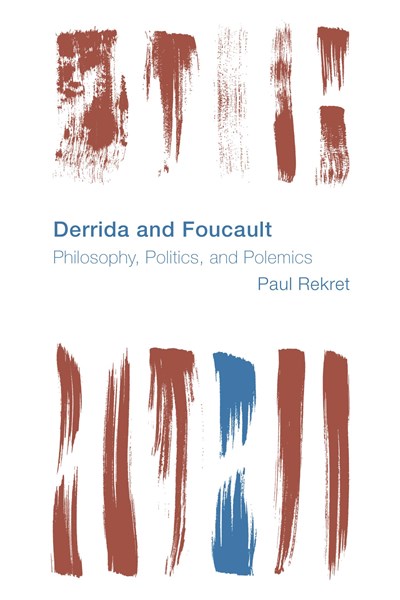
Paul Rekret, Derrida and Foucault. Philosophy, Politics, and Polemics, Rowman & Littlefield International, 2017

Derrida and Foucault offers a major contribution to the interpretation of these two highly influential thinkers. By tracing the moments where Derrida and Foucault’s arguments converge but also where they deviate, this book fundamentally recasts our understanding not only of these two philosophers, but of the political more broadly. Organised thematically around questions of epistemology, ethics, and politics, this is the only work to bring Derrida and Foucault’s whole oeuvres into dialogue with one another. This book frames a dialogue not only between their works of the 1960s and 1970s but also their works that deal with political questions around liberalism, capitalism and democracy. This book offers the first substantial critical assessment of Derrida and Foucault’s political work and also situates these crucial thinkers in contemporary debates in political theory.

stuartelden's avatarProgressive Geographies

B46_Marzoni_openerFoucault in the Valley of Death‘ – Andrew Marzoni on Simeon Wade’s Foucault in California in The Baffler (online and in issue #46).

I spoke to Marzoni by phone during his research for this piece, and am briefly quoted in it. Although it uses the Wade memoir, it goes quite a way beyond that, and quotes the correspondence between Foucault and Wade which is now archived at USC.

THE FIRST TIME that Simeon Wade read Michel Foucault was in a graduate seminar at Harvard in the 1960s. Madness and Civilization had been translated into English in 1965, and the book excited Wade, who had been vice president of the Baptist student union at the College of William and Mary only a few years earlier. But it was The Order of Things, a bestseller in France upon its publication in 1966, that caused the young Marxist to “discard…

View original post 82 more words

Yongchun Cai, Borges and Ge Fei: Transfiguring the poetics of atemporal labyrinth
(2019) Neohelicon, 46 (1), pp. 303-329.

https://doi.org/10.1007/s11059-019-00480-7

Abstract
This article examines, from a comparative perspective, how Jorge Louis Borges configures his archetypal textual labyrinth in “The Garden of Forking Paths” and to what extent the Chinese avant-gardist Ge Fei is inspired to absorb, concoct and transfigure Borges’ aesthetics of maze into his own labyrinth poetics of fiction through a representation of lacunae, negation, repetition, memories, and particularly time and space. In this essay, Ge Fei’s fiction “The Mystified Boat” is analyzed under the notions of Bakhtin’s “chronotope” and Foucault’s “heterotopia” and discussed in depth in close relation to Borges’ metafictional story in the convoluted reconfiguration of narrative maze in a web of distorted historical times and spaces. Instilling Borgesian fictional inspiration into his own work of art, Ge Fei is adept at utilizing labyrinths and omissions to metaphorically project the world and the mind as mazes through the nonlinear concept of chronology and the deconstruction of habitualization. With the theoretical frame of reference for his fiction, it is revealed that Ge Fei aptly converts Borges’ labyrinthine inspirations and influences into his own poetics of atemporal labyrinth to metaphorically represent in his stories the chaos of the universe and the mystery of the mind, fabricates the disorienting spatial–temporal realms that dissolve the nexus between fiction and reality, and reconfigures the diverse mechanisms of atemporal labyrinths between the inner and outer worlds. © 2019, Akadémiai Kiadó, Budapest, Hungary.

Author Keywords
Atemporal labyrinth; Borges; Ge Fei; Geolocation; Metafiction; Repetition; Riddled lacunae; Time and space

Thiel, J.
The UK National Student Survey: An amalgam of discipline and neo-liberal governmentality
(2019) British Educational Research Journal, 45 (3), pp. 538-553.

DOI: 10.1002/berj.3512

Abstract
The UK National Student Survey (NSS) has high status on the agenda of UK universities. Its rise in status is linked to its influence on national rankings and associated funding streams referenced to the Teaching Excellence Framework (TEF). Consequently, many universities have implemented further assessments of student satisfaction, thereby putting additional internal performative pressures on courses and individual lecturers. The research contribution of this article comprises an analysis of the NSS through Foucault’s notion of ‘governmentality’, with a particular focus on his work on ‘discipline’ and ‘neo-liberal governmentality’. More specifically, by utilising qualitative data from interviews, research diaries and observations, it will be demonstrated how the NSS functions as a ‘disciplinary’ technology of government which subjects lecturers, departments and universities to intersecting panoptic gazes and perpetual ratings. In addition, the NSS can also be considered ‘neo-liberal’ in that it governs the academic population through narrow conceptions of ‘freedom’ and omnipresent competition. The article proposes that it is through the amalgamated forces of intersecting panoptic gazes, on the one hand, and neo-liberal free-market principles, on the other, that student feedback develops its power to govern. © 2019 The Authors. British Educational Research Journal published by John Wiley & Sons Ltd on behalf of British Educational Research Association

Author Keywords
discipline; Foucault; governmentality; National Student Survey; neoliberalism; student evaluations of teaching

Gobby, B., Niesche, R. Community empowerment? School autonomy, school boards and depoliticising governance
(2019) Australian Educational Researcher, 46 (3), pp. 565-582.

DOI: 10.1007/s13384-019-00303-9

Abstract
The public education systems of many countries have undergone governance reforms involving administrative decentralisation, corporatisation and community ‘empowerment’. In this paper, we examine the significance of local participation and partnerships in the context of public school autonomy and their corporatisation. Focusing specifically on the use of school boards in the Independent Public Schools (IPS) initiative in Western Australia, we analyse the interview responses of five IPS principals using Foucauldian notions of governmentality, governance and community. The analysis shows that school boards are conceptualised and mobilised through the narrow technical–rationalist discourses of governance associated with corporatised school autonomy. School boards function as a new form of governmentality that constrains recruitment and participation in school decision-making in ways that depoliticise education. In response to the rise of school autonomy and corporatisation in Australia and elsewhere, we argue for wider local participation on school boards and local engagement with, rather than eschewal of, the politics surrounding education and the public good. © 2019, The Australian Association for Research in Education, Inc.

Author Keywords
Community; Foucault; Governance; Neoliberalism; School autonomy; School boards

French philosopher Michel Serres dies at 88
France 24 02/06/2019

See also this link and this link (en français)

The philosopher, writer and academic Michel Serres died on Saturday June 1 2019 at the age of 88.

His publishing house Le Pommier made the announcement on Saturday evening. “He died peacefully at 7pm, surrounded by family,” said his editor Sophie Bancquart.

Serres was an extremely prolific writer and public figure in France, and was elected to the Académie française – a highly selective and somewhat grand French institution that issues edicts on the proper usage of the French language.

Serres was born in 1930 in Agen, a town situated in the south-west of France between Bordeaux and Toulouse. He graduated from France’s elite university, the École Normale Supérieure, with a degree in philosophy in 1955, after having studied at a naval academy. He worked as a naval officer for a few years before becoming an assistant professor in philosophy at the same faculty as Michel Foucault.

Call for papers: Race, Biopolitics and the Genres of the Human

Northeast Modern Language Association 51st Annual Convention, March 5-8, 2020

Chair: Nazia Manzoor, University at Albany, SUNY (nmanzoor@albany.edu)

What is politics’ relationship with the human? Contemporary politics’ reliance on unequal and uneven distribution of power—characterized by an intersectional relationship among capital, racism, migratory constraints, colonialism and violence—is dependent upon an older, systemic hierarchization of humans as a political subject. For Michel Foucault, biopower is fundamentally a modern concept where the modern man’s political presence is no longer an additional capacity for being human but rather, an essence of life itself. Both Foucault and Georgio Agamben trace a trajectory of repeated conditions and situations in Western history through a self-reflexive project that identifies the human as ‘just’ political subject—a trend that demands further investigation.

With Alexander Weheliye’s inclusion of race as the constituent category of the human and black feminist theory’s critique of the exclusion of nonwhite subjects into the category of human dominating current scholarship on race and biopolitics, this panel seeks to look back on classic literature from the eighteenth-century to rethink some of the earlier literary explorations of race and biopolitics.

Through critical engagement with theories of race, postcoloniality, subalternity, gender and sexuality, and post-humanism, the papers presented in the panel wish to engage with the current crisis of the shifting configurations of the non-human racial other. As displaced peoples, migrants and refugees grapple with the ability to lay claim to full-human status, as they are re-segregated and re-excluded from the juridical realm and as newer forms of institutionalized, militarized ideas of the human become the norm, this panel proposes that turning towards the past could be a way through which we can stay within the trouble of the present.

To that end, we encourage scholars to submit abstracts (300 words) that engage with the topic of race, biopolitics and the eighteenth-century construction of the human. The session will follow the traditional format, with 3-4 participants, reading a formal paper of 15-20 minutes (2500-3000 words), followed by Q&A. The deadline for submissions is September 30, 2019.

To submit, please visit: https://www.cfplist.com/nemla/Home/CFP.

Detailed information about abstract can be found at: http://www.buffalo.edu/nemla/convention/callforpapers/submit.html

~Nazia Manzoor is a third-year Ph.D. student at the Department of English, University at Albany. SUNY.  Her dissertation project explores the conceptual and theoretical role of race in the construction of the human as a political subject.