Foucault News

News and resources on French thinker Michel Foucault (1926-1984)

Weili Zhao (2019) China’s making and governing of educational subjects as ‘talent’: A dialogue with Michel Foucault, Educational Philosophy and Theory

DOI: 10.1080/00131857.2019.1646640

Abstract
As an imprint of Confucian culture, China’s education intersects state governance in making and governing educational subjects as ‘talent’, an official translation of the Chinese term ‘rencai’ (literally, human-talent). Whereas the English word ‘talent’ itself denotes ‘[people with] natural aptitude or skill’, ‘talent’ is currently mobilized in China not only as a globalized discourse that speaks to the most aspired educational subjects for the 21st century but also as a re-invoked cultural notion that relates to Confucian wisdom. Drawing upon Foucault’s biopower hypothesis and Confucian thought, this paper leverages upon China’s unique manipulation of ‘talent’ as certain skills and human subjects, both cultivable through education, to problematize China’s talent making and governing in two dimensions. First, it unpacks the various technologies of power entangled in China’s talent making and governing within its ‘state governance’ paradigm. Second, it unpacks Confucian thought as an archaeological prototype for China’s present talent appeal, meanwhile explicating their divergences in defining ‘human’, ‘talent’, and the human-talent interpellation. In so doing, this paper makes two arguments. First, the linguistic notion of ‘talent’ functions as a Foucauldian apparatus of biopower, making (up) new kinds of people and normalizing a certain population as the objective/object of China’s state governance. Second, CPC’s re-invocation of Confucian talent discourses is more of a rhetorical strategy than an authentic cultural renaissance gesture.

Keywords: Educational subjects, talent making and governing, biopower, state governance, technologies of power, Confucian wisdom
Richard Niesche, Christina Gowlett, (2019) Social, Critical and Political Theories for Educational Leadership. Series: Educational Leadership Theory. Springer, Singapore

This book makes the case for the continued and expanded use of social, critical and political theories in the field of educational leadership. It helps readers understand educational leadership by introducing them to a wide variety of theoretical and philosophical approaches and positions. The book incorporates a rich blend of ideas and concepts, and compares and contrasts the approaches discussed.

Table of contents (7 chapters)

Why Use Social, Critical and Political Theories in Educational Leadership?

Critical Perspectives in Educational Leadership: A New ‘Theory Turn’?

Michel Foucault and Discourses of Educational Leadership

Using Judith Butler to Queer(y) Educational Leadership

Bernard Stiegler: Technics and Educational Leadership as a Form of Psycho-Power

Entangling Karen Barad with/in Educational Leadership

The Inescapable Connection Between Theory and Practice

stuartelden's avatarProgressive Geographies

9782711628988Michel Foucault, Folie, Langage, Litterature, edited by Henri-Paul Fruchaud, Daniele Lorenzini and Judith Revel, Vrin, September 2019

The latest collection of pieces from the archive, with an introduction by Judith Revel.

La folie, le langage et la littérature ont longtemps occupé une place centrale dans la pensée de Michel Foucault. Quels sont le statut et la fonction du fou dans nos sociétés « occidentales », et en quoi se différencient-t-ils de ce qu’ils peuvent être dans d’autres sociétés? Mais également : quelle étrange parenté la folie entretient-elle avec le langage et la littérature, qu’il s’agisse du théâtre baroque, du théâtre d’Artaud ou de l’œuvre de Roussel? Et, s’il s’agit de s’intéresser au langage dans sa matérialité, comment l’analyse littéraire s’est-elle elle-même transformée, en particulier sous l’influence croisée du structuralisme et de la linguistique, et dans quelle direction évolue-t-elle?
Les conférences et les textes, pour la plupart inédits, réunis ici illustrent la manière…

View original post 69 more words

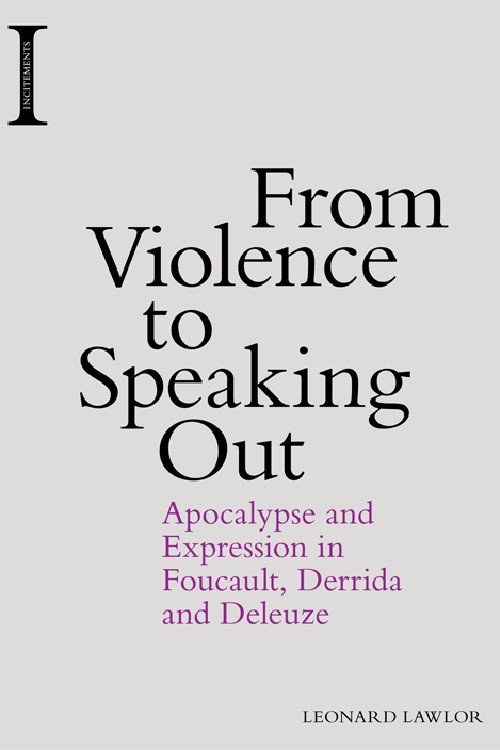
Leonard Lawlor, From Violence to Speaking Out. Apocalypse and Expression in Foucault, Derrida and Deleuze, Edinburgh University Press, 2019

Review by Jeffrey A. Bell

Develops the Derridean idea of the worst violence and creates new ways of speaking out against it

Leonard Lawlor’s groundbreaking book draws from a career-long exploration of the French philosophy of the 1960s in order to find a solution to ‘the problem of the worst violence’. The worst violence is the reaction of total apocalypse without remainder. It is the reaction of complete negation and death. It is nihilism.

Lawlor argues that it is not just transcendental violence that must be minimised: all violence must itself be reduced to its lowest level. He then offers new ways of speaking which will best achieve the least violence which he creatively appropriates from Foucault, Derrida and Deleuze and Guattari as ‘speaking-freely’, ‘speaking-distantly’ and ‘speaking-in-tongues’.

Contents

Introduction: From Violence to Speaking Out

Part I: On Transcendental Violence

1. A New Possibility of Life: The Experience of Powerlessness as the Solution to the Problem of the Worst Violence

2. What Happened? What is going to happen? An Essay on the Experience of the Event

3. Is it happening? Or the Implications of Immanence

4. The Flipside of Violence, or Beyond the Thought of Good enough

Part II: Three Ways of Speaking

5. Auto-Affection and Becoming: Following the Rats

6. The Origin of Parrēsia in Foucault’s Thinking: Truth and Freedom in The History of Madness

7. Speaking out for Others: Philosophy’s Activity in Deleuze and Foucault (and Heidegger)

8. ‘The Dream of an Unusable Friendship’: The Temptation of Evil and the Chance for Love in Derrida’s Politics of Friendship

9. Three Ways of Speaking, or ‘Let others be Free’: On Deleuze’s ‘Speaking-in-Tongues’; Foucault’s ‘Speaking-Freely’; and Derrida’s ‘Speaking-Distantly’

Conclusion: Speaking out against Violence

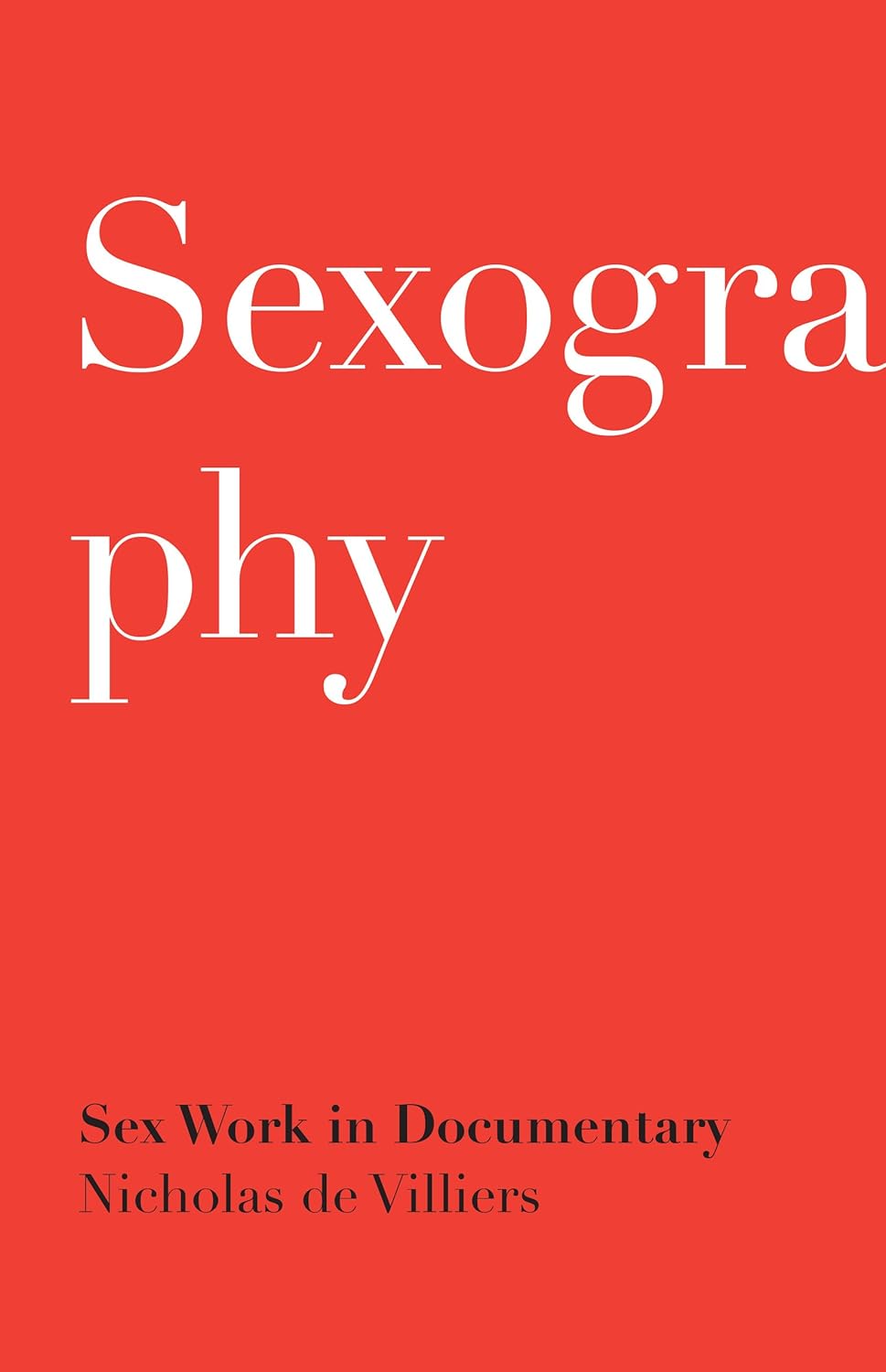
Nicholas de Villiers. Porno Cultures Podcast, July 10, 2019. Interview with Brandon Arroyo.

facebook.com/AcademicSex

When we think about the rhetoric around sex workers it’s often easier to hear or read opinions advocating for the abolishment of sex work coming from politicians or “concerned citizens” who are not sex workers, or have never bothered to speak to a sex worker. The degree to which the voices of sex workers are suppressed in mainstream outlets throughout the West speaks to how dangerous their voices are considered. What on earth can sex workers be saying that so many people feel the need to speak for them instead of letting them speak for themselves? Well, that’s one of the primary issues that Nicholas de Villiers looks to solve in Sexography: Sex Work in Documentary (University of Minnesota Press, 2017).

Sexography analyzes a series of films centered around interviewing sex workers. These films represent some of the few instances where sex workers are actually allowed to speak for themselves. Of course, these films are not without their own tensions. Many of the films are directed by non-sex workers and some of the portrayals of sex work in these films is quite negative. This is where de Villiers’ dynamic analysis of these films through a queer perspective helps us think about the nature of sex work, the interview, documentary aesthetics, and the concept of “truth” in new and interesting ways.

Sexography is an exploration of how we can go about reading for, and exploring the sexual practices of, not only sex workers, but our own ideas about sexuality as well. How can the financial aspects of sex work help us understand the power dynamics of our own sexual relationships? What can sex workers teach us about sex and pornographic literacy? What is the relationship between sex work, pornography, and drag performance? And how can the work of Foucault help us think about the contemporary nature of sexual practice? These are just some of the questions explored in this wide-ranging interview. De Villiers is one of the most interesting and bold queer theorists working today, so you’re not going to want to miss out on his compelling analysis of these films or his thoughts on contemporary sexuality!

More work from Nicholas de Villiers
Opacity and the Closet: Queer Tactics in Foucault, Barthes, and Warhol
Nicholas’ appearance on the Critical Theory podcast discussing Opacity and the Closet
“Afterthoughts on Queer Opacity”

“FBI Seized 23 Tor-hidden Child Porn Sites, Deployed Malware from Them”
“How the FBI Became the World’s Largest Distributor of Child Sex Abuse Imagery”
“Transgender, at War and in Love”
“What Teenagers are Learning from Online Porn”
Paris is Burning (1990)
Love Meetings (1964)
Not Angels But Angles (1994)
Body Without Soul (1996)
Tales of the Night Fairies (2002)

Nadia Bou Ali, Rohit Goel (eds). Lacan Contra Foucault. Subjectivity, Sex, and Politics, Bloomsbury

Review at Notre Dame Philosophical Reviews

Lacan Contra Foucault seeks to ground the divergences and confluences between these two key thinkers in relation to contemporary philosophy and criticism. Specifically the topics of sexuality, the theory of the subject, history and historicism, scientific formalization, and ultimately politics. In doing so, the authors in this volume open up new connections between Lacan and Foucault and shine a light on their contemporary relevance to politics and critical theory.

Contents
Introduction: ‘Measure against Measure: Why Lacan contra Foucault?’ Nadia Bou Ali, merican University of Beirut, Lebanon

Chapter 1: Cutting Off the King’s Head, Mladen Dolar, University of Ljubljana, Slovenia

Chapter 2: Author, Subject, Structure: Lacan contra Foucault, Lorenzo Chiesa, European University at St Petersburg, Russia

Chapter 3: Better Failures: Science and Psychoanalysis, Samo Tomšic, Humboldt University, Germany

Chapter 4: Merely Analogical: Structuralism and the Critique of Political Economy, Anne van Leeuwen, James Madison University, USA

Chapter 5: Battle Fatigue: Kiarostami and Capitalism, Joan Copjec, Brown University, USA

Chapter 6: Foucault’s Neo-liberal Post-Marxism, Zdravko Kobe, University of Ljubljana, Slovenia

stuartelden's avatarProgressive Geographies

It’s been over five months since I posted an update on The Early Foucault, and it is only in the last couple of weeks that I’ve really been back at work on the manuscript. In the spring and early summer I gave a number of lectures on Shakespeare, some connected to Foucault, but not to the early work, and a few presentations on terrain. The last of those, “Terrain, Politics, History”, will be given at the RGS-IBG conference at the end of August as the Dialogues in Human Geography lecture. Because there will be three responses, I had to send it off a month before. These, and other duties, took me away from the focus on Foucault’s early career. After the Dialogues lecture I have no other speaking commitments in the diary, though it’s likely I’ll be speaking about the Foucault work in New York in the spring…

View original post 511 more words

Tim Christiaens, The entrepreneur of the self beyond Foucault’s neoliberal homo oeconomicus, European Journal of Social Theory 23(4), 2019, 493-511.
https://doi.org/10.1177/1368431019857998

Abstract
In his lectures on neoliberalism, Michel Foucault argues that neoliberalism produces subjects as ‘entrepreneurs of themselves’. He bases this claim on Gary Becker’s conception of the utility-maximizing agent who solely acts upon cost/benefit-calculations. Not all neoliberalized subjects, however, are encouraged to maximize their utility through mere calculation. This article argues that Foucault’s description of neoliberal subjectivity obscures a non-calculative, more audacious side to neoliberal subjectivity. Precarious workers in the creative industries, for example, are encouraged not merely to rationally manage their human capital, but also to take a leap of faith to acquire unpredictable successes. It is this latter risk-loving, extra-calculative side to neoliberal subjectivity that economists usually designate as ‘entrepreneurial’. By confronting Foucault with the theories of entrepreneurship of the Austrian School of Economics, Frank Knight, and Joseph Schumpeter, the Foucauldian analytical framework is enriched. Neoliberal subjectivation is not the monolithic promotion of utility-maximizing agents, but the generation of a multiplicity of modes for entrepreneurs to relate to oneself and the market.

Jemma Tosh, Psychology and Gender Dysphoria. Feminist and Transgender Perspectives, Routledge, 2105

Description

Psychiatry and psychology have a long and highly debated history in relation to gender. In particular, they have attracted criticism for policing the boundaries of ‘normal’ gender expression through gender identity diagnoses, such as transvestism, transsexualism, gender identity disorder and gender dysphoria.

Drawing on discursive psychology, this book traces the historical development of psychiatric constructions of ‘normal’ and ‘abnormal’ gender expression. It contextualizes the recent reconstruction of gender in the 5th edition of the Diagnostic and Statistical Manual of Mental Disorders (DSM-5) and its criteria for gender dysphoria. This latest diagnosis illustrates the continued disagreement and debate within the profession surrounding gender identity as ‘disordered’. It also provides an opportunity to reflect on the conflicted history between feminist and transgender communities in the changing context of a more trans-positive feminism, and the implications of these diagnoses for these distinct but linked communities.

Psychology and Gender Dysphoria examines debates and controversies surrounding psychiatric diagnoses and theories related to gender and gender nonconformity by exploring recent research, examples of collaborative perspectives, and existing feminist and trans texts. As such, the book is relevant for postgraduate and postdoctoral researchers of gender, feminism, and critical psychology as well as historical issues within psychiatry.

Extract
With this volatile context in mind, I will describe the role psychology and psychiatry have played in defining gender ‘normality’ and ‘abnormality’, as well as the responses and challenges posed by those more likely to be positioned in the latter category: women (cisgender and transgender) and those with gender identities and bodies that exist outside of the binaries of man/woman, male/female. I do this with an appreciation of the historical and changing contexts in which these perspectives occurred. I echo the aim of many who have positioned the ‘psy’ disciplines as the subject of study and analysis (Foucault, 1975; Rose, 1979). I provide a genealogical tracing as well as a critical questioning of present assumptions and misconceptions (Pilgrim, 1990). I show how long-standing problems within the psy professions impact on present discourses and experiences. (p.2)

With thanks to Diana Kuhl for this reference

Heather Brunskell-Evans, Mini-Symposium on Sex and Gender: Foucault and the Construction of Transgender Children, The Electric Agora
A modern symposium for the digital age
blog, July 2019

Thirty years ago, ‘the transgender child’ would not have made sense to the general public, nor would it have made sense to young people. Today, children and adolescents declare themselves transgender, the NHS refers some children for ‘gender-affirming’ therapy, and laws and policy are invented which uphold young people’s ‘choice’ to transition and to authorize the stages at which medical intervention is permissible and desirable.

The current narrative of the transgender child has numerous, attendant strands: although previously unrecognized, children born in ‘the wrong body’ are alleged to have always existed; parents are ‘brave’ when they accept their daughter is ‘really’ a boy (and vice versa); active cultural support of children’s gender self-identification helps revolutionize hide-bound, sexist and outdated ideas about gender; and medical intervention is a sign of a tolerant, liberal and humane society. What is the provenance of such a narrative? On what scientific medical/ psychological/philosophical bases are these composite ‘truths’ founded?

[…]
In order to examine the component parts that make up the narrative of the transgender child as a real, ahistorical, naturally occurring figure I use the genealogical method of the philosopher Michel Foucault who traces histories of the present power/knowledge/ ethics relations out of which sex and gender identities emerge.